An Italian Grand Tour: Art, History, and Alpine Majesty
This comprehensive travel guide outlines a journey through Italy’s heart, from the ancient ruins of Rome to the dramatic peaks of the Dolomites, culminating in the romantic canals of Venice.
Rome: The Eternal City
Overview
Rome, Italy’s capital, is a sprawling, cosmopolitan city with a history that spans nearly three millennia. Its global influence in art, architecture, culture, and religion is unparalleled. From the awe-inspiring ruins of the Roman Forum to the spiritual power of Vatican City, Rome is a layered, open-air museum.
Key Attractions
The Colosseum: The iconic Roman amphitheater, a testament to ancient engineering and the site of gladiatorial contests.
Roman Forum & Palatine Hill: The political, religious, and commercial heart of ancient Rome, offering a profound sense of history.
Pantheon: A marvel of Roman engineering with its massive unsupported dome, originally a temple to all gods.
Trevi Fountain: The largest Baroque fountain in the city, famous for the tradition of throwing a coin to ensure a return to Rome.
Vatican City: An independent city-state and the epicenter of the Catholic Church. Must-sees include St. Peter’s Basilica, the Vatican Museums, and the Sistine Chapel with Michelangelo’s ceiling.
Piazza Navona: A beautiful square built on the site of an ancient stadium, featuring Bernini’s Fountain of the Four Rivers.
Spanish Steps: A grand staircase rising from Piazza di Spagna to the Trinità dei Monti church.
Practical Information
Getting There: Leonardo da Vinci Airport (FCO) is the main international airport, with good train and bus links to the city center.
Getting Around: Rome has a comprehensive public transport system (metro, buses, trams). The historic center is best explored on foot.
Accommodation: Options range from luxury hotels near Via Veneto to charming B&Bs in Trastevere and budget hostels near Termini Station.
Food & Drink: Try classic Roman pasta dishes like Cacio e Pepe and Carbonara. Enjoy coffee at a historic café and gelato from a local gelateria.
Tip: Book tickets for the Colosseum and Vatican Museums online well in advance to avoid extremely long queues.
Civita di Bagnoregio: The Dying Town
Overview
Known as “Il Paese che Muore” (The Dying Town), Civita di Bagnoregio is a stunning hilltop village in the Lazio region, perched atop a crumbling tufa plateau. Accessible only by a long pedestrian bridge, its isolation has preserved a magical, medieval atmosphere, earning it the nickname “Sky City.”
Key Attractions
The Footbridge: The dramatic 300-meter walkway is the only access to the town, offering breathtaking views.
San Donato Church: The main church in the central piazza, containing a wooden crucifix from the 15th century.
The Medieval Quarter: Wander the silent, narrow alleyways and archways that date back to Etruscan and medieval times.
Geological Landscape: Observe the dramatic erosion of the surrounding clay valleys, which continues to threaten the town’s existence.
Practical Information
Getting There: Best reached by car from Rome or Viterbo. There is a paid parking lot at the base of the footbridge. Public transport options are limited.
Entrance Fee: There is a small fee to cross the bridge, which helps with conservation efforts.
Best Time to Visit: Spring or autumn to avoid summer crowds and heat. Early morning or late afternoon offers the best light for photography.
Amenities: Very limited. There are a few small restaurants and B&Bs within Civita and more options in the neighboring town of Bagnoregio.
Siena: The Gothic Jewel of Tuscany
Overview
Siena is a medieval city built over three hills, renowned for its unique Gothic architecture, artistic heritage, and the Palio horse race. Its historic center is a UNESCO World Heritage site, characterized by red-brick buildings and the shell-shaped Piazza del Campo.
Key Attractions
Piazza del Campo: One of Europe’s greatest medieval squares, famous for its fan-shaped layout and the Fonte Gaia fountain.
Siena Cathedral (Duomo): A stunning masterpiece of Italian Romanesque-Gothic architecture with a striped marble facade, intricate floor mosaics, and works by Pisano, Donatello, and Michelangelo.
Palazzo Pubblico & Torre del Mangia: The city’s Gothic town hall and its tall tower, offering panoramic views of the city and countryside.
The Palio: A historic, bareback horse race held twice a year (July 2 and August 16) in Piazza del Campo, representing the fierce rivalry between Siena’s contrade (districts).
Practical Information
Getting There: Siena is well-connected by bus from Florence. The train station is located several kilometers from the city center; a bus or taxi is required to reach the historic core.
Getting Around: The historic center is entirely pedestrianized and best explored on foot. Be prepared for steep hills.
Accommodation: Stay in a historic palazzo or a charming agriturismo in the surrounding hills.
Food & Drink: Siena is known for its rich panforte cake, pecorino cheese, and pici pasta. Enjoy a glass of Chianti from the surrounding region.
Milan & Bergamo: Fashion and History
Milan Overview
Milan is Italy’s financial and fashion capital, a dynamic metropolis where cutting-edge design coexists with profound historical treasures like Leonardo da Vinci’s “The Last Supper.”
Duomo di Milano: An immense and ornate Gothic cathedral, the symbol of Milan. Climb to the roof for stunning city views.
Galleria Vittorio Emanuele II: A magnificent 19th-century shopping arcade, known as “Milan’s drawing room.”
Santa Maria delle Grazie: A UNESCO site housing Leonardo da Vinci’s “The Last Supper.” Booking months in advance is essential.
Sforza Castle: A vast fortress complex containing several museums and artworks, including Michelangelo’s final sculpture.
Bergamo Overview
A short train ride from Milan, Bergamo is a city of two parts: the modern Lower City (Città Bassa) and the enchanting, walled Upper City (Città Alta), perched on a hill.
Città Alta: A medieval treasure accessible by a funicular railway. Explore Piazza Vecchia, the Basilica of Santa Maria Maggiore, and the Colleoni Chapel.
Venetian Walls (Mura Venete): A 16th-century defensive system now offering beautiful walking paths with panoramic views.
Accademia Carrara: An prestigious art gallery with works by Botticelli, Raphael, and Titian.
Trentino & The Dolomites Route: An Alpine Adventure
The journey now enters the heart of the Alps, traversing the stunning landscapes of Trentino-Alto Adige/Südtirol. This region is characterized by a unique blend of Italian and Austrian cultures, evident in the language, cuisine, and architecture.
Trento
A sophisticated city with a rich history, serving as the gateway to the Dolomites. Its well-preserved Renaissance center is dominated by the Buonconsiglio Castle.
Lago di Braies (Pragser Wildsee)
A picture-perfect alpine lake known for its emerald-green waters set against the imposing Seekofel (Croda del Becco) mountain. A flat path circles the lake, making it accessible for all.
Val di Funes (Villnößtal)
A pastoral valley famous for its iconic views of the Odle/Geisler peaks rising behind the picturesque Santa Maddalena and Santa Giovanni churches. A paradise for hikers and photographers.
Alpe di Siusi (Seiser Alm)
The largest high-altitude alpine meadow in Europe. Accessible from Ortisei by cable car, it offers endless hiking and biking trails with dramatic backdrops of the Sassolungo and Sciliar massifs.
Venice: The Floating City
Overview
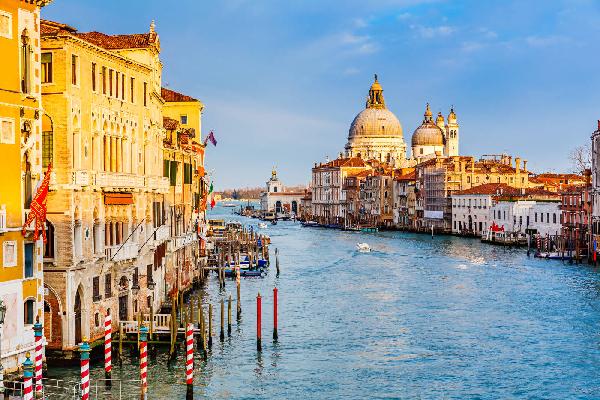
Venice is a city unlike any other, built on over 100 small islands in a lagoon. Its canals serve as roads, and its palaces seem to rise directly from the water. It is a place of immense romance, art, and history.
Key Attractions
St. Mark’s Square (Piazza San Marco): The city’s main public square, home to St. Mark’s Basilica with its golden mosaics and the Campanile bell tower.
Doge’s Palace (Palazzo Ducale): A masterpiece of Gothic architecture, the former residence of the Doge, connected to the prisons by the Bridge of Sighs.
The Grand Canal: Take a vaporetto (water bus) or gondola ride along the main waterway to see the magnificent palazzi lining its banks.
The Rialto Bridge: The oldest and most famous bridge spanning the Grand Canal, surrounded by a vibrant market.
The Islands of Murano and Burano: Visit Murano for its world-famous glassmaking and Burano for its brightly colored fishermen’s houses and lacemaking tradition.
Practical Information for Your Italian Journey