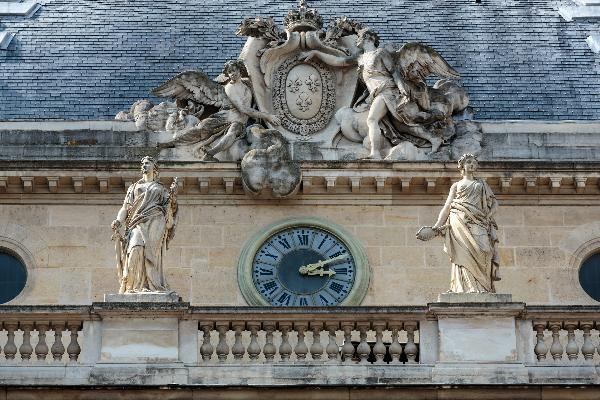
A Journey Through Time: The Historic Heart of Paris
This travel guide details a journey through the 5th and 6th arrondissements of Paris, the city’s historic and intellectual epicenter. This route connects world-famous landmarks with hidden Roman ruins and hallowed academic institutions, offering a profound exploration of Parisian history from its ancient origins to its modern-day vibrancy. Travelers will walk in the footsteps of scholars, saints, and legendary artists, discovering the layers of time that make this area uniquely captivating.
Route Overview and Itinerary Planning
The attractions listed form a logical and walkable route, primarily on the Left Bank (Rive Gauche) of the Seine. A logical order for a one or two-day exploration could be:
Day 1: Start at Notre-Dame (Île de la Cité), cross to the Shakespeare and Company bookstore, then proceed to the Roman ruins (Arenes de Lutece and Cluny Baths). End the day at the Panthéon.
Day 2: Explore the academic institutions like Collège de France and Université Paris 1 Panthéon-Sorbonne, see the remnants of the Philippe Auguste Wall, and finish with the local market atmosphere at Place Monge.
Comfortable walking shoes are essential. The Paris Métro system, with stations like Saint-Michel, Cluny – La Sorbonne, Cardinal Lemoine, and Place Monge, provides excellent access to all points.
Notre-Dame Cathedral
Introduction: Notre-Dame de Paris, meaning “Our Lady of Paris,” is more than a cathedral; it is the symbolic heart of the city. A masterpiece of French Gothic architecture, its construction began in 1163 and spanned nearly two centuries. It has witnessed coronations, revolutions, and has been immortalized in Victor Hugo’s classic novel, The Hunchback of Notre-Dame. The devastating fire of April 2019 captured the world’s attention, but the cathedral survives and is undergoing a meticulous restoration, scheduled for completion in December 2024.
Visitor Information: While the interior remains closed to the public during restoration, the exterior is still an awe-inspiring sight. The parvis (square) in front offers the best views of the famous facade with its rose windows and sculpted portals. The archaeological crypt nearby is open and provides a fascinating glimpse into the ancient history of Île de la Cité. Access is via Métro lines 4 and 10 at station “Cité”.
Cultural Insight: The restoration process itself is a national project of immense cultural significance, employing traditional craftspeople and modern technology. Observing the reconstruction efforts offers a unique lesson in heritage preservation and French resilience.
Shakespeare and Company
Introduction: Just across the river from Notre-Dame, on the Left Bank, sits this legendary English-language bookstore. Founded by George Whitman in 1951, it became a spiritual successor to Sylvia Beach’s original shop from the 1920s. It served as a haven for the “Lost Generation” writers like Ernest Hemingway and F. Scott Fitzgerald and continues to be a magnet for writers, readers, and dreamers from around the globe.
Visitor Information: The tiny, creaking rooms are packed floor-to-ceiling with books. Upstairs, there is a reading library and sometimes even a bed for the “tumbleweeds”—aspiring writers who help out in the shop in exchange for lodging. It’s a place to browse slowly, discover a hidden literary gem, and perhaps have a book stamped with the iconic shop seal. Photography is often discouraged inside to preserve the tranquil atmosphere.
Food Recommendation: The bookstore has its own charming café next door, perfect for a coffee and pastry while delving into a new purchase. For a more substantial meal, the surrounding Saint-Michel area is filled with classic Parisian bistros, though it’s wise to avoid overly touristy menus.
Cluny Museum – National Museum of the Middle Ages (Roman Baths)
Introduction: A short walk from Shakespeare and Company lies the Hôtel de Cluny, a stunning medieval mansion built on the ruins of Gallo-Roman baths from the late 2nd or early 3rd century. This site is a literal palimpsest of Parisian history. The museum houses one of the world’s finest collections of medieval art, including the celebrated Lady and the Unicorn tapestry series.
Visitor Information: The star attraction is the frigidarium (cold room) of the Roman baths, an exceptionally well-preserved vaulted room that stands 14 meters high. The juxtaposition of the Roman stonework with the Flamboyant Gothic architecture of the mansion is breathtaking. The museum is located at 28 Rue Du Sommerard. The nearest Métro is Cluny – La Sorbonne.
Cultural Insight: The baths are a powerful reminder that Paris was once the Roman city of Lutetia. They illustrate the high level of Roman engineering and social life that existed here long before the medieval city took shape.
Collège de France
Introduction: Adjacent to the Sorbonne is the Collège de France, one of France’s most prestigious research institutions. Founded in 1530 by King Francis I, its mission was and remains to teach “knowledge in the making.” Unlike a university, it does not grant degrees. Instead, its professors—leading experts in their fields—deliver free and open lectures to the public on everything from quantum physics to Assyriology.
Visitor Information: While you cannot simply wander into research labs, the public can attend lectures (check their website for schedules) and admire the classical buildings from the courtyard at Place Marcelin-Berthelot. The atmosphere is one of quiet, intense intellectual pursuit.
Cultural Insight: The Collège embodies the French Republic’s ideal of free and accessible knowledge for all. Its presence here anchors the Latin Quarter as a global center for learning and open inquiry.
Université Paris 1 Panthéon-Sorbonne
Introduction: Part of the sprawling Sorbonne University system, Paris 1 is a leading institution specializing in law, economics, humanities, and social sciences. Its central administration is located in the historic Sorbonne building, a name synonymous with academia itself since its founding in the 13th century.
Visitor Information: The main Sorbonne building’s interior courtyard and chapel are sometimes open to the public during heritage days or via guided tours. Inquiring at the tourist office is the best way to arrange a visit. Mostly, visitors experience it by absorbing the vibrant student atmosphere in the surrounding streets, cafes, and bookshops.
Food Recommendation: The area is filled with affordable student eateries. Look for crêperies, kebab shops, and bakeries offering delicious and inexpensive baguette sandwiches. Le Comptoir du Panthéon is a classic brasserie popular with academics and students alike.
The Panthéon
Introduction: Dominating the skyline of the 5th arrondissement, the Panthéon is a neoclassical mausoleum for France’s “Great Men.” Originally commissioned by King Louis XV as a church dedicated to St. Geneviève, it was secularized during the Revolution to honor those who had served the nation. Its facade is modeled on the Pantheon in Rome.
Visitor Information: Inside, visitors can pay respects at the tombs of figures such as Voltaire, Rousseau, Victor Hugo, Marie Curie (the first woman honored based on her own merits), and Alexandre Dumas. The vast interior features Foucault’s Pendulum, a demonstration of the Earth’s rotation. The climb to the colonnaded dome is highly recommended for one of Paris’s most spectacular 360-degree views. It is located at Place du Panthéon.
Cultural Insight: The Panthéon represents France’s struggle between religious monarchy and secular republic. Who is interred here is a deeply political question, reflecting the nation’s evolving values and identity.
The Philippe Auguste Wall
Introduction: Before visiting the next Roman site, look for subtle remnants of medieval Paris. In the late 12th century, King Philippe Auguste built a fortified wall to protect the city. While most of it was dismantled centuries ago, several fragments survive. The most impressive section in this area runs alongside the Lycée Henri-IV, just north of the Panthéon on Rue Clovis.
Visitor Information: This is a “hidden gem” experience. There is no ticket or opening time; you simply walk down a public street and see this massive stone structure integrated into later buildings. It offers a tangible sense of the scale of medieval Paris, which was much smaller than today’s metropolis.
Arenes de Lutece (Lutetia Arena)
Introduction:Tucked away in a quiet neighborhood near Place Monge is one of Paris’s most important Gallo-Roman relics: the Arenes de Lutece. Built in the 1st century AD, this amphitheater could hold up to 15,000 spectators for gladiatorial combats and theatrical performances. It was lost for centuries, buried under subsequent construction, before being rediscovered during roadworks in the 19th century.
Visitor Information: Today, it functions as a public park. Unlike a fenced-off monument, you can walk directly onto the stage area or sit on the stone terraces where Romans once sat. It’s a favorite spot for local children to play soccer and for residents to enjoy a quiet moment. The entrance is at 49 Rue Monge.
Cultural Insight:The arena’s rediscovery and preservation were championed by Victor Hugo and other intellectuals. Its current use as a community space beautifully bridges its ancient past with contemporary Parisian life.
Place Monge
Introduction:A charming neighborhood square that serves as the lively hub for the surrounding residential area. It is named after Gaspard Monge, a renowned mathematician. The square features a traditional Carrousel and is surrounded by cafes, bakeries, and shops.
Visitor Information:The main attraction is its vibrant open-air market, held on Wednesdays, Fridays, and Sundays. Here, one can experience authentic Parisian market culture: vendors selling fresh produce, cheese, charcuterie, flowers, and clothing. It’s an ideal place to assemble a picnic to enjoy in the nearby Arenes de Lutece or Jardin des Plantes.
Food Recommendation:The market is the best place for food. Buy a baguette, some cheese from a fromager, and a few slices of pâté. For a sit-down meal, Café Delmas on the square is a classic Parisian brasserie perfect for people-watching.
Accommodation Tips
The 5th and 6th arrondissements offer a range of accommodations, from budget-friendly hostels to luxury hotels.
Budget/Location: The area around Place Monge and Rue Mouffetard offers smaller, family-run hotels and B&Bs that provide good value and an authentic local feel.
Mid-Range/Atmosphere:The Saint-Germain-des-Prés area (6th arrondissement) is famous for its literary and artistic history but comes with a higher price tag. Look for hotels on quieter side streets.
Splurge/View:For a truly memorable stay with views of Notre-Dame or the Seine, consider luxury hotels on Quai des Grands Augustins or Île de la Cité itself.
Transportation Information
The entire route is highly walkable. The Paris Métro (RATP) is efficient for covering longer distances or when your feet need a rest.
Key Métro Stations:
Cité (Line 4): For Notre-Dame.
Saint-Michel (Lines 4 & RER B/C): For Notre-Dame and Shakespeare and Company.
Cluny – La Sorbonne (Line 10 & RER B/C): For the Cluny Museum, Sorbonne, and Collège de France.
Cardinal Lemoine (Line 10): For the Panthéon and Arenes de Lutece.
Place Monge (Line 7): For the market and arena.
Buses: Lines 21 connects many of these sites along Rue Saint-Jacques.
Walking:The most rewarding way to explore. Allow for serendipitous discoveries down narrow cobblestone streets.
Vélib’ Bikes:Paris’s bike-sharing system has many stations in this area and is an excellent way to get around like a local.