A Journey Through Germany’s Romantic Heart: Frankfurt, Würzburg, Rothenburg, Heidelberg & Rüdesheim
This comprehensive travel guide details a classic circular route through the heart of Germany, starting and ending in Frankfurt. This journey takes travelers through the world-famous Romantic Road, along the majestic River Rhine, and into the heart of German history, culture, and winemaking. The itinerary covers the vibrant metropolis of Frankfurt, the baroque splendor of Würzburg, the medieval fairy-tale of Rothenburg ob der Tauber, the romantic philosopher’s path of Heidelberg, and the wine village charm of Rüdesheim.
Trip Overview and Logistics
This route is designed to be a 5 to 7-day trip, allowing for a deep and unhurried exploration of each location. The total distance covered by train and/or car is approximately 400-450 kilometers. The best time to embark on this journey is from late spring to early autumn (May to October), when the weather is pleasant for walking, and the vineyards and river landscapes are at their most vibrant. The Christmas market season in December is also a magical, albeit colder and more crowded, time to visit.
Transportation: Germany’s efficient rail system (Deutsche Bahn) makes this itinerary highly accessible without a car. The German Rail Pass (Deutschlandticket) can offer significant savings for multiple long-distance journeys. For maximum flexibility, especially for reaching smaller villages like those in the Rhine Valley, renting a car in Frankfurt is an excellent option.
Accommodation: It is highly recommended to book accommodations well in advance, particularly in popular towns like Rothenburg and during peak season. Options range from large city hotels in Frankfurt to family-run guesthouses (Gasthöfe), and even historic inns within medieval walls.
Cuisine: This region showcases the hearty flavors of Franconia and the Rhineland. Be prepared for robust dishes, excellent local wines, and world-famous beers.
Frankfurt: The Gateway
Frankfurt am Main, often simply called Frankfurt, is Germany’s financial hub and a city of striking contrasts, where sleek skyscrapers stand alongside reconstructed historical buildings.
Main Attractions
Römerberg: This is the historic heart of Frankfurt, a picturesque square lined with beautifully reconstructed half-timbered houses. The Römer itself is Frankfurt’s city hall and an iconic symbol.
St. Bartholomew’s Cathedral (Kaiserdom): A grand Gothic cathedral that was the election and coronation site for Holy Roman Emperors. Climbing the tower offers a panoramic view of the city.
Museumsufer (Museum Embankment): A unique concentration of museums on both sides of the River Main. Highlights include the Städel Museum (European art) and the German Film Museum.
Palmengarten: One of the largest botanical gardens in Germany, offering a peaceful escape from the urban bustle.
Food & Drink
Frankfurter Würstchen: The classic thin, smoked sausage, usually served with bread, mustard, and potato salad.
Grüne Soße (Green Sauce): A cold herb sauce made with seven fresh herbs (parsley, chives, chervil, borage, sorrel, garden cress, and salad burnet), sour cream, and yogurt. Traditionally served with boiled potatoes and eggs.
Apfelwein (Ebbelwoi): Frankfurt’s signature tart apple cider. The best place to try it is in a traditional Apfelwein tavern in the Sachsenhausen district.
Transportation & Accommodation
Frankfurt Airport (FRA) is a major international hub. The city center is easily accessible via S-Bahn (suburban train). Frankfurt’s public transportation system (RMV) is comprehensive and efficient. For accommodation, the city center (Innenstadt) is convenient for sightseeing, while the Sachsenhausen district offers a more traditional and lively atmosphere.
Würzburg: The Baroque Pearl
Traveling east from Frankfurt by train (approx. 1 hour), you arrive in Würzburg, the northern gateway to the Romantic Road. This university city is renowned for its magnificent Residenz palace and its location amidst Franconian wine country.
Main Attractions
Würzburg Residenz: A UNESCO World Heritage Site, this 18th-century palace is a masterpiece of Baroque architecture. The grand staircase, crowned by Giovanni Battista Tiepolo’s vast ceiling fresco, is considered the largest in the world. The guided tour is highly recommended.
Marienberg Fortress: This mighty fortress dominates the city skyline from across the Main River. It houses museums and offers spectacular views of Würzburg and its vineyards. The walk across the Old Main Bridge is a quintessential Würzburg experience.
Old Main Bridge (Alte Mainbrücke): Lined with statues of saints, this bridge has become a social hub where locals and tourists gather to enjoy a glass of local wine (Brückenschoppen) while taking in the view of the fortress.
Market Square & St. Mary’s Chapel: The vibrant central square features the ornate Gothic Marienkapelle and a daily market selling local produce and specialties.
Food & Drink
Franconian Wine: Würzburg is at the heart of the Franconia (Franken) wine region, known for its dry white wines, particularly Silvaner, bottled in distinctive round Bocksbeutel flasks.
Franconian Bratwurst: Typically smaller and thinner than its Nuremberg counterpart, often served with sauerkraut or potato salad.
Blaue Zipfel: A traditional dish of sausages cooked in a vinegar-onion broth, giving them a “blue” appearance.
Transportation & Accommodation
Würzburg’s main train station (Hauptbahnhof) is a major hub. The city center is compact and easily explored on foot, though a bus or a steep walk is required to reach the Marienberg Fortress. Stay in the Altstadt (Old Town) to be within walking distance of all major sights.
Rothenburg ob der Tauber: The Medieval Dream
A short train or bus ride south on the Romantic Road (approx. 1 hour 15 minutes) brings you to Rothenburg ob der Tauber. This town is a perfectly preserved medieval gem that seems to have been lifted straight from a storybook.
Main Attractions
Town Walls & Gates: A walk along the covered sentry path on top of the complete medieval town walls provides unique views over the town’s rooftops and the surrounding Tauber Valley.
Market Square (Marktplatz): The heart of Rothenburg, flanked by the Town Hall (Rathaus) with its towering gothic front and the picturesque Councillors’ Tavern (Ratstrinkstube), where a glockenspiel reenacts the legendary “Meistertrunk” story.
Plönlein: This iconic corner with a half-timbered house splitting two streets is one of the most photographed spots in Germany.
Criminal Museum (Mittelalterliches Kriminalmuseum): A fascinating and sometimes gruesome look at medieval law and order, featuring instruments of punishment.
The Night Watchman’s Tour: A highly entertaining and informative evening walking tour led by a character dressed as the town’s night watchman, offering historical insights with humor.
Food & Drink
Rothenburger Schneeball (Snowball): A local pastry made of shortcrust dough strips formed into a ball and deep-fried, then dusted with powdered sugar or coated in chocolate or nuts. It’s a must-try for its visual appeal, if not its dryness.
Franconian Cuisine: Enjoy hearty dishes like Schäufele (slow-roasted pork shoulder) with potato dumplings and sauerkraut in a cozy restaurant.
Transportation & Accommodation
Rothenburg is best reached by regional train or Romantic Road coach. The town itself is a pedestrian zone; cars must be left outside the city walls. Staying within the walled city is a magical experience, allowing you to enjoy the town’s atmosphere after the day-trippers have left. Book well in advance.
Heidelberg: Romance and Philosophy
The journey now heads west towards the Neckar River Valley. Reaching Heidelberg from Rothenburg requires a train change, often in Steinach or Stuttgart (approx. 2.5-3 hours). Heidelberg is Germany’s oldest university town, famed for its romantic setting and philosophical history.
Main Attractions
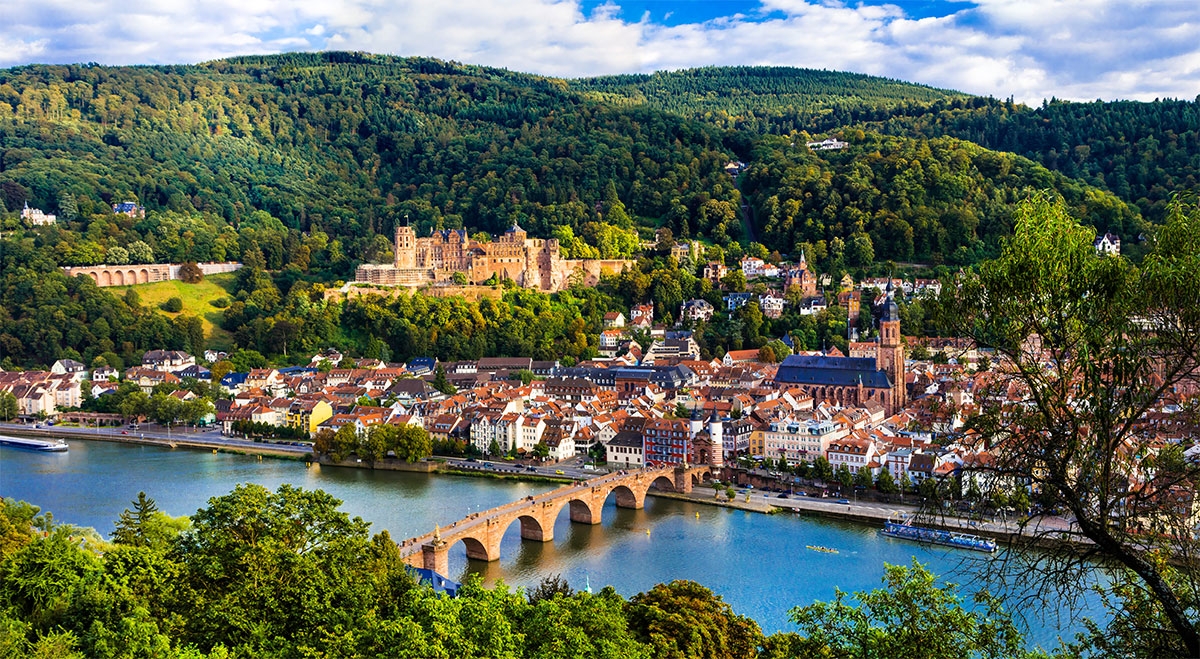
Heidelberg Castle (Heidelberger Schloss): The magnificent red sandstone ruin towers over the city. Take the funicular railway up for a tour of the castle grounds, the Great Vat (a massive wine barrel), and the German Pharmacy Museum. The view of the city and river from the castle terrace is unforgettable.
Old Town (Altstadt): Stretching along the Neckar River, Heidelberg’s baroque Old Town is one of the longest pedestrian zones in Europe, filled with shops, cafes, and historic buildings.
Old Bridge (Karl-Theodor-Brücke): Another iconic bridge gate, offering a classic photo opportunity with the castle in the background.
Philosophers’ Walk (Philosophenweg): A path on the sunny side of the Neckar River opposite the Old Town, offering breathtaking views. It was traditionally a place for Heidelberg’s thinkers and poets to wander and reflect.
Student Prison (Studentenkarzer):A unique attraction within the old university where misbehaving students were imprisoned from 1778 to 1914. The walls are covered in their graffiti and drawings.
Food & Drink
Heidelberger Studentenkuss: A local chocolate praline (“Heidelberg Student’s Kiss”) created as a discreet way for students to send messages to young ladies.
Regional Wines:The Bergstraße region produces excellent wines. Try a Riesling or Pinot Noir from a local wine bar (Weinstube).
Heart Baden Cuisine:Slightly lighter than Franconian fare, look for dishes like Sauerbraten (pot roast marinated in vinegar) or onion tart (Zwiebelkuchen) in autumn.
Transportation & Accommodation
Heidelberg’s main train station (Hauptbahnhof) is well-connected. From there, trams and buses provide easy access to the Old Town. Staying in or very near the Altstadt is recommended for easy access to all sights. The funicular to the castle departs from the Kornmarkt.
Rüdesheim am Rhein: Wine Village Charm
The final leg of the journey heads north to the UNESCO World Heritage Rhine Valley. A train ride from Heidelberg via Mainz (approx. 1.5-2 hours) brings you to Rüdesheim, a charming wine town nestled between vineyards and the river.
Main Attractions
Drosselgasse:A narrow, lively alley just 144 meters long, packed with wine taverns, restaurants, and music. It’s a quintessential Rhine Valley experience, especially in the evening.
Siegfried’s Mechanical Music Cabinet (Siegfrieds Mechanisches Musikkabinett):A fascinating museum housing a collection of self-playing musical instruments from past centuries.
Rhine River Cruise:A highlight of any visit. Take a boat from Rüdesheim to St. Goar or beyond to see the most scenic stretch of the Middle Rhine Valley, dotted with countless castles and vineyards.
Niederwalddenkmal:A monumental statue commemorating the founding of the German Empire after the Franco-Prussian War. Reach it via a scenic cable car ride for stunning views over the Rhine Valley.
Vineyard Hikes:The hills above Rüdesheim are crisscrossed with hiking trails through vineyards, offering magnificent views at every turn.
Food & Drink
Riesling Wine:The Rhine Valley is Riesling country. Sample the local wines in a traditional wine tavern (Weingut) or during a tasting.
Rüdesheimer Kaffee:A famous local cocktail made with Asbach Uralt brandy, sugar, and flambéed, then topped with coffee and whipped cream.
River Fish:Freshly caught fish from the Rhine, such as trout or pike-perch (Zander) are common menu items.
Transportation & Accommodation
The most scenic way to arrive in or depart from Rüdesheim is by boat. The town itself is small and walkable. For accommodation, consider staying in a family-run hotel or guesthouse on one of the quieter streets just off the main tourist thoroughfares. Rüdesheim serves as an excellent base for exploring other Rhine villages like Bacharach and Oberwesel.
The Return to Frankfurt
The final journey back to Frankfurt from Rüdesheim is short and straightforward by regional train (approx. 1 hour 15 minutes), often requiring one change in Mainz. This brings you full circle back to Germany’s dynamic financial capital for your departure flight or onward travel.
Cultural Insights and Practical Tips
Cash is King:While credit cards are becoming more common, Germany still has a strong preference for cash (Bargeld), especially in smaller towns, guesthouses, and family-run restaurants.
Sundays and Holidays:Sundays are legally protected as “quiet days.” Most shops are closed, and noise should be kept to a minimum. Plan accordingly for meals and activities.
The Pfand System:A deposit (Pfand) is added to the price of most bottled drinks in supermarkets and drink shops. You get this deposit back when you return the empty bottle to a machine in any store that sells them.
“Prost!”:The German word for “Cheers!”. When clinking glasses, make direct eye contact with your drinking companions—it’s considered good manners and avoids seven years of bad luck according to local superstition.
Sustainability:The “Leitkultur” (guiding culture) includes respect for rules and orderliness. Be punctual for tours and reservations. Also be mindful of recycling rules which are taken seriously throughout Germany.
A journey through Frankfurt, Würzburg, Rothenburg, Heidelberg, and Rüdesheim offers an unparalleled glimpse into Germany’s diverse cultural landscape—from its imperial past and medieval splendor to its romantic river valleys and world-class viticulture. It is a trip that satisfies history buffs, romantics, foodies, and nature lovers alike.