A Grand Iberian Adventure: Madrid, Barcelona, Valencia, Andalusia & Lisbon
This comprehensive travel guide outlines a classic circuit through the heart of Spain and Portugal, exploring vibrant capitals, historic cities, and stunning coastal regions. The journey begins and ends in Madrid, weaving through the diverse landscapes and rich cultures of the Iberian Peninsula. This itinerary is designed for travelers seeking a deep immersion into art, architecture, gastronomy, and history.
Route Overview & Travel Strategy
The proposed route is:
Madrid → Zaragoza → Barcelona → Valencia → Granada → Málaga → Seville → Lisbon → Toledo → Madrid. This loop efficiently connects major highlights using Spain and Portugal’s excellent high-speed (AVE) and regional train networks, complemented by buses and flights where advantageous. Travelers should allocate a minimum of 14 to 21 days for this journey to fully appreciate each destination. The most efficient long-distance travel legs are the high-speed train from Barcelona to Valencia and from Córdoba (a potential day-trip from Seville) to Seville. For the segment from Seville to Lisbon, a direct bus or a combination of train and bus is the most practical option.
Best Time to Travel: Spring (April-June) and Autumn (September-October) offer pleasant temperatures and fewer crowds.
Transportation: Utilize Spain’s Renfe AVE trains for long distances. Consider buses for more remote areas or the Seville-Lisbon leg. Internal flights can save time but add airport logistics.
Accommodation: Book well in advance, especially for popular cities like Barcelona, Seville, and Granada. Options range from central hostels and boutique hotels to historic paradores.
Madrid: The Vibrant Capital
Madrid, Spain’s energetic capital, is a city of elegant boulevards, sprawling parks, and world-class art museums. It serves as the perfect start and end point for this Iberian adventure.
Key Attractions
Prado Museum (Museo del Prado): Home to an unparalleled collection of European art, including masterpieces by Goya, Velázquez, and El Greco.
Royal Palace (Palacio Real): The official residence of the Spanish Royal Family, this opulent palace is one of the largest in Europe.
Retiro Park (Parque del Buen Retiro): A vast and beautiful park perfect for boating on the lake, visiting the stunning Glass Palace (Palacio de Cristal), or simply strolling.
Puerta del Sol and Plaza Mayor: The bustling heart of the city, ideal for people-watching and soaking in the atmosphere.
Food & Drink
Madrid is famous for its tapas culture. Must-try experiences include hopping between tapas bars in the La Latina neighborhood, trying the classic
bocadillo de calamares (calamari sandwich), and enjoying churros con chocolate at the historic Chocolatería San Ginés. For a more substantial meal, cocido madrileño, a hearty chickpea-based stew, is a local specialty.
Transportation & Accommodation
Madrid-Barajas Airport (MAD) is a major international hub. The city’s metro system is extensive and efficient. It is recommended to stay in central districts like Sol/Gran Vía, Huertas, or Salamanca for easy access to sights, dining, and transport links.
Zaragoza: The City of Four Cultures
A stopover between Madrid and Barcelona, Zaragoza is the capital of the Aragon region, boasting a rich history shaped by Romans, Moors, Jews, and Christians.
Key Attractions
Basilica of Our Lady of the Pillar (Basílica del Pilar): A monumental baroque church on the banks of the Ebro River, it is a major pilgrimage site.
Aljafería Palace: An 11th-century Islamic palace-fortress that is a superb example of Hispano-Islamic architecture and later served as a residence for Aragonese kings.
Caesaraugusta Forum Museum: An underground museum showcasing the ruins of the ancient Roman forum.
Food & Cultural Insight
Zaragoza offers robust Aragonese cuisine. Try
ternasco de Aragón (roast lamb) and migas (breadcrumbs with pork and grapes). The city’s Fiestas del Pilar in October are a spectacular celebration. Zaragoza provides a fascinating glimpse into Spain’s layered history without the overwhelming crowds of larger cities.
Barcelona: The Catalan Masterpiece
Barcelona is a vibrant, cosmopolitan city renowned for its unique Catalan culture, stunning Modernist architecture, and lively Mediterranean vibe.
Key Attractions
Sagrada Família: Antoni Gaudí’s unfinished masterpiece and the city’s iconic symbol. Booking tickets online well in advance is essential.
Park Güell: A whimsical public park designed by Gaudí, offering fantastical architecture and panoramic city views.
Gothic Quarter (Barri Gòtic): A maze of narrow medieval streets filled with historic buildings, charming plazas, and Roman ruins.
Casa Batlló & La Pedrera: Two other stunning Gaudí buildings on the Passeig de Gràcia, showcasing his innovative and organic style.
La Boqueria Market: A bustling food market off La Rambla, perfect for sampling fresh produce, juices, and local snacks.
Food & Drink
Catalan cuisine is diverse. Must-tries include
pa amb tomàquet (bread with tomato), esqueixada (salt cod salad), and suquet
Transportation & Accommodation
Barcelona-El Prat Airport (BCN) is well-connected. The city’s metro is the best way to get around. Popular areas to stay include Eixample for its modernist architecture, El Born for its trendy boutiques and nightlife, and Gràcia for a more local village feel.
Valencia: City of Arts and Sciences
Valencia beautifully blends its ancient history with stunning modern architecture. It is also the birthplace of paella.
Key Attractions
City of Arts and Sciences (Ciutat de les Arts i les Ciències): A futuristic cultural and architectural complex designed by Santiago Calatrava, housing an opera house, science museum, IMAX cinema, and Europe’s largest aquarium.
Valencia Cathedral: Home to what is claimed to be the Holy Grail. Climb the Miguelete bell tower for spectacular views.
Central Market (Mercado Central): One of Europe’s largest markets, housed in a beautiful Modernist building, offering an incredible array of fresh produce, meats, and seafood.
Turia Gardens: A vast park created in the former riverbed of the Turia River, perfect for cycling and walking across the city.
Food & Cultural Insight
Valencia is the true home of paella. Seek out authentic
paella valenciana, made with rabbit, chicken, and snails (or green beans), in a restaurant near the Albufera lagoon. Also try horchata, a refreshing tiger nut drink, with fartons (sweet pastries). The Fallas festival in March is a world-famous celebration involving giant ninot sculptures that are burned in a spectacular climax.
Granada: The Jewel of Al-Andalus
Nestled at the foot of the Sierra Nevada mountains, Granada is dominated by the magnificent Alhambra, a breathtaking reminder of Spain’s Moorish past.
Key Attractions
The Alhambra and Generalife: A sprawling palace and fortress complex representing the pinnacle of Nasrid architecture. It is absolutely essential to book tickets online months in advance.
Albaicín Quarter: A historic Moorish quarter with winding, cobbled streets and whitewashed houses. The Mirador de San Nicolás offers the most famous sunset view of the Alhambra.
Sacromonte: The traditional Gitano (Roma) neighborhood, known for its cave dwellings and vibrant flamenco shows.
Granada Cathedral & Royal Chapel: The final resting place of the Catholic Monarchs, Ferdinand and Isabella.
Food & Cultural Insight
A unique cultural tradition in Granada is that a free tapa is served with every drink ordered in most bars. Explore the tapas bars around Plaza Nueva and Campo del Príncipe. Local specialties include
habas con jamón (broad beans with ham) and tortilla del Sacromonte (a complex omelette). The city’s deep Moorish heritage is palpable in its architecture, cuisine, and atmosphere.
Málaga: The Coastal Gateway
Often overlooked as just an airport hub, Málaga is a vibrant city in its own right, boasting a revitalized port area, excellent museums, and a sunny Mediterranean climate.
Key Attractions
Picasso Museum: Housed in the artist’s birthplace, it features a superb collection of his works.
Alcazaba: A well-preserved Moorish fortress-palace with beautiful gardens and panoramic views of the city and port.
Málaga Cathedral: Nicknamed “La Manquita” (the one-armed lady) because one of its towers was never finished.
Soho District & Pompidou Center: A trendy neighborhood known for its street art and the colorful cube of the Pompidou Center Málaga.
Culinary Delights & Transportation
Savor fresh seafood at beachfront
chiringuitos. Málaga’s sweet wine and fried fish (pescaíto frito) are legendary. Málaga-Costa del Sol Airport (AGP) is a major gateway to Andalusia. The city is well-connected by high-speed train to Córdoba and Madrid, making it a strategic transport node.
Seville: The Heart of Andalusia
Seville is a city of passion, famous for flamenco, orange trees, and magnificent monuments that tell the story of its pivotal role in Spanish history.
Key Attractions
Seville Cathedral & Giralda Tower: The largest Gothic cathedral in the world. Climb the ramps of the Giralda minaret-tower for unparalleled views.
Real Alcázar: A stunning royal palace complex with exquisite Mudejar architecture and lush, tranquil gardens. It is still used by the Spanish royal family.
Plaza de España: A grand, semi-circular plaza built for the 1929 Ibero-American Exposition, featuring beautiful tile work (azulejos) representing Spanish provinces.
Triana Neighborhood: Cross the Isabel II Bridge to this historic district, known as the birthplace of flamenco and for its ceramic workshops.
Cuisine & Flamenco Culture
The culinary scene in Seville is vibrant. Enjoy tapas like
espinacas con garbanzos (spinach with chickpeas) and solomillo al whisky (pork in whisky sauce). Seville is considered one of the birthplaces of flamenco. For an authentic experience, see a show in a small tablao in Triana or Santa Cruz. The city’s two major festivals, Semana Santa (Holy Week) and the Feria de Abril (April Fair), are spectacular cultural events.
The Journey to Lisbon: Crossing into Portugal
The trip from Seville to Lisbon takes approximately 6-7 hours by direct bus (operated by companies like Alsa or FlixBus) or a combination of train and bus via Évora or Faro. While not as fast as Spain’s AVE, it is a scenic journey through changing landscapes.
Lisbon: The City of Seven Hills
Portugal’s captivating capital charms visitors with its hilly streets, colorful tiles (
azulejos,), melancholic Fado music, and stunning views over the Tagus River.
Key Attractions
Belém Tower & Jerónimos Monastery:> Iconic Manueline-style monuments celebrating Portugal’s Age of Discoveries. Don’t miss the famous Pastéis de Belém custard tarts nearby.
Alfama District:> The oldest neighborhood in Lisbon, a labyrinth of narrow streets, hidden courtyards, and home to Fado houses. Take tram 28 for a classic tour.
São Jorge Castle:> A Moorish castle perched atop one of Lisbon’s highest hills, offering breathtaking 360-degree views of the city.
LX Factory:> A trendy creative hub located under the 25 de Abril Bridge in a revitalized industrial complex, full of shops, restaurants, and galleries.
National Tile Museum (Museu Nacional do Azulejo):> A unique museum dedicated to the art of Portuguese tiles.
Cuisine & Cultural Insight
Savor Portuguese classics like
bacalhau à brás> (shredded cod with eggs and potatoes), grilled sardines, and the aforementioned >pastéis de nata>. Enjoy a glass of Ginjinha, a sour cherry liqueur. Fado music is the soul of Lisbon; experience it in an intimate club in Alfama or Mouraria. The city’s light, reflected off the river and tiles, gives it a unique quality celebrated by poets.
A Note on Day Trips: Sintra & Cascais
A short train ride from Lisbon lies Sintra, a fairy-tale town of lush forests and extravagant palaces like the colorful Pena Palace and the mysterious Quinta da Regaleira. Combining Sintra with a visit to the coastal town of Cascais makes for an unforgettable day trip.
Toledo: The Imperial City
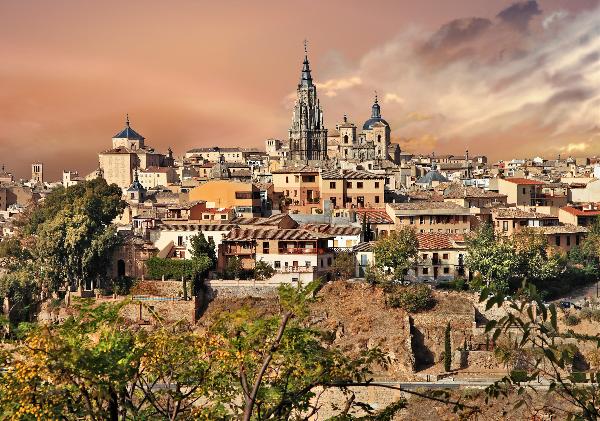
A final stop before returning to Madrid, Toledo is a UNESCO World Heritage site perched on a hill overlooking the Tagus River. Known as the “City of Three Cultures,” it was once a place where Christian, Muslim, and Jewish communities coexisted.
A Day in Toledo
Toledo Cathedral:> A masterpiece of High Gothic architecture with an incredibly rich interior.
<
li><
strong
><
em
>Marzipan (<
em
>Mazapán<
/em
>):<
/strong
> Toledo is famous for this sweet confection made from almonds and sugar.<
/li>>
<
/
ul>>
<
p
>Toledo is easily accessible as a day trip from Madrid via a 30-minute high-speed train. Its compact historic center is best explored on foot, getting lost in its medieval streets.<
/
p>>
<
h2
>The Return to Madrid & Departure<
/
h2>>
<
p
>The final leg from Toledo back to Madrid is short via train or bus. This allows for last-minute souvenir shopping or revisiting a favorite Madrid tapas bar before departing from Madrid-Barajas Airport (MAD). This grand Iberian circuit offers an unparalleled journey through two distinct yet interconnected cultures, leaving travelers with memories of stunning landscapes, profound history, and unforgettable flavors.<
/
p>>
< / section>>