A Grand Balkan Circuit: Budapest to Belgrade via Romania, Bulgaria, and Serbia
This comprehensive travel guide details an epic journey through the heart of Central and Eastern Europe. The route connects the stunning Hungarian capital of Budapest with a loop through Romania’s Transylvanian Alps and historic provinces, Bulgaria’s ancient towns and Thracian plains, and Serbia’s resilient cities, before returning to Budapest. It’s a voyage through layers of history, from Roman ruins and Ottoman mosques to Austro-Hungarian palaces and communist-era monuments, all set against a backdrop of breathtaking natural beauty.
Route Overview and Travel Philosophy
The itinerary follows a logical circular route, minimizing backtracking and maximizing cultural and scenic diversity:
Budapest (Hungary) → Timișoara (Romania) → Sibiu → Brașov → Sinaia → Bucharest → Veliko Tărnovo (Bulgaria) → Plovdiv → Sofia → Niš (Serbia) → Belgrade → Budapest. This journey is best experienced over a minimum of two to three weeks. The primary modes of transportation are trains and buses, which, while sometimes slower than Western European standards, offer an authentic travel experience. Renting a car provides greater flexibility, especially in rural Transylvania.
Chapter 1: Budapest, Hungary – The Pearl of the Danube
Budapest, a city split by the Danube into Buda and Pest, is a grand introduction to the region. Its architecture tells a story of Ottoman occupation, Austro-Hungarian grandeur, and 20th-century resilience.
Key Attractions
Buda Castle & Castle Hill: A UNESCO World Heritage site, the castle district is home to the Royal Palace, Matthias Church, and Fisherman’s Bastion, offering panoramic views of the city.
Hungarian Parliament Building: An iconic neo-Gothic masterpiece on the Pest side of the river. Booking a guided tour in advance is essential.
Széchenyi Thermal Baths: One of the largest spa complexes in Europe, located in City Park. A dip in its outdoor pools, even in winter, is a quintessential Budapest experience.
Dohány Street Synagogue: The largest synagogue in Europe, a poignant site that also encompasses the Jewish Museum and the Holocaust Memorial.
Food & Drink
Hungarian cuisine is hearty and flavorful. Must-try dishes include
Goulash (a meat and vegetable soup/stew), Lángos (deep-fried dough with toppings like sour cream and cheese), and Chicken Paprikash. Don’t miss tasting Tokaji wine or Unicum, a herbal liqueur. The Great Market Hall is an excellent place to sample local produce and delicacies.
Transportation & Accommodation
Budapest has an efficient and extensive public transport system (metro, trams, buses). A multi-day travel pass is cost-effective. The city is well-connected by international flights and trains. For accommodation, the Jewish Quarter is popular for its nightlife, while District V (Belváros) offers luxury hotels with prime locations.
Chapter 2: Crossing into Romania – Timișoara
The journey begins with a train or bus ride from Budapest to Timișoara, a city known as the “Little Vienna” and the birthplace of the 1989 Romanian Revolution.
Attractions: The three main squares—Piața Victoriei, Piața Libertății, and Piața Unirii—are surrounded by beautiful Secessionist architecture. The Timișoara Orthodox Cathedral is a stunning landmark.
Cultural Insight: Timișoara’s multicultural heritage (Romanian, German, Hungarian, Serbian) is palpable in its architecture and atmosphere.
Next Leg: From Timișoara, take a train or bus to Sibiu, deep in Transylvania.
Chapter 3: Sibiu, Romania – The Ocular City
Sibiu, a former Germanic Saxon capital, enchants visitors with its well-preserved medieval fortifications, baroque squares, and distinctive “eyes” on its rooftops.
Attractions: The Grand Square (Piața Mare) and Little Square (Piața Mică) form the heart of the city. Climb the Council Tower for views, walk across the iconic Liars’ Bridge, and explore the Brukenthal National Museum.
Food: Try Sarmale (cabbage rolls) and Mămăligă (polenta). For a unique experience, dine in one of the restaurants in the lower town’s historic lanes.
Accommodation: Stay within the old citadel for a truly immersive experience.
Chapter 4: Brașov & the Transylvanian Alps
From Sibiu, a scenic train or drive through the Carpathian Mountains leads to Brașov, a gateway to some of Romania’s most famous sites.
Brașov City
Attractions: The Council Square (Piața Sfatului) is dominated by the Black Church, the largest Gothic church in Southeastern Europe. Stroll along the charming Rope Street (Strada Sforii), one of the narrowest in Europe.
Day Trips from Brașov
Bran Castle: Often marketed as “Dracula’s Castle,” its connection to Vlad the Impaler is tenuous, but its dramatic architecture and history are compelling.
Râșnov Fortress:A impressive 13th-century peasant fortress located on a hilltop between Brașov and Bran.
Sinaia: A short train ride from Brașov, this mountain resort is home to stunning Peleș Castle, a masterpiece of German Renaissance architecture and a former royal residence.
Chapter 5: Bucharest, Romania – The Little Paris
From Sinaia or Brașov, a train journey takes you to the Romanian capital, Bucharest, a city of stark contrasts between its elegant French-inspired architecture and colossal communist-era structures.
Attractions:
Palace of the Parliament: The world’s second-largest administrative building, a staggering symbol of Ceaușescu’s regime. Guided tours are mandatory.
Old Town (Lipscani): A vibrant district with restored buildings housing cafes, bars, and shops.
Village Museum (Muzeul Satului): An excellent open-air museum showcasing traditional Romanian village life.
Revolution Square: A key site of the 1989 revolution.
Food: Bucharest offers the full range of Romanian cuisine. Visit Caru’ cu Bere for a traditional meal in a historic setting.
Chapter 6: Crossing into Bulgaria – Veliko Tărnovo
The journey south from Bucharest leads into Bulgaria. The most scenic and convenient first stop is Veliko Tărnovo, the medieval capital of the Second Bulgarian Empire.
Attractions: The star attraction is the Tsarevets Fortress, a massive stronghold on a hill with a spectacular Sound and Light show. Explore the Samovodska Charshiya complex for traditional crafts.
Cultural Insight: The city cascades down the hills along the Yantra River, creating a unique and dramatic urban landscape.
Transportation: The most practical way from Bucharest is by bus or train to Ruse, Bulgaria, followed by another bus or train to Veliko Tărnovo.
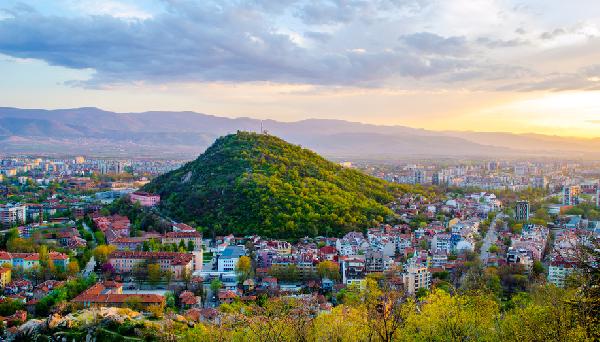
Chapter 7: Plovdiv, Bulgaria – The City of Seven Hills
A bus or train ride south through the Shipka Pass brings you to Plovdiv, one of the oldest continuously inhabited cities in Europe and the European Capital of Culture in 2019.
Attractions:
Old Town: A maze of cobbled streets lined with colorful National Revival-era houses. Don’t miss the Ancient Roman Theatre, still used for performances today.
Kapana Creative District: A trendy area full of art galleries, workshops, cafes, and bars.
Roman Stadium: Located beneath the main pedestrian street, a glimpse into the city’s ancient past.
Food: Bulgarian cuisine features excellent yogurt and cheeses. Try Shopska Salad, Kavarma (a clay-pot stew), and drink Rakia (a strong fruit brandy).
Chapter 8: Sofia, Bulgaria – The Growing Capital
A short train or bus ride from Plovdiv leads to Sofia, Bulgaria’s vibrant capital nestled at the foot of Vitosha Mountain.
Attractions: The city’s compact center allows for easy walking. Key sites include Alexander Nevsky Cathedral, St. George Rotunda (the oldest building in Sofia), the Banya Bashi Mosque, and the former Communist Party Headquarters.
Cultural Insight: Sofia embodies religious coexistence, with an Orthodox church, a Catholic cathedral, a mosque, and a synagogue located within close proximity.
Accommodation: Stay near the city center for easy access to major sights. Vitosha Boulevard is the main commercial street with many dining options.
Chapter 9: Crossing into Serbia – Niš
The journey west from Sofia crosses into Serbia. The first major stop is Niš, Serbia’s third-largest city and a historically significant crossroads.
Attractions:
Niš Fortress:A well-preserved Ottoman fortress in the city center.
Ćele Kula (Skull Tower):A sobering monument built by the Ottomans with the skulls of Serbian rebels.
Red Cross Concentration Camp:A memorial museum documenting Nazi atrocities during WWII.
Food: Serbian grilled meats are legendary. Try Ćevapi (minced meat sausages) and Pljeskavica (a spiced meat patty).
Transportation: Buses are the most frequent and reliable connection between Sofia and Niš.
Chapter 10: Belgrade, Serbia – The White City
The final Serbian leg of the journey is to Belgrade (“Beograd”), the capital situated at the confluence of the Danube and Sava rivers. It’s a city known for its energetic nightlife and resilient spirit.
Attractions:
Belgrade Fortress & Kalemegdan Park:The city’s central historical site, offering stunning views of the rivers and the city.
Skadarlija:A bohemian quarter with cobbled streets and traditional restaurants (“kafanas”).
St. Sava Temple:One of the largest Orthodox churches in the world, an awe-inspiring landmark.
The Church of Saint Sava:A monumental Orthodox church, one of the largest in the world.
Nightlife: Belgrade is famous for its splavovi (floating river clubs). For a more relaxed evening, enjoy a drink at one of the many bars along the Danube.
Return to Budapest: Belgrade is well-connected to Budapest by frequent trains and buses, completing the grand Balkan circuit.
Practical Travel Summary
Visa Requirements
As of 2024, Hungary, Romania, Bulgaria, and Serbia are not part of the Schengen Area but have varying visa policies. Many nationalities can enter visa-free for short stays. However, it is crucial to check current visa requirements for each country based on your passport before travel. Romania and Bulgaria are EU members but maintain separate border controls from Schengen. Serbia is not an EU member.
Budgeting & Currency
Hungary: Hungarian Forint (HUF). Budapest can be moderately priced; other areas are cheaper.
Romania: Romanian Leu (RON). Generally inexpensive outside of Bucharest and major tourist spots in Transylvania.
Bulgaria: Bulgarian Lev (BGN). One of the most affordable countries in Europe.
Serbia: Serbian Dinar (RSD). Very affordable for food, accommodation, and transport.
Transportation Between Cities
Trains:A romantic and scenic way to travel, but often slower than buses in this region. The Romanian CFR network is extensive but can be unreliable. Bulgarian BDZ trains are slow. Serbian trains are improving. Book international tickets in advance where possible.
Buses:The backbone of Balkan travel. Companies like FlixBus operate on major routes, but local companies (e.g., Matpu in Bulgaria) are often more frequent and cover more destinations. Bus stations are usually centrally located.
Taxis & Ride-Sharing: Use official taxi companies or apps like Bolt to avoid scams. Always insist on the meter being turned on.
Cultural Etiquette & Tips
- A simple greeting in the local language (“Jó napot” in Hungarian, “Bună ziua” in Romanian, “Dobăr den” in Bulgarian, “Dobar dan” in Serbian) is always appreciated.
- Tipping is customary: around 10% in restaurants if service is not included.
- The Balkans have a coffee culture. Be prepared to spend time sipping coffee in cafes.
- A nod or shake of the head can have different meanings. In Bulgaria, for example, a nod means “no” and a shake means “yes.” It’s best to confirm verbally.
- The people are generally very hospitable and proud of their countries. Showing interest in their history and culture will be met with warmth.
This grand circuit through Hungary, Romania, Bulgaria, and Serbia offers an unparalleled journey through a region where East meets West. It’s a trip defined by dramatic landscapes, complex history, incredible food, and the genuine warmth of its people. With careful planning and an open mind, this route promises to be one of Europe’s most memorable travel experiences.