A Comprehensive Travel Guide: Frankfurt to Munich via the Romantic Road
This guide details a classic German itinerary, taking you from the modern financial hub of Frankfurt through the heart of Bavaria’s Romantic Road, culminating in the vibrant capital, Munich. You will explore medieval towns, baroque cities, fairytale castles, and breathtaking Alpine landscapes.
Introduction to the Route
This journey spans western and southern Germany, primarily following the famous
Romantic Road (Romantische Straße). It’s a route designed to showcase the country’s diverse beauty, from the River Main to the Bavarian Alps, with deep history, rich culture, and world-renowned cuisine at every stop.
Recommended Mode of Transport
Train: Excellent for city-to-city travel between Frankfurt, Würzburg, Bamberg, Nuremberg, and Munich. The German Rail Pass (Deutschland-Ticket) can offer flexibility.
Car: Highly recommended for the full flexibility to explore the smaller towns like Rothenburg, Füssen, and the castles at your own pace. The Romantic Road is well-signposted.
Bus: Companies like FlixBus offer direct services along the Romantic Road, connecting many of these destinations affordably.
Best Time to Visit
Spring (May-June) and Autumn (September-October): Ideal weather, fewer crowds, and beautiful landscapes.
Summer (July-August): Peak season with the best weather but also the largest crowds. Book accommodations and castle tickets well in advance.
Winter (December): Magical Christmas markets in every city and town, but some attractions may have shorter hours. Snow is likely in the Alpine regions.
Frankfurt am Main
Often the gateway to Germany due to its major international airport, Frankfurt is a city of contrasts, where sleek skyscrapers stand alongside reconstructed historical buildings.
Key Attractions
Römerberg: The historic heart of Frankfurt, featuring the Römer (city hall) and picturesque half-timbered houses.
St. Bartholomew’s Cathedral (Kaiserdom): A 14th-15th century Gothic cathedral where Holy Roman Emperors were elected.
Museum Embankment (Museumsufer): A unique concentration of museums on both sides of the River Main, including the Städel Museum for art lovers.
Main Tower: The only skyscraper with a public viewing platform, offering panoramic views of the city.
Practical Information
Getting There: Frankfurt Airport (FRA) is one of Europe’s busiest hubs. The main train station (Hauptbahnhof) is centrally located.
Getting Around: An efficient U-Bahn (subway) and S-Bahn (urban rail) system covers the entire city.
Food Specialties: Grüne Soße (green sauce with herbs), Frankfurter Würstchen (small sausages), and Apfelwein (hard apple cider).
Würzburg
Situated on the River Main, Würzburg is the northern starting point of the Romantic Road and is famed for its Residenz palace and baroque architecture.
Key Attractions
Würzburg Residenz: A UNESCO World Heritage Site, this magnificent baroque palace boasts the world’s largest fresco by Giovanni Battista Tiepolo on its vaulted ceiling.
Marienberg Fortress: A massive fortress overlooking the city, accessible by a scenic walk or bus. Houses two museums and offers stunning views.
Alte Mainbrücke (Old Main Bridge): A picturesque bridge adorned with statues of saints, perfect for a stroll and a glass of local Franconian wine.
Market Square (Marktplatz): Home to the colorful Falkenhaus and a daily market selling fresh produce and local delicacies.
Practical Information
Getting There: Direct train from Frankfurt Hauptbahnhof (approx. 1 hour).
Food Specialties: Franconian wine (especially Silvaner), Bratwurst, and Käsespätzle (cheesy egg noodles).
Bamberg
A UNESCO World Heritage city built on seven hills, Bamberg is renowned for its intact old town and its unique smoked beer.
Key Attractions
Bamberg Old Town: A sprawling, UNESCO-listed area with over 2,400 historic buildings.
Bamberg Cathedral (Bamberger Dom): A 13th-century imperial cathedral housing the famous Bamberg Rider statue and the tomb of Pope Clement II.
Altes Rathaus (Old Town Hall): Built on an artificial island in the middle of the Regnitz River, it looks like it’s floating.
Little Venice (Klein Venedig): A charming row of old fishermen’s houses along the riverbank.
Smoked Beer (Rauchbier): Visit a traditional brewery like Schlenkerla to try this unique, bacon-flavored beer.
Practical Information
Getting There: Direct train from Würzburg (approx. 1 hour) or Nuremberg (approx. 30-40 minutes).
Food Specialties: Rauchbier, Bamberg Onion (a baked onion stuffed with meat), and Franconian pork dishes.
Nuremberg (Nürnberg)
A city with a profound and complex history, Nuremberg is known for its medieval castle, its role in the Holy Roman Empire, and its significance during the Nazi era and subsequent war crimes trials.
Key Attractions
Imperial Castle (Kaiserburg): One of the most important medieval palaces in Europe, offering commanding views over the city’s red-roofed old town.
Nuremberg Trials Memorial (Memorium Nürnberger Prozesse): Located in Courtroom 600 of the Nuremberg Palace of Justice, this is a sobering and essential museum.
Documentation Center Nazi Party Rally Grounds: A museum housed in the unfinished Congress Hall of the Nazi party grounds, providing deep insight into this dark period.
Albrecht Dürer’s House: The restored home of Germany’s most famous Renaissance artist.
Hauptmarkt:The main market square featuring the beautiful Frauenkirche and the Schöner Brunnen (Beautiful Fountain). Home to Germany’s most famous Christkindlesmarkt (Christmas Market).
Practical Information
Getting There: Direct train from Bamberg (approx. 30-40 minutes) and Munich (approx. 1-1.5 hours).
Food Specialties: Nürnberger Rostbratwurst (small, thin grilled sausages), Lebkuchen (gingerbread), and Nuremberg Red Beer (Rotbier).
Rothenburg ob der Tauber
The quintessential medieval German town, Rothenburg is a perfectly preserved walled city on the Romantic Road that seems frozen in time.
Key Attractions
Town Walls: Walk the entire circumference of the old town on the covered sentry walkway for fantastic views.
Market Square (Marktplatz): Dominated by the Town Hall (Rathaus) with its tall tower you can climb.
Criminal Museum (Mittelalterliches Kriminalmuseum):A fascinating and sometimes gruesome look at medieval law and order.
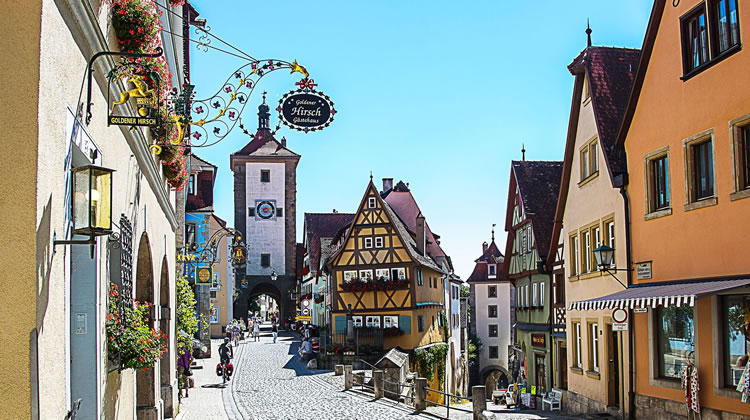
Plönlein:The most photographed spot in Rothenburg – a small fork in the road with a half-timbered house and two towers.
The Night Watchman’s Tour:A highly entertaining and informative evening walking tour that brings the town’s history to life.
Practical Information
Getting There: Best accessed by car or Romantic Road bus from Nuremberg or other points. The nearest train station is in Steinach, with a connecting shuttle bus to Rothenburg.
Food Specialties: Schneeballen (snowballs – pastry strips formed into a ball and covered in sugar or chocolate), Franconian wine.
The Alpine & Castle Region: Füssen, Neuschwanstein, Linderhof & Oberammergau
This section takes you into the breathtaking Bavarian Alps, home to King Ludwig II’s fantastical castles and traditional villages.
The Towns & Villages
Füssen
A charming Alpine town at the end of the Romantic Road, serving as the perfect base for visiting the castles.
Hohes Schloss:A late Gothic castle, former summer residence of the Prince-Bishops of Augsburg, now an art gallery.
Sankt Mang Monastery:A former Benedictine monastery with a beautifully decorated Baroque interior.
The Old Town (Altstadt): A picturesque area with colorful houses and cobblestone streets nestled against the Alps.
The Castles of King Ludwig II
Neuschwanstein Castle
The iconic fairytale castle that inspired Disney’s Sleeping Beauty Castle. It is perched on a rugged hill overlooking Hohenschwangau Valley.
Tickets are MANDATORY and must be booked months in advance online.
Tickets are only available at the Ticket Center in Hohenschwangau village, not at the castle itself.
- The castle interior can only be visited on a guided tour (approx. 30 minutes).
- The best exterior photo spot is from Marienbrücke (Mary’s Bridge), a bridge over a gorge behind the castle.
- The walk up is steep; consider taking a shuttle bus or horse-drawn carriage.
Linderhof Palace (Schloss Linderhof)
The smallest but most finished of Ludwig’s palaces, and the only one he lived to see completed. It is heavily inspired by Versailles and set in magnificent gardens.
- The interior is incredibly ornate, featuring a hall of mirrors and intricate wood carvings.
- The grounds include a Grotto (an artificial cave with a lake and waterfall), a Moorish Kiosk, and the Venus Grotto.
- Tickets are also highly recommended to be booked in advance online.
The Village of Oberammergau
A world-famous village known for its Passion Play, held every ten years (next in 2030), and its beautiful
Lüftlmalerei (frescoes) painted on house façades.
The Passion Play Theatre:Tours are available even in non-performance years.
The Lüftlmalerei:
The Woodcarving Tradition:
Crucial Practical Information for Visiting the Castles & Region