A Comprehensive Travel Guide: Frankfurt, Heidelberg, Stuttgart & Metzingen
This travel guide outlines a classic and rewarding journey through the heart of southwestern Germany, focusing on the financial hub of Frankfurt, the romantic university town of Heidelberg, the industrial and cultural powerhouse of Stuttgart, and the shopper’s paradise of Metzingen. This route offers a diverse experience, blending history, culture, scenic beauty, automotive passion, and retail therapy into one unforgettable trip.
Trip Overview and Itinerary
This circular route typically spans 5 to 7 days, starting and ending in Frankfurt am Main, a major international transportation hub. The journey takes travelers through the picturesque state of Baden-Württemberg, known for its forests, vineyards, and innovation. The recommended order is Frankfurt -> Heidelberg -> Stuttgart -> Metzingen -> Frankfurt, leveraging efficient German autobahns and an excellent rail network. The distance between each stop is relatively short, making train travel a highly recommended and relaxing option.
Day 1: Arrival in Frankfurt, explore the city center.
Day 2: Deep dive into Frankfurt’s museums and modern skyline, afternoon travel to Heidelberg.
Day 3: Explore Heidelberg Castle and the Old Town, enjoy the philosopher’s walk.
Day 4: Travel to Stuttgart, visit the Mercedes-Benz or Porsche Museum.
Day 5: Explore Stuttgart’s city center and palaces, or take a day trip to Metzingen for shopping.
Day 6: Return travel to Frankfurt, with time for last-minute sights or shopping.
Day 7: Departure from Frankfurt Airport.
Frankfurt am Main: The “Mainhattan” Gateway
Frankfurt is a city of fascinating contrasts, where a futuristic skyline of skyscrapers coexists with a meticulously restored medieval old town. As Germany’s financial capital and a major European transportation hub, it often serves as the first point of entry for international travelers.
Main Attractions
Römerberg: This is the historic heart of Frankfurt, a picturesque square lined with beautifully reconstructed half-timbered houses. The Römer itself is the city hall and has been for over 600 years. It’s the perfect starting point for any city tour.
Frankfurt Cathedral (Kaiserdom): Not technically a cathedral but an imperial church, this Gothic building was the election and coronation site for Holy Roman Emperors. Climbing the tower rewards visitors with breathtaking panoramic views of the city.
Museumsufer (Museum Embankment): A unique concentration of world-class museums on both banks of the River Main. Highlights include the Städel Museum (European art), the German Film Museum, and the Senckenberg Natural History Museum.
Main Tower: For the best view of the famous skyline, the Main Tower offers an public observation deck and restaurant. It’s the only skyscraper with a publicly accessible rooftop.
Palmengarten: A magnificent botanical garden showcasing a vast array of plants from around the world in various climate-controlled greenhouses. It’s a peaceful escape from the urban bustle.
Food & Drink
Frankfurt’s culinary scene is a mix of traditional Hessian specialties and international flair due to its cosmopolitan population.
Grüne Soße (Green Sauce): A Frankfurt specialty made from seven fresh herbs, sour cream, and yogurt, typically served with boiled potatoes and eggs.
Apfelwein (Ebbelwoi): The region’s signature drink, a tart, fermented apple cider. The best place to try it is in a traditional Apfelwein tavern in the Sachsenhausen district.
Frankfurter Würstchen: The original Frankfurter is a thin, smoked pork sausage. They are typically served with bread, mustard, and potato salad.
Handkäse mit Musik: A regional dish of sour milk cheese (“hand cheese”) with a marinade of oil, vinegar, and onions (“mit Musik” refers to its after-effects).
Transportation & Accommodation
Frankfurt Airport (FRA) is one of Europe’s busiest, with excellent global connections. The city center is easily reached via S-Bahn (suburban train) in about 15 minutes. Within the city, an integrated public transport system (RMV) of U-Bahn (subway), trams, and buses is efficient and comprehensive. A Frankfurt Card offers unlimited travel and museum discounts.
For accommodation, the city center (Innenstadt) is convenient for sightseeing, while the Bahnhofsviertel area near the main station offers more budget-friendly options (though some parts can be seedy at night). For a more upscale stay, the banking district around the skyscrapers provides luxury hotels.
Heidelberg: Romance and Scholarship
A short journey south from Frankfurt lies Heidelberg, a city that embodies German Romanticism. Nestled in the Neckar River valley and dominated by its magnificent ruined castle, Heidelberg is home to Germany’s oldest university and exudes a youthful, intellectual energy.
Main Attractions
Heidelberg Castle: The iconic red sandstone ruin towers over the city. Visitors can tour the castle grounds, see the world’s largest wine barrel, and enjoy stunning views of Heidelberg and the Neckar River. The castle is accessible via a steep walk or a historic funicular railway.
Altstadt (Old Town): A long, winding Hauptstraße (Main Street) runs through the Old Town, lined with Baroque buildings, charming shops, cafes, and historical sites like the Church of the Holy Spirit.
Old Bridge (Karl-Theodor-Brücke): This beautiful stone bridge across the Neckar is a classic Heidelberg landmark, offering picture-perfect views of the castle and old town.
Philosophers’ Walk (Philosophenweg): On the sunny north side of the river, this path winds up the hill, providing one of the best vantage points of the castle and old town. It was traditionally a place for Heidelberg’s scholars to stroll and think.
Student Prison (Studentenkarzer): A unique attraction belonging to Heidelberg University. From 1778 to 1914, misbehaving students were incarcerated here, and they covered the walls with graffiti and drawings, offering a fascinating glimpse into historic student life.
Food & Drink
Heidelberg’s cuisine is influenced by the Palatinate (Pfalz) region, known as one of Germany’s prime wine-growing areas.
Heidelberger Studentenkuss: A local chocolate praline, the “Heidelberg Student’s Kiss,” was originally created as a discreet way for students to send messages to young ladies.
Pfälzer Saumagen: A hearty dish from the nearby Palatinate region, consisting of a pig’s stomach stuffed with potatoes, vegetables, and meat.
Local Wines: Sample wines from the Baden and Pfalz regions, especially Riesling and Spätburgunder (Pinot Noir), in one of the many traditional wine taverns (Weinstuben).
Heidelberger Frühstück: A local beer style, a pale, hoppy lager that is very refreshing.
Transportation & Accommodation
Heidelberg is easily reached from Frankfurt by train (approx. 1 hour) or car (approx. 1 hour, subject to traffic). The city itself is very walkable, with its main attractions concentrated in the Altstadt. A Bergbahn (funicular) takes visitors up to the castle and beyond to the Königstuhl mountain. Staying in the Altstadt offers the most atmospheric experience, with many guesthouses and hotels in historic buildings. For quieter stays, neighborhoods across the river like Neuenheim are also attractive.
Stuttgart: Cradle of the Automobile
Stuttgart is the capital of Baden-Württemberg and a dynamic city set within a ring of lush hills and vineyards. It is globally renowned as the headquarters of Mercedes-Benz and Porsche, making it a pilgrimage site for car enthusiasts. However, it also boasts a rich cultural scene, beautiful parks, and distinctive Swabian culture.
Main Attractions
Mercedes-Benz Museum: An architectural marvel that takes visitors on a journey through over 130 years of automotive history. The museum’s spiral design showcases 160 vehicles in a captivating chronological display.
Porsche Museum: Located in Zuffenhausen, this sleek, modern museum presents the history of the iconic sports car manufacturer with around 80 vehicles and many smaller exhibits.
Stuttgart State Gallery (Staatsgalerie Stuttgart): A premier art museum with an impressive collection spanning from the Old Masters to modern classics, housed in a building that is itself an architectural landmark.
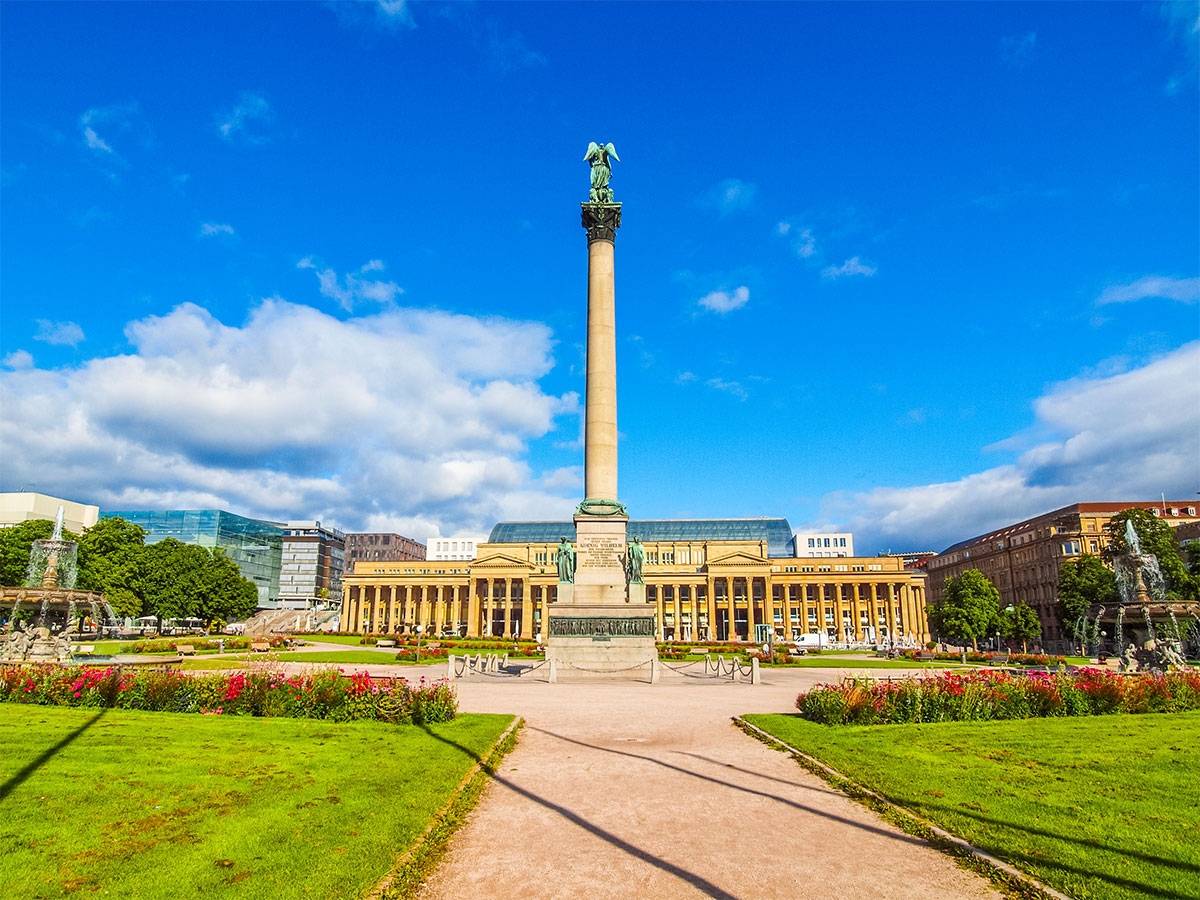
Schlossplatz: The city’s central square, surrounded by magnificent buildings like the New Palace and the King’s Building. It’s a popular gathering place for locals and visitors alike.
Wilhelma Zoo and Botanical Garden: A unique combination of a zoological and botanical garden located on the grounds of a former royal palace. It is one of the most biologically diverse zoos in Europe.
Food & Drink
The Swabian cuisine found in Stuttgart is hearty, flavorful, and considered by many to be among Germany’s best.
Maultaschen: Often called “Swabian ravioli,” these are pasta pockets filled with meat, spinach, and herbs. They can be served in broth, fried with onions, or sliced in a salad.
Spätzle:A type of soft egg noodle that is a staple side dish. Kässpätzle is a popular variant where the noodles are layered with cheese and topped with crispy fried onions.
Linsen mit Spätzle: Lentils served with Spätzle and sausages (usually Wiener), a classic comfort food.
Gaisburger Marsch:A traditional beef stew with potatoes, Spätzle, and onions.
Local Wines:The region around Stuttgart is known for its Trollinger and Lemberger red wines and Riesling whites. Visit one of the many “Besen” or “Straußen,” which are small, seasonal wine taverns run by local vintners.
Transportation & Accommodation
The train from Heidelberg to Stuttgart takes approximately 40 minutes. Stuttgart has an extensive public transport network (VVS) including S-Bahn trains, U-Bahn trains/light rail, trams, and buses. The city center is compact and walkable. For accommodation, areas near the main train station (Hauptbahnhof) offer convenience for arrivals/departures. The city center (Mitte) is close to major sights like Schlossplatz. For a more relaxed atmosphere, consider staying in areas like Bad Cannstatt or near the vineyards on the city outskirts.
Metzingen: Outlet Shopping Destination
A short train ride south of Stuttgart lies the town of Metzingen, which has been transformed into one of Germany’s premier outlet shopping destinations. What started with a single Hugo Boss factory store has grown into a sprawling village of over 60 designer and brand-name outlets offering significant discounts year-round.
Shopping Experience
The Brands:The outlet village features a wide array of high-end and mid-range brands. Key anchors include Hugo Boss (which has its headquarters here), Bally, Burberry, Gucci, Prada, Jimmy Choo, Michael Kors, Nike, Adidas, and many more.
Shopping Strategy:The best deals are often found during seasonal sales (January/February and July/August). It’s advisable to arrive early to avoid crowds, especially on weekends. Check the official Outletcity Metzingen website for current opening hours and special promotions before your visit.
Amenities:The outlet village is well-equipped with cafes, restaurants, parking garages, luggage storage, and information points to ensure a comfortable shopping experience.
Transportation & Practical Tips
The most convenient way to reach Metzingen from Stuttgart is by train. Regional trains (RE/RB) depart frequently from Stuttgart Hauptbahnhof, taking approximately 25-30 minutes. The Metzingen station is just a short walk from the outlet stores. Driving is also an option (approx. 30-40 minutes), but parking can be challenging on busy days. As Metzingen is primarily a shopping destination rather than a tourist town with traditional sights or accommodation options day-tripping from Stuttgart or returning to Frankfurt afterward is highly recommended.
Culinary Journey: From Apple Wine to Spätzle
The culinary landscape on this route shifts distinctly as you travel from Hesse through Baden to Württemberg. In Frankfurt embrace hearty Hessian fare like Green Sauce and Apfelwein In Heidelberg you transition into Palatinate influences with robust dishes like Saumagen accompanied by excellent local wines Finally in Stuttgart you encounter Swabian cuisine renowned for its handmade pasta dishes like Maultaschen and Spätzle Each region takes great pride in its local specialties making it essential for travelers to try these authentic dishes in traditional restaurants or wine taverns
Cultural Insights and Travel Etiquette
Understanding local customs enhances any travel experience In this region of Germany punctuality is highly valued for both business and social appointments When greeting someone a firm handshake with direct eye contact is standard A common greeting is “Guten Tag” Good day When dining out it is customary to wish fellow diners “Guten Appetit” before starting your meal Tipping is appreciated; rather than a percentage it is common practice to round up the bill to the nearest euro for small amounts or add 5-10% for larger meals simply tell the server the total amount you wish to pay including the tip Sundays are legally protected as quiet days with most shops closed making it an ideal day for countryside walks or museum visits
Practical Information Summary
Currency:The currency is the Euro (€). Credit cards are widely accepted but it is always wise to carry some cash especially in smaller shops markets or traditional taverns
Language:The official language is German English is commonly spoken in tourist areas hotels and restaurants but learning a few basic German phrases will be appreciated by locals
Best Time to Visit:The ideal times are late spring May-June and early autumn September-October when the weather is mild and pleasant The Christmas markets in December are also a major attraction offering a magical atmosphere
Tickets & Passes:The German Rail Pass BahnCard or regional group tickets like the Baden-Württemberg-Ticket can offer significant savings on train travel City tourist cards like the Frankfurt Card HeidelbergCard or Stuttgart Card provide free public transport and discounts on attractions