A Comprehensive Travel Guide: Exploring Turkey’s Historical and Natural Wonders
This guide details a classic Turkish itinerary, a loop that takes you from the bustling metropolis of Istanbul deep into the heart of Anatolia, through surreal landscapes and ancient ruins, before returning along the scenic Aegean and Marmara coasts. This journey is a profound exploration of empires, religions, and geology, offering an unparalleled blend of history, culture, and natural beauty.
Istanbul: Where Continents Collide
Your adventure begins in Istanbul, a city that straddles Europe and Asia, serving as the capital of the Roman, Byzantine, and Ottoman Empires. The weight of history is palpable in its very air.
Top Attractions
Sultanahmet Square: The historical core of the city. Here, you will find the Hagia Sophia, a breathtaking architectural marvel that has been a cathedral, mosque, and now a museum. Across from it stands the Blue Mosque, famous for its stunning blue Iznik tiles and its six minarets.
Topkapi Palace: The sprawling palace of the Ottoman Sultans for nearly 400 years. Explore its lavish courtyards, harem, and treasury, which houses priceless jewels and relics.
Basilica Cistern: An underground wonder, this vast subterranean chamber supported by 336 columns was built by Emperor Justinian in the 6th century. The atmosphere is mysteriously serene.
Grand Bazaar & Spice Bazaar: Get lost in the labyrinthine alleys of the Grand Bazaar, one of the world’s largest covered markets. The Spice Bazaar is a feast for the senses, with its vibrant colors and intoxicating aromas.
Bosphorus Cruise: A boat tour on the Bosphorus Strait is essential. It offers spectacular views of palaces, mosques, and wooden mansions (yalıs) lining the shores between Europe and Asia.
Food & Drink
Istanbul’s culinary scene is vast. Don’t miss:
Balık Ekmek: A fresh fish sandwich grilled on a boat near the Galata Bridge.
Meze: A selection of small appetizer dishes, best enjoyed with rakı (an anise-flavored spirit).
Kebab: Sample various types, from İskender to Adana.
Turkish Breakfast (Kahvaltı): A lavish spread of cheeses, olives, tomatoes, cucumbers, jams, honey, and more.
Transportation & Tips
Istanbul has an extensive public transport system (metro, tram, ferry). Get an
Istanbulkart for discounted fares. Traffic is heavy, so use the tram in the Sultanahmet area. Be prepared for crowds at major sites; visiting early in the morning is highly recommended.
Ankara: The Modern Capital
A high-speed train or bus ride from Istanbul takes you to Ankara, Turkey’s modern capital. While less tourist-focused, it houses one of the country’s most important museums.
Top Attractions
Museum of Anatolian Civilizations: Housed in a 15th-century bedesten (covered market), this world-class museum offers a chronological journey through Anatolia’s history, from Paleolithic artifacts to Hittite treasures and Phrygian metalwork. It provides essential context for the ancient sites you will visit later.
Anıtkabir: The monumental mausoleum of Mustafa Kemal Atatürk, the founder of modern Turkey. The site is a profound symbol of Turkish identity and nationalism.
Travel Insight
Many travelers use Ankara as a brief stopover. The museum is the primary draw, making it a worthwhile pause to understand the deep historical roots of the region before heading to Cappadocia.
Cappadocia: A Surreal Dreamscape
A short flight or a longer bus journey from Ankara brings you to the otherworldly region of Cappadocia. Famous for its unique “fairy chimney” rock formations and ancient cave dwellings, it feels like stepping onto another planet.
Top Attractions
Hot Air Balloon Ride: The quintessential Cappadocia experience. Floating at dawn over the valleys as hundreds of other balloons rise with the sun is an unforgettable spectacle. Book this well in advance.
Göreme Open-Air Museum: A UNESCO World Heritage site featuring a complex of rock-cut churches, chapels, and monasteries adorned with beautiful Byzantine frescoes.
Underground Cities: Explore Kaymaklı or Derinkuyu, vast multi-level subterranean cities that could house thousands of people, used by early Christians for protection.
Hiking the Valleys: Ihlara Valley, Love Valley, and Rose Valley offer spectacular hiking trails through stunning rock formations and past hidden churches.
Stay in a Cave Hotel: Accommodation in a cave hotel is a unique part of the experience, offering comfort carved directly into the rock.
Food & Drink
Cappadocia has its own culinary specialties. Try
Testi Kebab (a meat and vegetable stew cooked in a sealed clay pot that is broken open at your table) and sample the local wines from vineyards nurtured in the volcanic soil.
Practical Tip
The balloon flights are weather-dependent and can be canceled for safety reasons. Have a flexible schedule if possible. The best base towns are Göreme, Uçhisar, or Ürgüp.
Konya: The City of Whirling Dervishes
Traveling southwest from Cappadocia, you arrive in Konya, a city of deep religious significance and the home of the Mevlevi Order, known as the Whirling Dervishes.
Top Attractions
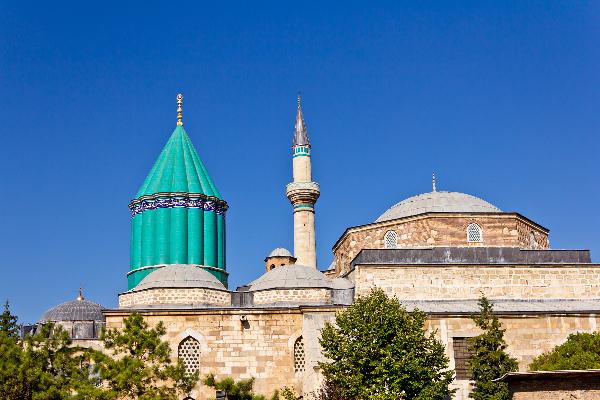
Mevlana Museum: The former lodge of the Dervishes and the mausoleum of Jalāl ad-Dīn Muhammad Rūmī (Mevlana), the renowned Sufi mystic poet. It is a place of pilgrimage and profound peace.
Selimiye Mosque: Adjacent to the Mevlana Museum, this mosque is an impressive example of Ottoman architecture.
Cultural Insight
Konya is a more conservative city than Istanbul or the coastal resorts. Dressing modestly is recommended as a sign of respect. If your timing aligns, try to see a Sema Ceremony (the Whirling Dervish ritual), a mesmerizing and spiritual performance.
Pamukkale: The Cotton Castle
Continuing west, you encounter one of nature’s most stunning creations: Pamukkale. Meaning “Cotton Castle” in Turkish, it is a series of brilliant white travertine terraces filled with thermal waters.
Top Attractions
The Travertines: Walk barefoot on the warm, mineral-rich terraces and bathe in the turquoise pools. The water is said to have healing properties.
Hierapolis: The ancient Greco-Roman city built on top of the hot springs. Explore its extensive ruins, including a remarkably well-preserved theatre, a necropolis (one of the largest in Anatolia), and the Antique Pool where you can swim amongst submerged Roman columns.
Practical Tip
The travertines are fragile. Visitors are required to walk along designated paths and barefoot to preserve the formations. The best time for photography is late afternoon when the sun casts a golden glow on the white terraces.
Ephesus & Kusadasi: Ancient Glory & Aegean Charm
A short drive from Pamukkale brings you to one of the most magnificent archaeological sites in the world: Ephesus. The nearby port town of Kusadasi serves as a popular base for exploration.
Top Attractions in Ephesus
The Library of Celsus: The iconic facade of Ephesus, an awe-inspiring reconstruction of this ancient Roman library.
The Great Theatre: A massive structure that could hold 25,000 spectators. It is where St. Paul is said to have preached.
Terraced Houses: These are the homes of the wealthy elite, covered with mosaics and frescoes. Access requires a separate ticket but is well worth it.
Temple of Artemis: One of the Seven Wonders of the Ancient World; today only a single column remains, but its historical significance is immense.
House of Virgin Mary:A pilgrimage site believed to be the final home of the Virgin Mary, located on a tranquil hillside near Ephesus.
Kusadasi
This bustling resort town offers a lively seafront promenade, shopping (especially for leather goods), and a relaxing atmosphere after a day of historical exploration. It’s a gateway to the Aegean islands.
Troy & Çanakkale: Myth and History
Travelling north along the coast, you reach the Dardanelles Strait and the city of Çanakkale, the gateway to the legendary city of Troy.
Top Attractions
Troy Archaeological Site: Explore the layered ruins of at least nine cities built on top of each other. While the ruins are less visually intact than Ephesus, their historical significance is overwhelming. The symbolic wooden Trojan Horse at the entrance makes for a great photo opportunity.
Çanakkale Naval Museum: Learn about the significant World War I Battle of Gallipoli, which took place across the strait.
Travel Insight
The story of Troy is as important as the ruins themselves. Reading about the Iliad before your visit will greatly enhance the experience. Consider taking a ferry to the Gallipoli Peninsula to visit the moving war memorials and cemeteries.
Bursa: The Green City and First Ottoman Capital
Crossing the Sea of Marmara by ferry brings you to Bursa, set at the foot of Mount Uludağ. This city was the first major capital of the Ottoman Empire and is known for its lush parks and early Ottoman architecture.
Top Attractions
Grand Mosque (Ulu Cami): An impressive 14th-century Seljuk-style mosque with 20 domes and a beautiful interior fountain (şadırvan).
Koza Han:A beautiful historic caravanserai in the city center, now housing shops selling silk products and cafes where you can relax in its central courtyard.
Cumalıkızık Village:A well-preserved Ottoman village at the foot of the mountain, with charming cobblestone streets and historic houses. It’s a popular spot for a traditional Turkish breakfast.
Mount Uludağ:A popular ski resort in winter and a great spot for hiking and picnicking in the summer, accessible by teleferik (cable car).
Food & Drink
Bursa is the birthplace of the
İskender Kebab. Don’t miss trying this delicious dish here—thinly sliced lamb döner served over pita bread, topped with tomato sauce and browned butter, and accompanied by yogurt.
The Return to Istanbul
A final drive from Bursa brings you back to Istanbul, completing this remarkable loop. You will return with a profound appreciation for Turkey’s layered history, from Neolithic settlements and classical empires to Byzantine glory and Ottoman splendor, all set against a backdrop of stunning and diverse natural landscapes.
General Travel Tips for Turkey
Transportation: Domestic flights connect major cities like Istanbul, Ankara, and Cappadocia efficiently. For land travel, buses are comfortable, reliable, and extensive. Renting a car offers maximum flexibility for exploring regions like Cappadocia and the Aegean coast.
Best Time to Visit: Spring (April-June) and Autumn (September-October) offer ideal weather—warm but not scorching—and smaller crowds.
Cuisine: Be adventurous! Turkish cuisine is among the world’s best. Eat at local restaurants (lokanta) where you can see the prepared food. Drink çay (tea) constantly—it’s a social staple.
Shopping & Bargaining: Bargaining is expected in bazaars but not in fixed-price shops. Be polite and see it as a cultural interaction rather than a confrontation.
Cultural Respect: Dress modestly when visiting mosques (cover shoulders and knees; women should carry a headscarf). Remove your shoes before entering a mosque or a Turkish home.
This itinerary through Turkey is more than a vacation; it’s a journey through time that will leave you with memories of breathtaking landscapes, profound historical encounters, and incredible hospitality.