Grand Tour of Italy, Switzerland, and France: Rome to Paris
An epic journey through the heart of Western Europe, exploring ancient ruins, Renaissance art, alpine wonders, and romantic cities.
Introduction
This travel guide outlines a comprehensive itinerary through three of Europe’s most captivating countries: Italy, Switzerland, and France. The journey is designed to showcase a diverse range of experiences, from the historical and artistic treasures of Italy to the breathtaking natural beauty of the Swiss Alps and the charming romance of French cities. The route is logical, minimizing backtracking, and is best experienced over a period of three to four weeks.
Italy: Rome, Florence, Tuscany & The Italian Riviera
Rome (Roma)
The Eternal City, a sprawling metropolis where history echoes from every corner. Rome is a living museum, home to monumental relics of the Roman Empire, magnificent Renaissance art, and the spiritual heart of the Catholic Church.
Key Attractions:
The Colosseum: The iconic Roman amphitheater, a symbol of imperial power and engineering. Booking a skip-the-line ticket with a guided tour is highly recommended.
Roman Forum: The political and social heart of ancient Rome, now a sprawling complex of ruins including temples, basilicas, and public spaces.
Pantheon: A marvel of ancient engineering with its massive unsupported dome. It is the best-preserved ancient Roman building and now a church.
Vatican City: An independent city-state and the center of the Catholic world. Must-sees include St. Peter’s Basilica (climb the dome for panoramic views) and the Vatican Museums, home to the Sistine Chapel.
Trevi Fountain: A magnificent Baroque fountain. The tradition is to throw a coin over your left shoulder with your right hand to ensure a return to Rome.
Piazza Navona: A beautiful elliptical square featuring Bernini’s Fountain of the Four Rivers and Borromini’s church of Sant’Agnese in Agone.
Practical Information:
Getting Around: Rome has a comprehensive metro, bus, and tram system. The historic center is best explored on foot.
Food Specialties: Cacio e Pepe, Carbonara, Supplì (fried rice balls), Pizza Romana (thin and crispy), and Gelato.
Accommodation: Consider staying in neighborhoods like Trastevere for a lively atmosphere, near Termini Station for transport convenience, or in the historic center for proximity to major sites.
Florence (Firenze) & Tuscany (Toscana)
The cradle of the Renaissance, Florence is an open-air gallery filled with unparalleled artistic masterpieces. The surrounding Tuscan countryside is famed for its rolling hills, cypress trees, medieval hilltop towns, and world-class wine.
Key Attractions in Florence:
Galleria dell’Accademia: Home to Michelangelo’s iconic statue of David.
Uffizi Gallery: One of the world’s finest art museums, housing works by Botticelli, Leonardo da Vinci, Raphael, and Caravaggio. Book tickets far in advance.
Florence Cathedral (Duomo): A stunning complex with Brunelleschi’s dome, Giotto’s bell tower, and the Baptistery with its famous Gates of Paradise.
Ponte Vecchio: A medieval stone bridge spanning the Arno River, known for its shops built along it, traditionally occupied by jewellers.
Piazzale Michelangelo: A square across the river offering the most famous panoramic view of Florence.
Tuscan Excursions:
Tuscan Countryside: Rent a car or join a tour to explore areas like Chianti (wine), Val d’Orcia (landscapes), and towns like Siena, San Gimignano, and Montepulciano.
Pisa: Primarily known for its Leaning Tower, the iconic freestanding bell tower of the city’s cathedral. The complex, known as the Piazza dei Miracoli, also includes the Cathedral and Baptistery. It’s a popular day trip from Florence.
Practical Information:
Getting There: High-speed trains connect Rome to Florence in about 1.5 hours.
Food Specialties: Bistecca alla Fiorentina (T-bone steak), Ribollita (Tuscan soup), Crostini Toscani (chicken liver pâté on toast), and Chianti wine.
Cinque Terre & Parma
A stark contrast to the art cities, this segment focuses on coastal beauty and culinary excellence.
Cinque Terre:
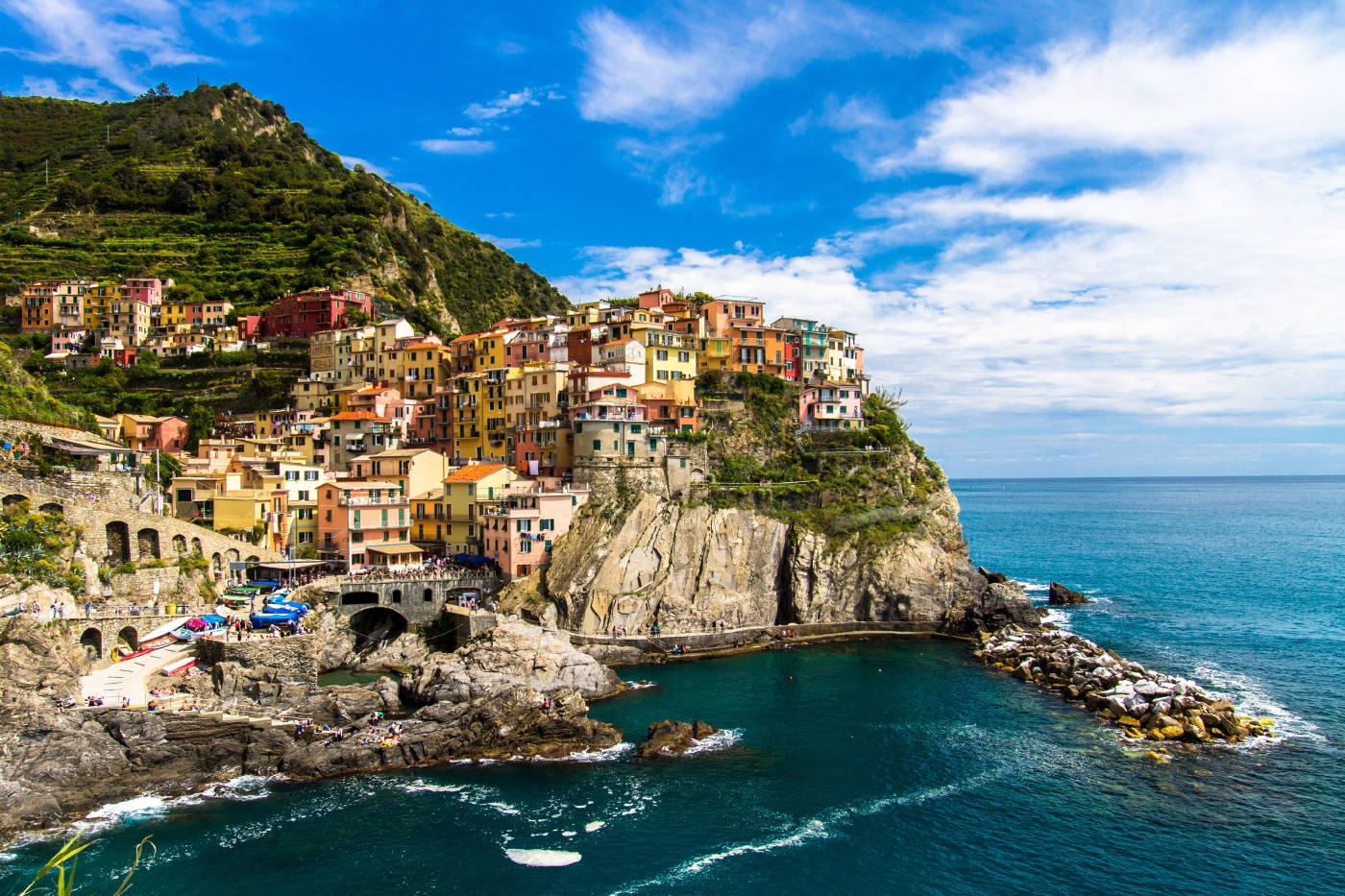
A string of five centuries-old seaside villages (Monterosso al Mare, Vernazza, Corniglia, Manarola, and Riomaggiore) clinging to the rugged Italian Riviera coastline. The villages are connected by train, boat, and scenic hiking trails.
Activities: Hiking the coastal trails (check for open paths), swimming, exploring the vibrant villages, and enjoying fresh seafood.
The Cinque Terre Train Card: Offers unlimited train travel between the villages and access to the hiking paths.
Parma:
A city in the Emilia-Romagna region, a gastronomic paradise known for its world-famous Prosciutto di Parma and Parmigiano Reggiano cheese. It’s also a city of music (home to Toscanini) and art.
Attractions: Parma Cathedral and Baptistery, the Teatro Regio opera house, and food-focused tours or factory visits to see cheese and ham production.
Practical Information:
Getting There: Train from La Spezia (gateway to Cinque Terre) to Parma. From Parma, you can connect north towards Venice or Milan.
Venice (Venezia) & Milan (Milano)
Venice:
A city built on water, a magical and unique place of canals, gondolas, and breathtaking architecture.
Key Attractions:
St. Mark’s Square (Piazza San Marco): The city’s main square, home to St. Mark’s Basilica (a masterpiece of Italo-Byzantine architecture) and St. Mark’s Campanile (bell tower).
Doge’s Palace: A stunning Gothic palace that was the residence of the Doge and the seat of government.
The Grand Canal: Take a vaporetto (water bus) along the main waterway to see the palazzos lining its banks.
Rialto Bridge: The oldest and most famous bridge across the Grand Canal.
Get Lost: The best way to experience Venice is to wander away from the main tourist areas into its quiet alleys and canals.
Milan:
Italy’s financial and fashion capital, a dynamic and modern city that also boasts immense cultural wealth.
Key Attractions:
Milan Cathedral (Duomo): An immense and ornate Gothic cathedral. You can walk on the roof for close-up views of the spires and a city panorama.
Galleria Vittorio Emanuele II: A magnificent 19th-century shopping arcade.
Teatro alla Scala: One of the world’s most famous opera houses.
“The Last Supper”: Leonardo da Vinci’s iconic mural in the refectory of the Convent of Santa Maria delle Grazie. Booking months in advance is essential.
Practical Information:
Getting There: High-speed trains connect Venice to Milan in about 2.5 hours. Milan is a major transport hub for traveling into Switzerland.
Venice Food Specialties: Cicchetti (Venetian tapas), Seafood risotto, Sarde in Saor (sweet and sour sardines).
Milan Food Specialties: Risotto alla Milanese (with saffron), Cotoletta alla Milanese (breaded veal cutlet), Panettone (especially during Christmas).
Switzerland: The Alpine Wonderland
The Interlaken Region: Gateway to the Jungfrau
The town of Interlaken, situated between Lake Thun and Lake Brienz, serves as the primary base for exploring the Jungfrau region, a UNESCO World Heritage site known for its dramatic alpine scenery.
Jungfraujoch – Top of Europe:
A journey to the highest railway station in Europe (3,454 meters). The trip itself is an experience, culminating in breathtaking views of the Aletsch Glacier (the longest in the Alps) and surrounding peaks.
The Journey: The train ride involves a change at Kleine Scheidegg. The final leg goes through a tunnel inside the Eiger and Mönch mountains.
At the Top: Sphinx Observatory terrace, Ice Palace (tunnels through the glacier), and various viewing platforms. Be prepared for potential altitude sickness.
Tickets: Very expensive. Consider travel passes like the Swiss Travel Pass or Jungfrau Travel Pass for discounts. Book in advance in high season.
Lake Brienz (Brienzersee) & Surroundings:
A stunning emerald-green lake known for its clear water and picturesque surroundings.
Brienz: A charming village known for woodcarving. Take the steam-powered Brienz Rothorn Bahn cogwheel railway for a spectacular ascent.
Giessbach Falls: A magnificent waterfall accessible by a historic funicular from the lake shore.
Boat Cruises: A highly recommended way to experience the lake’s beauty.
Lungern & Lucerne:
Lungern (Lungern):A picture-perfect village nestled between mountains on the shores of Lake Lungern. It’s a serene stop on the GoldenPass Line train route from Interlaken to Lucerne.
Lucerne (Luzern):A beautiful city on Lake Lucerne with a stunning mountain backdrop.
Chapel Bridge (Kapellbrücke):A 14th-century wooden footbridge with interior paintings, it is one of Switzerland’s most famous landmarks.
Old Town: Well-preserved medieval squares and buildings with colorful façades.
Lion Monument (Löwendenkmal):A poignant sculpture of a dying lion carved into rock face, commemorating Swiss Guards who died during the French Revolution.
Mount Pilatus or Mount Rigi: Take a cogwheel railway or cable car for incredible panoramic views of the lake and Alps.
Practical Information:
Getting There:The train from Milan to Interlaken is scenic and involves a change in Spiez or Brig. The Swiss Travel System is extremely efficient.