A Journey Through the Heart of Germany: Frankfurt, Würzburg, Heidelberg, Rüdesheim, Koblenz & Cologne
This comprehensive travel guide details a classic German itinerary, a circular route that captures the essence of the country’s rich history, stunning landscapes, and vibrant culture. The journey begins and ends in Frankfurt, weaving through the picturesque Romantic Road, the world-renowned Rhine Valley, and culminating in the magnificent cathedral city of Cologne. It is a trip designed to offer a deep dive into medieval towns, baroque palaces, legendary wine regions, and modern urban centers.
Itinerary Overview
This route is typically undertaken over 7 to 10 days, allowing for a comfortable pace to explore each destination. The primary modes of transport are Germany’s efficient rail system (Deutsche Bahn) and, for a quintessential experience, the Rhine River boats between Rüdesheim and Koblenz. The cities are well-connected, making this a seamless and rewarding journey for international travelers.
Start/End: Frankfurt am Main
Major Stops: Würzburg, Heidelberg, Rüdesheim, Koblenz, Cologne
Key Themes: Rhine River Valleys, UNESCO World Heritage Sites, Wine Culture, Medieval Architecture, Baroque Palaces
Recommended Duration: 7-10 days
Frankfurt am Main: The Gateway
Frankfurt is Germany’s financial hub and a major international transportation center. While its skyline of skyscrapers has earned it the nickname “Mainhattan,” the city boasts a charming, reconstructed old town that provides a stark and beautiful contrast.
Top Attractions in Frankfurt
Römerberg: The historic heart of Frankfurt, this picturesque square is lined with beautifully reconstructed half-timbered houses. The Römer itself is the city’s town hall and has been for over 600 years.
St. Bartholomew’s Cathedral (Frankfurter Dom): A grand Gothic cathedral that was the election and coronation site for Holy Roman Emperors. Climbing the tower offers a panoramic view of the city.
Museumsufer (Museum Embankment): A unique concentration of museums on both sides of the River Main. Highlights include the Städel Museum (European art) and the German Film Museum.
Palmengarten: One of the largest botanical gardens in Germany, offering a peaceful escape with greenhouses showcasing diverse global flora.
Frankfurt Food & Drink
Frankfurt has its own distinct culinary specialties. A must-try is
Grüne Soße (Green Sauce), a cold herb sauce made with seven fresh herbs, typically served with boiled potatoes and eggs. Also sample the local Apfelwein (apple wine), a tart cider-like beverage, in the traditional apple wine pubs of the Sachsenhausen district. For something heartier, Frankfurter Würstchen is the original sausage from which the American hot dog derives.
Transportation & Accommodation in Frankfurt
Frankfurt Airport (FRA) is one of Europe’s busiest hubs, making it an easy starting point. The city center is compact and walkable, with an excellent U-Bahn (subway) and S-Bahn (urban rail) system. For accommodation, the area around the Hauptbahnhof (main station) offers many options but can be less charming; consider staying in the city center near the Römer or in the trendy Bornheim district for a more local experience.
Würzburg: The Baroque Jewel on the Romantic Road
A short train ride north-east from Frankfurt lies Würzburg, the northern starting point of the Romantic Road. This city is dominated by magnificent baroque architecture and is a UNESCO World Heritage Site thanks to its Residenz palace.
Top Attractions in Würzburg
Würzburg Residence: A masterpiece of South German Baroque architecture, this monumental palace boasts a grand staircase, lavish imperial halls, and the world’s largest fresco by Giovanni Battista Tiepolo on its ceiling.
Marienberg Fortress: This former prince-bishop’s fortress towers over the city from the opposite bank of the Main River. The walk up rewards visitors with stunning views and houses two museums.
Alte Mainbrücke (Old Main Bridge): A beautiful old stone bridge adorned with statues of saints. It’s a popular spot to enjoy a glass of local Franconian wine while watching the sunset over the fortress.
Market Square & Falkenhaus: The vibrant central square features the ornate, stuccoed Falkenhaus and a daily market selling local produce and flowers.
Würzburg Food & Drink
Würzburg is located in the Franconian wine region, known for its distinctive dry white wines, particularly Silvaner. The wine is often bottled in a round, flat
Bocksbeutel flask. Pair your wine with traditional Franconian dishes like Blaue Zipfel (sausages cooked in a vinegar-onion broth) or Fränkischer Sauerbraten (a pot roast marinated in vinegar and spices).
Transportation & Accommodation in Würzburg
Würzburg is easily reached from Frankfurt by frequent direct trains (approx. 1 hour). The city center is very walkable, though a tram or bus might be needed to reach the Residence from the main station. For a memorable stay, look for guesthouses in the old town or hotels with views of the river and fortress.
Heidelberg: The Romantic City of Philosophers
Traveling south-west from Würzburg, Heidelberg is arguably Germany’s most famous romantic city. Its enchanting setting on the Neckar River, crowned by a magnificent ruined castle, has inspired poets and artists for centuries.
Top Attractions in Heidelberg
Heidelberg Castle: The iconic red sandstone ruin is the city’s landmark. Take the funicular railway up to explore the vast grounds, see the world’s largest wine barrel, and enjoy breathtaking views of the city and river below.
Altstadt (Old Town): A long, picturesque main street (Hauptstraße) runs through the old town, filled with shops, cafes, and historical buildings.
Old Bridge (Karl-Theodor-Brücke): Another beautiful stone bridge guarded by a medieval gate tower. Crossing it offers the classic postcard view of the castle.
Philosophers’ Walk (Philosophenweg): A path on the sunny side of the Neckar River opposite the old town, offering unparalleled views. It was traditionally a place for university professors and philosophers to stroll and reflect.
Heidelberg Food & Drink
Heidelberg has a lively student pub culture. Try a dark beer in one of the historic student taverns, like Zum Roten Ochsen or Schnitzelbank. For dessert, nothing is more local than
Heidelberger Studentenkuss (Heidelberg Student’s Kiss), a chocolate praline created as a token of affection. Hearty Palatinate cuisine is also prevalent, featuring dishes like Saumagen (pig’s stomach).
Transportation & Accommodation in Heidelberg
The train journey from Würzburg to Heidelberg requires a change in Mannheim or Stuttgart and takes about 1.5 hours. Heidelberg’s main sights are concentrated in the Altstadt, which is best explored on foot (though be prepared for hills). The funicular is essential for reaching the castle and higher viewpoints. Stay in the old town for atmosphere or in Neuenheim for a quieter, more residential feel.
The Rhine Valley: Rüdesheim & Koblenz
The journey now enters the crown jewel of German river landscapes: the Upper Middle Rhine Valley, a UNESCO World Heritage Site. This stretch between Rüdesheim/Bingen and Koblenz is famed for its steep vineyards, medieval castles, and charming villages.
Rüdesheim am Rhein
A classic Rhine wine town, Rüdesheim is touristy but undeniably charming. Its main attraction is the
Drosselgasse, a narrow, lively lane lined with wine taverns and live music. For a spectacular view, take the cable car up to the Niederwalddenkmal, a monument commemorating the unification of Germany. Rüdesheim is famous for its Riesling wines and Asbach brandy. Try a Rüdesheimer Kaffee, a coffee drink flambéed with Asbach brandy and topped with whipped cream.
The Rhine River Cruise
The highlight of this leg is the boat trip from Rüdesheim to Koblenz (or vice-versa). This 4-5 hour journey passes by countless castles, fortresses, and the legendary
Loreley Rock, a steep slate cliff associated with a siren whose song lured sailors to their doom. Companies like KD Rhine and Köln-Düsseldorfer operate frequent services. It is highly recommended to check timetables in advance.
Koblenz: Where Rivers Meet
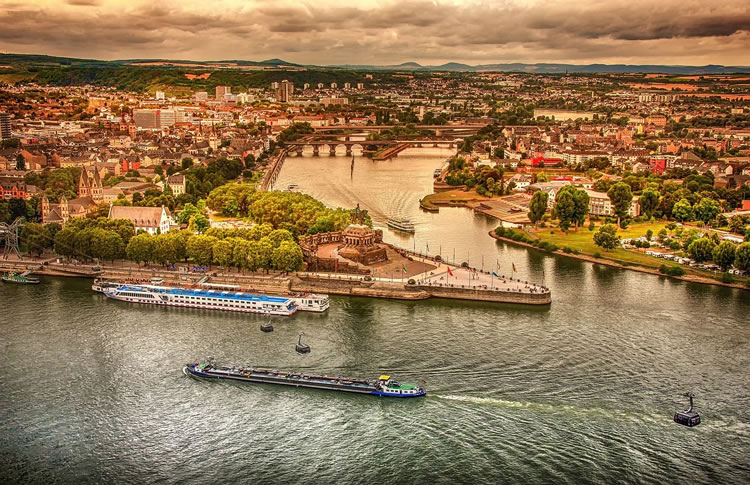
Koblenz is situated at the dramatic
Deutsches Eck (German Corner), the confluence of the Rhine and Moselle Rivers. A monumental equestrian statue of Emperor Wilhelm I marks the spot.
Ehrenbreitstein Fortress: One of Europe’s largest preserved fortresses, it looms over the Rhine opposite the Deutsches Eck. Reach it via a cable car that offers stunning aerial views of the river confluence.
Deutsches Eck:The symbolic heart of the city, perfect for understanding its strategic geographical importance.
Old Town: Koblenz has a pleasant old town with historical buildings like the former Jesuit square, now known as the “Four Towers” due to the ornate houses on its corners.
Transportation & Accommodation in the Rhine Valley
The train from Heidelberg to Rüdesheim often involves changes in Mainz or Wiesbaden. The most scenic transport is undoubtedly the river cruise from Rüdesheim to Koblenz. In Koblenz, all major sights are accessible on foot or by a short ride on the cable car. Stay in Rüdesheim for a wine-focused experience or in Koblenz for its larger city amenities and dramatic river views.
Cologne: The Metropolitan Cathedral City
A short train ride north from Koblenz brings travelers to Cologne (Köln), one of Germany’s oldest and largest cities. It is dominated by its breathtaking cathedral and boasts a vibrant, modern arts and nightlife scene.
Top Attractions in Cologne
Cologne Cathedral (Kölner Dom):A UNESCO World Heritage Site and Germany’s most visited landmark. This Gothic masterpiece took over 600 years to complete. Climb the 533 steps to the south tower for an incredible view.
Old Town (Altstadt):The reconstructed old town along the Rhine is home to colorful buildings, traditional breweries (Brauhäuser), and the iconic Great St. Martin Church.
Museum Ludwig:Houses an excellent collection of modern art, including one of the largest Pop Art collections outside the US and a significant number of works by Pablo Picasso.
Hohenzollern Bridge:Famous for the thousands of “love locks” attached by couples to its fence. The bridge offers a fantastic photo opportunity with the cathedral as a backdrop.
Cologne Food & Drink
Cologne is defined by its beer culture, centered around
Kölsch, a clear, light-bodied ale served in tall, thin 0.2-liter glasses called Stangen. Waiters known as Köbes will continuously replace your empty glass with a fresh one until you place your coaster on top of the glass to indicate you are finished. Typical food to have with Kölsch includes Himmel un Ääd (black pudding with mashed potatoes and apple sauce) or a hearty Rheinischer Sauerbraten (marinated pot roast).
Transportation & Accommodation in Cologne
Cologne is a major rail hub with high-speed connections across Germany and Europe. The cathedral and main train station (Hauptbahnhof) are directly adjacent. The city has an extensive network of trams and U-Bahns. For accommodation, staying in the Altstadt provides easy access to major sights and breweries, while the Belgisches Viertel (Belgian Quarter) offers trendy shops and cafes.
The Return to Frankfurt
The final leg from Cologne back to Frankfurt is a quick and efficient journey on Germany’s high-speed ICE train, taking just over one hour. This allows for a final morning of exploration in Cologne before an afternoon departure, arriving in Frankfurt with plenty of time for an evening flight or a final overnight stay.
Cultural Insights & Practical Tips
Cash is King: While card payments are becoming more common, Germany still has a strong preference for cash, especially in smaller towns, markets, and traditional restaurants.
Punctuality: Public transport, particularly trains, is generally very punctual. It is considered polite to be on time for tours and reservations.
Sundays: Most shops are closed on Sundays nationwide. Plan accordingly by visiting museums, cafes, or taking scenic walks on this day.
The German “Cheers”: When clinking glasses, make direct eye contact with your drinking partners. It’s said that failing to do so brings seven years of bad luck in love.
The Deutschland-Ticket: For extended stays, investigate monthly public transport passes like the Deutschland-Ticket (€49 per month), which offers unlimited travel on regional trains (RE, RB, S-Bahn), trams, and buses throughout Germany.
Shopping Hours: Standard shop hours are Monday to Saturday, typically from 9 or 10 am until 8 pm. Smaller shops may close for lunch.
This itinerary through central and western Germany offers a profound journey through time and landscape. From Frankfurt’s modern dynamism to Cologne’s Gothic splendor, via baroque palaces, romantic ruins, and legendary river valleys, it encapsulates the diverse soul of Germany in one unforgettable loop.