A Journey Through Southern Germany: From Frankfurt to the Bavarian Alps
This travel guide details a classic route through the heart of Southern Germany, connecting the financial hub of Frankfurt with the romantic landscapes, medieval towns, and royal palaces of Bavaria. The journey offers a profound exploration of German history, culture, engineering prowess, and culinary delights.
Route Overview
The itinerary follows a logical and scenic path, primarily by train and regional transport, from north to south:
Frankfurt → Würzburg → Bamberg → Nuremberg → Rothenburg ob der Tauber → Füssen (for Neuschwanstein) → Linderhof Palace & Oberammergau → Munich. This route is ideally undertaken over 10-14 days to fully appreciate each location.
Frankfurt am Main: The Gateway
Often the entry point for international travelers, Frankfurt is a city of contrasts, where sleek skyscrapers stand alongside reconstructed historical buildings.
Main Attractions
Römerberg: The historic heart of Frankfurt, featuring the Römer city hall and picturesque half-timbered houses. It’s a perfect introduction to German architecture.
St. Bartholomew’s Cathedral (Frankfurter Dom): A Gothic cathedral that was the election and coronation site for Holy Roman Emperors. Climbing the tower offers panoramic city views.
Museum Embankment (Museumsufer): A unique concentration of museums on both sides of the River Main, including the Städel Museum, renowned for its European art collection.
Main Tower: The only skyscraper with a public viewing platform, providing a breathtaking perspective of Frankfurt’s skyline.
Food & Drink
Grüne Soße (Green Sauce): A Frankfurt specialty made with seven fresh herbs, sour cream, and yogurt, typically served with boiled potatoes and eggs.
Apfelwein (Ebbelwoi): The region’s tart, fermented apple cider. Enjoy it in a traditional apple wine tavern in the Sachsenhausen district.
Handkäse mit Musik: A regional cheese marinated in vinegar and oil, often served with onions (“mit Musik”).
Transportation & Accommodation
Frankfurt Airport (FRA) is a major international hub. The city center is easily navigated by its efficient U-Bahn and S-Bahn system. Stay in the city center (Innenstadt) for proximity to sights or near the Hauptbahnhof (main station) for easy train connections for the next leg of the journey.
Würzburg: The Baroque Pearl
A short train ride from Frankfurt, Würzburg is the capital of Lower Franconia and the starting point of the Romantic Road. It is famed for its baroque and rococo architecture.
Main Attractions
Würzburg Residence: A UNESCO World Heritage Site, this magnificent palace is a masterpiece of Baroque architecture, featuring the world’s largest ceiling fresco by Giovanni Battista Tiepolo.
Marienberg Fortress: A former prince-bishop’s fortress overlooking the city. The walk across the Old Main Bridge with its stone saints offers fantastic photo opportunities.
Old Main Bridge (Alte Mainbrücke): A lively spot in the evening where locals and tourists gather to enjoy a glass of Franconian wine while watching the sunset over the fortress.
Food & Drink
Franconian Wine: Würzburg is at the heart of the Franconian wine region, known for its dry white wines, particularly Silvaner, often served in a distinctive round bottle (Bocksbeutel).
Franconian Bratwurst: Typically smaller and finer than its Nuremberg counterpart, often served with sauerkraut or potato salad.
Bamberg: The City on Seven Hills
A UNESCO World Heritage city, Bamberg is unique for having escaped major damage during WWII. Its entire old town is a preserved medieval and baroque masterpiece, built around the Regnitz River.
Main Attractions
Bamberg Cathedral: Home to the famous “Bamberg Rider” statue and the tomb of Pope Clement II.
Old Town Hall (Altes Rathaus): Built on an artificial island in the middle of the river, its frescoed façades are an iconic sight.
Little Venice (Klein Venedig): A picturesque row of old fishermen’s houses along the riverbank.
Schlenkerla Brewery Tavern: The most famous place to sample Bamberg’s unique smoked beer, “Rauchbier.”
Food & Drink
Rauchbier: A distinctive beer with a smoky flavor, reminiscent of bacon. It’s an acquired taste but a must-try cultural experience.
Franconian Dumplings: Large bread dumplings that are a staple side dish, perfect for soaking up rich sauces.
Blue Onion: A local pottery pattern originating in the 18th century, a popular souvenir.
Nuremberg (Nürnberg): History and Gingerbread
Nuremberg is a city of profound historical significance, from the Holy Roman Empire to the Nazi Party rallies and the subsequent Nuremberg Trials. It’s also a city of charming medieval streets and famous Christmas markets.
Main Attractions
Imperial Castle (Kaiserburg): One of the most important imperial palaces of the Middle Ages, offering commanding views over the red-roofed old town.
Nazi Party Rally Grounds Documentation Center: A deeply moving and informative museum located in the unfinished Congress Hall of the Nazi party, critically examining this dark chapter of history.
Albrecht Dürer’s House: The restored home of Germany’s most famous Renaissance artist, offering insights into his life and work.
Hauptmarkt: The main market square, home to the beautiful Frauenkirche and the site of the world-famous Christkindlesmarkt.
Food & Drink
Nuremberg Rostbratwurst: Small, thin grilled sausages, traditionally served “Drei im Weckla” (three in a roll) or with sauerkraut and potato salad.
Lebkuchen: A soft, spiced gingerbread cookie that is a Nuremberg specialty, especially popular during Christmas.
Nuremberg Red Beer (Rotbier): A traditional, top-fermented ale with a coppery-red color.
Rothenburg ob der Tauber: The Fairytale Town
The quintessential medieval German town, Rothenburg ob der Tauber is a perfectly preserved walled city on the Romantic Road that seems frozen in time.
Main Attractions
Town Walls: Walk the entire circumference of the city on the covered sentry walkway for incredible views over the town and surrounding countryside.
Market Square (Marktplatz): Dominated by the Town Hall and the mechanical clock on the Councillors’ Tavern, which reenacts the legendary “Meistertrunk” story.
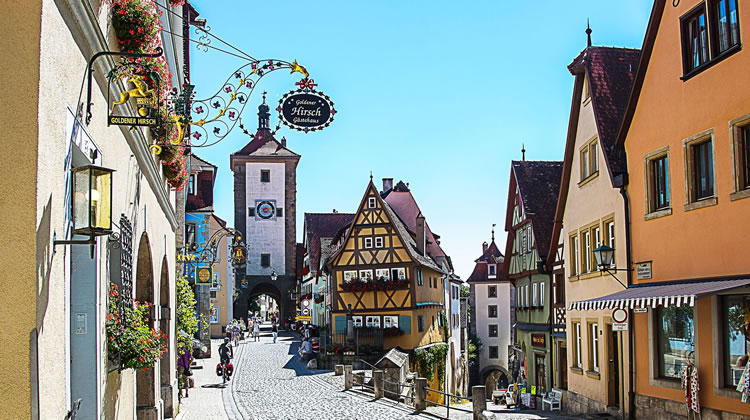
Plönlein: The most photographed spot in Rothenburg—a small fork with a half-timbered house, framed by two towers.
Criminal Museum (Mittelalterliches Kriminalmuseum): A fascinating and sometimes gruesome look at medieval law and order.
The Night Watchman’s Tour: A highly entertaining and informative evening walking tour that brings the town’s history to life.
Food & Drink
Schneeballen (Snowballs): Strips of pastry dough formed into a ball, deep-fried, and dusted with powdered sugar or coated in chocolate. A unique local pastry.
Franconian Wine: Enjoy a glass in one of the many cozy wine bars or beer gardens.
Transportation Note
Rothenburg is best reached by bus from Steinach (which is on the main train line) or by Romantic Road bus. It serves as a gateway to the Alpine region, with train connections via Ansbach or Treuchtlingen.
The Bavarian Royal Castles & Alpine Foothills
This segment of the journey delves into the fantastical world of King Ludwig II and the breathtaking beauty of the Bavarian Alps. The town of Füssen is the ideal base.
Füssen: The Base for Exploration
A charming town in its own right, nestled in the Alps. It’s the primary gateway for visiting Neuschwanstein and Hohenschwangau castles.
Neuschwanstein Castle
The iconic fairytale castle that inspired Disney’s Sleeping Beauty Castle. Built by the “Fairytale King” Ludwig II, it is a dramatic homage to Wagnerian operas and medieval romance. Tickets must be purchased in advance at the Ticket Center in Hohenschwangau. The hike up to Marienbrücke (Mary’s Bridge) provides the classic postcard view.
Hohenschwangau Castle
The less-famous but equally beautiful yellow castle where King Ludwig II spent his childhood. It is located directly opposite Neuschwanstein and is included in many combination tickets.
Linderhof Palace
The only one of Ludwig II’s grand projects that was completed during his lifetime. This ornate palace is smaller but lavishly decorated in a rococo style, set in magnificent French-style gardens. It is located near Oberammergau and is best reached by car or regional bus (e.g., RVO Bus 9622 from Oberammergau).
Oberammergau: The Passion Play Village
A world-famous village known for two things: its decennial Passion Play and its beautiful Lüftlmalerei (frescoes) painted on house façades. These paintings depict religious scenes, fairy tales, and historical figures.
Transportation & Accommodation in the Alpine Region
The area around Füssen, Schwangau, and Oberammergau is best explored using a combination of trains and regional buses. The Bayern-Ticket (Bavaria Ticket) is excellent value for regional travel after 9 AM on weekdays. Staying in Füssen offers the most amenities, while guesthouses in Schwangau provide proximity to the castles. Oberammergau offers a more traditional Alpine village experience.
Munich (München): The Capital of Bavaria
The journey culminates in Munich, a vibrant metropolis that seamlessly blends traditional Bavarian culture with modern urban life.
Main Attractions
Marienplatz:The central square, home to the New Town Hall and its famous Glockenspiel, which chimes and reenacts stories at 11 AM, 12 PM, and 5 PM daily.
English Garden (Englischer Garten): One of the world’s largest urban parks, where you can see surfers on the Eisbach river, relax in a beer garden, or visit the Chinese Tower.
Hofbräuhaus:The world’s most famous beer hall, offering a quintessential (if touristy) Bavarian experience with oompah music, hearty food, and massive steins of beer.
Nymphenburg Palace:The spectacular summer residence of the Bavarian monarchs, with stunning interiors and vast, beautiful gardens.
Deutsches Museum:A massive museum of science and technology, one of the largest and oldest in the world.
Dachau Concentration Camp Memorial Site:A somber but essential visit located just outside Munich, providing a powerful and educational experience about the horrors of the Nazi regime.