A Grand Tour of Britain: From Scottish Capital to English Countryside
This comprehensive travel guide details a circular journey through the United Kingdom, starting and ending in Edinburgh. The itinerary encompasses historic cities, prestigious universities, stunning landscapes, and cultural landmarks across Scotland and England.
Edinburgh (Start of Journey)
Edinburgh, the capital of Scotland, is a city steeped in history and dramatic topography. It is built around an extinct volcano and a glacial valley, creating a striking contrast between the Old Town’s medieval tenements and the New Town’s Georgian elegance.
Key Attractions
Edinburgh Castle: Dominating the city skyline, this historic fortress houses the Crown Jewels of Scotland and the Stone of Destiny. The One O’Clock Gun is a daily tradition.
Royal Mile: The main thoroughfare of the Old Town, connecting the Castle to the Palace of Holyroodhouse. It’s lined with shops, pubs, and historic closes (alleys).
Palace of Holyroodhouse: The official residence of the British monarch in Scotland, located at the bottom of the Royal Mile.
Arthur’s Seat: An ancient volcano in Holyrood Park offering panoramic views of the city; a popular hike for visitors and locals.
National Museum of Scotland: A vast museum covering Scottish history, world cultures, and natural history.
Practical Information
Getting There: Edinburgh Airport (EDI) is well-connected internationally. Waverley Station is the main railway hub.
Getting Around: The city center is highly walkable. Buses are efficient for longer distances.
Accommodation: Range from luxury hotels on Princes Street to boutique B&Bs in the New Town and hostels in the Old Town.
Food & Drink: Try traditional Scottish fare like haggis, neeps, and tatties. The city has a thriving food scene with numerous fine-dining and casual options.
York
A historic walled city in North Yorkshire, England, York is famous for its rich Roman, Viking, and medieval heritage. Its compact center is a labyrinth of charming streets.
Key Attractions
York Minster: One of the world’s most magnificent cathedrals, with stunning Gothic architecture and medieval stained glass.
The Shambles: A beautifully preserved medieval street, often cited as one of Europe’s best, with overhanging timber-framed buildings.
York City Walls: Walk a large section of the well-preserved ancient walls that encircle the old city center.
Jorvik Viking Centre: An award-winning museum built on the site of a Viking-age settlement, offering a ride-through reconstruction of 10th-century York.
National Railway Museum: A free-entry museum housing a world-class collection of historic locomotives and rolling stock.
Practical Information
Getting There: Direct trains from Edinburgh (approx. 2.5 hours) and London. York railway station is a short walk from the city center.
Getting Around: The city is best explored on foot.
Accommodation: Many guesthouses and hotels are located within and just outside the city walls.
Cambridge
Renowned for its prestigious university, Cambridge is a city of graceful college buildings, tranquil riverside scenery, and academic history dating back to 1209.
Key Attractions
University Colleges: Visit iconic colleges like King’s College (and its chapel), Trinity College, and St John’s College. Note that access may be restricted during term time or require a fee.
Punting on the River Cam: A classic Cambridge experience. Glide along the “Backs” – the picturesque gardens and grounds behind the colleges.
Fitzwilliam Museum: A superb art and antiquities museum with a diverse collection from ancient Egyptian coffins to Impressionist paintings.
The Mathematical Bridge: A finely engineered wooden footbridge at Queen’s College, often cited as a feat of design.
Practical Information
Getting There: Trains from London King’s Cross take about 50 minutes. There is no direct train from York; a change in Peterborough is typical.
Getting Around: The city center is compact and walkable. Bicycles are extremely popular.
Accommodation: Options include university rooms (available during vacations), hotels, and B&Bs.
London (First Visit)
The capital of England and the United Kingdom is a vast, global metropolis with a history spanning nearly two millennia. It is a world center for finance, culture, and the arts.
Key Attractions
Historic & Ceremonial: The Tower of London, Buckingham Palace (Changing of the Guard), Westminster Abbey, Houses of Parliament & Big Ben.
Museums & Galleries: The British Museum, National Gallery, Tate Modern, Victoria and Albert Museum (many with free general admission).
Landmarks & Views: London Eye, St. Paul’s Cathedral, Tower Bridge, The Shard.
Parks & Leisure: Hyde Park, Regent’s Park, Covent Garden for street performers and shopping.
Practical Information
Getting There: Major airports include Heathrow (LHR), Gatwick (LGW), Stansted (STN), and Luton (LTN). Major rail stations like King’s Cross, Paddington, and Waterloo connect to the rest of the UK.
Getting Around: The London Underground (“the Tube”) is extensive. Buses, black cabs, and ride-sharing services are also available. An Oyster card or contactless payment is essential for public transport.
Accommodation: Vast range available, from hostels to luxury hotels. Consider location relative to Tube lines.
Windsor
A historic market town on the River Thames, best known as the site of Windsor Castle, a primary residence of the British monarch.
Key Attractions
Windsor Castle: The oldest and largest inhabited castle in the world. Highlights include the State Apartments, St. George’s Chapel (the burial place of monarchs including Queen Elizabeth II), and Queen Mary’s Dolls’ House.
The Long Walk: A stunning 2.65-mile tree-lined avenue leading from the castle into Windsor Great Park.
Eton College: Just across the bridge from Windsor, this prestigious private school can be viewed from the outside.
Practical Information
Getting There: Easy train journey from London Paddington (change at Slough) or direct from Waterloo. The journey takes 30-50 minutes.
Tickets: Pre-booking tickets for Windsor Castle online is highly recommended to avoid long queues.
Oxford
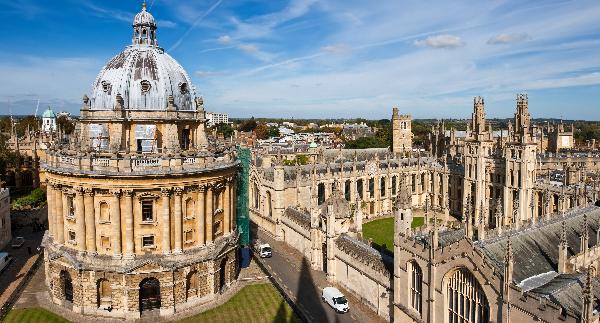
“The City of Dreaming Spires,” Oxford is home to the world’s third-oldest university. Its center is a breathtaking collection of honey-colored college buildings, museums, and libraries.
Key Attractions
University Colleges: Visit Christ Church (notable for its cathedral and Harry Potter connections), Magdalen College, and All Souls College. As in Cambridge, access may be limited.
Bodleian Library: One of the oldest libraries in Europe. Guided tours allow access to historic reading rooms.
Ashmolean Museum: Britain’s first public museum, now a world-renowned institution of art and archaeology.
Radcliffe Camera: A iconic circular library building, a landmark of the Oxford skyline (interior access is limited to Bodleian tour members).
Bridge of Sighs: A famous skyway connecting two parts of Hertford College.
Practical Information
Getting There: Direct trains from London Paddington take about one hour. Trains from Windsor require a change at Slough.
Getting Around:The city center is very walkable.
The Cotswolds
A designated Area of Outstanding Natural Beauty (AONB), the Cotswolds is a region of rolling hills, river valleys, and quintessential English villages built from distinctive honey-colored limestone.
Key Attractions (Villages & Towns)
Bourton-on-the-Water: Known as the “Venice of the Cotswolds” due to the River Windrush that flows through its center.
Stow-on-the-Wold:A historic market town with a large market square and antique shops.
Bibury: Famous for Arlington Row, a row of picturesque 17th-century weavers’ cottages.
Castle Combe: Often voted one of England’s prettiest villages, with a market cross and a bridge over the Bybrook River.
Cirencester: