Ultimate Central European Grand Tour: Berlin to Budapest and Beyond
This comprehensive travel guide covers a magnificent journey through the heart of Europe, connecting ten countries in an unforgettable circuit. From the artistic alleys of Berlin to the romantic banks of the Danube, this itinerary is designed to showcase the incredible diversity, history, and culture of Central Europe. Travelers will experience world-class museums, stunning architecture, delectable cuisines, and scenic landscapes, all connected by efficient and convenient transportation networks.
Itinerary Overview
The proposed route forms a logical loop, minimizing backtracking and maximizing sightseeing efficiency:
Germany (Berlin, Frankfurt, Cologne) → Netherlands (Amsterdam, Windmill Village, The Hague, Rotterdam) → Belgium (Antwerp, Bruges, Brussels) → France (Paris) → Luxembourg (Luxembourg City, Trier) → Germany (Heidelberg, Frankfurt) → Switzerland (Zurich, Lucerne) → Liechtenstein (Vaduz) → Germany (Munich, German-Austrian Border Town) → Austria (Vienna) → Hungary (Budapest) → Czech Republic (Prague) → Germany (Dresden, Berlin).
Germany: Urban Energy and Historic Charm
Berlin: The Phoenix City
Berlin, Germany’s capital, is a dynamic metropolis steeped in 20th-century history. It is a city of contrasts, where gritty history meets cutting-edge art and nightlife.
Attractions: The Brandenburg Gate, the Reichstag Building (book dome visit in advance), the East Side Gallery (longest remaining stretch of the Berlin Wall), Museum Island (a UNESCO World Heritage site), the Holocaust Memorial, and Checkpoint Charlie.
Food & Drink: Indulge in a classic Currywurst, savor a hearty Eisbein (pork knuckle), and explore the vibrant Turkish food scene in Kreuzberg. Don’t forget to try a Berliner Weisse, a tart wheat beer.
Transportation: Berlin’s BVG network includes U-Bahn (subway), S-Bahn (city train), trams, and buses. A Berlin WelcomeCard offers unlimited travel and discounts on attractions.
Accommodation: Stay in Mitte for centrality, Kreuzberg-Friedrichshain for a trendy vibe, or Prenzlauer Berg for a quieter, family-friendly atmosphere.
Cologne & Frankfurt: Cathedrals and Commerce
Cologne is dominated by its breathtaking Gothic cathedral (Kölner Dom), a UNESCO site. The city is known for its Roman history and its jovial Karneval celebrations. Cross the Hohenzollern Bridge, famous for its “love locks,” and visit one of the traditional Brauhaus pubs for a Kölsch beer.
Frankfurt is Germany’s financial hub, nicknamed “Mainhattan” for its impressive skyline. Contrast the modern city center with the charming, reconstructed Altstadt (old town) around Römerberg square. It serves as a major transportation nexus for the entire region.
The Netherlands: Canals, Culture, and Coastline
Amsterdam: The Venice of the North
Amsterdam is famous for its elaborate canal system, narrow houses, world-renowned museums, and liberal spirit.
Attractions: The Rijksmuseum, Van Gogh Museum, Anne Frank House (book tickets months in advance), a canal cruise, and the Jordaan district for charming streets.
Food & Drink: Sample Dutch pancakes (Pannenkoeken), savory mini-pancakes (Poffertjes), and raw herring with onions. Try local jenever (gin) and sample the vast array of Dutch cheeses.
Transportation: The city is highly walkable and bike-friendly. The GVB public transport system includes trams, buses, and metros. Renting a bike is a quintessential Amsterdam experience.
Windmill Village, The Hague, and Rotterdam
A short trip from Amsterdam leads to three distinct Dutch experiences.
Zaanse Schans (Windmill Village): An open-air museum area with well-preserved historic windmills, wooden houses, and workshops demonstrating traditional crafts like clog-making and cheese-making.
The Hague (Den Haag): The seat of the Dutch government and the International Court of Justice. Visit the Binnenhof (parliament complex), the Mauritshuis art museum (home to Vermeer’s “Girl with a Pearl Earring”), and the modernist Peace Palace.
Rotterdam: A stark contrast to Amsterdam, Rotterdam is a hub of modern architecture due to its reconstruction after WWII. See the innovative Cube Houses, the stunning Markthal, and the Erasmus Bridge.
Belgium: Medieval Splendor and Chocolate
Antwerp, Bruges, and Brussels
Antwerp is a vibrant port city and a global diamond center. Its Grote Markt square is stunning, and it is the home of Baroque painter Peter Paul Rubens. The Cathedral of Our Lady houses several of his masterpieces.
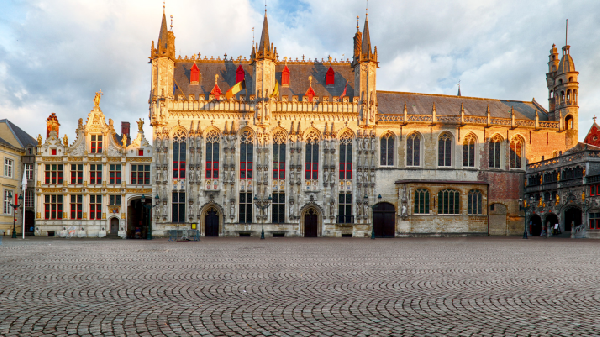
Bruges is a perfectly preserved medieval fairy-tale city, a UNESCO World Heritage site. A boat trip along its canals is a must. Climb the Belfry for panoramic views and indulge in some of the world’s best chocolate.
Brussels, the capital of Belgium and the EU, offers a mix of grand institutions and quirky charm.
Attractions: The Grand-Place (a breathtaking central square), the Manneken Pis statue, the Atomium, and the Comic Book Route featuring murals of beloved characters like Tintin.
Food & Drink: Belgian cuisine is a highlight. Enjoy mussels with fries (Moules-frites), a vast selection of beers (from Trappist ales to fruit lambics), decadent waffles, and of course, exquisite chocolates.
Transportation: Belgium’s train network (NMBS/SNCB) is excellent for connecting these cities. Brussels is also a major hub for international rail services like the Eurostar.
France & Luxembourg: Grandeur and Grand Duchies
Paris: The City of Light
A high-speed train from Brussels whisks you to Paris. While a short visit only scratches the surface, key highlights are achievable.
Attractions: The Eiffel Tower, the Louvre Museum, Notre-Dame Cathedral (exterior viewing post-fire), Arc de Triomphe, and a stroll along the Champs-Élysées. Montmartre district offers artistic history and the Sacré-Cœur Basilica.
Food & Drink: Start the day with a croissant and coffee at a sidewalk café. Enjoy steak-frites, onion soup, crêpes, and pastries like macarons. A picnic with a baguette, cheese, and wine is a classic Parisian experience.
Luxembourg City & Trier
Luxembourg City, the capital of the Grand Duchy, is known for its spectacular fortified medieval old town perched on sheer cliffs, a UNESCO site. Walk the Chemin de la Corniche, dubbed “Europe’s most beautiful balcony.”
Trier, Germany’s oldest city, is a short trip from Luxembourg. Founded by the Romans, it boasts impressive ruins including the Porta Nigra (a massive Roman city gate) and an imperial bath complex.
Switzerland & Liechtenstein: Alpine Majesty
Zurich and Lucerne
Zurich is a global banking center set on a beautiful lake. Explore the upscale Bahnhofstrasse shopping avenue, the charming Old Town (Altstadt) on both sides of the Limmat River, and enjoy lake cruises.
Lucerne is postcard-perfect Switzerland. Its key landmarks include the Chapel Bridge (Kapellbrücke), a 14th-century wooden footbridge, and the Water Tower. The city is a gateway to nearby Mount Pilatus and Mount Rigi for breathtaking alpine excursions.
Food & Drink: Try traditional Swiss fondue or raclette, Zürcher Geschnetzeltes (sliced veal in cream sauce), and rösti (fried grated potatoes). Swiss chocolate is unmissable.
Transportation:The Swiss Travel System is legendary for its precision and scenic routes. Consider a Swiss Travel Pass for unlimited travel on trains, buses, and boats.
Liechtenstein: A Microstate Experience
The principality of Liechtenstein is one of the world’s smallest countries. A visit to its capital,
Vaduz, is about the novelty. See Vaduz Castle (the royal residence, not open to the public) from below, visit the Post Museum showcasing the country’s famous stamps, and get your passport stamped as a souvenir.
Austria & Hungary: Imperial Elegance and Danube Romance
Vienna: The Imperial Capital
Vienna exounds elegance and history from its days as the capital of the Habsburg Empire.
Attractions: The Schönbrunn Palace and its gardens, the Hofburg Palace complex, St. Stephen’s Cathedral, the Vienna State Opera, and the Belvedere Palace (home to Klimt’s “The Kiss”).
Food & Drink: Spend an afternoon in a traditional coffee house enjoying a Melange coffee and a slice of Sachertorte. Visit a Heuriger (wine tavern) in the Grinzing or Neustift am Walde districts for local wine and cold cuts. Don’t miss Wiener Schnitzel.
Cultural Insight: Vienna’s coffee house culture is listed as an intangible UNESCO cultural heritage. It’s a place to linger, read, and socialize.
A German-Austrian Border Town
The route from Munich to Vienna often passes through picturesque towns on the German-Austrian border like Salzburg or smaller locales like Passau. These towns offer a glimpse into charming Bavarian and Austrian provincial life, with baroque architecture, river settings, and cozy beer gardens.
Budapest: The Pearl of the Danube
Hungary’s capital is actually two cities—Buda and Pest—unified by a chain of beautiful bridges across the Danube River.
Attractions: In Buda: Buda Castle Hill, Fisherman’s Bastion (for stunning views), and Matthias Church. In Pest: The Hungarian Parliament Building (a stunning example of Neo-Gothic architecture), St. Stephen’s Basilica, and the Dohány Street Synagogue. A soak in one of the city’s famous thermal baths like Széchenyi or Gellért is essential.
Food & Drink: Feast on Goulash soup, Chicken Paprikash, and Langos (fried dough bread). Try local wines from the Tokaj or Eger regions and the fruit brandy Pálinka.
Accommodation:The Jewish Quarter is trendy with ruin bars, while District V offers luxury hotels with Danube views.
The Czech Republic: Bohemian Rhapsody
Prague: The City of a Hundred Spires
Prague escaped major damage during WWII, leaving its historic core incredibly intact and beautiful.
Attractions:The Prague Castle complex (the largest ancient castle in the world), Charles Bridge (best visited early morning or late evening), the Old Town Square with its Astronomical Clock, and the Jewish Quarter (Josefov).
Food & Drink:Savor roast pork with dumplings and sauerkraut (Vepřo knedlo zelo) , drink world-famous Pilsner Urquell beer, and try Trdelník, a sweet pastry often sold on the street.
Transportation:The city center is very walkable. A public transport ticket is valid on metros, trams, and buses.
Caveat:The city can be extremely crowded; booking tickets for major attractions online in advance is highly recommended.
The Return to Berlin: Saxon Treasures
Dresden: The Florence on the Elbe
The journey back to Berlin should include a stop in Dresden. This Saxon capital was famously rebuilt after its destruction in WWII. Its magnificent Baroque architecture in the Altstadt (Old Town) includes the Zwinger Palace, Semper Opera House, and the Frauenkirche—a powerful symbol of reconciliation.
Practical Travel Information
Transportation Strategy
The most efficient way to travel this route is by rail. A continuous Eurail/Interrail Global Pass might be cost-effective if calculated carefully. However,mixing point-to-point tickets with budget flights (e.g., from Budapest back to Berlin) can sometimes be cheaper. Book high-speed trains (like TGV, ICE) in advance for lower fares. For flexibility between smaller cities,towns,and rural areas like Zaanse Schans or border towns,a rental car can be advantageous but is not recommended for large cities due to traffic,parking costs,and restricted zones.
Accommodation Tips
Cities:Aim for central locations near main train stations or public transport hubs to save time and commuting costs.Districts just outside the absolute center often offer better value.
Towns: