The Ultimate Iberian Adventure: A Travel Guide from Madrid to Barcelona
This comprehensive guide details a classic and enriching journey through the heart of Spain and Portugal, traversing historic capitals, medieval hilltop towns, dramatic coastlines, and vibrant cultural hubs. The route from Madrid to Barcelona encapsulates the profound history, diverse landscapes, and rich culinary traditions of the Iberian Peninsula.
Route Overview
This itinerary is typically undertaken over two to three weeks. The logical progression connects major cities via Spain’s and Portugal’s excellent high-speed and regional train networks, with buses or rental cars offering flexibility for smaller towns. The journey covers a vast and diverse range of experiences, from the bustling plazas of Madrid to the serene cliffs of the Algarve, and from the Moorish palaces of Andalusia to the modernist marvels of Barcelona.
Starting Point: Madrid, Spain
Countries Covered: Spain & Portugal
Primary Transport: High-speed train (AVE, Alvia), regional train, bus, and rental car.
Recommended Duration: 18-22 days
Madrid: The Spanish Capital
As the starting point, Madrid is a city of grand boulevards, world-class art, and relentless energy. Situated in the center of Spain, it serves as a perfect introduction to Spanish culture.
Attractions
Prado Museum: Home to an unparalleled collection of European art, including masterpieces by Velázquez, Goya, and El Greco.
Royal Palace: The official residence of the Spanish Royal Family, this opulent palace is one of the largest in Europe.
Retiro Park: A sprawling green oasis in the city center, perfect for boating on the lake, visiting the Crystal Palace, or simply strolling.
Puerta del Sol & Plaza Mayor: The bustling heart of the city, ideal for people-watching and soaking in the atmosphere.
Food & Drink
Madrid is famous for its tapas culture. Must-tries include
Callos a la Madrileña (tripe stew), Bocata de Calamares (fried squid sandwich), and Churros con Chocolate from the historic Chocolatería San Ginés. Enjoy a vermouth in a traditional tavern before a late dinner.
Transportation & Accommodation
Madrid-Barajas Airport (MAD) is a major international hub. The city’s metro system is efficient and extensive. Stay in central neighborhoods like Sol/Gran Vía for proximity to sights, or Chamberí and Salamanca for a more local, upscale feel.
Toledo: The City of Three Cultures
A short train ride south from Madrid, Toledo is a UNESCO World Heritage site perched on a hill overlooking the Tagus River. It is a historical melting pot where Christian, Muslim, and Jewish cultures flourished side-by-side.
Attractions
Toledo Cathedral: A magnificent Gothic cathedral with an intricate altarpiece and a collection of art by El Greco.
Alcázar of Toledo: A formidable fortress that dominates the city’s skyline, now housing an army museum.
Synagogue of Santa María la Blanca & El Tránsito: Beautiful synagogues that reflect the city’s rich Jewish history.
Wander the Old Town: Get lost in the labyrinthine streets; the city itself is the main attraction.
Food & Drink
Toledo is known for its marzipan (
Mazapán), a sweet almond paste confection. Also try game meats like partridge (Perdiz) and Carcamusas, a hearty pork and pea stew.
Ávila: The Walled City
Northwest of Madrid, Ávila is famous for its perfectly preserved medieval walls, which completely encircle the old town. It is the birthplace of Saint Teresa of Ávila.
Attractions
The Walls of Ávila: Walk along the ramparts for stunning views of the city and the surrounding plains.
Ávila Cathedral: A fortified cathedral that forms part of the city’s defenses.
Basilica of San Vicente: A beautiful Romanesque church located outside the walls.
Food & Drink
Try
Judías del Barco de ÁvilaYema de Santa Teresa, a sweet egg yolk-based dessert.
Salamanca: The Golden City
Famed for its prestigious university and stunning Plaza Mayor, Salamanca’s buildings are constructed from Villamayor stone, which glows golden in the evening sun.
Attractions
Plaza Mayor: Often considered Spain’s most beautiful square, it is the vibrant social hub of the city.
University of Salamanca: One of the oldest universities in Europe. Look for the famous frog carved on the facade of the main building for good luck.
Old & New Cathedrals: Two cathedrals joined together, offering a journey through Gothic and Baroque architecture.
Porto: Portugal’s Riverside Gem
Crossing into Portugal, Porto is a charismatic city built into hills overlooking the Douro River. It is the birthplace of Port wine and exudes an old-world charm.
Attractions
Ribeira District: A UNESCO-listed riverside neighborhood with colorful houses, ideal for a scenic stroll.
Port Wine Cellars: Cross the Dom Luís I Bridge to Vila Nova de Gaia for tours and tastings at famous lodges like Taylor’s, Graham’s, and Sandeman.
Livraria Lello: A stunning bookshop rumored to have inspired J.K. Rowling; its intricate staircase is a masterpiece.
Clérigos Tower: Climb this iconic bell tower for a panoramic view of the city and river.
Food & Drink
Savor a
Francesinha, a decadent Porto sandwich layered with meats, covered in cheese, and smothered in a spicy tomato-beer sauce. Of course, tasting Port wine is essential. Also try fresh grilled fish from the Atlantic.
Transportation & Accommodation
Porto is connected by train from Spain (often requiring a change). Francisco Sá Carneiro Airport (OPO) serves the city. Stay in the Ribeira for charm or in the city center near Aliados Avenue for convenience.
Cabo da Roca & Sintra: Where the Land Ends
A day trip or short stay from Lisbon takes travelers to these two magical places.
Cabo da Roca
This is the westernmost point of mainland Europe. The dramatic cliffs and windswept landscape offer a powerful sense of place. The monument declares, “Where the land ends and the sea begins.”
Sintra
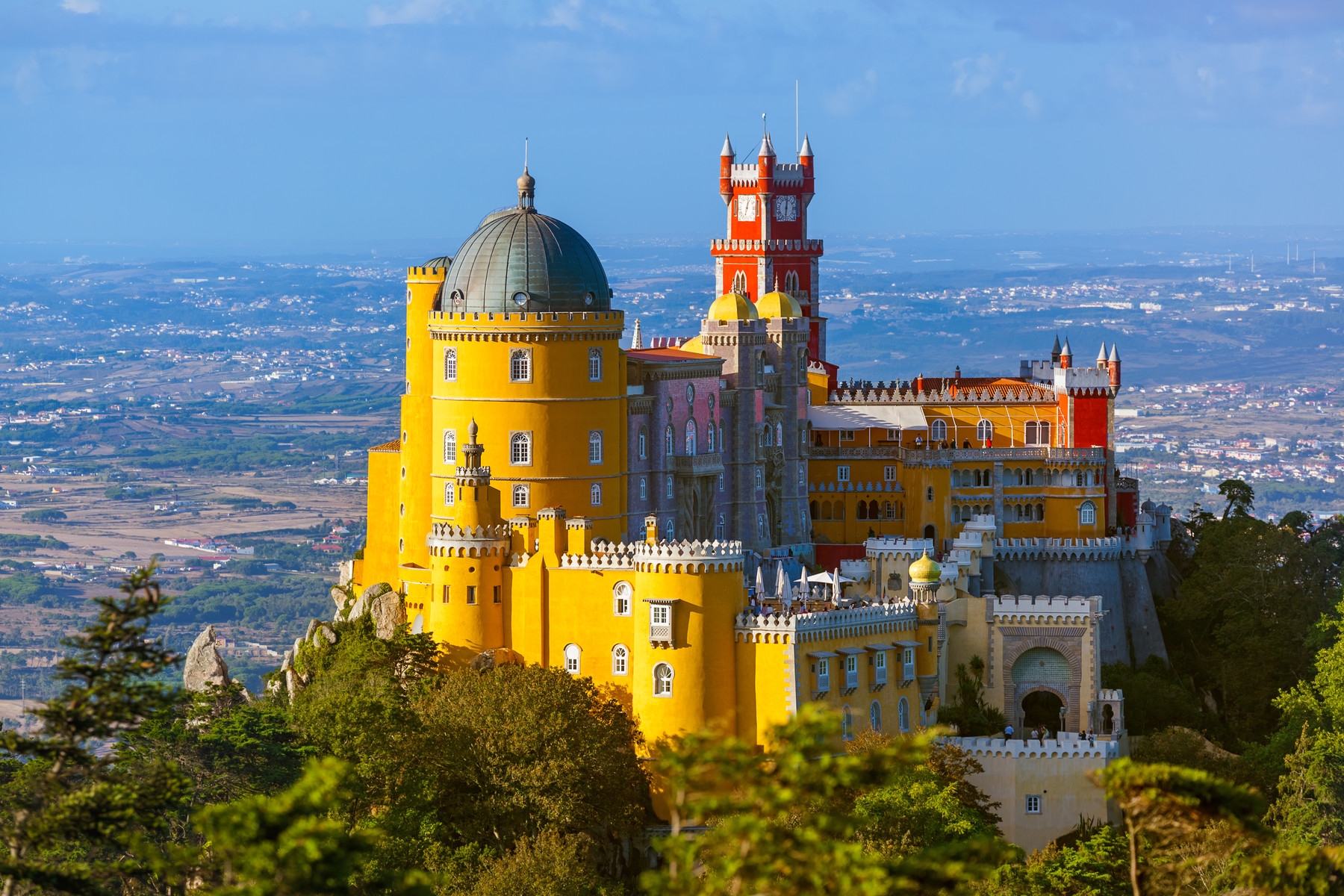
A fairy-tale town filled with romantic 19th-century palaces and lush gardens, nestled in the pine-covered hills of the Serra de Sintra.
Pena Palace: A fantastical, brightly colored palace that seems straight out of a Disney film, perched high on a hill.
Moorish Castle: The ruins of a medieval castle with sprawling walls offering breathtaking views.
Quinta da Regaleira: An enigmatic estate with a palace, chapels, and mysterious initiation wells hidden in its gardens.
Lisbon: The City of Seven Hills
Portugal’s captivating capital is built on hills overlooking the Tagus River. Known for its yellow trams, melancholic Fado music, and vibrant atmosphere.
Attractions
Belém District: Visit the Jerónimos Monastery (a Manueline masterpiece), the Belém Tower, and the Monument to the Discoveries.
Alfama: The oldest district, a maze of narrow streets, hidden courtyards, and home to Fado houses. Take tram 28 for a classic tour.
Castle of São Jorge: Offers the best panoramic views of the city sprawling below.
LX Factory:A trendy creative hub under the 25 de Abril Bridge, full of shops, restaurants, and galleries.
Food & Drink
Eat a
Pastel de Nata (custard tart) from the famous Pastéis de Belém. Try fresh grilled sardines,Bifanas(pork sandwiches), andBacalhau à Brás(shredded cod with eggs and potatoes). Sip on aGinjinha, a sour cherry liqueur.
Seville: The Heart of Andalusia
Returning to Spain, Seville is a passionate city drenched in flamenco, orange blossoms, and Moorish history. It is the quintessential Andalusian experience.
Attractions
Real Alcázar:A stunning royal palace complex with exquisite Mudejar architecture and lush gardens. A filming location for “Game of Thrones.”
Seville Cathedral & La Giralda:The largest Gothic cathedral in the world. Climb the Giralda bell tower, a former minaret, for incredible views.
Plaza de España:A massive, semi-circular brick building built for the 1929 exposition, with painted tile alcoves representing Spanish provinces.
Barrio Santa Cruz:The city’s old Jewish quarter, a delightful area of whitewashed houses, flower-filled patios, and narrow lanes.
Food & Drink
Savor tapas like
Espinacas con Garbanzos(spinach with chickpeas) andSoldaditos de Pavía(fried cod). In summer, enjoy a coolGazpacho. For a true local experience, catch a flamenco show in the Triana district.
Ronda: The Dramatic Cliffside Town
Situated in the mountains of Andalusia, Ronda is famous for its deep El Tajo gorge, which carries the Guadalevín River and divides the town. The Puente Nuevo bridge connects the old Moorish town with the newer 15th-century部分。
Attractions
Puente Nuevo:The “New Bridge” (18th century) is the iconic symbol of Ronda, offering dizzying views into the gorge below.
Plaza de Toros:One of Spain’s oldest bullrings, considered a birthplace of modern bullfighting.
The Old Town (La Ciudad):A picturesque area with narrow streets, historic palaces like Casa del Rey Moro, and charming squares.
Málaga: The Coastal Gateway
A bustling port city on the Costa del Sol, Málaga has reinvented itself as a cultural destination while retaining its authentic Andalusian character. It’s the birthplace of Pablo Picasso.
Attractions
Picasso Museum:Houses a comprehensive collection of the artist’s work in his hometown.
Alcazaba & Roman Theatre:A well-preserved Moorish fortress-palace with beautiful gardens, overlooking a Roman theatre.
Calle Larios & Atarazanas Market:The main shopping street leads to a vibrant market where you can sample local produce and seafood.
Granada: The Last Moorish Kingdom
Nestled at the foot of the Sierra Nevada mountains, Granada is home to the Alhambra, one of the most magnificent architectural wonders in the world.
The Alhambra
A vast palace and fortress complex that was the residence of the Nasrid sultans. It consists of three main parts:
The Nasrid Palaces:The pinnacle of Islamic art in Spain, with intricate stucco work, beautiful tilework (azulejos), and serene courtyards like the Court of the Lions.(Book tickets months in advance!)
The Alcazaba:The oldest part, a military fortress with great towers and views.
The Generalife:The summer palace and its exquisite, tranquil gardens with fountains and water channels.
Other Attractions & Food
The Albaicín:The old Moorish quarter, a labyrinth of whitewashed streets facing the Alhambra. Visit the Mirador de San Nicolás for sunset views.
The Sacromonte:The traditional Gitano (Roma) neighborhood, known for its cave houses and flamenco shows.
When in Granada, it is customary to receive a free tapa with every drink ordered at a bar. Try local dishes likeTortilla del Sacromonte(a rich omelette with offal) andHabas con Jamón(broad beans with ham).