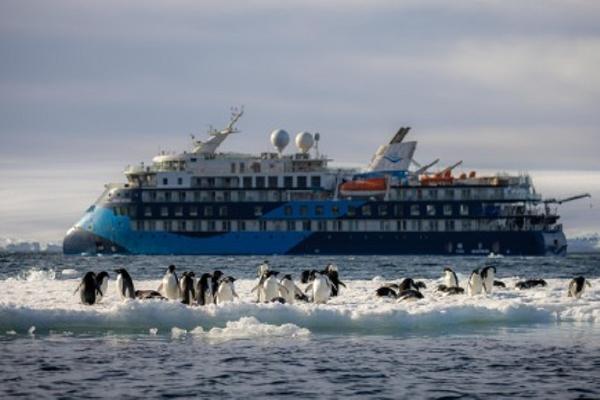
The Ultimate Antarctic Expedition: Ushuaia, Drake Passage, South Shetland Islands & the Antarctic Peninsula
This travel guide details one of the world’s most epic maritime journeys: the expedition cruise from the southern tip of Argentina to the frozen continent of Antarctica. This route, traversing some of the planet’s most formidable and beautiful waterways, offers an unparalleled adventure into the heart of the White Continent.
Introduction: The Path to the Seventh Continent
The journey from Ushuaia, Argentina, to the Antarctic Peninsula is the most popular and accessible way to experience Antarctica. This expedition is not merely a cruise but a voyage of discovery, taking travelers through legendary seaways, past colossal icebergs, and into a world teeming with unique wildlife. The standard itinerary involves a two-day crossing of the infamous Drake Passage, exploration of the South Shetland Islands, and several days navigating the stunning channels and bays of the Antarctic Peninsula before making the return journey. It is a trip defined by raw nature, profound silence, and awe-inspiring landscapes.
Chapter 1: Ushuaia – The End of the World
Nestled between the snow-capped peaks of the Andes and the Beagle Channel, Ushuaia proudly bills itself as the “Fin del Mundo” (End of the World). As the southernmost city on the globe, it is the primary gateway for Antarctic expeditions.
Attraction Introductions
Tierra del Fuego National Park: A stunning national park where the Andes meet the sea. Visitors can hike through sub-Antarctic forests, along peat bogs, and dramatic coastlines. The “End of the World Train” offers a historical journey into the park, recounting the area’s penal colony past.
Beagle Channel: Named after Charles Darwin’s ship, this channel is a must-see. Boat tours depart from the port, offering views of sea lion and cormorant colonies, the iconic Les Eclaireurs Lighthouse, and breathtaking mountain scenery.
Martillo Island Penguin Colony: Located on the Beagle Channel, this island is home to Magellanic and Gentoo penguins. Some tours even offer a unique opportunity to walk among them (with strict guidelines).
Museo Marítimo y del Presidio de Ushuaia: Housed in the city’s former prison, this museum complex provides a fascinating, if somber, look at Ushuaia’s history as a penal colony and its maritime heritage.
Food Recommendations
Ushuaia’s cuisine is dominated by the bounty of the South Atlantic.
Centolla (King Crab): The undisputed king of local cuisine. It is typically served simply boiled with a light mayonnaise or lemon butter sauce to let its sweet, delicate flavor shine.
Merluza Negra (Patagonian Toothfish/Chilean Sea Bass): A rich, oily, and delicious white fish often grilled or baked.
Cordero Patagónico (Patagonian Lamb): Slow-roasted over an open fire, this is a classic dish of the region, known for its tender texture and smoky flavor.
Calafate Sour: A local twist on the Pisco Sour, made with Calafate berry liqueur, which according to legend, ensures your return to Patagonia.
Accommodation Tips
Travelers should plan to arrive in Ushuaia at least one or two days before their Antarctic cruise departure to account for any flight delays.
Luxury: The Arakur Ushuaia Resort & Spa offers stunning panoramic views, an infinity pool, and a spa, located just outside the city center within a private nature reserve.
Mid-Range: Hotels like Los Cauquenes Resort or Alto Andino provide excellent comfort and convenience, often with beautiful views of the Beagle Channel.
Budget: Numerous hostels and B&Bs are available in the city center, such as Antarctica Hostel, which is popular with backpackers and adventure travelers.
Cultural Insights
Ushuaia has a rugged, frontier-town feel. Its identity is deeply intertwined with its extreme location and its history as a penal colony. The people are resilient and proud of their unique home. There’s a strong sense of adventure in the air, fueled by its role as a launchpad for Antarctic scientists, mountaineers, and explorers.
Chapter 2: The Drake Passage – The Legendary Crossing
The Drake Passage is the body of water between Cape Horn (the southern tip of South America) and the South Shetland Islands of Antarctica. It is where the Atlantic, Pacific, and Southern Oceans converge, creating some of the most unpredictable seas on Earth.
Attraction Introductions
The “Drake Lake” or “Drake Shake”: The crossing is famously variable. Travelers may experience a surprisingly calm “Drake Lake” or a tumultuous “Drake Shake.” Both are part of the authentic Antarctic experience.
Seabird Spectacular: The passage is a prime area for pelagic bird watching. Keen-eyed visitors can spot Wandering Albatrosses (with the largest wingspan of any bird), Southern Giant Petrels, Cape Petrels, and numerous other species soaring effortlessly alongside the ship.
Onboard Lectures: Expedition teams use the crossing time to deliver informative presentations on Antarctic history, geology, wildlife, and the protocols for visitors, building excitement and knowledge for the days ahead.
Practical Information
The crossing typically takes about two days each way. Modern expedition vessels are equipped with stabilizers to mitigate rolling, but seasickness is common. It is highly recommended to come prepared with medication (patches, pills), acupressure bands, or ginger supplements.
Chapter 3: South Shetland Islands – The Icy Archipelago
The first sight of land after crossing the Drake Passage is often the South Shetland Islands. This chain of volcanic islands serves as a spectacular introduction to the Antarctic environment.
Attraction Introductions
Deception Island: A spectacular volcanic caldera that ships can sail into through a narrow passage called Neptune’s Bellows. Inside, visitors can see the remains of an abandoned whaling station and a British Antarctic Survey base. A highlight is taking a polar plunge in the volcanically heated waters of Pendulum Cove.
Half Moon Island: A scenic island home to a large colony of Chinstrap Penguins. It also offers stunning views of surrounding mountains and glaciers and is often visited by fur seals and various seabirds.
Livingston Island / Hannah Point: Known for its dense and diverse wildlife, this area can feature Elephant Seals lounging on the beach, Chinstrap and Gentoo Penguin colonies, and occasional sightings of Macaroni Penguins.
Chapter 4: The Antarctic Peninsula – The Mainland Experience
The Antarctic Peninsula is the most accessible part of the continent. Its dramatic landscape features towering mountains, immense glaciers, and deep fjords. It is also a hub for wildlife and historical exploration.
Attraction Introductions
Gerlache Strait: A breathtakingly beautiful channel flanked by the Antarctic Peninsula on one side and a chain of islands on the other. It is a prime area for Zodiac cruises amidst icebergs and wildlife sightings.
Cuverville Island: Home to one of the largest colonies of Gentoo Penguins on the Antarctic Peninsula. The steep climb up the snow-covered slope rewards visitors with an incredible view of thousands of penguins and the surrounding Errera Channel.
Neko Harbour / Danco Island: These are typical landing sites that offer the chance to set foot on the continental mainland itself. They feature steep climbs for panoramic views and are populated by busy Gentoo Penguin colonies.
Port Lockroy: A historic British base from World War II that now operates as a museum and post office. Visitors can learn about early Antarctic life and send postcards from the southernmost post office in the world.
Lemaire Channel: Often called “Kodak Gap” for its photogenic quality, this narrow channel is flanked by sheer cliffs and glaciers. Navigating through it, surrounded by icebergs and with potential Orca sightings, is a highlight for many.
Chapter 5: Paradise Bay – The “Pocket” of Ice
True to its name, Paradise Bay is one of the most stunningly beautiful locations in Antarctica. It is a wide, sheltered bay filled with icebergs of every shape and size.
Attraction Introductions
Zodiac Cruising: The primary activity here is a silent Zodiac cruise through a maze of brilliant blue icebergs. The silence is broken only by the crackling of ancient ice and the sound of Humpback whales exhaling nearby.
Almirante Brown Research Station (Argentina): While not always open for visits, the station’s location provides a potential landing site and a steep climb for an absolutely breathtaking panoramic view of the entire bay.
Wildlife Viewing: The bay’s rich waters attract Humpback and Minke whales. Crabeater seals are often seen hauled out on ice floes, and the cliffs are nesting sites for Blue-eyed Shags.
Chapter 6: Wilhelmina Bay – The Whale Soup
Wilhelmina Bay is renowned as one of the best places in Antarctica for whale watching. Its deep, protected waters are rich in krill, making it a favorite feeding ground for Humpback whales.
Attraction Introductions
Whale Watching Extravaganza: It is common to see dozens of Humpback whales in Wilhelmina Bay. Visitors may witness lunge feeding, tail slapping, and spy-hopping from these magnificent creatures. The ship’s engines are often turned off to allow for silent observation.
The Wreck of the Guvernøren: The rusting remains of a Norwegian whaling factory ship that burned in 1915 are visible at the far end of the bay, adding a touch of historical intrigue to the landscape.
Iceberg Graveyard: The bay often collects a dense concentration of icebergs that have calved from nearby glaciers, creating a spectacular scene for photography.
The Return Journey: Drake Passage & Beagle Channel
After several intense days of exploration in Antarctica, the voyage turns northward for the return crossing of the Drake Passage. This time is used for final lectures, sharing photos, and reflecting on the experience. The journey culminates with a calm sail through the scenic Beagle Channel before docking back in Ushuaia.
Transportation Information
The only practical way to undertake this journey is on an expedition cruise ship.
Types of Vessels: Ships range from small yachts (carrying under 50 passengers) to larger ice-strengthened vessels (carrying 100-200 passengers). Smaller ships offer more landings and a more intimate experience, while larger ones provide more stability in rough seas and more amenities.
The IAATO Factor: All reputable operators are members of IAATO (International Association of Antarctica Tour Operators), which sets strict guidelines to protect the fragile environment. A key rule is that no more than 100 people can be on land at one time.
Booking: Expeditions typically run from November to March (the Antarctic summer). Bookings should be made 6-12 months in advance due to high demand.
Cruise Accommodation & Onboard Life
Life onboard is a blend of adventure, education, and comfort.
Cabin Types: Options range from shared quad cabins to luxurious suites with balconies. All cabins are functional with private facilities.
Dining: Meals are included and are typically served buffet-style. The quality is generally very high, with chefs preparing international cuisine. Special dietary requirements can usually be accommodated with advance notice.
Amenities: Most ships have a lounge/bar, a lecture theater, a library, and sometimes a small gym, sauna, or pool. The focus, however, is on the external environment.
A Note on Antarctic Cuisine
There is no “local” cuisine to sample on the continent itself due to environmental protection laws that prohibit bringing any foreign organic matter ashore. All meals are provided on the ship. However, many cruise lines celebrate reaching milestones with special themed dinners or barbecues on deck (weather permitting).
Cultural & Environmental Insights
The Antarctic Treaty: Antarctica is a continent dedicated to peace and science. Visitors become ambassadors for its protection.
Leave No Trace: This principle is paramount. Nothing is left behind, and nothing is taken except photographs and memories.
Scientist Interactions: On some voyages, especially those that visit active research stations like Palmer Station (US), passengers may have the opportunity to interact with scientists and learn about their vital work.
The Spirit of Exploration: Traveling in the footsteps of explorers like Shackleton, Amundsen, and Scott adds a profound historical dimension to the journey. Understanding their hardships fosters a deep appreciation for modern expedition travel.
A Final Word: An Unforgettable Expedition
A journey from Ushuaia through the Drake Passage to the Antarctic Peninsula is more than a vacation; it is a pilgrimage for nature lovers and adventurers. It is an experience that recalibrates one’s perspective on scale, beauty, and wilderness. The sight of a breaching Humpback whale, the cacophony of a penguin colony, the profound silence of a glacial valley, and the raw power of the Drake Passage combine to create memories that will last a lifetime and instill a lasting commitment to preserving this last great wilderness.