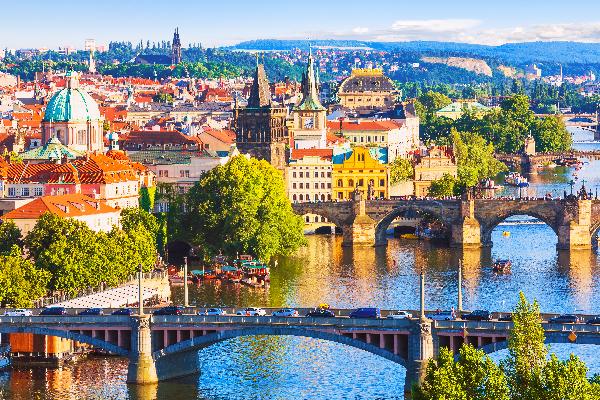
The Grand European Circuit: A Comprehensive Travel Guide
This extensive itinerary weaves through the heart of Western and Central Europe, encompassing the financial hubs of Germany, the alpine majesty of Switzerland, the imperial elegance of Austria and Hungary, the stunning Adriatic coast of the Balkans, and the sun-drenched charm of the Mediterranean. It is a journey of contrasts, history, and breathtaking landscapes.
Introduction to the Route
This multi-national tour is best undertaken over a period of several weeks, allowing for a deep immersion into each region’s unique culture. The route is designed as a circuit, starting and ending in the major transport hub of Frankfurt, Germany. Travelers can utilize a combination of efficient rail networks, regional buses, and occasional flights to cover the vast distances comfortably. The following guide breaks down the journey into logical geographical and thematic chapters.
Chapter 1: The Benelux & Parisian Grandeur (Frankfurt to Paris)
This leg focuses on the art, canals, and political centers of the Low Countries, culminating in the iconic French capital.
Frankfurt & Cologne, Germany
Frankfurt am Main is often the gateway to this journey. While known as a financial center, its reconstructed Römerberg square offers a glimpse of traditional German architecture. The Museumsufer (Museum Embankment) is a world-class cultural district. A short train ride leads to Cologne, dominated by its magnificent Cologne Cathedral, a UNESCO World Heritage site. Visitors can climb the south tower for panoramic views and cross the Hohenzollern Bridge, famous for its “love locks.”
Food: In Frankfurt, try Grüne Soße (Green Sauce) with boiled eggs and potatoes. In Cologne, wash down a hearty meal with a glass of Kölsch, the local beer.
Transport: Excellent ICE high-speed train connections between Frankfurt and Cologne (approx. 1 hour).
Amsterdam, Windmill Village, The Hague & Rotterdam, Netherlands
Amsterdam is a city of canals, cycling, and culture. Key attractions include the Anne Frank House, the Rijksmuseum, and a relaxing canal cruise. A short trip away is Zaanse Schans (Windmill Village), an open-air museum with working windmills and traditional crafts. The Hague is the seat of the Dutch government and international law, home to the Peace Palace and Mauritshuis art museum. Rotterdam contrasts with its modern architecture, notably the cubic houses and the massive Europort.
Food: Sample raw herring with onions, Dutch pancakes (pannenkoeken), and Gouda cheese.
Transport: Netherlands Railways (NS) provides frequent and reliable connections between all these cities.
Antwerp & Bruges, Belgium
Antwerp is a vibrant port city and a global diamond center. The Grote Markt (Main Square) and the Cathedral of Our Lady, housing several Rubens masterpieces, are must-sees. Bruges is a perfectly preserved medieval fairy-tale town. A boat trip along its serene canals is essential to appreciate its timeless beauty, alongside visiting the Belfry and the Markt square.
Food: Indulge in Belgian fries with mayonnaise, rich stews like Carbonnade Flamande, and a vast selection of Belgian beers. Chocolate shops are ubiquitous.
Transport: Direct trains from Rotterdam to Antwerp and then to Bruges.
Brussels & Paris
Brussels, the capital of the EU, offers the grand Grand-Place, the iconic Manneken Pis, and numerous institutions like the Atomium. From here, a high-speed Thalys train whisks you to Paris. The French capital needs little introduction: the Eiffel Tower, Louvre Museum, Notre-Dame, and the Champs-Élysées represent just a fraction of its allure. Exploring neighborhoods like Montmartre and Le Marais provides a more local experience.
Food: In Brussels, try mussels with fries (moules-frites) and waffles. In Paris, enjoy croissants, steak-frites, coq au vin, and pastries from a local patisserie.
Transport: Thalys train from Brussels to Paris is the fastest option (approx. 1.5 hours).
Chapter 2: German History & Alpine Majesty (Luxembourg to Liechtenstein)
This segment delves into ancient history, romantic cityscapes, and the breathtaking scenery of the Alps.
Luxembourg City & Trier, Germany
Luxembourg City is known for its dramatic gorges and fortifications, a UNESCO site. The Grund district and the Casemates du Bock are highlights. A short journey into Germany brings you to Trier, the country’s oldest city. Founded by the Romans, it boasts impressive ruins like the Porta Nigra (Black Gate) and an ancient amphitheater.
Heidelberg & The Romantic Road
Heidelberg is the epitome of German romance. Its red sandstone castle ruins overlook the Altstadt (Old Town) and the Neckar River. Strolling across the Old Bridge is a quintessential experience. While not explicitly on this route, it serves as a gateway to the Romantic Road region.
Zurich & Lucerne, Switzerland
Zurich is a global city set on a beautiful lake, with a charming Old Town (Altstadt) and upscale shopping along the Bahnhofstrasse. Lucerne is even more picturesque, with its covered Chapel Bridge, Water Tower, and stunning location on Lake Lucerne against a mountain backdrop. A trip to nearby Mount Pilatus or Rigi offers unforgettable alpine vistas.
Food: Fondue, raclette, rösti (fried grated potatoes), and Zürcher Geschnetzeltes (veal in cream sauce).
Transport: Swiss Travel System is impeccable. Scenic train rides like the GoldenPass Line are highly recommended.
Accommodation: Consider a stay in a traditional mountain lodge for a full Swiss experience.
Liechtenstein & Munich
The microstate of
Liechtenstein, nestled between Switzerland and Austria, is known for its dramatic alpine scenery and Vaduz Castle. It can be explored in a day-trip. Then, travel to Munich, the capital of Bavaria. Visit the Marienplatz with its Glockenspiel, the grand Nymphenburg Palace, and one of the city’s famous beer halls like the Hofbräuhaus. A day trip to the fairytale Neuschwanstein Castle is highly recommended.
Chapter 3: Imperial Capitals & The Danube (Vienna to Budapest)
A journey through the former heart of the Austro-Hungarian Empire, following the beautiful Blue Danube.
Austrian Border Towns & Vienna
The route suggests stopping at charming
Austrian border towns, such as Salzburg (birthplace of Mozart) or Hallstatt (a picture-perfect lakeside village). The crown jewel is Vienna, an imperial city of music and art. Key sites include the Schönbrunn Palace, Hofburg Palace, St. Stephen’s Cathedral, and the Vienna State Opera. Enjoying a coffee and Sachertorte in a historic coffeehouse is a cultural ritual.
Budapest, Hungary
The “Pearl of the Danube,”
Budapest, is actually two cities—Buda and Pest—united. Cross the iconic Chain Bridge to explore Buda Castle and Fisherman’s Bastion on one side, and visit the Hungarian Parliament Building and relax in the Széchenyi Thermal Baths on the Pest side. The view from Gellért Hill at night is spectacular.
Food: In Vienna, try Wiener Schnitzel and Apfelstrudel. In Budapest, savor Goulash soup, Langos (fried dough), and Paprikás Csirke (chicken paprikash).
Transport:A direct Railjet train connects Vienna and Budapest comfortably in about 2.5 hours.
Chapter 4: The Balkan Adriatic Adventure (Zagreb to Dubrovnik)
This leg explores the stunning natural beauty and complex history of Croatia and Bosnia & Herzegovina.
Zagreb & Plitvice Lakes National Park, Croatia
Zagreb, Croatia’s capital, has an attractive Upper Town (Gornji Grad) with St. Mark’s Church and the quirky Museum of Broken Relationships. The main draw in this region is Plitvice Lakes National Park, a UNESCO site renowned for its cascading turquoise lakes and waterfalls connected by trails and wooden walkways.
Zadar, Split & Dubrovnik
The coastal city of
Zadar boasts unique attractions like the Sea Organ and the Sun Salutation. Further south, Split is built around the monumental Diocletian’s Palace, a living Roman ruin. The crown jewel of the Adriatic is Dubrovnik, the “Pearl of the Adriatic.” Walking the intact city walls offers breathtaking views of the old town and the sea.
Food: Fresh seafood is paramount. Try black risotto (crni rižot), grilled fish, Dalmatian pršut (prosciutto), and Pag island cheese.
Transport:A combination of buses and ferries is common along the coast. The bus journey from Split to Dubrovnik is particularly scenic.
Cultural Insight:The history of the 1990s Balkan Wars is still very present. Visiting sites like the War Photo Limited museum in Dubrovnik provides important context.
Mostar & Sarajevo, Bosnia & Herzegovina
A detour inland takes you to
Mostar, famous for its reconstructed Stari Most (Old Bridge), a symbol of reconciliation. The old bazaar is atmospheric. The capital, Sarajevo, is where East meets West, with Ottoman-era bazaars next to Austro-Hungarian architecture. It’s a city marked by its recent siege during the war, with poignant reminders like the “Sarajevo Rose” memorials and Tunnel Museum.
Chapter 5: Central European Return & French/Spanish Finale (Vinkovci to Barcelona)
The final leg circles back through Central Europe before heading south into France and Spain.
The Return via Vinkovci & Pécs to Budapest & Prague
The route passes through transit hubs like
Vinkovci in Croatia and stops in Hungarian cities like Pécs, known for its early Christian burial tombs (a UNESCO site) and Turkish-era architecture. From Budapest, an overnight train or a flight can take you to Prague.
Prague & Berlin