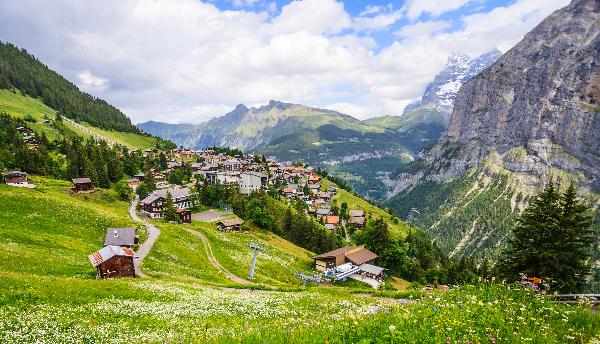
Switzerland Travel Guide: Zurich, Lucerne, Interlaken, Bernese Oberland, Grindelwald, Lauterbrunnen
Introduction
This guide details a classic Swiss itinerary, a circular route starting and ending in Zurich. This journey takes you from the sophisticated urban centers of Zurich and Lucerne, through the central hub of Interlaken, and into the heart of the breathtaking Bernese Oberland, home to iconic peaks like the Jungfrau and villages like Grindelwald and Lauterbrunnen. The route is designed for efficiency and scenic beauty, primarily utilizing Switzerland’s world-class public transportation system.
General Travel Information
Best Time to Visit
Summer (June – August): Ideal for hiking, clear mountain views, and warm weather. This is the peak tourist season, so expect crowds and higher prices.
Spring (April – May) & Autumn (September – October): Shoulder seasons with fewer crowds, pleasant temperatures, and beautiful landscapes (blooming flowers or autumn colors). Some high-altitude trails may be closed.
Winter (December – March): Perfect for winter sports. The landscape is magical under snow, but daylight hours are shorter. Christmas markets are a highlight in Zurich and Lucerne.
Transportation
Switzerland’s public transport is exceptional. For this itinerary, the following are essential:
Swiss Travel Pass: Highly recommended. Offers unlimited travel on trains, buses, and boats across the country, includes free entry to many museums, and provides discounts on mountain railways. It simplifies travel significantly.
Half-Fare Card: If you don’t get a Swiss Travel Pass, this card allows you to buy all tickets at half price for one month.
Trains: The Swiss Federal Railways (SBB/CFF/FFS) network is punctual, clean, and scenic. Use the SBB Mobile app for schedules and tickets.
Boats: Scenic boat trips on Lake Zurich and Lake Lucerne are included with the Swiss Travel Pass.
Local Transport: Trams and buses in cities are efficient and included in the pass or city visitor cards.
Accommodation
Book well in advance, especially during peak season. Options range from luxury hotels and charming boutique hotels to hostels and vacation apartments. Consider staying in smaller towns like Grindelwald for a more immersive mountain experience.
Language & Currency
Language: German is the primary language in this region. English is widely spoken in tourist areas. French and Italian are also official languages in other parts of Switzerland.
Currency: Swiss Franc (CHF). Credit cards are widely accepted, but it’s wise to have some cash for smaller establishments.
Zurich (Zürich)
Zurich is Switzerland’s largest city, a global banking hub, and a cultural center with a beautifully preserved old town.
Getting There & Around
Zurich Airport (ZRH) is a major international hub. A direct train connects the airport to Zurich Hauptbahnhof (main station) in 10 minutes. The city center is very walkable, and the tram network is excellent.
Key Attractions
Old Town (Altstadt): Explore the narrow, winding lanes on both sides of the Limmat River. See well-preserved medieval houses, guild halls, and churches.
Bahnhofstrasse: One of the world’s most exclusive shopping avenues, running from the main station to Lake Zurich.
Lake Zurich (Zürichsee): Take a relaxing boat cruise (included with Swiss Travel Pass) for stunning views of the city and the distant Alps.
Lindenhof: A peaceful hilltop square offering a panoramic view over the old town and the river.
Fraumünster Church: Famous for its stained-glass windows created by Marc Chagall.
Grossmünster Church: The city’s landmark twin-tower church with a history dating back to Charlemagne.
Swiss National Museum (Landesmuseum Zürich): Located next to the main station, it offers a comprehensive overview of Swiss cultural history.
Practical Tips for Zurich
- The Zurich Card offers free public transport and museum entries for 24 or 72 hours.
- For a unique experience, visit the thermal baths and spa at Thermalbad & Spa Zürich, set in a former brewery.
Lucerne (Luzern)
A picturesque city on the shores of Lake Lucerne, surrounded by mountains. It’s known for its well-preserved medieval architecture.
Getting There & Away
The train from Zurich to Lucerne is a direct and scenic journey taking about 45-50 minutes.
Key Attractions
Chapel Bridge (Kapellbrücke): A iconic 14th-century wooden footbridge with interior paintings depicting Lucerne’s history. It’s the oldest truss bridge in Europe.
Water Tower (Wasserturm): The octagonal stone tower adjacent to the Chapel Bridge, formerly a prison and treasury.
Old Town: Wander through the cobblestone streets filled with historic buildings painted with frescoes.
Lion Monument (Löwendenkmal): A poignant sculpture of a dying lion carved into a rock face, commemorating the Swiss Guards who died during the French Revolution.
Musegg Wall: A well-preserved section of the city’s medieval fortifications, which you can walk along for great views.
Lake Lucerne (Vierwaldstättersee): A stunning lake surrounded by mountains. A boat trip (included with Swiss Travel Pass) is highly recommended.
Mount Pilatus or Mount Rigi: Take a day trip to one of the nearby mountains for breathtaking alpine vistas. The “Golden Round Trip” to Pilatus is particularly famous.
Practical Tips for Lucerne
- The Lucerne Visitor Card is provided by most hotels and offers discounts on attractions and local transport.
- The city is very compact; all major sights are within walking distance.
Interlaken
Situated between Lake Thun and Lake Brienz, Interlaken (meaning “between lakes”) is the primary gateway to the Jungfrau region of the Bernese Oberland. It’s a bustling tourist town with a wide range of services.
Getting There & Away
The train from Lucerne to Interlaken is one of Switzerland’s most beautiful journeys, the Luzern-Interlaken Express, taking around 1 hour 50 minutes.
Key Attractions & Activities
Höhematte Park: A large, open park in the center of town with spectacular views of the Jungfrau massif.
Harder Kulm: Interlaken’s local mountain. A funicular takes you to the top for a panoramic view of the town, two lakes, and the surrounding peaks. The “Two-Lakes-Bridge” viewing platform is a highlight.
Boat Trips: Take a scenic cruise on either Lake Thun or Lake Brienz (included with Swiss Travel Pass).
Adventure Sports: Interlaken is a hub for paragliding, skydiving, canyon jumping, and rafting.
Day Trips: Visit nearby towns like Thun with its castle or Brienz, known for woodcarving.
Practical Tips for Interlaken
- Interlaken has two main stations: Interlaken Ost (East) and Interlaken West. Most trains to the mountain villages depart from Interlaken Ost.
- It’s a good base for exploring the region if you prefer a town with more amenities, but consider staying in Grindelwald or Wengen for a more authentic alpine experience.
The Bernese Oberland: Grindelwald & Lauterbrunnen
This is the heart of the Swiss Alps, a region of dramatic valleys, towering peaks, and idyllic villages. Interlaken is the gateway, but the true beauty lies in the valleys above.
Getting There & Around
From Interlaken Ost, two railway lines lead into the mountains:
- The Bernese Oberland Railway (BOB) to Grindelwald.
- The Bernese Oberland Railway (BOB) to Lauterbrunnen, where you can connect to the Wengernalp Railway (WAB) to Wengen and Kleine Scheidegg.
These journeys are partially covered by the Swiss Travel Pass, but a supplement is required for the final ascent to Jungfraujoch.
Grindelwald
A popular resort village sitting at the foot of the Eiger North Face.
First Mountain: A major adventure hub. Take the cable car up for activities like the First Cliff Walk (a free suspension bridge), First Flyer (zipline), and Trottibike scooters down the mountain. The hike to Bachalpsee lake is stunning.
Eiger North Face: View the legendary mountain face from various points in the village or while hiking.
Männlichen: Take a cable car from Grindelwald to Männlichen for incredible views and the easy, scenic Royal Walk hike.
Pfingstegg: A smaller cable car station offering a summer toboggan run and starting point for hikes to the glacial Gletscherschlucht (Glacier Gorge).
Lauterbrunnen
A village in a deep U-shaped valley characterized by its sheer cliff faces and 72 waterfalls.
Staubbach Falls: One of Europe’s highest free-falling waterfalls, visible from almost anywhere in the village.
A unique series of ten glacial waterfalls inside a mountain, accessible by an internal lift. The force of the water is awe-inspiring (entry fee required).
The Valley Itself:
Simply walking or cycling through the flat valley floor is an unforgettable experience, with waterfalls cascading down on both sides.
Cable Car to Mürren:
From Stechelberg at the end of the valley, a cable car ascends to the car-free village of Mürren, offering spectacular views.
A must-do excursion from this region. A spectacular railway journey takes you to the highest railway station in Europe at 3,454 meters (11,332 ft). The Journey:
The train goes from Interlaken to Lauterbrunnen or Grindelwald, then to Kleine Scheidegg, where you board the Jungfrau Railway. It travels through a tunnel inside the Eiger and Mönch mountains, with stops at viewing windows along the way.
At the Top:
Visit the Sphinx Observatory terrace for 360-degree views of the Aletsch Glacier (a UNESCO World Heritage site) and surrounding peaks. Explore the Ice Palace tunnels carved into the glacier. Note that altitude sickness can be an issue; take it easy.
Tickets:
Very expensive. The Swiss Travel Pass and Half-Fare Card provide significant discounts. Book in advance during high season. Check the weather forecast before you go; a clear day is essential.
The area is a hiker’s paradise. Some classic routes include: Männlichen to Kleine Scheidegg:
An easy, mostly downhill hike with constant, close-up views of the Eiger, Mönch, and Jungfrau.
North Face Trail (Eiger Trail):
A more challenging hike along the base of the Eiger North Face.
The Jungfraujoch – Top of Europe
Hiking in the Bernese Oberland