Grand Tour of Western Europe: Benelux, Iberia, and France
This comprehensive travel guide details an epic journey through the heart of Western Europe, encompassing the historic cities of the Benelux region, the sun-drenched landscapes of the Iberian Peninsula, and the rich cultural tapestry of France. The itinerary connects major capitals, charming towns, and breathtaking natural wonders, offering a deep dive into art, history, cuisine, and architecture.
Itinerary Overview
The journey is a grand loop, starting and ending in Paris, and can be broadly divided into three segments:
The Benelux & Western Germany Circuit: Paris → Waterloo → Brussels → The Hague → Amsterdam → Cologne → Bonn → Trier → Luxembourg City → Reims → Paris.
The Iberian Peninsula Adventure: Paris → Toulouse → Figueres → Girona → Barcelona → Zaragoza → Madrid → Toledo → Badajoz → Cabo da Roca → Sintra → Lisbon → Salamanca → San Sebastián.
The Atlantic Coast & Loire Valley Return: San Sebastián → Dax → Dune du Pilat → Bordeaux → Poitiers → Loire Valley → Paris.
Part 1: The Benelux & Western Germany Circuit
Paris, France: The Starting Point
While the journey begins here, Paris also serves as the final destination. Travelers are advised to explore its iconic landmarks like the Eiffel Tower, Louvre Museum, and Notre-Dame Cathedral either at the start or end of the trip. It is a global hub for art, fashion, and gastronomy.
Attractions: Eiffel Tower, Louvre Museum, Arc de Triomphe, Champs-Élysées, Montmartre.
Food: Croissants, café au lait, coq au vin, macarons from Ladurée.
Transport: Charles de Gaulle (CDG) or Orly (ORY) airports. Excellent Metro and RER train system within the city.
Accommodation: Options range from hostels in the 11th arrondissement to luxury hotels near the Champs-Élysées.
Waterloo, Belgium
A short trip from Brussels, Waterloo is hallowed ground for history enthusiasts. It was the site of Napoleon Bonaparte’s final defeat in 1815.
Attractions: The Lion’s Mound Panorama, Wellington Museum, and Hougoumont Farm. The recently opened Memorial 1815 provides an immersive experience.
Transport: Easily accessible by train from Brussels Midi station in about 30 minutes.
Brussels, Belgium
The vibrant capital of Belgium and the de facto capital of the European Union, Brussels seamlessly blends medieval charm with modern internationalism.
Attractions: Grand-Place (a UNESCO World Heritage site), Atomium, Manneken Pis, Comic Book Route.
Food: Moules-frites (mussels and fries), Belgian waffles, chocolate (from brands like Neuhaus or Pierre Marcolini), and a vast selection of beers.
Transport: Served by Brussels Airport (BRU) and Brussels-South Charleroi Airport (CRL). The city center is very walkable, with a comprehensive metro and tram system.
Accommodation: Stay near the Grand-Place for tourist convenience or in the European Quarter for a more business-like atmosphere.
The Hague (Den Haag), Netherlands
As the seat of the Dutch government and royalty, The Hague is known for its wide boulevards, elegant architecture, and international institutions.
Attractions: Binnenhof (Inner Court), Mauritshuis museum (home to Vermeer’s “Girl with a Pearl Earring”), Peace Palace, Scheveningen Beach.
Transport: A 50-minute train ride from Brussels. Trams are efficient for getting around the city.
Amsterdam, Netherlands
Famous for its elaborate canal system, cycling culture, and artistic heritage, Amsterdam is a city of unparalleled charm.
Attractions: Canal Ring (UNESCO), Rijksmuseum, Van Gogh Museum, Anne Frank House, Jordaan district.
Food: Bitterballen, stroopwafels, raw herring (if you’re brave), and Indonesian rijsttafel (a legacy of colonial history).
Transport: Schiphol Airport (AMS) is a major international hub. The best way to experience the city is on a bicycle. Trams and canal boats are also excellent.
Accommodation: Book well in advance, especially in the city center. Consider staying in the De Pijp or Oost districts for a more local feel.
Cultural Insight: The Dutch are direct and pragmatic. The city’s culture of tolerance is deeply ingrained but comes with an expectation of personal responsibility.
Cologne (Köln), Germany
A historic Roman city on the Rhine River, Cologne is dominated by its magnificent cathedral.
Attractions: Cologne Cathedral (Kölner Dom) – a Gothic masterpiece and UNESCO site, Roman-Germanic Museum, Hohenzollern Bridge with its “love locks.”
Food: Kölsch beer (served in small glasses), Himmel un Äd (black pudding with mashed potatoes and apples), Rheinischer Sauerbraten.
Transport: A high-speed train (ICE) from Amsterdam takes about 2.5 hours. The main train station (Hauptbahnhof) is right next to the cathedral.
Bonn, Germany
The former capital of West Germany, Bonn is a serene city with a rich cultural heritage, famously the birthplace of Ludwig van Beethoven.
Attractions: Beethoven-Haus, Poppelsdorf Palace, Museum Mile.
Trier, Germany
Claimed to be Germany’s oldest city, Trier boasts impressive Roman ruins that earned it UNESCO World Heritage status.
Attractions: Porta Nigra (a massive Roman city gate), Imperial Baths, Trier Cathedral, Roman Amphitheatre.
Cultural Insight: The city’s location near Luxembourg and France gives it a distinct, cross-border cultural flavor.
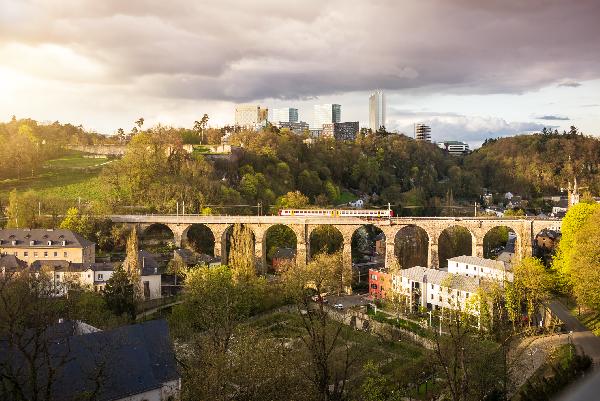
Luxembourg City, Luxembourg
The capital of the Grand Duchy of Luxembourg is a financial hub set within a dramatic landscape of deep gorges and fortifications.
Attractions: The Bock Casemates (a network of underground tunnels), Notre-Dame Cathedral, Grand Ducal Palace, Chemin de la Corniche (“the most beautiful balcony in Europe”).
Food: Judd mat Gaardebounen (smoked pork neck with broad beans), Gromperekichelcher (potato fritters).
Transport: A small but well-connected international airport (LUX). The city center is highly walkable, though the gorges involve many stairs and slopes. Public transport is free throughout the country.
Reims, France
The capital of the Champagne region, Reims is synonymous with the world’s most famous sparkling wine.
Attractions: Reims Cathedral (where French kings were crowned), Champagne cellars like Taittinger or Veuve Clicquot for tastings.
Transport: A direct TGV train from Luxembourg City can take around 2 hours. From Reims, TGVs connect back to Paris in about 45 minutes.
Part 2: The Iberian Peninsula Adventure
Toulouse, France: “La Ville Rose”
The pink-hued city is a hub for aerospace but retains a lively university town atmosphere.
Attractions: Capitole de Toulouse, Basilica of Saint-Sernin, Cité de l’Espace.
Transport: A flight or train from Paris is the best way to begin this leg of the journey.
Figueres and Girona, Spain
The journey enters Catalonia through these two distinct cities. Figueres is home to the surrealist world of Salvador Dalí, while Girona boasts a stunningly preserved medieval Jewish Quarter.
Attractions (Figueres): Dalí Theatre-Museum.
Attractions (Girona): Girona Cathedral (with its massive Gothic nave), the Arab Baths, the colorful houses along the Onyar River.
Barcelona, Spain
A vibrant, cosmopolitan city known for the unique modernist architecture of Antoni Gaudí and a dynamic street life.
Attractions: Sagrada Família, Park Güell, Gothic Quarter (Barri Gòtic), La Rambla, Casa Batlló, Magic Fountain of Montjuïc.
Food: Tapas (patatas bravas, jamón ibérico), paella (best eaten for lunch), crema catalana. Visit La Boqueria Market for a sensory overload.
Transport: El Prat Airport (BCN). The Metro system is extensive and efficient. Many areas are also perfect for walking.
Accommodation: The Eixample district offers central location and Gaudí architecture, while the Gothic Quarter provides historic charm.
Cultural Insight: Barcelona is the capital of Catalonia, a region with its own distinct language and culture. Be mindful of local sensitivities regarding identity.
Zaragoza, Spain
A historical city halfway between Barcelona and Madrid, Zaragoza is famous for its Basilica del Pilar overlooking the Ebro River.
Madrid, Spain
The lofty Spanish capital is known for its elegant boulevards, sprawling parks, and world-class art museums.
Attractions: Prado Museum, Royal Palace, Retiro Park, Puerta del Sol, Plaza Mayor.
Food: Cocido Madrileño (a hearty chickpea-based stew), churros con chocolate from San Ginés, tapas hopping in the La Latina neighborhood.
Transport: Barajas Airport (MAD). A superb public transport network includes Metro and buses. The city is also very walkable.
Accommodation: