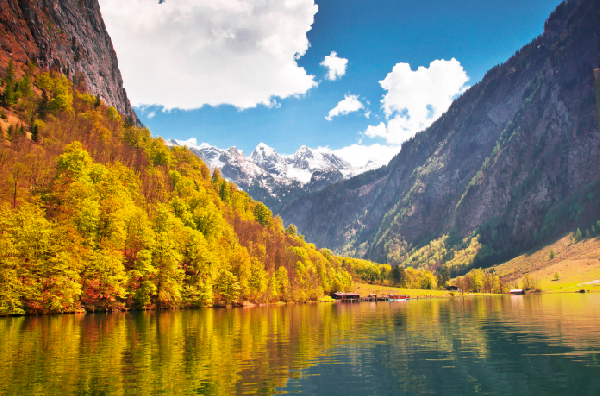
Grand Tour of Switzerland and Germany: A Comprehensive Travel Guide
This guide details a comprehensive itinerary through the heart of Europe, connecting the financial hubs, medieval old towns, and breathtaking alpine landscapes of Switzerland with the historic cities, romantic roads, and fairytale castles of Germany. The journey is a loop starting and ending in Frankfurt, designed for a thorough exploration by train and regional transport.
Overview and Travel Philosophy
This is an ambitious trip covering significant ground. It is highly recommended to travel by rail. Switzerland and Germany boast some of the world’s most efficient and scenic train systems. For Switzerland, consider a
Swiss Travel Pass for unlimited travel on trains, buses, and boats, as well as free entry to many museums and discounts on mountain excursions. For the German segments, a German Rail Pass (Deutschlandticket) or advance-purchase “Sparpreis” tickets can offer substantial savings. Pack light, as you will be moving between destinations frequently. Comfortable walking shoes are non-negotiable.
Part 1: Switzerland
Frankfurt (Germany) to Stuttgart (Germany)
Transport: Direct high-speed ICE train; journey time approximately 1 hour 15 minutes.
Description: While Frankfurt is the starting point, the first major stop is Stuttgart, a city renowned for its automotive heritage and modern architecture.
Key Attractions:
Mercedes-Benz Museum: A stunning architectural feat tracing over 130 years of automotive history.
Stuttgart Library (Stadtbibliothek): A minimalist, cube-shaped library famous for its pure white interior and serene atmosphere.
Schlossplatz: The city’s central palace square, perfect for people-watching.
Practical Tip: Stuttgart is a great place to experience German wine culture, as it’s one of Germany’s largest wine-growing regions.
Stuttgart to Zurich (Switzerland)
Transport: Direct train; journey time approximately 2 hours 30 minutes.
Description: Zurich is Switzerland’s largest city, a global banking hub seamlessly integrated with a beautifully preserved old town and a vibrant cultural scene along the Limmat River and Lake Zurich.
Key Attractions:
Bahnhofstrasse: One of the world’s most exclusive shopping avenues.
Old Town (Altstadt): A maze of narrow, winding streets with guild houses, churches, and charming cafes.
Lindenhof: A peaceful hilltop square offering panoramic views over the old town.
Fraumünster: Famous for its stained-glass windows by Marc Chagall.
Lake Zurich: Take a boat cruise for stunning views of the city and distant Alps.
Practical Tip: Zurich is expensive. Consider purchasing a “ZurichCARD” for free public transport and museum discounts.
Zurich to Bern
Transport: Direct train; journey time approximately 1 hour.
Description: Bern, the capital of Switzerland, is a UNESCO World Heritage site. Its well-preserved medieval old town is built on a steep peninsula surrounded by the Aare River.
Key Attractions:
Zytglogge: The iconic medieval clock tower with an animated figurine show that occurs just before the hour.
Old Town Streets: Explore the 6 kilometers of arcades (Lauben) housing shops, bars, and restaurants.
Federal Palace (Bundeshaus): The seat of the Swiss government and parliament.
Bear Park: Home to Bern’s heraldic animals, located just across the river from the old town.
Rose Garden (Rosengarten): A park with beautiful views over the old town’s red-roofed buildings.
The GoldenPass Line: Bern to Zweisimmen to Montreux
Transport: Scenic train journey; total journey time approximately 2 hours.
Description: This is not just transport; it’s a highlight. The GoldenPass train takes you from the Bernese Oberland into the Vaud region, passing rolling hills, traditional chalets, and pristine lakes before descending to the Swiss Riviera.
Key Attractions (en route):
- The changing landscape from pre-alps to the shores of Lake Geneva.
- The view of Chillon Castle as you approach Montreux.
Montreux and Geneva
Description: Montreux, nestled on the shores of Lake Geneva under snow-capped mountains, has a mild climate and a reputation for jazz. Geneva is a global city, home to the United Nations and the Red Cross.
Key Attractions in Montreux:
Château de Chillon: A stunning island castle that inspired Lord Byron.
Freddie Mercury Statue: A tribute to the legendary singer who loved Montreux.
Lakeside Promenade: Lined with flowers, sculptures, and palm trees.
Transport to Geneva: Direct train along the lake; journey time approximately 1 hour 10 minutes.
Key Attractions in Geneva:
Jet d’Eau: The famous water fountain shooting 140 meters into the air.
The Flower Clock (L’Horloge Fleurie): A symbol of Geneva’s watchmaking tradition.
St. Pierre Cathedral: Offers a superb view of the city from its towers.
The United Nations Office at Geneva (Palais des Nations): Take a guided tour.
Lausanne
Transport: Short train ride from Geneva or Montreux; about 35-40 minutes from either.
Description: A vibrant city built on three hills, overlooking Lake Geneva. It is the Olympic Capital and home to a famous university, giving it a youthful energy.
Key Attractions:
The Olympic Museum: A world-class museum dedicated to the history of the Olympic Games.
Cathedral of Notre Dame: The most impressive Gothic building in Switzerland.
The Old Town (Cité): A charming medieval district with cobbled streets and cafes.
Ouchy: The lakeside port area, perfect for a stroll.
The Heart of the Alps: Zermatt, Jungfraujoch, Interlaken
Zermatt: A car-free village at the foot of the iconic Matterhorn. Access is via a connecting train from Visp or Brig. Highlights include Gornergrat for a panoramic view of the Matterhorn and surrounding peaks, and hiking trails for all levels.
Jungfraujoch – Top of Europe: Accessed from Interlaken via Grindelwald or Lauterbrunnen. A spectacular railway journey to the highest railway station in Europe (3,454 meters). Visit the Ice Palace, Sphinx Observatory, and walk on the Aletsch Glacier. Book tickets in advance and check the weather.
Interlaken: A tourist hub situated between Lake Thun and Lake Brienz. It’s the gateway to the Jungfrau region. Activities include boat trips on the lakes, paragliding, and using it as a base for exploring nearby villages like Grindelwald and Lauterbrunnen.
The Scenic Route: Lungern, Lucerne
The Journey from Interlaken to Lucerne via the Brünig Pass is one of Switzerland’s most beautiful train rides. The turquoise waters of Lake Lungern are a breathtaking sight. Consider a brief stop in the picturesque village of Lungern.
Lucerne (Luzern): A postcard-perfect city on Lake Lucerne with a stunning mountain backdrop.
Chapel Bridge (Kapellbrücke): The iconic wooden footbridge with a water tower.
The Lion Monument (Löwendenkmal): A moving sculpture of a dying lion, carved into rock face.
The Old Town: Colorful buildings, cobblestone squares, and well-preserved city walls (Musegg Wall).
Lake Lucerne Boat Trips: Essential for experiencing the dramatic scenery.
The Rhine Falls and Return to Germany
Schaffhausen: A medieval town in northern Switzerland known for its oriel windows and the mighty Rhine Falls, Europe’s largest waterfall. Take a boat to the rock in the middle of the falls for an up-close experience.
Transport to Stuttgart: Train from Schaffhausen; journey time approximately 2 hours 30 minutes with a change in Singen or Plochingen.
Part 2: Germany
The Romantic Rhine and Heidelberg
Rüdesheim am Rhein: A classic Rhine Valley wine town. Take a KD Rhine cruise from here to St. Goar or Boppard to see the densest concentration of castles along the Rhine, including the Pfalzgrafenstein Castle and Lorelei Rock.
Heidelberg: Germany’s romantic capital, home to Germany’s oldest university.
Heidelberg Castle (Schloss Heidelberg): A magnificent red sandstone ruin overlooking the city. Take the funicular railway up.
The Old Bridge (Alte Brücke): A beautiful stone bridge with a grand gate tower.
The Old Town (Altstadt): A long main street (Hauptstrasse) full of life, shops, and historic buildings.
The Philosophers’ Way (Philosophenweg):A path across the river offering the best views of the castle and old town.