Grand European Tour: Zurich to Barcelona and Back
This comprehensive travel guide details a remarkable journey through the heart of Western Europe, connecting the financial hubs of Switzerland with the sun-drenched shores of the Mediterranean and the historic towns of France and Germany. The itinerary—Zurich, Lucerne, Geneva, Annecy, Valence, Avignon, Barcelona, Girona, Figueres, Nîmes, Besançon, Lyon, Colmar, Frankfurt, and back to Zurich—offers a stunning variety of landscapes, cultures, and cuisines. This is not just a trip; it’s a curated experience of European excellence.
1. Zurich, Switzerland: The Pristine Gateway
Your adventure begins in Zurich, a global banking center that seamlessly blends urban sophistication with natural beauty. Nestled at the northwestern tip of Lake Zurich and straddling the Limmat River, the city exudes an air of orderly prosperity.
Attractions & Activities
Old Town (Altstadt): Stroll through the labyrinthine, car-free streets on both sides of the Limmat River. Admire the beautifully preserved medieval houses and guild halls. Don’t miss the iconic twin steeples of the Grossmünster and the stunning stained-glass windows by Augusto Giacometti in the Fraumünster.
Lake Zurich: A boat trip on the pristine lake is essential. The views of the city skyline with the distant Alps as a backdrop are breathtaking. Alternatively, relax on the grassy shores of the Zürichhorn park.
Bahnhofstrasse: One of the world’s most exclusive shopping avenues. Even if high-end shopping isn’t your goal, the atmosphere and the window displays are an experience in themselves.
Uetliberg: Take a short train ride up this small mountain for a panoramic view over the entire city, the lake, and, on a clear day, the glimmering Alpine chain.
Food & Drink
Swiss cuisine is hearty and diverse. In Zurich, try
Zürcher Geschnetzeltes (sliced veal in a creamy mushroom and white wine sauce, typically served with Rösti). For a unique local experience, visit a traditional fondue restaurant. Don’t forget to try Luxemburgerli, the famous macarons from Confiserie Sprüngli.
Transportation & Tips
Zurich Airport (ZRH) is a major international hub. The city’s public transportation system (ZVV) is exceptionally efficient and clean. Purchase a Zurich Card for unlimited travel and museum discounts. Swiss Francs (CHF) are the currency, though Euros are sometimes accepted (often with poor exchange rates).
Local Insight: For a less crowded alternative to Bahnhofstrasse, explore the trendy shops and cafes in the Kreis 4 and Kreis 5 districts, particularly along Langstrasse.
2. Lucerne, Switzerland: A Picture-Perfect Postcard
A short train ride from Zurich brings you to Lucerne, a city that embodies Swiss charm. Situated on the shores of Lake Lucerne with a dramatic mountain panorama, it’s a place of fairy tales.
Attractions & Activities
Chapel Bridge (Kapellbrücke): This iconic covered wooden bridge, dating from the 14th century, is the symbol of Lucerne. The interior triangular paintings depict scenes from Swiss and local history.
Old Town: Wander through the cobblestone squares with their colorful painted buildings. Climb the old city walls (Musegg Wall) for fantastic views.
Lion Monument (Löwendenkmal): A profoundly moving sculpture of a dying lion, carved into a rock face, commemorating the Swiss Guards who died during the French Revolution.
Lake Lucerne Boat Trip: A cruise on the fjord-like lake is spectacular. Consider a trip to nearby Mount Pilatus or Mount Rigi for unparalleled Alpine vistas.
Food & Drink
Enjoy a lakeside meal featuring fresh fish from the lake. Lucerne is also an excellent place to try Swiss classics like Älplermagronen (a hearty pasta, potato, and cheese gratin) or a simple but delicious Bratwurst from a street vendor.
Transportation & Tips
Lucerne is easily reached from Zurich by direct train (approx. 50 minutes). The city center is very walkable. It serves as a perfect base for exploring central Switzerland.
Local Insight: Visit the Bourbaki Panorama, a massive circular painting depicting the Franco-Prussian War, for a unique and immersive historical experience that few tourists seek out.
3. Geneva, Switzerland: The Cosmopolitan Capital of Peace
A train journey along Lake Geneva brings you to its namesake city. Geneva is international, elegant, and home to numerous United Nations agencies and the Red Cross.
Attractions & Activities
Jet d’Eau: This 140-meter-high water fountain shooting out of Lake Geneva is the city’s most famous landmark.
Old Town (Vieille Ville): Perched on a hill, this area is characterized by narrow streets, antique shops, and St. Peter’s Cathedral. Climb the North Tower for a magnificent view.
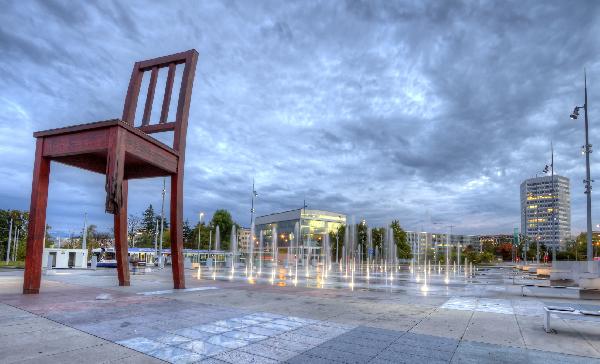
International District: Take a guided tour of the Palais des Nations, the European headquarters of the UN. The Broken Chair sculpture opposite is a powerful symbol against landmines.
Jardin Anglais: Home to the famous L’Horloge Fleurie, a functioning flower clock that is a tribute to Geneva’s watchmaking heritage.
Food & Drink
Given its international influence, Geneva’s dining scene is diverse. Try
Filets de Perche (fried perch fillets from the lake), a local favorite. Fondue is, of course, always an option. Swiss chocolate is a must, with numerous artisanal chocolatiers throughout the city.
Transportation & Tips
Geneva Airport (GVA) is well-connected. The city offers free public transportation passes from your hotel or hostel. It’s a compact city best explored on foot or by tram.
Local Insight: For a local experience, cross the river to the Carouge district. Known as “Greenwich Village of Geneva,” it has a bohemian vibe with artisan workshops and lively cafes.
4. Annecy, France: The Venice of the Alps
A short bus or train ride across the border takes you from Geneva to Annecy, a French town of undeniable charm. With canals winding through the old town and a stunning lake backdrop, it feels like stepping into a painting.
Attractions & Activities
Old Town (Vieille Ville): Explore the cobbled streets and pastel-colored houses lining the Thiou canal. The Palais de l’Isle, a 12th-century castle shaped like a ship in the middle of the canal, is the quintessential photo spot.
Lake Annecy: Rent a bike and cycle the path that circles much of the lake, or simply relax on its beaches. The water is famously clean and turquoise.
Château d’Annecy: This former residence of the Counts of Geneva overlooks the town and offers excellent views of the lake and mountains.
Canal Cruise: A short boat trip along the canals provides a different perspective of the beautiful old town.
Food & Drink
Welcome to Haute-Savoie cuisine! Indulge in rich dishes like
Tartiflette (a potato, bacon, onion, and Reblochon cheese gratin) and Raclette (melted cheese served with potatoes and charcuterie). For dessert, try the local blueberry tart.
Transportation & Tips
Annecy is easily accessible from Geneva by bus (approx. 1.5 hours) or train. The town center is very walkable. This is your first stop using the Euro (EUR).
Local Insight: Visit the outdoor market on Sunday, Tuesday, or Friday morning. It’s one of the largest and most vibrant in France, filling the streets of the old town with local produce, cheeses, and crafts.
5. Valence, France: The Gateway to the South
A train ride south from Annecy brings you to Valence, often considered the northern gateway to Provence. It’s a pleasant city with a relaxed pace and a notable culinary heritage.
Attractions & Activities
Parc Jouvet: A beautiful park on a hill offering splendid views over the Rhône River and the city.
Old Town: Stroll through the pedestrianized center with its fountains and historic buildings, including the Cathedral of St. Apollinaire.
Maison des Têtes: Admire this 16th-century mansion famous for its facade decorated with sculpted heads.
A short trip to Tain-l’Hermitage: Cross the river to its twin town, famous for its prestigious Côtes du Rhône vineyards.
Food & Drink
Valence is known as “the pantry of France.” It’s the home of Chef Anne-Sophie Pic, one of the few female chefs to hold three Michelin stars. Try local specialties like
Caillette (a herb-and-pork patty) and enjoy the robust red wines from the nearby Hermitage appellation.
Transportation & Tips
Valence is a major stop on the TGV line from Paris to Marseille, making it easily accessible. It’s a great place to break up the journey and experience a less touristy French city.
Local Insight: Visit Les Halles de Valence, the covered market, to taste local cheeses, charcuterie, and produce. It’s a true reflection of the region’s rich agricultural bounty.
6. Avignon, France: The City of Popes
Continuing south into Provence, you arrive in Avignon, a city forever marked by its 14th-century role as the seat of the Catholic popes.
Attractions & Activities
Palais des Papes (Pope’s Palace): This immense Gothic palace is one of the most important medieval buildings in Europe. An audio guide is essential to understand its vast, often empty halls and rich history.
Pont Saint-Bénézet (Pont d’Avignon): The famous “bridge of Avignon” from the song. Only four of its original 22 arches remain, leading partway across the Rhône.
Rocher des Doms: A beautiful hillside garden overlooking the palace, bridge, and river—perfect for a picnic with a view.
The City Walls: Avignon is entirely encircled by intact medieval ramparts, which you can walk along for sections.
Food & Drink
Provençal cuisine shines here. Enjoy dishes like
Ratatouille, Bouillabaisse (though more common on the coast), and tapenade. Avignon is also in the heart of the Côtes du Rhône wine region—don’t miss a tasting of Châteauneuf-du-Pape from just north of the city.
Transportation & Tips
The TGV station is just outside the city walls. The historic center is compact and best explored on foot. If visiting in July, be prepared for the world-famous Avignon Festival, which takes over the entire city with theater and performance art.
Local Insight: Venture across the river to Villeneuve-lès-Avignon for stunning views back towards Avignon and to visit the Fort Saint-André and the Chartreuse du Val de Bénédiction.
[Sections for Barcelona, Girona, Figueres would follow here with equal detail]
[…] 10. Nîmes, France: The Rome of France
[Content about Nîmes’ Roman attractions like Les Arènes and Maison Carrée]
[…] 14. Frankfurt, Germany: The Manhattan of Germany
[Content about Frankfurt’s skyline, Römerberg, Apfelwein culture]
The Final Leg: Frankfurt to Zurich
A direct train ride (approx. 4 hours) brings you full circle back to Zurich, Switzerland. This final journey takes you through the scenic valleys and rolling hills of southern Germany and back into the orderly landscape of Switzerland, allowing for reflection on an incredible trip through four distinct European cultures.
The Practical Travel Master Guide
A Note on Transportation: The Rail Backbone
The entire itinerary is perfectly suited for travel by train. Europe’s high-speed and regional rail networks make this journey efficient and scenic.
The Swiss Travel Pass: For the Swiss legs (Zurich, Lucerne, Geneva), consider this pass. It offers unlimited travel on trains, buses, and boats, plus free entry to many museums. It can offer tremendous value and convenience.
The Eurail Pass: For travel across multiple countries (Switzerland, France, Spain), a Eurail Global Pass is worth investigating. Compare point-to-point ticket prices versus the pass to see which is more economical for your specific itinerary.
TGV & High-Speed Trains: Book these well in advance for the best fares (e.g., Barcelona to Nîmes/Valence area). Seat reservations are mandatory.
Tram & Metro Systems: Cities like Lyon and Barcelona have excellent public transport systems. Purchase day passes for unlimited travel.