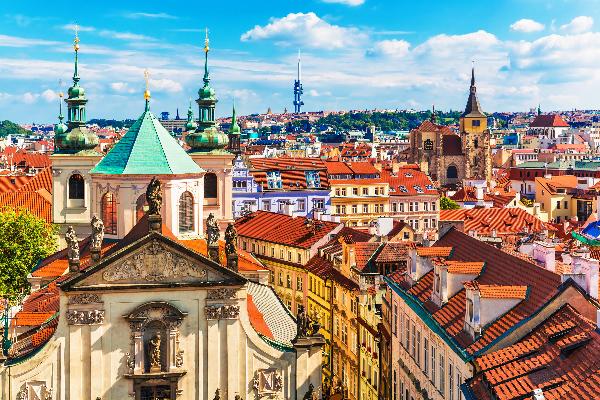
Grand European Tour: Paris to the Alps and the Heart of Central Europe
This comprehensive travel guide details a remarkable journey through the cultural and scenic highlights of France, Germany, the Czech Republic, Slovakia, Hungary, and Austria, before looping back through the majestic Swiss Alps. This itinerary is designed as a loop, ideal for a multi-week trip by train or car, offering a deep dive into historic cities, fairytale castles, and breathtaking natural landscapes.
1. Paris, France: The City of Light
Your adventure begins in Paris, a city synonymous with art, fashion, and romance. The sheer density of iconic landmarks and world-class museums can be overwhelming, but a structured approach ensures you experience its magic.
Attractions: No visit is complete without seeing the Eiffel Tower. Consider a reservation for the summit at sunset. The Louvre Museum demands a full day; focus on masterpieces like the Mona Lisa, Venus de Milo, and Winged Victory of Samothrace. Stroll through the bohemian district of Montmartre, visiting the Sacré-Cœur Basilica for a panoramic view of the city. A walk along the Champs-Élysées to the Arc de Triomphe is a classic Parisian experience. Don’t miss the stained-glass glory of Sainte-Chapelle and the impressive Notre-Dame Cathedral (exterior visit currently).
Food & Culture: Start your day with a buttery croissant and café au lait at a corner boulangerie. For lunch, grab a jambon-beurre sandwich or find a traditional bistro for steak frites. Indulge in pastries from renowned patisseries like Ladurée (for macarons) or Pierre Hermé. The café culture is integral to Parisian life; spend an hour people-watching from a sidewalk terrace. Dinner might include coq au vin or duck confit.
Transportation: The Paris Métro is efficient and extensive. A carnet (pack of 10 tickets) is cost-effective. Walking is the best way to discover hidden courtyards and charming streets.
Travel Tip: Purchase a Paris Museum Pass for skip-the-line access to many major attractions. Always greet shopkeepers with “Bonjour” upon entering.
2. Heidelberg, Germany: Romanticism and Ruins
Traveling east from Paris by high-speed train, you arrive in Heidelberg, the epitome of German Romanticism. Nestled on the Neckar River, this university town is famed for its picturesque old town and majestic castle ruins.
Attractions: The Heidelberg Castle is a magnificent red sandstone ruin overlooking the city. Take the funicular railway up and explore the vast grounds and the world’s largest wine barrel. Wander through the Altstadt (Old Town), a long, pedestrianized street lined with Baroque buildings. Cross the elegant Old Bridge (Karl-Theodor-Brücke) for the classic photo of the castle and town.
Food & Culture: Heidelberg is a student city, so the atmosphere is vibrant. Enjoy traditional German fare like schnitzel or sausages with a tall glass of local beer in a historic beer hall. Try a slice of Studentenkuss (“Student’s Kiss”), a local chocolate praline.
Transportation: The city is very walkable. The funicular to the castle is part of the public transport network.
Travel Tip: The Philosophers’ Walk (Philosophenweg) on the north side of the river offers stunning views back across to the castle, especially in the evening light.
3. Stuttgart, Germany: Automotive Heritage and Urban Green
A short train ride south brings you to Stuttgart, the capital of Baden-Württemberg. While an industrial powerhouse, it surprises visitors with its vast green spaces and world-class museums.
Attractions: Car enthusiasts will be in heaven at the Mercedes-Benz Museum and the Porsche Museum, both architectural marvels chronicling automotive history. The sprawling Wilhelma Zoo and Botanical Garden is one of Europe’s most beautiful. For a taste of royal life, visit the opulent New Palace on the Palace Square.
Food & Culture: Stuttgart is the heart of Swabian cuisine. Try Maultaschen (Swabian ravioli), Spätzle (egg noodles), and Linsen mit Spätzle (lentils with Spätzle). It’s also the home of Daimler and Porsche, reflecting a culture of precision engineering and innovation.
Transportation: Stuttgart has an excellent S-Bahn (suburban train) and U-Bahn (metro) system connecting all key points.
Travel Tip: Climb the TV Tower (Fernsehturm), the world’s first concrete television tower, for a 360-degree view of the city and surrounding vine-covered hills.
4. Mariánské Lázně (Marienbad), Czech Republic: A Spa Retreat
Crossing into the Czech Republic, you arrive in Mariánské Lázně, one of the country’s famous spa towns. It’s a world of pastel-colored colonnades, curative springs, and serene parks.
Attractions: The centerpiece is the magnificent Colonnade, a cast-iron structure where visitors stroll and drink from ornate cups filled with mineral water from various springs. The Singing Fountain in front of the Colonnade puts on a musical show several times a day. Explore the lush parks and elegant 19th-century architecture that once hosted royalty like King Edward VII.
Food & Culture:The culture here revolves around wellness. Partake in the tradition of “taking the waters.” For food, enjoy Czech classics like svíčková (marinated beef with cream sauce) or guláš. Pair your meal with a world-famous Pilsner Urquell beer.
Transportation:The town is small and easily navigated on foot.
Travel Tip:You can purchase a special spa cup and sample the different springs, each with its own purported health benefits and distinct taste (some are quite salty or metallic).
5. Prague, Czech Republic: The City of a Hundred Spires
A short journey north takes you to Prague, a stunningly preserved medieval city that feels like a living fairytale.
Attractions:Cross the historic Charles Bridge at dawn to avoid crowds. Explore the vast Prague Castle complex, including St. Vitus Cathedral. The Old Town Square is home to the magical Astronomical Clock and the twin-spired Church of Our Lady before Týn. Wander through the Jewish Quarter (Josefov) with its ancient cemetery and synagogues.
Food & Culture:Prague is known for hearty food. Try roast pork with dumplings and sauerkraut, or a beef goulash. Trdelník (a sugar-coated pastry) is a popular street snack. The beer culture is central to life; enjoy a pint of Czech lager in a traditional pub for a fraction of Western European prices.
Transportation:The city has an excellent and affordable metro, tram, and bus system. The historic center is best explored on foot.
Travel Tip:For the best view of “the City of a Hundred Spires,” climb to the top of the Old Town Hall tower or Petřín Hill. Book castle tickets online in advance to skip long queues.
6. Bratislava, Slovakia: A Charming Capital on the Danube
A quick train ride south brings you to Bratislava, Slovakia’s compact and lively capital, nestled on the banks of the Danube River.
Attractions:Dominating the city skyline is Bratislava Castle, offering superb views over the Danube and into Austria. The charming Old Town is filled with quirky sculptures, like Čumil (the “Man at Work”), and historic squares like Hlavné Námestie and Franciscan Square. The blue church of St. Elizabeth is a unique Art Nouveau gem.
Food & Culture:The cuisine shows Hungarian and Austrian influences. Try bryndzové halušky (potato dumplings with sheep cheese), or a hearty Slovak soup. The city has a burgeoning café culture and is more affordable than its western neighbors.
Transportation:The city center is very small and walkable. Trams are useful for reaching sights further out.
Travel Tip:A popular day trip is to the ruins of Devín Castle, located at the confluence of the Danube and Morava rivers, offering dramatic scenery and a poignant history.
7. Budapest, Hungary: The Pearl of the Danube
A scenic journey along the Danube takes you to Budapest, a grand city formed by the unification of Buda and Pest.
Attractions:On the Buda side, explore the Buda Castle Hill, including the Royal Palace and the beautiful Matthias Church. The Fisherman’s Bastion provides unparalleled views across the river to Pest. In Pest, be awed by the massive Hungarian Parliament Building. Relax in one of the city’s famous thermal baths, such as Széchenyi or Gellért. Walk along Andrássy Avenue to Heroes’ Square. The Jewish Quarter is home to the stunning Dohány Street Synagogue.
Food & Culture:Savor Hungarian classics like goulash soup, chicken paprikash, and langos (fried dough). Don’t miss trying Tokaji wine. The ruin bars (romkocsma) in the Jewish Quarter are a unique cultural phenomenon—eclectic bars set up in abandoned buildings.
Transportation:The city has a good metro, tram, and bus network. A cruise on the Danube is a fantastic way to see the city lights at night.
Travel Tip:A night cruise on the Danube is essential to see the brilliantly illuminated Parliament and Castle District. Purchase tickets for the baths online to save time.
(Itinerary Note: Vienna & Salzburg follow logically from Budapest)
(Continuation from Budapest)
8. Vienna, Austria: Imperial Grandeur and Musical Legacy
A short train ride west from Budapest brings you to Vienna, a city that exudes imperial elegance and a rich musical heritage.
Attractions:The former imperial palace, Schönbrunn Palace, with its glorious gardens, is a must-see. In the city center, explore the Hofburg Palace, home to the Spanish Riding School and the Sisi Museum. Admire the art nouveau masterpieces by Gustav Klimt at the Belvedere Palace, including “The Kiss.” No visit is complete without experiencing a concert, whether in a grand hall or a more intimate palace chamber.
Food & Culture:Coffee house culture is UNESCO-listed; spend an afternoon reading the paper over a Melange coffee and a slice of Sachertorte. Visit a traditional wine tavern (Heuriger) in districts like Grinzing for local wine and cold cuts. Classic Viennese dishes include Wiener Schnitzel and Tafelspitz (boiled beef).
Transportation:The U-Bahn (metro) system is clean, efficient, and easy to navigate. The city center is also very walkable.
Travel Tip:The Vienna City Card offers discounts on transportation and attractions. For classical music, book tickets well in advance for major venues, but look for cheaper, high-quality performances in smaller churches and palaces.
(Itinerary Note: Munich & Neuschwanstein follow logically from Salzburg)
(Continuation from Salzburg)
(Itinerary Note: The route then returns to Stuttgart before heading into France)
(Continuation from Stuttgart)
(Itinerary Note: The journey continues into Switzerland)
(Continuation from Annemasse)
(Itinerary Note: Final leg back to Paris)
The Alpine Loop: Switzerland & Return to France
The second half of this grand tour plunges you into the heart of the Alps, offering some of Europe’s most dramatic scenery.
(Continuation from Chamonix)
(Itinerary Note: Final leg back to Paris)
The final leg from Chamonix is a scenic drive or train ride back to Paris, bringing your epic Central European and Alpine adventure full circle.
A Final Overview & Practical Tips for Your Grand Tour
Sustainable Travel:A Eurail Global Pass can be an excellent investment for this itinerary, offering flexibility across multiple countries. Always validate your train tickets where required.
Cuisine Journey:
-
You will experience a fascinating culinary journey from French haute cuisine and delicate pastries to hearty German sausages and dumplings, savory Czech goulash, spicy Hungarian paprikash, refined Viennese coffee culture, and finally, hearty Swiss cheese fondue and Alpine air-dried meats.
Cultural Sensitivity:
-
While English is widely spoken in tourist areas, learning a few basic phrases (“hello,” “please,” “thank you”) in each local language (French, German, Czech, Slovak, Hungarian) is always appreciated and shows respect for the local culture.
Trip Duration & Packing:
-
This itinerary covers significant ground. A minimum of three to four weeks is recommended to appreciate each destination without feeling rushed. Pack comfortable walking shoes above all else, along with layers suitable for variable mountain weather in Switzerland.
A Journey of a Lifetime: