Grand European Tour: From Frankfurt to the Mediterranean and Back
An epic journey through the heart of Western Europe, exploring iconic cities, stunning landscapes, and rich cultural heritage across five countries.
Introduction
This comprehensive travel guide details an extensive road trip or train journey through the diverse landscapes and cultures of Germany, Switzerland, France, Spain, and Portugal. The route is designed to showcase a remarkable variety of experiences, from the financial hubs of Frankfurt and Zurich to the serene beauty of Swiss lakes, the historic papal seat in Avignon, the vibrant Mediterranean coasts of Spain, the Moorish legacy of Andalusia, the Atlantic charm of Lisbon, and the gastronomic capitals of France before returning to the starting point. This is a journey for the traveler seeking a deep and varied immersion into Western Europe.
Itinerary Overview
This is a long and ambitious itinerary, best undertaken over a period of 4-6 weeks to be fully appreciated. The route is circular, starting and ending in Frankfurt, Germany. The primary modes of transport for such a journey would be by train (utilizing Eurail/Interrail passes) or by rental car, offering flexibility and scenic drives.
Countries Covered: Germany, Switzerland, France, Spain, Portugal.
Total Stops: 20+ cities and towns.
Themes: Urban exploration, historical sites, natural landscapes, culinary experiences, art and architecture.
Frankfurt am Main, Germany
Description
Frankfurt is a metropolis of contrasts, known globally as a leading financial center. Its skyline, dominated by skyscrapers, has earned it the nickname “Mainhattan.” However, alongside this modern facade lies a reconstructed historic old town, the Römerberg, which offers a glimpse into its pre-war past. The city is a major transportation hub, making it an ideal start and end point for a European tour.
Key Attractions
Römerberg: The historic heart of Frankfurt with beautifully reconstructed medieval buildings, including the Römer city hall.
St. Bartholomew’s Cathedral (Kaiserdom): A Gothic cathedral that was the election and coronation church of the Holy Roman Empire.
Museumsufer (Museum Embankment): A unique concentration of museums on both sides of the River Main, including the Städel Museum.
Palmengarten: A large botanical garden showcasing plant life from around the world.
Main Tower: The only skyscraper with a public viewing platform, offering panoramic views of the city.
Practical Information
Language: German. English is widely spoken in tourist and business areas.
Currency: Euro (€).
Getting There: Frankfurt Airport (FRA) is one of Europe’s busiest hubs. The central train station (Hauptbahnhof) is a major rail nexus.
Local Transport: An efficient network of U-Bahn (subway), S-Bahn (suburban train), trams, and buses.
Culinary Specialty: Apfelwein (apple wine), Grüne Soße (green sauce) with boiled eggs and potatoes, and Handkäs mit Musik (marinated cheese).
Zurich, Switzerland
Description
Zurich is Switzerland’s largest city, a global center for banking and finance set on the serene shores of Lake Zurich. It seamlessly combines a well-preserved medieval old town (Altstadt) with a contemporary, vibrant urban culture. The city is known for its high quality of life, clean streets, and stunning waterfront promenades.
Key Attractions
Old Town (Altstadt): A labyrinth of narrow, winding streets on both sides of the Limmat River, filled with historical buildings, guild houses, and churches.
Lake Zurich (Zürichsee): Perfect for boat trips, swimming in summer, and leisurely walks along its shores.
Bahnhofstrasse: One of the world’s most exclusive shopping avenues, running from the main station to the lake.
Kunsthaus Zurich: One of Switzerland’s most important art museums, with an extensive collection from the Middle Ages to contemporary art.
Uetliberg Mountain: The local mountain of Zurich, easily accessible by train, offering breathtaking views over the city, lake, and Alps.
Practical Information
Language: Swiss German. Standard German and English are widely understood.
Currency: Swiss Franc (CHF). Euros are sometimes accepted but change is given in Francs.
Getting There: Direct trains from Frankfurt take approximately 4 hours. Zurich Airport (ZRH) is well-connected internationally.
Local Transport: An excellent and punctual network of trams, buses, and S-Bahn trains.
Culinary Specialty: Zürcher Geschnetzeltes (sliced veal in a creamy mushroom and white wine sauce), Fondue, and Luxemburgerli macarons from Confiserie Sprüngli.
Lucerne (Luzern), Switzerland
Description: A picture-postcard city on Lake Lucerne with a stunning mountain backdrop. Famous for its preserved medieval architecture and iconic wooden Chapel Bridge (Kapellbrücke).
Highlights: Chapel Bridge & Water Tower, Lion Monument (Löwendenkmal), Musegg Wall, boat trips on Lake Lucerne, excursions to Mount Pilatus or Rigi.
Geneva, Switzerland
Description:A global city, home to numerous international organizations including the Red Cross and United Nations European headquarters. Situated on the shores of Lake Geneva (Lac Léman) at the foot of the Alps.
Highlights: Jet d’Eau fountain, St. Pierre Cathedral, The Flower Clock (L’Horloge Fleurie), Palais des Nations (UN), International Red Cross and Red Crescent Museum.
Barcelona, Spain (First Visit)
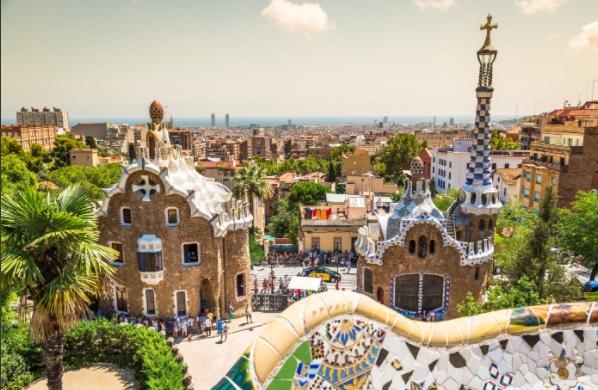
Description:The vibrant capital of Catalonia, renowned for its unique architecture by Antoni Gaudí, lively street life, and beautiful Mediterranean beaches.
Highlights: Sagrada Família, Park Güell, Gothic Quarter (Barri Gòtic), Las Ramblas, Casa Batlló & La Pedrera, Barceloneta beach.
Lisbon, Portugal
Description:Portugal’s hilly, coastal capital city known for its café culture, iconic yellow trams, Fado music, and stunning views over the Tagus River.
Highlights: Belém Tower (Torre de Belém), Jerónimos Monastery (Mosteiro dos Jerónimos), Alfama district, Tram 28 ride, São Jorge Castle (Castelo de São Jorge), Pastéis de Belém.
Barcelona, Spain (Second Visit)
A chance to revisit favorites or explore missed attractions like Montjuïc Hill with its castle and magic fountain.
Practical Information for the Entire Journey
Transportation
By Train: A Eurail/Interrail Global Pass is highly recommended. It offers flexibility across multiple countries. High-speed trains (TGV in France, AVE in Spain) require seat reservations for an additional fee.
By Car: Offers maximum flexibility for exploring rural areas. Be aware of tolls (especially in France and Spain), vignettes (Switzerland requires one), parking costs in cities can be high.
Internal Flights: Can save time on long legs (e.g., from Seville back towards Madrid or Barcelona) but consider environmental impact and airport transfer times.
Accommodation
- A mix of hotels, hostels, guesthouses (pensions), and vacation rentals (like Airbnb) are available in all cities.
- Book well in advance for popular destinations during peak season (June-August).
- Consider location relative to city centers and public transport links.
Cuisine
Germany: Hearty meats, sausages, potatoes, and breads.
Switzerland: Cheese fondue, raclette, rösti, chocolate.
France: Renowned for its regional diversity; from Lyonnaise bouchons to Provençal ratatouille and fine pastries.
Spain: Tapas culture is key. Paella in Valencia, jamón ibérico (cured ham), gazpacho (cold soup).
Portugal: Grilled fish (especially bacalhau – cod), pastéis de nata (custard tarts).