Grand Central European Tour: A Journey Through History, Culture, and Scenery
This comprehensive travel guide details a multi-country itinerary through the heart of Europe, covering Germany, Switzerland, Liechtenstein, Austria, Hungary, Czechia, Luxembourg, France, Belgium, and the Netherlands.
Introduction to the Journey
This extensive tour is a classic “Grand Tour” of Central Europe, looping from Frankfurt and traversing some of the continent’s most iconic cities, picturesque towns, and breathtaking landscapes. The route is designed to offer a rich tapestry of experiences, from imperial history and world-class art to alpine vistas and vibrant modern culture. The circular nature of the trip, starting and ending in Frankfurt, makes it logistically efficient.
Detailed Itinerary & Destination Guide
Frankfurt am Main, Germany
Often called “Mainhattan” due to its impressive skyline, Frankfurt is Germany’s financial hub and your likely starting point. It seamlessly blends modern commerce with historical charm.
Römerberg: The historic heart of the city, featuring reconstructed medieval buildings and the Römer city hall.
St. Bartholomew’s Cathedral: A Gothic cathedral that was the election and coronation site for Holy Roman Emperors.
Museumsufer (Museum Embankment): A unique cluster of museums on both sides of the River Main, including the Städel Museum.
Main Tower: Offers a panoramic view of the city from its public viewing platform.
Travel Tip: Use Frankfurt Airport (FRA) as your entry and exit point. The city center is easily accessible via S-Bahn trains.
Zurich, Switzerland
A global center for banking and finance, Zurich is set on the serene Lake Zurich and boasts a beautifully preserved Old Town, upscale shopping, and a high quality of life.
Old Town (Altstadt): Wander through narrow, winding lanes on both sides of the Limmat River, filled with historical buildings, guild houses, and churches.
Bahnhofstrasse: One of the world’s most exclusive shopping avenues.
Lake Zurich: Take a boat cruise or relax by the shores for stunning views of the city and distant Alps.
Swiss National Museum: Located in a fairytale-like castle, it details Swiss cultural history.
Travel Tip: Switzerland is not in the EU, so be prepared for border checks and the use of the Swiss Franc (CHF), though Euros are often accepted.
Lucerne (Luzern), Switzerland
Nestled amid snow-capped mountains on the edge of Lake Lucerne, this city is postcard-perfect and embodies Swiss charm.
Chapel Bridge (Kapellbrücke): A iconic 14th-century wooden footbridge with interior paintings depicting Lucerne’s history.
Water Tower: The octagonal stone tower adjacent to the Chapel Bridge.
Lion Monument (Löwendenkmal): A poignant rock relief commemorating Swiss Guards who died during the French Revolution.
Old Town: Explore the colorful squares and cobblestone streets filled with muralled buildings.
Mount Pilatus or Rigi: Take a cogwheel railway or cable car for breathtaking alpine panoramas.
Travel Tip: The Swiss Travel Pass can offer excellent value, covering trains, buses, boats, and museum entries.
Liechtenstein
One of the world’s smallest countries, this doubly-landlocked principality between Switzerland and Austria is a curiosity worth visiting.
Vaduz: The capital city, dominated by Vaduz Castle, the residence of the Prince of Liechtenstein.
Vaduz Castle: The castle is not open to the public, but the views from the footpath below are spectacular.
Kunstmuseum Liechtenstein: A modern art museum with a striking black cube design.
Postage Stamp Museum: A unique collection showcasing the country’s famous stamps.
Travel Tip: You can get your passport stamped as a souvenir at the tourist office for a small fee. The country uses the Swiss Franc.
Munich (München), Germany
The capital of Bavaria is a city of contrasts, known for its traditional beer halls, lavish royal palaces, and cutting-edge technology and industry.
Marienplatz: The central square, home to the New Town Hall and its famous Glockenspiel show.
Hofbräuhaus: The world’s most famous beer hall, offering a quintessential Bavarian experience.
Nymphenburg Palace: A magnificent Baroque summer residence with extensive gardens.
English Garden: One of the world’s largest urban parks, where you can even see surfers on the river.
Dachau Concentration Camp Memorial Site: A sobering and important visit located just outside the city.
Travel Tip: If visiting during late September-early October, book accommodations far in advance for Oktoberfest.
Austrian Border Village (e.g., Salzburg or Hallstatt region)
The itinerary suggests a stop in a charming德奥边境小镇 (German-Austrian border town). While not specified, popular and logical options include the area around Salzburg or the Salzkammergut lake district.
Salzburg: The birthplace of Mozart and setting for “The Sound of Music.” Visit Hohensalzburg Fortress, Mirabell Palace Gardens, and Getreidegasse.
Hallstatt: A UNESCO World Heritage village famous for its idyllic setting on a lake surrounded by mountains. Visit the salt mines and the “Bone House.”
Travel Tip: These areas can be extremely crowded. Consider staying in a smaller, nearby village like St. Gilgen or Bad Ischl for a more peaceful experience.
Vienna (Wien), Austria
The former capital of the Austro-Hungarian Empire, Vienna is a city of imperial grandeur, classical music, and exquisite coffee house culture.
Schönbrunn Palace: The magnificent summer residence of the Habsburgs with vast gardens and a zoo.
St. Stephen’s Cathedral (Stephansdom): The Gothic centerpiece of Vienna’s city center.
Belvedere Palace: Houses an incredible art collection, including Gustav Klimt’s “The Kiss.”
Vienna State Opera: Attend a world-class performance or take a guided tour.
Naschmarkt: A vibrant outdoor market with food stalls, restaurants, and produce.
Travel Tip: Spend an afternoon in a traditional Viennese coffee house like Café Central or Café Sacher (home of the original Sacher-Torte).
Budapest, Hungary
“The Pearl of the Danube,” Budapest is actually two cities—Buda and Pest—unified in 1873. It’s known for its thermal baths, stunning architecture, and vibrant nightlife.
Buda Castle & Castle Hill: A UNESCO World Heritage site featuring the Royal Palace, Matthias Church, and Fisherman’s Bastion with panoramic views.
Hungarian Parliament Building: An iconic Gothic Revival landmark on the banks of the Danube.
Széchenyi Thermal Bath: One of Europe’s largest spa complexes, located in City Park.
Chain Bridge: The famous bridge connecting Buda and Pest.
Ruin Pubs: Experience Budapest’s unique nightlife in abandoned buildings turned into eclectic bars (e.g., Szimpla Kert).
Travel Tip: The currency is the Hungarian Forint (HUF). Credit cards are widely accepted, but have some cash for markets and ruin pubs.
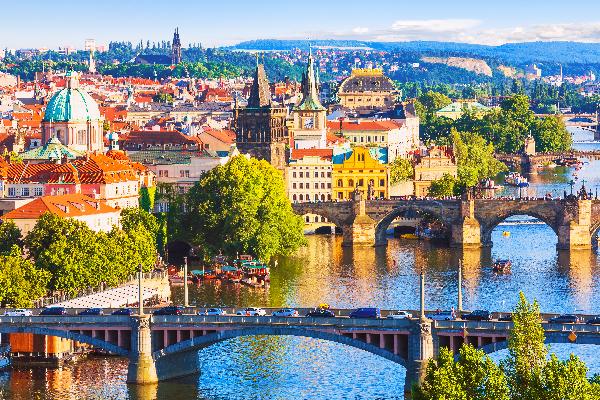
Prague (Praha), Czechia
“The City of a Hundred Spires,” Prague is a fairy-tale city largely untouched by war, boasting Romanesque, Gothic, and Baroque architecture.
Practical Information
Transportation
This itinerary is best undertaken using a combination of transport modes:
Train:The most efficient and scenic way to travel between major European cities. Consider rail passes like Eurail (for non-Europeans) or Interrail (for Europeans). High-speed trains (ICE, TGV, Railjet) connect cities like Frankfurt-Zurich, Vienna-Budapest, and Paris-Frankfurt.
Bus:A budget-friendly alternative for some routes, with companies like FlixBus operating extensively across Europe.
Car Rental:Offers flexibility for exploring rural areas and small villages but can be expensive and inconvenient in dense city centers where parking is scarce and costly.
Internal Flights:Generally not necessary or time-efficient for this tightly-packed itinerary.
Public Transport:All major cities have excellent metro, tram, and bus networks. Purchase day passes or multi-day cards for unlimited travel within the city.
Accommodation
A wide range of options is available in all destinations:
Hostels:Ideal for budget travelers and solo backpackers.
Hotels:Range from budget chains to luxury historic properties.
Pensions/Guesthouses (Pension, Gasthof):, often family-run accommodations common in Germany and Austria.
Vacation Rentals (e.g., Airbnb):Suitable for longer stays or groups desiring more space and kitchen facilities.
Booking Tip: Book well in advance, especially for popular destinations during peak season (June-August) and for major events.
Money & Budgeting
Currencies:The Euro (EUR) is used in Germany, Austria, France, Belgium, Netherlands, Luxembourg. Non-Euro countries: Switzerland (CHF), Czechia (CZK), Hungary (HUF).
ATMs:The easiest way to obtain local currency. Use bank-affiliated ATMs for better rates and lower fees. Always choose to be charged in the local currency for dynamic currency conversion.