Comprehensive Travel Guide: London, Cambridge, York, Edinburgh, Glasgow, Windermere, Manchester, Chatsworth, Stratford-upon-Avon, Oxford, Cotswolds, Bourton-on-the-Water, Bath, Stonehenge, Windsor
This guide provides a detailed itinerary and practical information for a classic tour of the United Kingdom, encompassing its most iconic cities, historic landmarks, picturesque countryside, and cultural hubs. The route is designed as a circular journey starting and ending in London, suitable for a two to three-week trip.
Itinerary Overview
The journey begins in the capital, London, before heading north to the university city of Cambridge. It continues to the historic walled city of York, then into Scotland for Edinburgh and Glasgow. The route then descends through the English Lake District (Windermere), the industrial heart of Manchester, and the Peak District (Chatsworth). It explores Shakespeare’s birthplace (Stratford-upon-Avon), the academic splendour of Oxford, the idyllic villages of the Cotswolds (Bourton-on-the-Water), the Roman and Georgian spa city of Bath, the prehistoric mystery of Stonehenge, and royal Windsor Castle before returning to London.
London
London, the capital of England and the UK, is a vibrant metropolis with a rich history spanning nearly two millennia. It is a global hub for finance, culture, and fashion.
Key Attractions:
The British Museum: Home to a vast collection of world art and artefacts, including the Rosetta Stone and the Parthenon sculptures.
Buckingham Palace: The official London residence of the monarch. Witness the Changing of the Guard ceremony.
Houses of Parliament & Big Ben: An iconic Gothic Revival building on the banks of the River Thames.
Westminster Abbey: A historic church where coronations, royal weddings, and burials have taken place.
Tower of London: A historic castle founded in 1066, housing the Crown Jewels and guided by Yeoman Warders.
Tower Bridge: The famous bascule and suspension bridge near the Tower of London.
The National Gallery: Located in Trafalgar Square, it houses a rich collection of Western European paintings.
West End Theatre: Catch a world-class musical or play in the theatre district.
Practical Information:
Getting Around: The London Underground (“the Tube”) is the most efficient way to travel. Consider an Oyster card or contactless payment for the best fares.
Accommodation: Areas like Kensington, Paddington, and Covent Garden offer good transport links.
Food: From traditional pubs serving pie and mash to diverse international cuisine and high-end restaurants.
Cambridge
Famous for its prestigious university, Cambridge is a beautiful city of historic colleges, riverside parks, and intellectual atmosphere.
Key Attractions:
King’s College Chapel: A masterpiece of English Gothic architecture with a stunning fan-vaulted ceiling.
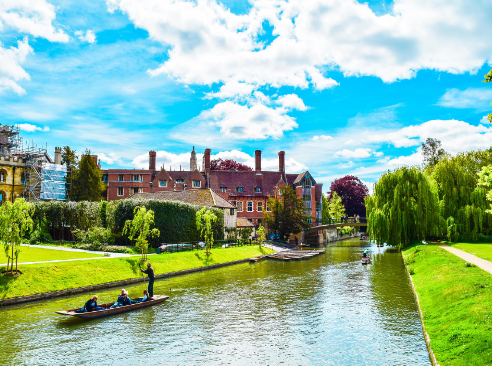
Punting on the River Cam: A traditional way to see the “Backs” – the gardens and rear views of the colleges.
Trinity College: Visit the Great Court and see the apple tree descendant from Isaac Newton’s original.
The Fitzwilliam Museum: An art and antiquities museum with a diverse collection.
Practical Information:
Getting There: Approximately 1 hour by train from London King’s Cross station.
Tip: Many colleges charge an entrance fee for visitors and may have restricted hours.
York
A wonderfully preserved medieval city in Northeast England, surrounded by ancient Roman walls.
Key Attractions:
York Minster: One of the world’s most magnificent cathedrals, with spectacular stained-glass windows.
The Shambles: A narrow, crooked medieval street lined with overhanging timber-framed buildings, said to be inspiration for Diagon Alley.
City Walls: Walk along the extensive and well-preserved medieval walls that encircle the old city.
National Railway Museum: A free museum housing a world-class collection of historic trains and locomotives.
Jorvik Viking Centre: An immersive museum built on the site of a Viking-age archaeological dig.
Practical Information:
Getting There: About 2 hours by train from London King’s Cross. 2.5 hours from Cambridge with a change.
Accommodation: Stay within the city walls for easy access to all attractions.
Edinburgh
The capital of Scotland is a dramatic and historic city, split between the Old Town and the Georgian New Town.
Key Attractions:
Edinburgh Castle: Dominating the city skyline, this historic fortress houses the Crown Jewels of Scotland and the Stone of Destiny.
Royal Mile: The main thoroughfare of the Old Town, connecting the Castle to the Palace of Holyroodhouse.
Palace of Holyroodhouse: The King’s official residence in Scotland.
Arthur’s Seat: An ancient volcano in Holyrood Park offering panoramic views of the city.
National Museum of Scotland: Covers Scottish history, world cultures, and natural history.
Practical Information:
Getting There: Around 2.5 hours by train from York.
Festivals: The Edinburgh Festival Fringe in August transforms the city; book accommodation far in advance.
Glasgow
Scotland’s largest city is known for its Victorian architecture, vibrant arts scene, and friendly locals.
Key Attractions:
Kelvingrove Art Gallery and Museum: A magnificent museum with an eclectic collection, from art to natural history.
Glasgow Cathedral: A superb example of Scottish Gothic architecture.
Necropolis: A Victorian cemetery on a hill beside the cathedral, offering great city views.
George Square:The city’s main public square, surrounded by impressive municipal buildings.
Riverside Museum: An award-winning transport museum located on the banks of the River Clyde.
Practical Information:
Getting There: Just under 1 hour by train from Edinburgh.
Atmosphere: More modern and gritty than Edinburgh, with excellent shopping and nightlife.
Windermere & Bowness-on-Windermere
The heart of the Lake District National Park, England’s largest natural lake and a UNESCO World Heritage Site known for its stunning scenery and literary connections.
Key Attractions:
Lake Windermere: Take a cruise or hire a rowboat to experience the lake from the water.
World of Beatrix Potter: An attraction in Bowness bringing the author’s beloved characters to life.
Hiking: Explore countless walking trails with breathtaking views, such as Orrest Head for a relatively easy climb with a great payoff.
Town Exploration: Visit nearby Ambleside or Grasmere (home of William Wordsworth).
Practical Information:
Getting There: Approximately 2.5 hours by train from Glasgow. The train station is in Windermere town; Bowness-on-Windermere (on the lake) is a short bus ride or 20-minute walk away.
Accommodation: Book well in advance, especially during summer. B&Bs are very popular.
Manchester
A major city with an illustrious industrial past, now renowned for its music scene, football clubs, and cultural offerings.
Key Attractions:
Science and Industry Museum: Housed in the world’s oldest passenger railway station, it explores Manchester’s industrial legacy.
Old Trafford & Etihad Stadium: Take a tour of the home stadiums of Manchester United or Manchester City.
Manchester Art Gallery: Houses a fine collection of British and European art.
The Northern Quarter:The city’s bohemian district, full of independent shops, cafes, and street art.
John Rylands Library:A stunning neo-Gothic library that feels like a cathedral of knowledge.
Practical Information:
Getting There: About 1.5-2 hours by train from Windermere (often with a change at Oxenholme).
Chatsworth House
A magnificent stately home in the Peak District, often associated with Jane Austen’s “Pride and Prejudice” as the inspiration for Pemberley.
Key Attractions:
The House: Explore over 30 rooms filled with priceless paintings, furniture, and artefacts collected over 16 generations.
The Garden: A 105-acre landscape with famous water features, a maze, and the Cascade waterfall.
The Farmyard and Adventure Playground: Excellent for families.
The Estate: Enjoy walks through the vast parkland with its herd of deer.
Practical Information:
Getting There: Best accessed by car from Manchester (approx. 1 hour). Public transport involves trains to Chesterfield or Bakewell followed by a bus. Many opt for an organized tour.
Tickets: Book online in advance, especially during peak season. Various ticket options are available (house, garden, farmyard).
Stratford-upon-Avon
A historic market town on the River Avon, famous as the birthplace of William Shakespeare.
Key Attractions:
Shakespeare’s Birthplace: Explore the half-timbered house where the playwright was born and grew up.
Anne Hathaway’s Cottage:The picturesque childhood home of Shakespeare’s wife.
Holy Trinity Church:The final resting place of Shakespeare.
The Royal Shakespeare Theatre: Watch a play by the world-renowned Royal Shakespeare Company.