Comprehensive Travel Guide: Germany, Sweden, Norway, Poland
This guide details a multi-country European itinerary connecting major cities and stunning natural landscapes across Germany, Sweden, Norway, and Poland. The route is designed for a mix of urban exploration and scenic train, ferry, and road journeys.
Itinerary Overview
The journey is a loop starting and ending in Berlin, Germany. The core segments are:
Germany & Denmark: Berlin -> Rostock -> Copenhagen (by ferry)
Sweden & Norway: Copenhagen -> Oslo -> Norwegian Fjords & Mountains (Hemsedal, Flam, Gudvangen, Voss, Bergen) -> Oslo
Sweden & Denmark: Oslo -> Gothenburg -> Malmo -> Copenhagen
Germany & Poland: Copenhagen -> Rostock -> Berlin -> Poznan -> Warsaw -> Krakow -> Auschwitz -> Wroclaw -> Berlin
Country-Specific Travel Information
Germany (Deutschland)
Currency: Euro (€)
Language: German. English is widely spoken in cities and tourist areas.
Transport: Excellent rail network (Deutsche Bahn), efficient inter-city buses (FlixBus), and well-maintained autobahns.
Sweden (Sverige)
Currency: Swedish Krona (SEK)
Language: Swedish. English proficiency is very high.
Transport: Modern trains (SJ), buses, and domestic flights.
Norway (Norge)
Currency: Norwegian Krone (NOK)
Language: Norwegian. English is universally spoken.
Transport: Famous for its scenic railways (Vy), ferries, and buses. Travel is expensive.
Poland (Polska)
Currency: Polish Zloty (PLN)
Language: Polish. English is common in major cities and tourist sites.
Transport: Extensive and affordable train (PKP Intercity) and bus networks.
Detailed Itinerary and Destinations
Segment 1: Berlin, Germany to Copenhagen, Denmark
Berlin, Germany
Germany’s vibrant capital is a city of history, culture, and art.
Sights & Activities: Visit the Reichstag Building (book dome visit in advance), Brandenburg Gate, East Side Gallery (remaining section of the Berlin Wall), Holocaust Memorial, Museum Island (Pergamonmuseum, Neues Museum), Checkpoint Charlie, and Tiergarten park.
Practical Info: Get a Berlin WelcomeCard for public transport and discounts. The city is vast; use the U-Bahn (subway) and S-Bahn (city train).
Rostock, Germany
A historic Hanseatic city on the Baltic Sea coast, primarily a transit point to Scandinavia.
Sights & Activities: Stroll through the Neuer Markt square, see the Gothic St. Mary’s Church, and walk along the Warnow River. The main reason to be here is the ferry to Denmark.
Ferry to Denmark: Companies like Scandlines and TT Line operate ferries from Rostock to Gedser (Denmark). From Gedser, take a train to Copenhagen. The entire ferry-train connection is seamless.
Copenhagen, Denmark
The stylish and cozy capital of Denmark, known for its design, food, and “hygge”.
Sights & Activities: See the Little Mermaid statue, explore the freetown of Christiania, visit Tivoli Gardens amusement park, tour the canals by boat, and see the changing of the guard at Amalienborg Palace. Walk along the colorful Nyhavn harbor.
Practical Info: The Copenhagen Card offers access to public transport and many attractions. The city is very bike-friendly.
Segment 2: Copenhagen to the Norwegian Fjords and Back
Oslo, Norway
The modern capital of Norway, set between the Oslofjord and forested hills.
Sights & Activities: Explore the Viking Ship Museum (currently closed for relocation, check for reopening), Fram Museum, Kon-Tiki Museum, the Norwegian National Opera & Ballet, and the Vigeland Sculpture Park.
Getting There: Overnight ferry from Copenhagen (DFDS Seaways) or a direct flight/train.
The Scenic Heart of Norway: Hemsedal to Bergen
Hemsedal
A popular mountain destination, known for hiking in summer and skiing in winter.
Sights & Activities: Hiking to Totten, skiing at Hemsedal Ski Resort, and enjoying the fresh mountain air.
Transport: Accessed by bus from Oslo or by car.
The “Norway in a Nutshell” Route: Flam – Myrdal – Flam – Gudvangen – Voss – Bergen
This is a world-famous tourist route that can be done independently or as a packaged tour. It showcases fjords, mountains, and railways.
Flam (Flåm): A tiny village at the head of the Aurlandsfjord. Home to the Flam Railway (Flåmsbana), one of the world’s steepest and most beautiful train rides.
Flam Railway (Flam to Myrdal): A 20km journey with breathtaking views of waterfalls and mountains. The train makes a photo stop at the powerful Kjosfossen waterfall.
Myrdal (Myrdal): A mountain station high on the plateau, serving as a transfer point between the Flam Railway and the main Oslo-Bergen railway line.
Naeroyfjord Cruise (Gudvangen to Flam): A scenic ferry cruise through the Naeroyfjord, a UNESCO World Heritage site and one of the narrowest fjords in the world. The trip from Flam to Gudvangen is the same route.
Gudvangen: A small village at the end of the Naeroyfjord. From here, buses connect to Voss.
Voss: A larger town situated between a lake and mountains, known as an adventure sports hub.
Bergen, Norway
A historic Hanseatic city surrounded by seven mountains, known as the “Gateway to the Fjords”.
Sights & Activities: Explore the UNESCO-listed Bryggen wharf with its colorful wooden houses, take the Floibanen Funicular to Mount Floyen for panoramic views, visit the Fish Market, and explore the Hakons Hall.
Practical Info: Bergen is famous for its rain; pack a waterproof jacket.
The Hardangerfjord Scenic Route: Norheimsund – Eidfjord
A detour showcasing another beautiful fjord region.
Norheimsund: A village on the Folgefonna peninsula, offering views of the Hardangerfjord.
Eidfjord: A branch of the Hardangerfjord, with access to the Voringsfossen waterfall and the Hardangervidda Nature Centre.
Geilo
A mountain resort town located roughly halfway on the Oslo-Bergen railway line.
Return to Oslo
The journey back to Oslo can be done via the scenic Bergen Railway (Bergensbanen) from Voss or Geilo, completing one of the world’s most beautiful train journeys.
Segment 3: Oslo to Copenhagen via Sweden
Gothenburg (Göteborg), Sweden
Sweden’s second-largest city, with a laid-back maritime atmosphere.
Sights & Activities: Visit Liseberg amusement park, explore the Haga district with its cozy cafes, see the Fish Church (Feskekörka) fish market, and take a boat tour of the archipelago.
Transport: Easily reached by train or bus from Oslo.
Malmö, Sweden
A dynamic city just across the Öresund Bridge from Copenhagen.
Sights & Activities: See the Turning Torso skyscraper, explore the historic Gamla Staden (Old Town), and relax in Kungsparken.
Transport to Copenhagen: A frequent train crosses the impressive Öresund Bridge directly to Copenhagen Central Station (approx. 35-40 minutes).
Copenhagen to Berlin via Rostock
The reverse of the initial journey. Take a train from Copenhagen to Gedser (or Rodbyhavn) and then a ferry to Rostock. From Rostock, a direct train will take you back to Berlin.
Segment 4: Berlin into Poland and Back
Poznań, Poland
One of Poland’s oldest cities, known for its Renaissance Old Town and trading history.
Sights & Activities: See the Town Hall with its mechanical fighting goats that appear at noon, stroll through the Old Market Square (Stary Rynek), and visit the Imperial Castle.
Transport: Direct trains from Berlin Hauptbahnhof take about 2.5 hours.
Warsaw (Warszawa), Poland
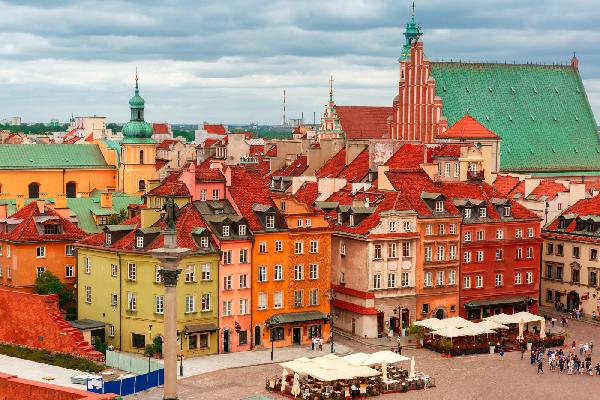
The capital of Poland, painstakingly rebuilt after its near-total destruction in World War II.
Sights & Activities: Explore the meticulously reconstructed Old Town (a UNESCO site), walk the Royal Route, visit the POLIN Museum of the History of Polish Jews, see the Warsaw Uprising Museum, and ascend the Palace of Culture and Science for city views.
Practical Info: The public transport system (trams, metro, buses) is efficient. Consider a Warsaw Pass for discounts.
Kraków, Poland
A jewel of European culture, Kraków’s historic center escaped WWII destruction and is a UNESCO World Heritage site.
<
Sights & Activities: