Central & Northern Europe Grand Tour: A Comprehensive Travel Guide
This guide details a grand tour through the heart of Europe, from the romantic streets of Paris to the majestic fjords of Norway, traversing historic cities, charming towns, and breathtaking natural landscapes across ten countries.
Overview and Itinerary
This extensive journey is best undertaken over a period of 4-6 weeks to fully appreciate each destination. The route combines major cultural capitals with scenic train journeys and road trips, particularly through the Norwegian fjords. The itinerary is a loop, starting and ending in major transport hubs like Berlin or Paris.
Core Route: Paris → Dijon → Lucerne → Liechtenstein → Munich → German-Austrian Border Towns → Vienna → Budapest → Prague → Berlin → Rostock → Copenhagen → Oslo → Heimsedal → Flåm → Myrdal → Flåm → Gudvangen → Voss → Bergen → Norheimsund → Øystese → Hardangerfjord (e.g., Eidfjord) → Geilo → Oslo → Gothenburg → Malmö → Copenhagen → Rostock → Berlin.
Country and City Guides
France
Paris
The journey begins in the French capital, a city renowned for its art, architecture, and cuisine. Key attractions include the Eiffel Tower, the Louvre Museum, Notre-Dame Cathedral (exterior viewing due to restoration), and the Champs-Élysées. Stroll through Montmartre and visit the Sacré-Cœur Basilica for panoramic city views.
Practical Info: The Paris Metro is efficient for getting around. Purchase a carnet of tickets or a Navigo pass for longer stays. Museum passes can save money and time.
Food & Drink: Enjoy classic pastries at a local boulangerie, sample cheese, and experience a traditional French bistro.
Dijon
A stop in the Burgundy region, Dijon is famous for its mustard and as a gateway to Burgundy wines. The city’s well-preserved historic center is a UNESCO World Heritage site. Visit the Palace of the Dukes of Burgundy and the Musée des Beaux-Arts.
Practical Info: Dijon is easily reached from Paris by TGV (high-speed train) in about 1.5 hours.
Food & Drink: Try Boeuf Bourguignon, Escargots, and of course, Dijon mustard. Wine tasting tours to nearby vineyards are highly recommended.
Switzerland
Lucerne (Luzern)
Nestled amid snow-capped mountains on the shores of Lake Lucerne, this city is postcard-perfect. Walk across the iconic Chapel Bridge (Kapellbrücke), explore the well-preserved Old Town, and visit the Lion Monument. A boat trip on Lake Lucerne or an excursion to nearby Mount Pilatus or Rigi is essential.
Practical Info: Switzerland uses the Swiss Franc (CHF). The Swiss Travel Pass can offer excellent value for train, bus, and boat travel.
Food & Drink: Try Swiss classics like Fondue, Rösti (fried grated potatoes), and Luzerner Chügelipastete (a vol-au-vent pastry).
Liechtenstein
Vaduz
This microstate between Switzerland and Austria is a unique stop. The capital, Vaduz, is dominated by Vaduz Castle, the residence of the Prince. Visit the Kunstmuseum Liechtenstein (Art Museum) and get your passport stamped as a souvenir at the Tourist Information center.
Practical Info: Liechtenstein uses the Swiss Franc (CHF). It’s easily accessible by bus from Swiss towns like Sargans or Buchs.
Food & Drink: Influenced by Swiss and Austrian cuisines.
Germany
Munich (München)
The capital of Bavaria, Munich blends traditional German culture with modern innovation. Explore Marienplatz and see the Glockenspiel show, visit the sprawling Englischer Garten, and see the Residenz palace. For beer enthusiasts, a visit to a traditional beer hall like Hofbräuhaus is a must.
Practical Info: Germany is part of the Eurozone. Munich has an excellent public transport system (MVV).
Food & Drink: Weisswurst (white sausage), Pretzels, Schweinshaxe (pork knuckle), and of course, beer.
German-Austrian Border Towns
This region, such as the area around Berchtesgaden and Salzburg, is stunning. Consider visiting the Königssee, a pristine alpine lake in Germany, or crossing into Austria to explore Salzburg, the birthplace of Mozart, known for its baroque architecture and Hohensalzburg Fortress.
Berlin
Germany’s vibrant capital is rich with history and contemporary culture. Key sites include the Brandenburg Gate, Reichstag Building (book dome visit in advance), East Side Gallery (remnants of the Berlin Wall), Checkpoint Charlie, and the Holocaust Memorial.
Practical Info: The Berlin WelcomeCard offers discounts and unlimited public transport.
Food & Drink: Doner Kebab (invented in Berlin), Currywurst, and international cuisine from its diverse neighborhoods.
Rostock
A historic Hanseatic city on the Baltic Sea coast, Rostock serves as the main port for ferries to Denmark. The medieval city center with its Gothic brick architecture and the Warnemünde district with its lighthouse and sandy beach are worth exploring.
Austria
Vienna (Wien)
A city of imperial grandeur and music. Visit the Schönbrunn Palace, Hofburg Palace, St. Stephen’s Cathedral, and the Vienna State Opera. Experience coffee culture in a traditional Viennese coffee house.
Practical Info: Austria uses the Euro. The Vienna Card provides transport and museum discounts.
Food & Drink: Wiener Schnitzel, Sachertorte (chocolate cake), and Apfelstrudel.
Hungary
Budapest
The “Pearl of the Danube” is split into two parts: hilly Buda and flat Pest. Cross the iconic Chain Bridge, explore Buda Castle, relax in the Széchenyi Thermal Baths, and see the Hungarian Parliament Building. A river cruise at night is highly recommended.
Practical Info: Hungary uses the Hungarian Forint (HUF). Public transport is extensive and affordable.
Food & Drink: Goulash, Lángos (fried dough), and Tokaji wine.
Czech Republic (Czechia)
Prague (Praha)
The “City of a Hundred Spires” is a fairy-tale destination. Walk across Charles Bridge at dawn, explore Prague Castle complex, see the Astronomical Clock in Old Town Square, and wander through the Jewish Quarter.
Practical Info: The Czech Republic uses the Czech Koruna (CZK). The city is very walkable, but trams are efficient for longer distances.
Food & Drink: Trdelník (pastry), Roasted Duck, Knedlíky (dumplings), and world-famous Pilsner beer.
Denmark
Copenhagen (København)
A city known for its cycling culture, modern design, and “hygge” (coziness). Visit the statue of The Little Mermaid, explore the freetown of Christiania, see the changing of the guard at Amalienborg Palace, and enjoy Tivoli Gardens.
Practical Info: Denmark uses the Danish Krone (DKK). Biking is a primary mode of transport; rentals are widely available.
Food & Drink: Smørrebrød (open-faced sandwiches), Danish pastries, and New Nordic cuisine.
Norway
The Norwegian segment focuses on the famous “Norway in a Nutshell” route and beyond, showcasing dramatic fjord landscapes.
Oslo
The capital offers a mix of modern architecture and green spaces. Visit the Viking Ship Museum, the Fram Museum, the Vigeland Sculpture Park, and the opera house for its unique architecture.
The Fjord Region: Heimsedal to Bergen
This is a scenic train and ferry journey through Norway’s most spectacular scenery.
Heimsedal: A popular mountain resort area.
Flåm & The Flåm Railway (Flåmsbana): One of the world’s steepest railway journeys, offering stunning views of mountains and waterfalls.
Myrdal: A mountain station where the Flåm Railway connects to the main Bergen Line.
Nærøyfjord Ferry: A UNESCO-listed fjord ferry trip from Flåm to Gudvangen, passing dramatic, narrow cliffs.
Gudvangen & Voss: Gudvangen is set in a dramatic valley; Voss is known for its stunning lake and adventure sports.
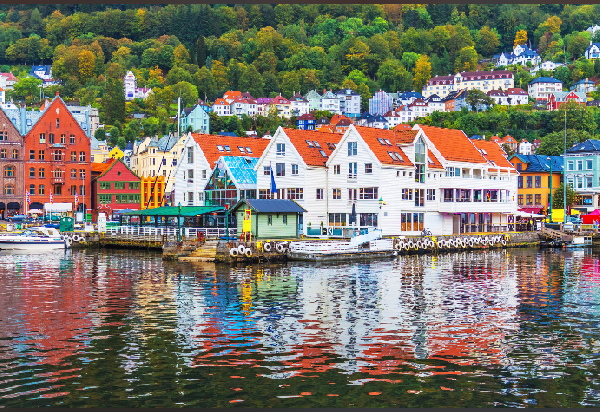
Bergen:The picturesque gateway to the fjords. Explore Bryggen Hanseatic wharf (a UNESCO site), take the funicular to Mount Fløyen for city views, and visit the fish market.
Hardangerfjord (Norheimsund, Øystese, Eidfjord):A scenic region known for its fruit orchards and the magnificent Vøringfossen waterfall near Eidfjord.
Geilo:A ski resort town on the Bergen Line, perfect for a stop between the fjords and Oslo.
Practical Info: Norway uses the Norwegian Krone (NOK). The “Norway in a Nutshell” ticket simplifies this complex journey. Food and accommodation are expensive; consider self-catering.
Food & Drink: Brunost (brown cheese), fresh salmon, reindeer meat, and cloudberries.
Sweden
Gothenburg (Göteborg)
A coastal city with Dutch-style canals and a laid-back atmosphere. Visit Liseberg amusement park, the Haga district with its picturesque wooden houses, and the Feskekôrka fish market.
Malmö
Connected to Copenhagen by the impressive Öresund Bridge. See the Turning Torso skyscraper and explore Gamla Staden (Old Town).
Practical Info: Sweden uses the Swedish Krona (SEK). The Öresund Bridge has a train connection between Malmö and Copenhagen.
Practical Travel Information
Transportation
Inter-Country Travel:A Eurail Global Pass is highly recommended for flexibility across all these countries (except Liechtenstein, which has no railways). For specific high-speed trains like French TGIs or German ICEs, seat reservations are mandatory and cost extra. Long-distance buses (FlixBus) are a cheaper alternative.
Ferries:The route includes two key ferry crossings: Rostock (Germany) to Gedser (Denmark) or similar, and multiple scenic ferries within the Norwegian fjords.
Internal Transport:Major cities have efficient public transport systems. Purchase day passes or city cards for savings.
Schengen Area Note
The countries on this itinerary (except Liechtenstein) are part of the Schengen Area. This means no border controls when traveling between them. Non-EU/EEA citizens can stay for up to 90 days within any 180-day period across the entire Schengen Zone.