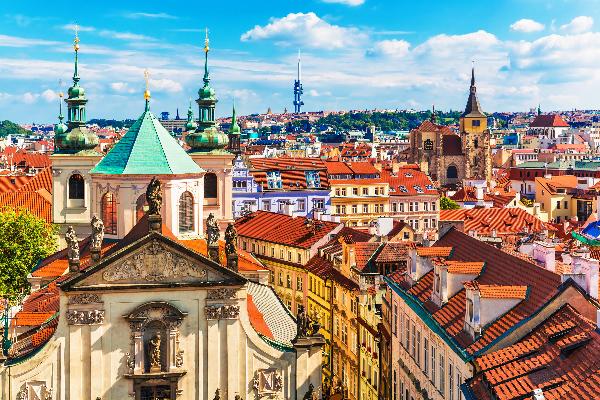
Central European Grand Tour: Stuttgart to the Heart of Europe
This comprehensive travel guide details a classic Central European circuit, a journey through history, art, and stunning landscapes. The route begins and ends in Stuttgart, Germany, weaving through the spa towns of the Czech Republic, the golden cities of Prague, Bratislava, Budapest, and Vienna, and culminating in the Alpine splendors of Salzburg and Neuschwanstein Castle before returning to the start. This itinerary is designed for a two to three-week trip, offering a deep dive into the diverse cultures of this fascinating region.
Route Overview & Logistics
The proposed route is:
Stuttgart (Germany) → Mariánské Lázně (Czech Republic) → Prague (Czech Republic) → Bratislava (Slovakia) → Budapest (Hungary) → Vienna (Austria) → Salzburg (Austria) → Munich (Germany) → Neuschwanstein Castle (Germany) → Stuttgart (Germany).
Best Time to Travel: Late spring (May-June) and early autumn (September-October) offer pleasant weather, fewer crowds, and beautiful scenery. Summer is peak season with more tourists, while winter provides magical Christmas markets.
Transportation: A combination of trains and buses is highly recommended. The European rail network is efficient and scenic. Companies like Deutsche Bahn (DB), ÖBB (Austrian Railways), and RegioJet (private Czech carrier) offer excellent connections. For flexibility, especially for the Neuschwanstein leg, renting a car from Munich or Stuttgart can be advantageous.
Currency: Germany and Austria use the Euro (€). The Czech Republic uses the Czech Koruna (CZK), Hungary uses the Hungarian Forint (HUF), and Slovakia uses the Euro (€). It is advisable to have some local currency on hand, especially in the Czech Republic and Hungary.
Visa: All these countries are part of the Schengen Area. A Schengen visa allows travel across all of them for most international travelers. Always check specific visa requirements based on your nationality.
1. Stuttgart, Germany
Stuttgart, the capital of Baden-Württemberg, is a hub of German engineering and culture, surrounded by vineyards and forests. It serves as an excellent starting point for this journey.
Attractions
Mercedes-Benz Museum: A breathtaking architectural marvel that takes visitors on a journey through over 130 years of automotive history.
Porsche Museum: Another must for car enthusiasts, showcasing the history and iconic models of the Porsche brand in a futuristic building.
Stuttgart Palace Square (Schlossplatz): The city’s central square, perfect for people-watching and surrounded by beautiful old buildings and gardens.
Wilhelma Zoo and Botanical Garden: One of Europe’s most diverse zoological-botanical gardens, located on the grounds of a former royal palace.
Food & Drink
Maultaschen: Swabian pasta pockets filled with meat, spinach, or herbs.
Spätzle: Soft egg noodles, often served with cheese (Käsespätzle) or lentils.
Local Wine: Sample Trollinger or Lemberger red wines from the local vineyards.
Transportation & Accommodation
Stuttgart has an excellent public transport system (VVS). The city center is compact and walkable. Stay in areas like Mitte (city center) for proximity to sights or near the main train station (Hauptbahnhof) for easy transit connections. Mid-range and luxury hotels are plentiful.
2. Mariánské Lázně (Marienbad), Czech Republic
A scenic train ride from Stuttgart via Nuremberg or Cheb brings you to Mariánské Lázně, the second largest Czech spa town. It is a serene destination known for its healing springs and elegant colonnades.
Attractions
The Colonnade: A magnificent cast-iron structure from the 19th century where visitors can sample water from several mineral springs.
Singing Fountain: In front of the Colonnade, this fountain puts on a choreographed water and music show several times a day.
Forest Springs and Hiking Trails: The town is surrounded by beautiful forests with numerous walking paths leading to other springs and viewpoints.
Goethovo Square: The main square, named after the famous German writer Johann Wolfgang von Goethe, who frequently visited.
Food & Drink
Spa Wafers (Lázeňské oplatky): Thin, warm wafers, a traditional spa treat.
Becherovka: A herbal bitter liqueur produced in nearby Karlovy Vary.
Traditional Czech Dishes: Such as Svíčková (marinated beef with cream sauce) or Vepřo-knedlo-zelo (roast pork with dumplings and sauerkraut).
Transportation & Accommodation
The town is best explored on foot. Accommodation ranges from historic grand spa hotels to smaller pensions. Staying in a spa hotel often includes treatment packages.
3. Prague, Czech Republic
A short train ride from Mariánské Lázně leads to the “City of a Hundred Spires.” Prague, the Czech capital, is a fairy-tale city of Gothic, Baroque, and Renaissance architecture.
Attractions
Prague Castle: The largest ancient castle complex in the world, containing St. Vitus Cathedral, the Old Royal Palace, and Golden Lane.
Charles Bridge: A historic bridge adorned with statues, offering stunning views of the castle and the Vltava River.
Old Town Square & Astronomical Clock: The heart of Prague, featuring the famous medieval clock that puts on a show every hour.
Jewish Quarter (Josefov): Home to several synagogues and the Old Jewish Cemetery, bearing witness to centuries of Jewish history.
Food & Drink
Trdelník:A sweet pastry rolled on a spit, grilled, and coated with sugar and nuts.
Pilsner Urquell:The world’s first pale lager, best enjoyed in a traditional Czech pub.
Goulash:A hearty beef stew, often served in a bread bowl.
Transportation & Accommodation
Prague has an extensive and efficient metro, tram, and bus network. The city center is very walkable but hilly. Stay in districts like Old Town (Staré Město), Lesser Town (Malá Strana), or Vinohrady for a good mix of accessibility and local charm.
4. Bratislava, Slovakia
A short train or bus ride from Prague leads to Bratislava, the compact and charming capital of Slovakia, strategically located on the Danube River.
Attractions
Bratislava Castle:Overlooking the city, this reconstructed castle offers panoramic views of Bratislava, Austria, and Hungary.
Old Town (Staré Mesto):A picturesque area with cobblestone streets, pastel-colored buildings, and lively squares like Hlavné Námestie.
UFO Tower:Located on the SNP Bridge, it offers a unique observation deck and restaurant with unparalleled 360-degree views.
St. Martin’s Cathedral:The coronation church for Hungarian kings for nearly 300 years.
Food & Drink
Bryndzové Halušky:The national dish: potato dumplings with sheep cheese and bacon.
Slovak Wine:The Little Carpathians region produces excellent wines, particularly Riesling and Grüner Veltliner.
Kofola:A popular Slovak carbonated soft drink, similar to cola but with a herbal taste.
Transportation & Accommodation
Bratislava’s city center is very small and easily explored on foot. Trams and buses cover the rest. Accommodation is generally more affordable than in neighboring capitals; consider staying in or near the Old Town.
5. Budapest, Hungary
A scenic journey up the Danube by train or boat brings you to Budapest, the “Pearl of the Danube.” This vibrant city is actually two cities—Buda and Pest—unified in 1873.
Attractions
Buda Castle & Fisherman’s Bastion:The historic castle complex on Castle Hill offers stunning views of Pest. The neo-Romanesque Fisherman’s Bastion looks like a fairy-tale terrace.
Hungarian Parliament Building:A magnificent example of Neo-Gothic architecture, best viewed from the Buda side or by a river cruise.
Szent István Bazilika (St. Stephen’s Basilica):The largest church in Budapest, housing the sacred right hand of St. Stephen.
Széchenyi Thermal Baths:One of the largest spa complexes in Europe, located in City Park. A quintessential Budapest experience.
Food & Drink
Goulash (Gulyás):A Hungarian staple, a hearty meat and vegetable soup seasoned with paprika.
Lángos:A deep-fried dough flatbread topped with sour cream and cheese.
Tokaji Aszú:A world-renowned sweet dessert wine from the Tokaj region.
Transportation & Accommodation
Budapest has a comprehensive metro, tram, and bus system. The city is large but manageable with public transport. For atmosphere, stay in District V (Pest side) for proximity to sights and restaurants, or on the Buda side for a quieter, more residential feel.
6. Vienna, Austria
A short train ride from Budapest leads to Vienna, the imperial capital of Austria, synonymous with music, art, and grand coffeehouse culture.
Attractions
Schönbrunn Palace:The former summer residence of the Habsburgs, with stunning rooms, vast gardens, and the world’s oldest zoo.
St. Stephen’s Cathedral (Stephansdom):The Gothic centerpiece of Vienna, with a colorful tiled roof.
The Hofburg:The former imperial palace in the center of the city, now housing museums, the Spanish Riding School, and the Austrian president’s office.
The Belvedere Palace:A beautiful Baroque palace complex housing an art museum with Gustav Klimt’s famous painting “The Kiss.”
Food & Drink
Wiener Schnitzel:A thin, breaded, and fried veal cutlet.
Sacher-Torte:A famous chocolate cake with a thin layer of apricot jam, invented in Vienna.
Coffeehouse Culture:Spend an afternoon at a traditional Kaffeehaus like Café Central or Café Sacher, enjoying coffee and cake.
Transportation & Accommodation
Vienna’s public transport (U-Bahn, trams, buses) is excellent. The Innere Stadt (Inner City) is a UNESCO World Heritage site and is best explored on foot. For a classic experience, stay in the Innere Stadt or in districts like Mariahilf or Neubau.
7. Salzburg, Austria
A train journey west from Vienna takes you to Salzburg, nestled at the foot of the Alps. It is the birthplace of Mozart and the setting for “The Sound of Music.”
Attractions
Hohensalzburg Fortress:One of the largest medieval castles in Europe, overlooking the city. Reachable by funicular or a steep walk.
Mirabell Palace and Gardens:The beautiful gardens featured in “The Sound of Music.” The Marble Hall inside the palace is a popular wedding venue.
Getreidegasse:A bustling shopping street known for its ornate wrought-iron shop signs and Mozart’s Birthplace.
Hellbrunn Palace & Trick Fountains:A Renaissance villa with unique water-powered trick fountains in its gardens.
Food & Drink
Mozartkugel:A famous chocolate confection made of marzipan, nougat, and dark chocolate.
Salzburger Nockerl:A sweet soufflé dessert representing the three hills surrounding Salzburg.
Austrian Beer: