Central European Grand Tour: From Frankfurt to the Alps and Beyond
This comprehensive travel guide details a classic Central European circuit, connecting the financial hubs, alpine wonders, and imperial capitals of Germany, Switzerland, Liechtenstein, Austria, Hungary, and the Czech Republic. The journey is a rich tapestry of diverse cultures, languages, histories, and landscapes, all conveniently connected by efficient transportation networks.
1. Frankfurt, Germany: The Gateway
Often the starting point due to its major international airport, Frankfurt am Main is a city of contrasts, where modern skyscrapers stand alongside reconstructed historical landmarks.
Römerberg: The historic heart of the city, featuring picturesque half-timbered houses and the Römer, Frankfurt’s city hall for over 600 years.
St. Bartholomew’s Cathedral (Kaiserdom): A stunning Gothic cathedral where Holy Roman Emperors were elected and crowned.
Museum Embankment (Museumsufer): A unique concentration of museums on both sides of the River Main, covering art, film, architecture, and more.
Food & Drink: Do not leave without trying Frankfurter Grüne Soße (green sauce made with seven herbs) with boiled potatoes and eggs, and washing it down with a glass of Apfelwein (tart apple wine) in a traditional apple wine tavern in the Sachsenhausen district.
Transport Tip: Frankfurt’s central station (Hauptbahnhof) is one of Europe’s largest. From here, you can catch high-speed trains to your next destination. Consider the Frankfurt Card for discounts on public transport and museums.
2. Zurich, Switzerland: Efficiency Meets Natural Beauty
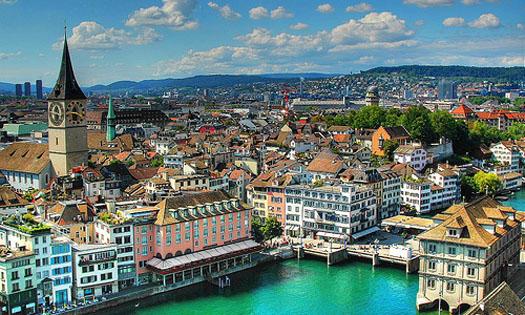
A direct train from Frankfurt takes you to Zurich, Switzerland’s largest city, seamlessly blending a modern financial center with a beautifully preserved old town and a stunning lakeside location.
Old Town (Altstadt): Wander through the narrow, winding lanes on both sides of the Limmat River. Explore the Guild Houses, the Lindenhof park for panoramic views, and the charming Niederdorf district.
Lake Zurich (Zürichsee): Take a boat cruise to appreciate the city from the water, with the Alps forming a dramatic backdrop.
Bahnhofstrasse: One of the world’s most exclusive shopping avenues, leading from the main station to the lake.
Swiss National Museum: Housed in a fairytale-like castle, it offers a deep dive into Swiss cultural history.
Food & Drink: Indulge in Zürcher Geschnetzeltes (sliced veal in a creamy mushroom and white wine sauce) with Rösti. For a unique experience, try fondue or raclette in a traditional restaurant. Don’t forget Swiss chocolate from Confiserie Sprüngli.
Cultural Insight: Zurich has a vibrant and often surprising art scene. The former industrial district of Zurich-West is now a hub for contemporary art, design, and nightlife.
3. Lucerne, Switzerland: Picture-Perfect Alpine Postcard
A short train ride from Zurich brings you to Lucerne, a city that encapsulates Swiss charm with its pristine lake, mountain vistas, and well-preserved medieval architecture.
Chapel Bridge (Kapellbrücke): The iconic covered wooden footbridge, adorned with 17th-century paintings, is the symbol of the city.
Water Tower: The octagonal stone tower adjacent to the Chapel Bridge, which has served as a prison, treasury, and torture chamber.
Old Town: Explore the colorful squares and buildings with detailed frescoes on their facades.
Lion Monument (Löwendenkmal): A poignant sculpture of a dying lion carved into rock, commemorating the Swiss Guards who died during the French Revolution.
Mount Pilatus or Mount Rigi: Take a cogwheel railway or cable car to the summit for breathtaking panoramic views of the Swiss Alps.
Food & Drink: Enjoy a lakeside meal with views of Mount Pilatus. Swiss classics like cheese fondue are ubiquitous here. Also, try Luzerner Chügelipastete, a vol-au-vent filled with diced meat and mushrooms in a cream sauce.
Transport Tip: The Swiss Travel Pass is highly valuable for this leg of the journey, covering trains, buses, boats, and even discounts on mountain railways.
4. Liechtenstein: A Day in a Microstate
A brief bus or train ride from Lucerne or Zurich takes you into the tiny Principality of Liechtenstein, nestled between Switzerland and Austria. It’s perfect for a day trip.
Vaduz: The capital city, dominated by Vaduz Castle, the official residence of the Prince of Liechtenstein. The castle is not open to the public, but the views from below are impressive.
Kunstmuseum Liechtenstein: A striking black cube housing modern and contemporary art.
The Postage Stamp Museum: A charming museum detailing the country’s famous philatelic history.
Food & Drink: Have lunch in a Vaduz café. While the cuisine is similar to its Swiss and Austrian neighbors, you can sample local wines from the Prince’s own vineyards.
Practical Tip: Get your passport stamped as a souvenir at the Tourist Information office for a small fee—a popular memento from one of the world’s smallest countries.
5. Munich, Germany: The Heart of Bavaria
Travel from Liechtenstein via train (often changing in Buchs or Sargans) to Munich (München), the capital of Bavaria, known for its hearty traditions, world-class museums, and beer culture.
Marienplatz: The central square, home to the New Town Hall (Neues Rathaus) and its famous Glockenspiel, which chimes and reenacts stories daily.
English Garden (Englischer Garten): One of the world’s largest urban parks, where you can see surfers riding the standing wave in the Eisbach river.
Hofbräuhaus: The world’s most famous beer hall, offering a quintessential Bavarian experience with oompah music, giant pretzels, and liter-sized beer steins.
Nymphenburg Palace: A magnificent Baroque palace with sprawling gardens, once the summer residence of Bavarian rulers.
Dachau Concentration Camp Memorial Site: A sobering but essential visit located just outside Munich, serving as a powerful reminder of history.
Food & Drink: Beyond beer, savor Bavarian specialties like Weißwurst (white sausage) with sweet mustard, Schweinshaxe (roasted pork knuckle), and Obatzda (a spiced cheese-butter spread).
Cultural Insight: Munich is a city of “laptop and lederhosen,” effortlessly blending high-tech industry with deep-rooted folk traditions. Visit during Oktoberfest (late Sept-early Oct) for the ultimate celebration, but book everything far in advance.
6. Austrian Border Town: A Taste of Alpine Serenity
Instead of heading directly to Vienna, take a detour to a charming town in the Austrian Alps. A popular choice is
Salzburg, or for something smaller, consider Hallstatt. This guide will use Salzburg as the example.
Hohensalzburg Fortress: One of Europe’s largest and best-preserved medieval castles, overlooking the city. Reach it by funicular for stunning views.
Getreidegasse: The famous shopping street with its ornate wrought-iron guild signs.
Mirabell Palace and Gardens: The beautiful gardens featured in “The Sound of Music.”
Mozart’s Birthplace: A pilgrimage site for classical music lovers.
Food & Drink: Sample Austrian classics like Salzburger Nockerl (a sweet soufflé), Wiener Schnitzel, and Mozartkugeln (marzipan and chocolate balls). Enjoy coffee and cake in a traditional Café-Konditorei.
Transport Tip:The train journey from Munich to Salzburg is short and scenic. The Austrian rail system (ÖBB) is excellent. From here, you can catch a direct train to Vienna.
7. Vienna, Austria: Imperial Elegance
The train from Salzburg delivers you to Vienna (Wien), a city steeped in imperial history, classical music, and artistic grandeur.
Schönbrunn Palace:The magnificent former summer residence of the Habsburgs. Tour the opulent rooms and get lost in the vast gardens.
St. Stephen’s Cathedral (Stephansdom):The Gothic centerpiece of Vienna, with its colorful tiled roof.
Belvedere Palace:A beautiful Baroque complex housing an art museum with Gustav Klimt’s famous painting, “The Kiss.”
The Hofburg:The former imperial palace in the city center, now home to the Spanish Riding School, the Sisi Museum, and the imperial apartments.
The Vienna State Opera:Catch a world-class performance or take a guided tour of this historic building.
Food & Drink:The Viennese coffee house culture is UNESCO-listed. Spend an afternoon at Café Sacher for the original Sacher-Torte. Also try Tafelspitz(boiled beef) and visit a Heuriger(a traditional wine tavern) in the Grinzing or Neustift am Walde districts for local wine and cold cuts.
Cultural Insight:The legacy of composers like Mozart, Beethoven, and Strauss is palpable. Attending a concert in one of Vienna’s historic halls is a quintessential experience.
8. Budapest, Hungary: The Pearl of the Danube
A comfortable train ride east from Vienna brings you to Budapest, Hungary’s vibrant capital, often called “Paris of the East.” The city is actually two cities—Buda and Pest—separated by the Danube River.
Buda Castle & Castle Hill:A UNESCO World Heritage site featuring the Royal Palace, Matthias Church, and Fisherman’s Bastion with its fairytale turrets offering unparalleled views over Pest.
The Hungarian Parliament Building:A stunning example of Neo-Gothic architecture on the Pest side of the river. It’s especially beautiful when illuminated at night.
Shoes on the Danube Bank:A moving memorial to Jews who were shot at the edge of the river during World War II.
Szentendre:A charming artistic town just north of Budapest, perfect for a half-day trip.
The Széchenyi Thermal Baths:The largest medicinal bath in Europe. Relax in the outdoor pools surrounded by magnificent architecture, a true Budapest experience.
Food & Drink:Savor Hungarian cuisine which is rich and flavorful. Must-tries include Goulash(a meat and vegetable stew),Lángos(deep-fried dough with toppings), andChimney Cake (Kürtőskalács). Try local wines like Tokaji (a sweet dessert wine) or Egri Bikavér (Bull’s Blood).
Practical Tip:The Budapest Card can be a good value, offering free public transport and museum discounts. For the best views, take a evening cruise on the Danube.
9. Prague, Czech Republic: The City of a Hundred Spires
A train journey north from Budapest leads to Prague (Praha), an incredibly well-preserved medieval city that feels like stepping into a fairy tale.
Prague Castle:The largest ancient castle complex in the world according to the Guinness Book of Records. Don’t miss St. Vitus Cathedral within its grounds.
Charles Bridge:The iconic 14th-century stone bridge, lined with baroque statues and offering stunning views, best experienced at sunrise to avoid crowds.
Old Town Square (Staroměstské náměstí):The heart of Prague, home to the Astronomical Clock (Orloj), which puts on a show every hour, and the Gothic Týn Church.
Josefov (The Jewish Quarter):A area rich with history, including several synagogues and one of Europe’s oldest Jewish cemeteries.
The Dancing House (Tančící dům):A modern architectural landmark contrasting with the city’s historical buildings.
Cuisine & Drink:Czech food is hearty. EnjoySvíčková(marinated beef sirloin with a creamy sauce),Vepřo knedlo zelo(roast pork with dumplings and sauerkraut), andTrdelník(a sweet pastry similar to Kürtőskalács). The Czech Republic is the birthplace of Pilsner; enjoy a freshPilsner Urquellin a traditional pub (hospoda).