Athens Travel Guide: A Journey to the Cradle of Western Civilization
Athens, the historic capital of Greece, is a city where ancient mythology and modern life vibrantly coexist. Dominated by the iconic Acropolis, a beacon of classical spirit, Athens offers a profound journey through layers of history, from the birthplace of democracy to a contemporary European metropolis. This guide provides a comprehensive overview for travelers seeking to explore the wonders of Athens, with a special focus on the Acropolis, its majestic heart.
Introducing Athens
Athens is one of the world’s oldest cities, with a recorded history spanning over 3,400 years. It was the leading city of Ancient Greece during the first millennium BC, and its cultural and political achievements during the 5th century BC laid the foundations of Western civilization. Today, it is a sprawling, sun-drenched city of approximately 3.75 million people. The cityscape is a fascinating juxtaposition: neoclassical buildings stand beside Roman ruins and sleek modern structures, all watched over by the ancient marbles of the Acropolis. The atmosphere is a blend of bustling energy and laid-back Mediterranean charm, where discussions in cozy cafés are as important as business meetings.
The Acropolis: The Sacred Rock
The Acropolis, a UNESCO World Heritage site, is the most important ancient site in the Western world. Crowning a rocky outcrop 156 meters above sea level, it has been a center of human activity for thousands of years. A visit here is not merely sightseeing; it is a pilgrimage to the source of philosophy, theater, and democracy.
Key Monuments on the Acropolis
The Parthenon: The quintessential symbol of Athens and Ancient Greece, the Parthenon is a temple dedicated to the goddess Athena Parthenos (the Virgin). Built in the 5th century BC under the statesman Pericles, it is a masterpiece of Doric architecture and an enduring icon of proportion and beauty, despite the damage it has sustained over centuries.
The Propylaea: The monumental gateway to the Acropolis complex. This grand entrance, constructed of white Pentelic marble, was designed to prepare visitors for the splendors within and itself stands as a magnificent architectural achievement.
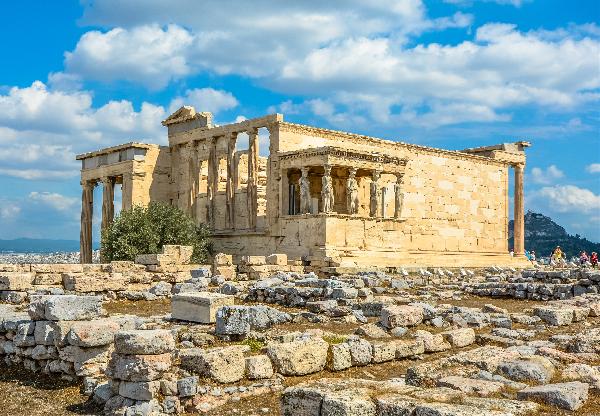
The Erechtheion: An intricate Ionic temple famous for its “Porch of the Caryatids”—six beautifully sculpted female figures that serve as supporting columns. The temple was dedicated to both Athena and Poseidon and marks the spot of their mythical contest for the patronage of the city.
The Temple of Athena Nike: A small, elegant temple perched on the southwest edge of the Acropolis, dedicated to Athena as the bringer of victory (Nike). Its delicate Ionic columns and friezes are a stunning example of classical artistry.
Practical Tips for Visiting the Acropolis
Tickets: It is highly recommended to purchase a “combo ticket” online in advance. This ticket provides access to the Acropolis and six other major archaeological sites (Ancient Agora, Roman Agora, etc.) over a five-day period and helps avoid long ticket queue lines.
Best Time to Visit: Arrive right at opening time (8:00 AM in summer) or later in the afternoon (after 4:00 PM) to avoid the largest crowds and the intense midday heat. Sunset from the Acropolis is a particularly magical experience.
What to Bring: Wear sturdy, comfortable shoes as the marble paths are uneven and slippery. Bring a hat, sunglasses, sunscreen, and plenty of water, as there is very little shade on the rock.
Accessibility: There is an elevator for visitors with mobility impairments; however, it is advisable to contact the site in advance to confirm its operation.
Exploring Beyond the Acropolis: Other Key Attractions
While the Acropolis is the star, the surrounding area and the city at its feet are rich with historical and cultural treasures.
Acropolis Museum: A must-visit after seeing the Acropolis itself. This stunning modern museum houses the artifacts found on the Sacred Rock. Its glass floors reveal excavations below, and the top-floor Parthenon Gallery offers a breathtaking view of the temple, with its marble friezes displayed in their original configuration.
Ancient Agora: Located northwest of the Acropolis, this was the heart of ancient Athenian public life. It was the center for political, commercial, administrative, and social activity. Key sites here include the remarkably well-preserved Temple of Hephaestus and the reconstructed Stoa of Attalos, which now houses the Agora Museum.
Plaka & Anafiotika: The old historical neighborhood of Athens, sprawling on the slopes of the Acropolis. With its labyrinthine, neoclassical streets, vibrant bougainvillea, and traditional tavernas, Plaka feels like a village within a city. Nestled above Plaka is Anafiotika, a tiny, whitewashed district built by Cycladic islanders in the 19th century, offering a serene escape with a distinct island vibe.
National Archaeological Museum: Widely considered one of the greatest museums in the world, it holds the richest collection of artifacts from Greek antiquity worldwide, spanning from prehistory to late antiquity. Highlights include the Mask of Agamemnon and the Antikythera Mechanism.
Mount Lycabettus: The highest point in central Athens. Visitors can take a funicular railway or hike to the top for panoramic 360-degree views of the entire city basin, all the way to the port of Piraeus and the Saronic Gulf. The sunset view is spectacular.
Culinary Journey: Food and Drink in Athens
Greek cuisine is a celebration of fresh, high-quality ingredients. Athenian dining ranges from humble street food to sophisticated modern Greek restaurants.
Must-Try Dishes
Souvlaki & Gyros: The quintessential Greek fast food. Souvlaki is grilled meat (usually pork or chicken) on a skewer, while gyros is meat roasted on a vertical rotisserie, both typically served wrapped in a soft pita with tomato, onion, tzatziki, and fries.
Moussaka: A classic baked casserole dish with layers of sautéed eggplant, minced meat (often lamb), and a creamy béchamel sauce topping.
Horiatiki (Greek Salad): A true Greek salad contains tomatoes, cucumber, red onion, green bell pepper, Kalamata olives, and a large slab of feta cheese, dressed simply with olive oil and oregano. It does not include lettuce.
Dolmades: Vine leaves stuffed with a mixture of rice, pine nuts, and herbs, sometimes including minced meat. They are often served with a lemon sauce.
Fresh Seafood: Being close to the sea, Athens offers excellent seafood. Look for grilled octopus, fried squid (kalamari), and barbounia (red mullet).
Drinks
Ouzo: The national spirit of Greece, an anise-flavored aperitif that turns milky white when mixed with water. It’s traditionally accompanied by meze (small appetizer plates).
Greek Wine: Greece has a thriving wine industry. Look for indigenous varieties like Assyrtiko (a crisp white from Santorini), Agiorgitiko (a rich red), and Xinomavro (a complex red).
Greek Coffee: A strong, thick coffee brewed in a small pot called a briki. It is served with the grounds in the cup and is a cultural ritual. Order it sketos (unsweetened), metrios (medium-sweet), or glykos (sweet).
Where to Eat
Psiri & Monastiraki: These adjacent neighborhoods are packed with traditional tavernas, ouzeries, and trendy bars. They are lively both day and night.
Central Market (Varvakios Agora): For an authentic experience, visit the bustling meat and fish market. The surrounding streets are filled with small eateries serving incredibly fresh food to market workers and locals.
Kolonaki: This upscale neighborhood at the foot of Lycabettus Hill is known for its chic cafes, fine-dining restaurants, and cocktail bars.
Getting Around Athens
Athens has an efficient and affordable public transportation system that makes navigating the city straightforward.
Metro: The Athens Metro is clean, safe, and efficient. It is the best way to cover long distances quickly. Key stations for tourists include “Acropoli” (for the Acropolis Museum and entrance), “Monastiraki” (for Plaka and the Ancient Agora), and “Syntagma” (for the city center and Parliament). The metro stations themselves are architectural sites, displaying artifacts unearthed during their construction.
Bus & Tram: The bus network covers areas not served by the metro. The tram is particularly useful for traveling from the city center to the coastal southern suburbs (Glyfada, Voula, Vouliagmeni).
Taxi & Ride-Sharing: Taxis are plentiful and relatively inexpensive compared to other European capitals. Ensure the meter is running or agree on a price beforehand for longer trips. Ride-sharing apps like Beat are also widely used and reliable.
On Foot: The historic center (Acropolis, Plaka, Monastiraki, Syntagma) is very walkable. Exploring on foot allows you to stumble upon hidden gems and fully absorb the city’s atmosphere.
Accommodation Tips: Where to Stay
Athens offers a wide range of accommodation to suit all budgets and travel styles.
Plaka & Monastiraki: Ideal for first-time visitors who want to be in the heart of the historic action. You’ll be within walking distance of major sites and surrounded by charming streets, but it can be noisy at night.
Syntagma: Centered around Syntagma Square and the Hellenic Parliament, this area is more upscale and business-oriented. It’s very central and well-connected by metro.
Kolonaki: A sophisticated neighborhood for travelers seeking luxury hotels, high-end shopping, and fine dining. It’s quieter but still central.
Psiri & Gazi: Perfect for those looking for a vibrant nightlife scene. These areas are filled with bars, clubs, and restaurants and have an edgy, artistic vibe.
Koukaki & Mets: Residential neighborhoods just south of the Acropolis that have become popular with tourists for their more local feel, excellent cafes, and good value accommodations. They are still very walkable to the main sites.
Cultural Insights and Etiquette
Understanding local customs will enrich your travel experience.
The Siesta: While less observed in the bustling city center than in villages, many smaller shops may still close in the afternoon (roughly 2:00 PM to 5:00 PM) before reopening in the evening.
Dining Times: Greeks typically dine late. It’s common for restaurants to be empty at 7:00 PM and bustling after 9:00 PM or even later.
Greetings: A handshake is common for initial greetings. Close friends and family often greet each other with embraces and kisses on both cheeks.
Church Etiquette: When visiting churches or monasteries, dress modestly. Shoulders and knees should be covered for both men and women.
“Moutza” Gesture: Avoid making a hand gesture with your palm open and fingers spread; this is considered a very serious insult in Greece.
Tipping: Tipping is appreciated but not always mandatory. In restaurants, it’s customary to leave a small tip (5-10%) by rounding up the bill or leaving some change on the table. For good service, leaving more is common.
Day Trips from Athens
Athens is an excellent base for exploring other significant historical sites in Attica.
Temple of Poseidon at Sounion: A breathtakingly beautiful temple perched on a cliff overlooking the sea at Cape Sounion, about a 1.5-hour drive from Athens. It is famous for its stunning sunsets.
Ancient Delphi: A UNESCO World Heritage site located about 2.5 hours northwest of Athens. Considered by ancient Greeks to be the center (“navel”) of the world, it was home to the most important oracle in the classical world. The setting on the slopes of Mount Parnassus is dramatic.
Hydra, Spetses, and Aegina Islands: Escape the city heat with a day trip to one of the nearby Saronic Islands. Hydra is particularly charming with its ban on cars and elegant stone mansions. Ferries depart regularly from Piraeus port.
A Final Note on Responsible Travel
As a visitor to one of the world’s most precious historical landscapes, it is crucial to travel responsibly. Do not touch or climb on ancient monuments; the oils from human hands cause erosion. Stay on marked paths. Dispose of all trash properly. By respecting these sites, you help ensure they will continue to inspire awe for generations to come. Athens is more than a destination; it is an open-air museum and a living testament to human achievement waiting to be explored.