A Travel Guide to Egypt’s Nile Valley: Aswan, Edfu, and Luxor
This guide explores the heart of Ancient Egypt, following the life-giving Nile River from the relaxed charm of Aswan to the monumental grandeur of Luxor, with a crucial stop at the well-preserved Temple of Horus in Edfu. This journey is more than a trip; it is a pilgrimage through time, offering an unparalleled glimpse into the pharaohs’ world, their gods, and their incredible architectural achievements.
Introduction to the Region
The stretch of the Nile between Aswan and Luxor represents one of the most archaeologically rich areas on Earth. Often referred to as an “open-air museum,” this region was the core of the ancient Upper Kingdom. The journey, traditionally made by Nile cruise but also accessible by road and train, allows travelers to trace the footsteps of history while witnessing the enduring beauty of the Egyptian landscape and the vibrant culture of its Nubian and Arab communities.
Aswan: The Nubian Gateway
Situated at the First Cataract of the Nile, Aswan has a distinct, relaxed atmosphere compared to the bustle of Cairo and Luxor. Its history is deeply intertwined with Nubian culture, and its location offers stunning granite landscapes and islands dotted with ancient ruins.
Key Attractions in Aswan
Abu Simbel: Although a 3-hour drive south, no visit to Aswan is complete without a trip to this breathtaking site. The twin temples, built by Ramesses II, were miraculously relocated in the 1960s to save them from the rising waters of Lake Nasser. The Great Temple dedicated to Ramesses himself and the smaller Temple of Hathor dedicated to his beloved wife Nefertari are awe-inspiring in their scale and preservation.
Philae Temple: Dedicated to the goddess Isis, this beautiful temple complex was also moved piece by piece to its current island location to save it from flooding. The approach by boat is magical, and the temple’s pylons, colonnades, and kiosks are wonderfully intact, telling stories of Isis, Osiris, and Horus.
High Dam: A modern engineering marvel that created Lake Nasser, the world’s largest artificial lake. The dam controls the Nile’s floods, provides hydroelectric power, and has fundamentally changed Egypt’s agriculture and economy. The view from the top offers a perspective on its immense scale.
Unfinished Obelisk: Located in an ancient granite quarry, this massive obelisk offers a fascinating look at ancient stone-working techniques. Had it been completed, it would have been the largest obelisk ever erected. Cracks in the granite caused it to be abandoned, leaving it attached to the bedrock.
Elephantine Island & Nubian Villages: Accessible by a short felucca ride, this island hosts the Aswan Museum and the ruins of the ancient city of Abu. A walk through the colorful Nubian villages on the island’s southern end provides a warm and welcoming cultural experience.
Felucca Ride on the Nile: A sunset sail on a traditional wooden felucca is an essential Aswan experience. It is a peaceful way to view the islands, the desert hills, and the Aswan skyline.
Aswan Food & Dining
Aswan’s cuisine reflects its Nubian heritage and riverine location.
Nubian Specialties: Seek out restaurants or home-style meals in Nubian villages to try dishes like ferek (a vegetable stew), grilled Nile perch, and shamsi bread (sun-baked bread).
Fresh Fish: The Nile provides excellent fish, often simply grilled and served with rice and salads.
Recommended Restaurants: The terrace at the Old Cataract Hotel is iconic for high tea or a drink, offering stunning views. For a more local experience, try restaurants along the Corniche serving fresh seafood.
Aswan Transportation & Accommodation
Getting Around: Aswan is walkable in its central areas. Taxis are plentiful for longer distances, and you can hire a car with a driver for a day to see all the sights. The train station connects Aswan to Luxor and Cairo.
Staying There: Accommodation ranges from luxurious historic hotels like the Sofitel Old Cataract Hotel to modern chains and budget-friendly guesthouses. Many travelers use Aswan as the starting point for their Nile cruise.
Edfu: Home of the Falcon God
The town of Edfu is primarily known for one of Egypt’s most complete and impressive temples. Most visitors stop here en route between Aswan and Luxor.
Key Attraction in Edfu
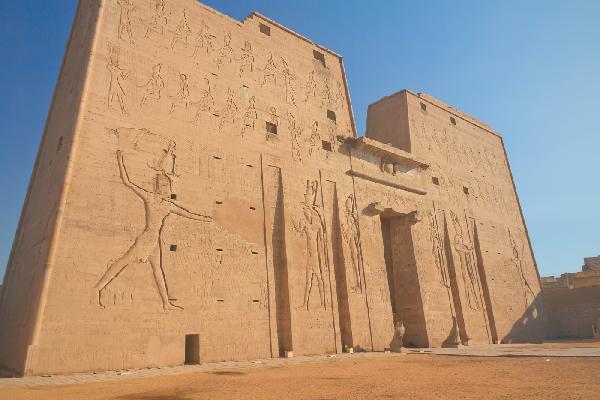
Temple of Horus: This is the crown jewel of Edfu. Dedicated to the falcon-headed god Horus, it is one of the best-preserved cult temples in Egypt. Built during the Ptolemaic period between 237 and 57 BC, its massive size and incredible detail are staggering. Highlights include the towering pylon entrance adorned with battle scenes, the grand courtyard, the hypostyle hall with its towering columns, and the sacred sanctuary where the god’s statue once resided. The walls are covered in hieroglyphics that provide invaluable information about temple rituals and ancient Egyptian mythology.
Edfu Food & Transportation
Dining: Most visitors have lunch on their cruise ship or stop at a simple local restaurant near the temple. It’s a good place to try standard Egyptian fare like koshari or taameya (Egyptian falafel).
Getting There: Nile cruises dock specifically for temple visits. Independent travelers can reach Edfu by train or service taxi from Aswan or Luxor. From the town, visitors take a horse-drawn carriage (caleche) from the dock to the temple entrance, which is part of the traditional experience.
Luxor: The World’s Greatest Open-Air Museum
Ancient Thebes, modern-day Luxor, was the glorious capital of Egypt during the height of its power in the New Kingdom. The city is uniquely divided by the Nile: the East Bank, representing life and the living, with its temples and bustling city; and the West Bank, representing death and the afterlife, with its vast royal cemeteries and mortuary temples.
Key Attractions on the East Bank
Karnak Temple Complex: This is not a single temple but a sprawling city of temples built over 2,000 years. It is the largest religious building ever constructed. Its sheer scale is humbling. Must-see features include the Great Hypostyle Hall with its 134 massive columns, the towering obelisks, the sacred lake, and the various precincts dedicated to the gods Amun, Mut, and Montu.
Luxor Temple: Located in the heart of the modern city, this temple is beautifully illuminated at night, making a visit after dark highly recommended. Built primarily by Amenhotep III and Ramesses II, it was connected to Karnak by a 3-kilometer avenue of sphinxes. Unlike other temples, it was not dedicated to a god or a deified pharaoh but to the rejuvenation of kingship.
Key Attractions on the West Bank
Valley of the Kings: The burial place of Egypt’s New Kingdom pharaohs, including the famous Tutankhamun. Visitors can enter several tombs (your ticket typically allows entry to 3), each with stunningly preserved wall paintings depicting scenes from funerary texts to guide the king to the afterlife. Note that photography inside most tombs is prohibited or requires a separate ticket.
Temple of Hatshepsut (Deir el-Bahari): A stunning mortuary temple built for the female pharaoh Hatshepsut. Its unique design, with three layered colonnaded terraces set against a sheer limestone cliff face, makes it one of Egypt’s most distinctive monuments.
Valley of the Queens: The burial site for royal wives and children. The most famous tomb here is that of Queen Nefertari, renowned for its vibrant and exquisitely detailed paintings. Access to Nefertari’s tomb is restricted and requires a very expensive separate ticket.
Medinet Habu: The mortuary temple of Ramesses III. This massive complex is one of the best-preserved on the West Bank and is covered in detailed reliefs depicting the pharaoh’s military victories and religious rituals. It is often less crowded than other sites.
Colossi of Memnon: Two massive stone statues of Pharaoh Amenhotep III that have stood in the Theban necropolis for 3,400 years. They are all that remains of his extensive mortuary temple.
Luxor Food & Dining
Luxor offers a wide range of dining options, from rooftop terraces with temple views to local eateries.
Egyptian Classics: Enjoy koshari, ful medames, grilled meats (kofta and kebab), and stuffed pigeon (hamam mahshi).
International Cuisine: Many hotels and tourist-oriented restaurants offer Italian, Asian, and other international dishes.
Recommended Spots: Sofra Restaurant & Café offers an authentic Egyptian experience in a historic house. The rooftop terrace at El-Moudira Hotel on the West Bank provides a romantic setting for dinner. For a quick, delicious meal, seek out a popular koshari shop.
Luxor Transportation & Accommodation
Getting Around: Taxis are abundant. For a more scenic option, hire a bicycle (especially on the generally flatter West Bank) or a horse-drawn carriage for short trips. The most common way to cross the Nile is by public ferry or private motorboat.
Staying There: You can choose to stay on either bank. The East Bank is more bustling, with more hotels, restaurants, and shops located near Luxor Temple. The West Bank is quieter and more rural, offering charming boutique hotels and a closer connection to the monuments.
Cultural Insights and Travel Tips
Bargaining: Haggling is expected in markets (souqs) and for services like taxi rides (agree on a price before getting in). Be polite but firm.
Tipping (Baksheesh): Tipping is deeply ingrained in Egyptian culture. Small tips are expected for minor services from restroom attendants to anyone who provides you with a small service. Carry small bills (Egyptian pounds).
Dress Code: Egypt is a predominantly Muslim country. Dress modestly out of respect, especially when visiting mosques or religious sites. For both men and women, clothing that covers shoulders and knees is recommended.
Guides: Hiring a knowledgeable, government-licensed Egyptologist guide for key sites like Karnak or the Valley of the Kings will immensely enrich your understanding and experience.
Hydration and Sun Protection:The sun can be intense. Wear a hat, sunglasses, and high-SPF sunscreen, and drink plenty of bottled water throughout the day.
Respectful Photography: Always ask for permission before photographing local people. Do not use flash photography inside tombs as it damages the pigments.
Conclusion
The journey from Aswan to Luxor via Edfu is a timeless voyage that captures the essence of ancient Egyptian civilization. From the Nubian influences and monumental dams of Aswan to the perfectly preserved temple in Edfu and finally to the unparalleled concentration of tombs and temples in Luxor, this corridor along the Nile offers an unforgettable adventure. With careful planning and cultural sensitivity, travelers can immerse themselves in this legendary landscape, connecting with a history that continues to captivate the world.