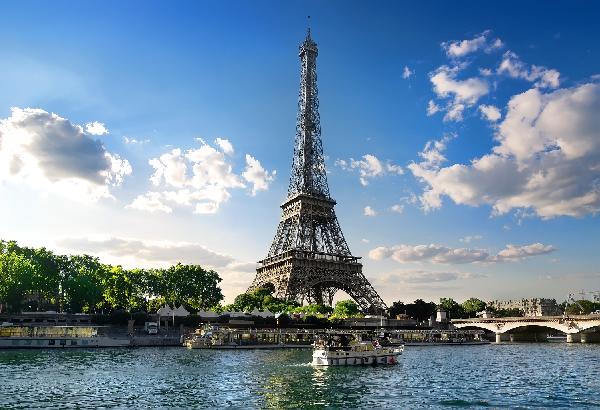
A Parisian Grand Axis: From the Arc de Triomphe to the Eiffel Tower
This guide details a journey through one of Paris’s most iconic routes, connecting monumental landmarks, world-class art, and elegant avenues. The itinerary follows a logical path from the Arc de Triomphe southeast towards the Eiffel Tower, exploring the diverse offerings of the 8th, 16th, and 7th arrondissements.
Arc de Triomphe

The Arc de Triomphe de l’Étoile is one of the most famous monuments in Paris. Commissioned by Napoleon in 1806 after his victory at Austerlitz, it was finally completed in 1836. The arch honors those who fought and died for France in the French Revolutionary and Napoleonic Wars. The interior and top of the arch feature a museum and a viewing terrace.
The monument stands at the western end of the Champs-Élysées at the center of Place Charles de Gaulle, a large circular square from which twelve grand avenues radiate, forming a star (étoile). The arch is adorned with intricate sculptures and reliefs, most notably François Rude’s high-relief masterpiece “La Marseillaise” on the right pillar facing the Champs-Élysées. Beneath the vault lies the Tomb of the Unknown Soldier from World War I, with its eternal flame rekindled every evening.
Practical Information
Address: Place Charles de Gaulle, 75008 Paris
Getting There: Metro lines 1, 2, 6 (Charles de Gaulle–Étoile station). Use the underground pedestrian tunnels to access the arch; do not attempt to cross the traffic circle.
Opening Hours: Typically 10:00 AM – 11:00 PM (hours vary by season).
Admission: Approximately €13 for access to the rooftop terrace and museum. Free for EU residents under 26.
Tips: The view from the top offers a unique, straight-line perspective down the Champs-Élysées and across Paris. It is less crowded than the Eiffel Tower.
Champs-Élysées

Often described as “the world’s most beautiful avenue,” the Champs-Élysées stretches for 1.9 kilometers (1.2 miles) from the Place de la Concorde to the Arc de Triomphe. Its name refers to the Elysian Fields, the paradise for dead heroes in Greek mythology. The lower part, closer to Place de la Concorde, is bordered by parks (Jardins des Champs-Élysées), theaters, and restaurants.
The upper part, from the Rond-Point des Champs-Élysées to the Arc de Triomphe, is lined with cinemas, cafes, luxury specialty shops, and airline offices. It is a major commercial hub, housing flagship stores for international brands. The avenue is a site for major public events, such as the Bastille Day military parade and the finish of the Tour de France cycling race.
Practical Information
Address: Avenue des Champs-Élysées, 75008 Paris
Getting There: Multiple metro stations along the avenue including Charles de Gaulle–Étoile, George V, Franklin D. Roosevelt, and Champs-Élysées – Clemenceau.
Opening Hours: Shops generally open from 10:00 AM to 8:00 PM or later. Restaurants and cafes have longer hours.
Admission: Free to walk the avenue.
Tips: While iconic, many of the cafes and shops are tourist-oriented and can be expensive. For a more authentic experience, explore the side streets.
Avenue George V

Branching off from the Champs-Élysées just after the Théâtre Marigny, Avenue George V is one of the three prestigious avenues known as the “Golden Triangle,” along with Avenue Montaigne and François-1er. This avenue is synonymous with ultra-luxury and haute couture. It is home to flagship stores of major fashion houses, prestigious hotels like the Hôtel George V (Four Seasons), and high-end jewelers.
The architecture is consistently grand and Haussmannian, contributing to an atmosphere of refined opulence. It offers a quieter, more exclusive alternative to the bustling Champs-Élysées while still being at the heart of Parisian luxury.
Practical Information
Address: Avenue George V, 75008 Paris
Getting There: Metro line 9 (Alma–Marceau or George V stations).
Opening Hours: Boutique hours are typically 10:00 AM – 7:00 PM.
Admission: Free to walk.
Tips: Even if window-shopping, it’s a beautiful street for a stroll to experience the pinnacle of Parisian luxury retail.
Place Diana (Place de la Princesse Diana)

Officially known as Place de la Princesse Diana, this small square is located at the northern end of the Pont de l’Alma tunnel, near the Seine River. It is not a grand, formal square but rather a garden space that has become an informal memorial to Diana, Princess of Wales, who died in a car crash in the tunnel below in 1997.
The focal point of the memorial is the “Flamme de la Liberté” (Flame of Liberty), a full-sized, gold-leaf-covered replica of the flame held by the Statue of Liberty. It was offered to France by the International Herald Tribune in 1989 as a symbol of Franco-American friendship. Since Diana’s death, it has been spontaneously adopted by the public as a site of remembrance, often covered with messages, flowers, and photographs.
Practical Information
Address: Place de la Princesse Diana, 75008 Paris (at Pont de l’Alma).
Getting There: Metro line 9 (Alma–Marceau station).
Opening Hours: Public square, accessible at all times.
Admission: Free.
Tips: A quiet and reflective spot. The bridge itself offers excellent views of the Eiffel Tower.
Musée d’Art Moderne de Paris (Paris Museum of Modern Art)
Housed in the Palais de Tokyo, built for the 1937 International Exhibition of Arts and Technology, the Musée d’Art Moderne de Paris is the city’s major municipal museum dedicated to modern and contemporary art from the 20th and 21st centuries. Its permanent collection includes over 15,000 works, featuring major movements such as Fauvism, Cubism, Surrealism, and New Realism.
The collection includes works by artists like Pablo Picasso, Henri Matisse, Raoul Dufy, Georges Braque, and Amedeo Modigliani. A significant highlight is Raoul Dufy’s monumental mural, “La Fée Électricité,” which covers 600 square meters. The museum also hosts temporary exhibitions of contemporary artists.
Practical Information
Address: 11 Avenue du Président Wilson, 75116 Paris
Getting There: Metro line 9 (Iéna or Alma–Marceau stations).
Opening Hours: Tuesday to Sunday, 10:00 AM – 6:00 PM (open until 10:00 PM on Thursdays for temporary exhibitions). Closed Mondays.
Admission: Free for the permanent collections. Fees apply for temporary exhibitions.
Palais de Tokyo
Occupying the other wing of the same building as the Musée d’Art Moderne de Paris, the Palais de Tokyo is one of Europe’s largest centers for contemporary art. Unlike a traditional museum, it functions as a site for creation and exhibition, focusing on the most current trends in the national and international art scene.
The space is raw and industrial, with exposed concrete and pipes, providing a stark contrast to the white cubes of traditional galleries. It hosts cutting-edge exhibitions, installations, performances, and live events. The programming is dynamic and often experimental, appealing to those interested in the forefront of artistic practice.
Practical Information
Address: 13 Avenue du Président Wilson, 75116 Paris
Getting There: Metro line 9 (Iéna or Alma–Marceau stations).
Opening Hours: Noon – Midnight every day except Tuesday. Unique late-night hours.
Admission: Ticketed for exhibitions. Check website for current pricing.