A Journey Through Myth and Majesty: Athens, Arachova, Delphi, Kalambaka & Meteora
This comprehensive travel guide details a classic mainland Greece loop, taking travelers from the ancient heart of Athens, through the mystical site of Delphi, to the breathtaking monastic pinnacles of Meteora. This journey offers a profound exploration of history, mythology, religion, and stunning natural landscapes.
Itinerary Overview
This route is typically completed over 5 to 7 days. The most efficient and recommended mode of transport for this itinerary is by rental car, offering flexibility to explore at one’s own pace. However, a combination of public buses (KTEL) and trains is also feasible. The standard route begins and ends in Athens, moving in a clockwise loop: Athens -> Arachova/Delphi -> Kalambaka/Meteora -> Athens.
Days 1-2: Exploring the ancient and modern wonders of Athens.
Day 3: Drive to Delphi via Arachova, visit the archaeological site, overnight in Arachova or Delphi.
Day 4: Travel from Delphi to Kalambaka, explore the town at the foot of Meteora.
Day 5: Full day exploring the monasteries of Meteora.
Day 6: Return to Athens, with optional stops.
Part 1: Athens – The Cradle of Western Civilization
Athens, the historical capital of Europe, is a vibrant metropolis where ancient ruins stand in stark contrast to modern life. It is a city steeped in mythology and history, home to the birthplace of democracy, philosophy, and theater.
Main Attractions in Athens
The Acropolis and Parthenon: The iconic citadel perched atop a rocky hill is the quintessential symbol of Athens. The Parthenon, the temple dedicated to the goddess Athena, is a masterpiece of Doric architecture. It is highly recommended to purchase a combined ticket that includes access to multiple archaeological sites.
Acropolis Museum: Located at the foot of the Acropolis, this state-of-the-art museum houses the treasures found on the rock. Its glass floors reveal excavations below, and the top-floor Parthenon Gallery offers a stunning view of the temple itself.
Ancient Agora: This was the heart of ancient Athens, the center of political, commercial, administrative, and social activity. Key sights include the remarkably well-preserved Temple of Hephaestus and the reconstructed Stoa of Attalos, which now serves as a museum.
Plaka and Anafiotika: Wandering through the labyrinthine streets of Plaka, the old historical neighborhood of Athens, is a must. Nestled on the northern slopes of the Acropolis, Anafiotika is a picturesque area with whitewashed, island-style houses, feeling like a Cycladic village in the middle of the city.
National Archaeological Museum: Housing some of the most important artifacts from across Greece, this museum is a treasure trove of ancient Greek art, including the Mask of Agamemnon and the Antikythera Mechanism.
Changing of the Guard (Evzones): In front of the Hellenic Parliament in Syntagma Square, the Evzones presidential guard perform a highly stylized changing of the guard ceremony every hour. The Sunday morning ceremony at 11:00 AM is the most elaborate.
Athens Food & Drink
Athenian cuisine is a highlight of any visit. Travelers should venture beyond the tourist-trap tavernas in Plaka.
Souvlaki & Gyros: A fast-food staple. For a classic experience, visit “Kostas” in Plaka or “O Thanasis” in Monastiraki.
Meze: Small shared plates similar to Spanish tapas. Visit a traditional “mezedopoleio” in areas like Psiri or Koukaki to sample a variety of dishes like tzatziki, dolmades (stuffed vine leaves), and octopus.
Fresh Seafood: Enjoy grilled fish and seafood in the Mikrolimano or Piraeus port areas.
Coffee Culture: Greeks take their coffee seriously. Try a traditional Greek coffee (strong and unfiltered) or a Freddo Cappuccino, a popular iced coffee.
Must-Try Dishes: Moussaka (eggplant and meat bake), Horiatiki (Greek salad), Fava (yellow split pea puree), and Spanakopita (spinach pie).
Transportation in Athens
Athens has an efficient and affordable public transport system consisting of metro, buses, and trams. The metro is particularly useful for reaching key sites; the Acropolis has its own station. A multi-day tourist ticket or an unlimited day pass is cost-effective for extensive sightseeing. The city center is also very walkable.
Accommodation Tips for Athens
Staying in central neighborhoods like Plaka, Monastiraki, Syntagma, or Koukaki provides easy walking access to major historical sites. Koukaki is a quieter, more residential area that has become popular with travelers. For a more upscale stay, the Kolonaki district offers luxury hotels and high-end shopping.
Part 2: Arachova & Delphi – The Navel of the World
The journey from Athens to Delphi takes approximately 2.5 hours by car. A scenic stop along the way is the charming mountain town of Arachova.
Arachova: The Winter Escape
Perched on the slopes of Mount Parnassus, Arachova is a stylish alpine town famous for its vibrant nightlife, traditional handicrafts (especially flokati rugs), and its proximity to the Parnassos Ski Center. Even in summer, it’s worth a stop to wander its steep cobblestone streets, enjoy the view from the clock tower, and sample its famous formaella cheese, a hard cheese produced exclusively in the region.
Delphi: The Oracle’s Sanctuary
In ancient times, Delphi was considered the center, or “navel,” of the world. People from all over the Mediterranean would travel here to consult the Oracle of Apollo.
The Archaeological Site: The site is built on the steep slopes of Mount Parnassus, offering dramatic views of the valley and sea below. Key monuments include the Temple of Apollo (where the Oracle resided), the ancient theater, the stadium (the best-preserved in Greece), and the Sacred Way lined with treasuries built by various city-states.
The Archaeological Museum of Delphi: Located adjacent to the site, this world-class museum contains many of the artifacts discovered at Delphi, including the famous Charioteer of Delphi, a breathtaking bronze statue from the 5th century BC.
The Tholos at Athena Pronaia: A short walk from the main site is this circular sanctuary, one of the most photogenic spots in Delphi. Its three reconstructed columns against the mountain backdrop are iconic.
Food & Accommodation in Delphi/Arachova
Delphi town offers accommodation with spectacular valley views. Arachova provides a more lively atmosphere with boutique hotels and tavernas. Local specialties include mountain tea, grilled meats, and dishes featuring local herbs and greens. For an authentic meal, try a family-run taverna in the nearby village of Chrisso.
Transportation to and Around Delphi
KTEL buses run regularly from Athens’ Liossion Bus Station to Delphi. Having a car allows for greater flexibility to visit Arachova and the Tholos at your own pace. The archaeological site and museum in Delphi are within walking distance of the modern town.
Part 3: Kalambaka & Meteora – Monasteries in the Sky
The drive from Delphi to Kalambaka is approximately 3 hours, traversing the plains of central Greece. Kalambaka is a small town situated at the very foot of the incredible rock formations of Meteora.
Kalambaka: The Gateway to Meteora
While primarily a base for exploring Meteora, Kalambaka has its own charm. Visit the Cathedral of the Dormition of the Virgin Mary, which features impressive frescoes and a beautiful iconostasis. The town has a good selection of hotels, restaurants, and shops.
Meteora: A Spiritual & Geological Wonder
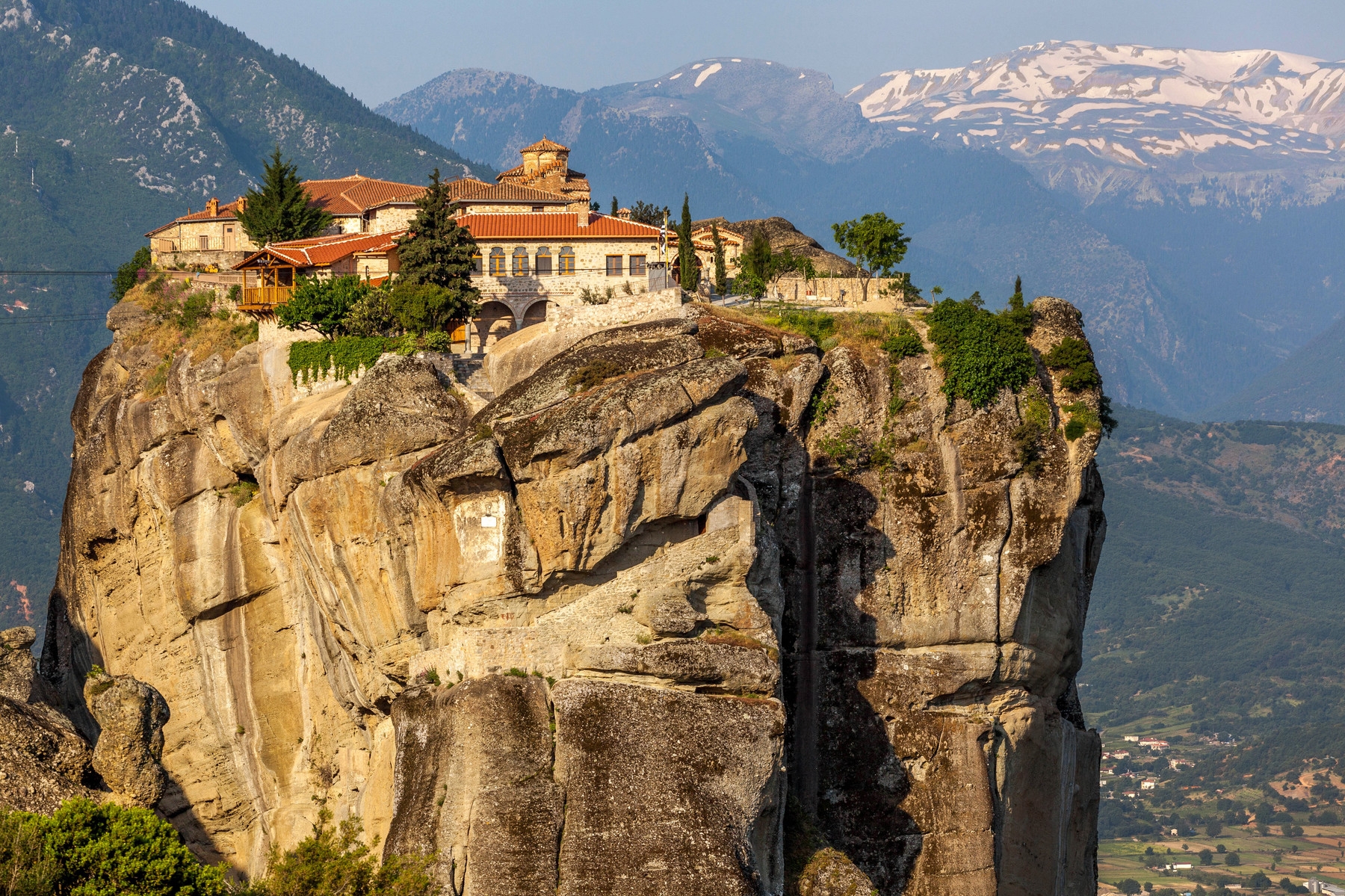
A UNESCO World Heritage Site, Meteora is one of Greece’s most awe-inspiring sights. Gigantic pillars of rock rise abruptly from the Thessalian plain, crowned by centuries-old monasteries built by Orthodox monks seeking spiritual isolation. At its peak, there were 24 monasteries; today, six are active and open to the public.
Great Meteoron (Monastery of the Transfiguration): The largest and oldest of the monasteries, founded in the 14th century. It houses a museum, a church with stunning frescoes depicting martyrdoms, and an old kitchen/cellar.
Varlaam Monastery: The second largest monastery, named after its first inhabitant. It preserves a 16th-century barrel for collecting rainwater and a rich collection of relics and post-Byzantine icons.
Roussanou Monastery: Dedicated to St. Barbara, this monastery is easily accessible via a short bridge and is known for its beautiful garden and wood-carved iconostasis.
St. Stephen’s Monastery: This is the most accessible monastery, reached by a flat pedestrian bridge. It contains a significant collection of icons and offers magnificent views over Kalambaka.
Holy Trinity Monastery (Agia Triada): Famously featured in the James Bond film “For Your Eyes Only,” it requires descending and then climbing 140 steps. The effort is rewarded with unparalleled views.
St. Nicholas Anapafsas Monastery: A compact monastery with multiple levels, featuring exceptional frescoes by the renowned Cretan painter Theophanes Strelitzas.
Experiencing Meteora
A full day is recommended to visit at least three or four monasteries. Visitors should wear modest clothing; skirts are provided for women at the entrance if needed, and men must wear long trousers. The best times to visit are early morning or late afternoon to avoid crowds and experience the most dramatic light for photography. Consider taking a guided hiking tour or a sunset tour for a more immersive experience.
Food & Accommodation in Kalambaka/Meteora
Kalambaka and the adjacent village of Kastraki offer a wide range of accommodation. For a unique experience, some hotels in Kastraki have rooms with direct views of the rocks. Local tavernas serve hearty mainland cuisine. Try specialties like grilled trout from local rivers, spit-roasted lamb, and pies filled with wild greens (hortopita).
Transportation to and Around Meteora
The most flexible way to explore Meteora is by car or taxi, allowing you to drive between monastery parking lots. KTEL buses from Trikala (which is connected to Athens by bus) go to Kalambaka and run limited local tours up to Meteora. From Athens, there is also a direct train to Kalambaka which offers a very scenic journey. Once there, many visitors opt for organized bus tours from Kalambaka or choose to hike between certain monasteries.
The Return Journey: Kalambaka to Athens
The drive back to Athens from Kalambaka takes approximately 4 hours via the national highway. Alternatively, there are direct trains and KTEL buses that make this journey comfortably. This marks the end of a remarkable loop through some of mainland Greece’s most significant historical and natural landmarks.
Practical Information & Cultural Insights
Best Time to Visit
The ideal times for this trip are spring (April-June) and autumn (September-October). The weather is pleasant for sightseeing and hiking, and crowds are smaller than in the peak summer months (July-August), which can be very hot. Winter can be cold, especially in Arachova and Meteora, but it offers a chance for skiing and seeing Meteora dusted with snow.
Budgeting & Money
Greece uses the Euro (€). This itinerary can be tailored to various budgets. Entrance fees for archaeological sites and monasteries can add up (consider combo tickets where available). Dining can be very affordable at local tavernas but more expensive in tourist-centric spots. Renting a car is a significant cost but offers unparalleled convenience.
Cultural Etiquette
Dress Modestly for Monasteries: Shoulders and knees must be covered for both men and women when visiting monasteries in Meteora and churches elsewhere.
Greetings: A simple handshake with direct eye contact is standard. Close friends may greet with an embrace.
Tipping: Tipping is appreciated but not always mandatory. In restaurants, it’s customary to round up the bill or leave 5-10%. Tip hotel staff and tour guides for good service.
“Greek Time”: Life can move at a more relaxed pace outside of Athens. Be patient, especially in restaurants where service may seem slow; it’s part of the culture of savoring a meal.
A Final Note on Mythology & History
To fully appreciate this journey, familiarizing oneself with Greek mythology adds a rich layer of context. Understanding the stories of Apollo at Delphi or contemplating the immense faith that drove monks to build on inaccessible peaks in Meteora transforms these sites from mere ruins into living narratives. This trip is not just a tour of locations; it’s a pilgrimage through the landscapes that shaped Western thought and spirituality.