A Journey Through Bavaria: Munich, the Magic Forest, Königssee, Zugspitze, and Eibsee
This travel guide outlines a classic and immersive circuit through the heart of the German Alps, starting and ending in the vibrant capital of Bavaria. The journey takes you from urban culture to mythical woodlands, pristine alpine lakes, and Germany’s highest peak, offering a comprehensive taste of southern Germany’s diverse beauty.
Part 1: Munich (München) – The Gateway to Bavaria
Munich, the capital of the Free State of Bavaria, is a city that effortlessly blends traditional Gemütlichkeit (coziness) with modern innovation. It serves as the perfect start and end point for your Alpine adventure.
Attractions & Experiences
Marienplatz and the New Town Hall (Neues Rathaus): The central square is the heartbeat of Munich. Gather here to watch the famous Glockenspiel, a clock tower show with dancing figurines reenacting two stories from the 16th century. Performances occur daily at 11 am, 12 pm, and (from March to October) 5 pm.
English Garden (Englischer Garten): One of the world’s largest urban parks. You can spend hours wandering its paths, watching surfers ride the standing wave at the Eisbach river, and enjoying a beer at the Chinese Tower (Chinesischer Turm) beer garden.
Hofbräuhaus: The world’s most famous beer hall. Even if you’re not a beer drinker, the experience is quintessentially Munich. The oompah band, massive steins of beer, and shared benches create a boisterous, unforgettable atmosphere.
Nymphenburg Palace (Schloss Nymphenburg): The summer residence of the former Bavarian monarchs. The palace itself is magnificent, but the sprawling gardens are equally stunning, perfect for a long, peaceful stroll.
Deutsches Museum: Located on an island in the Isar river, this is one of the world’s oldest and largest museums of science and technology. It’s incredibly comprehensive and engaging for all ages.
Food & Drink
Weißwurst: A traditional Bavarian veal sausage, typically eaten before noon. The proper way is to “zuzeln” (suck it out of the skin) or peel it. Served with sweet mustard, a soft pretzel (Brezn), and a wheat beer (Weißbier).
Schweinshaxe: A colossal, crispy roasted pork knuckle, usually served with potato dumplings (Knödel) and sauerkraut. It’s a hearty, must-try dish.
Beer Gardens: Visit a classic beer garden like Augustiner-Keller or Seehaus im Englischen Garten. The atmosphere is communal and relaxed. You are often allowed to bring your own food, but drinks must be purchased from the establishment.
Transportation & Tips
- Munich’s public transportation system (MVV) is excellent, comprising U-Bahn (subway), S-Bahn (suburban train), trams, and buses. A day pass (“Tageskarte”) is the most cost-effective option for extensive exploring.
- The main train station, München Hauptbahnhof, will be your hub for all regional and long-distance journeys.
Local Insight: For a less touristy beer hall experience, try Augustiner Bräustuben near the train station. It retains a more local feel with fantastic food and beer directly from the Augustiner brewery.
Part 2: The Day Trip to Königssee and the Magic Forest
This day takes you deep into Berchtesgaden National Park, an area of breathtaking natural beauty on the German-Austrian border.
Getting There
Take an early train from Munich Hauptbahnhof to Berchtesgaden Hauptbahnhof. The scenic journey takes about 2.5 hours, with a change in Freilassing. From Berchtesgaden station, take bus 841 directly to Königssee. To include the Magic Forest (Zauberwald), get off at the Hintersalt stop before Königssee.
The Magic Forest (Zauberwald)
Begin your day here. The Zauberwald is an enchanting woodland nestled between the steep walls of the Almbach Gorge and the crystal-clear waters of Lake Hintersee. The path through the forest is well-maintained and relatively flat, taking about 45-60 minutes to walk to Hintersee lake. Moss-covered boulders, twisted tree roots, and the play of light through the canopy create a truly magical, fairy-tale atmosphere. The sound of the Almbach river rushing through the gorge is a constant companion.
Königssee
From Hintersee, take bus 841 to its final stop at Königssee. This lake is often referred to as the cleanest in Germany. Its fjord-like appearance, with emerald-green water surrounded by sheer mountain walls, is stunning.
The Electric Boat Tour: The only way to explore the lake is via the quiet, electric-powered boats. The journey is a highlight in itself. Midway, the boat stops, and the captain plays a flugelhorn to demonstrate the incredible echo that reverberates off the Watzmann massif.
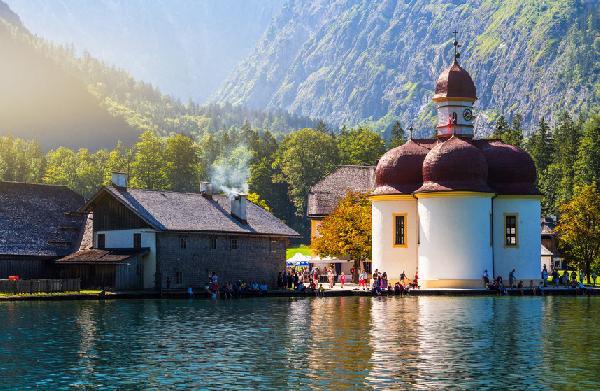
St. Bartholomä: The first stop on the boat tour is this iconic pilgrimage chapel with its distinctive red domes. It sits on a peninsula offering picture-perfect views. You can enjoy freshly smoked fish from the local fishery here.
Salet: The final stop on the boat tour. From here, it’s a beautiful 15-minute walk to Obersee, an even smaller and more secluded alpine lake. The view of the lake with the Röthbach waterfall—Germany’s highest—in the background is simply awe-inspiring.
Practical Tips
Combining Zauberwald and Königssee: This makes for a long but immensely rewarding day. Start early (take a train from Munich no later than 7:30 am).
Tickets: Purchase a Bayern-Ticket for your group. It covers all regional trains and buses in Bavaria for one day (valid from 9 am on weekdays, all day on weekends) and is incredibly cost-effective.
Local Insight: If you go to Salet, walk all the way to the far end of Obersee to the Fischunkelalm, a rustic mountain hut (only open in summer) that serves simple refreshments in an idyllic setting.
Part 3: The Ascent to Zugspitze and Eibsee
This day is dedicated to reaching the top of Germany and witnessing its most spectacular alpine panoramas.
Getting There
Take a train from Munich Hauptbahnhof to Garmisch-Partenkirchen Hauptbahnhof. The journey takes about 1 hour and 20 minutes. From there, it’s a short walk or bus ride to the Zugspitze cable car valley station (Eibsee-Seilbahn).
The Ascent Options
There are two main ways to ascend the Zugspitze (2,962 m / 9,718 ft), and a popular option is to take one up and the other down.
Cogwheel Train and Cable Car (Tiroler Zugspitzbahn): This route departs from Garmisch-Partenkirchen. The train travels through a long tunnel inside the mountain before transferring to a cable car for the final, steep ascent to the summit.
Eibsee Cable Car (Eibsee-Seilbahn): This is arguably the most spectacular option. The cable car glides directly over the stunningly beautiful Eibsee lake, offering breathtaking views of the turquoise water below before making its steep climb to the summit.
At the Summit
The 360-degree panoramic view from the top is unforgettable. On a clear day, you can see over 400 mountain peaks across four countries: Germany, Austria, Italy, and Switzerland.
Walk across the summit plateau, stand on the golden cross marking Germany’s highest point, and step into the “Top of Germany” shop in Austria (be sure to have your ID). There are restaurants and viewing platforms on both the German and Austrian sides.
Eibsee
Whether you take the cable car down or not, you must visit Eibsee. This lake at the foot of the Zugspitze is renowned for its almost unreal turquoise and emerald-green colors, created by rock flour from glacial meltwater.
A well-maintained circular path around the lake takes about 2-3 hours and offers constantly changing, picture-perfect views of the lake’s small islands and the Zugspitze looming above. It’s a perfect way to end your high-altitude adventure before returning to Garmisch-Partenkirchen.
Practical Tips
Tickets: The Zugspitze round-trip ticket is expensive but includes all modes of ascent/descent (cogwheel train and both cable cars). Booking online in advance can sometimes save money and guarantee a spot.
Weather: Mountain weather is extremely unpredictable. Check the live webcams on the Zugspitze website before you go. Even if it’s cloudy in Garmisch, it might be sunny at the top (and vice versa).
What to Wear: Even in summer, it can be very cold and windy at the summit. Dress in layers and wear sturdy shoes.
Local Insight: For a less crowded descent and a different perspective, take the cogwheel train down from the summit. It’s a unique journey through the heart of the mountain.
Part 4: Final Night in Munich
Return to Munich from Garmisch-Partenkirchen by train. Use your final evening to revisit a favorite spot, enjoy one last Bavarian meal, or explore a different neighborhood like Schwabing for its cafes or Haidhausen for its more intimate beer halls.
Overall Itinerary & Travel Strategy
A suggested 5-day itinerary would be:
Day 1: Arrive in Munich, explore city center (Marienplatz, Hofbräuhaus).
Day 2: Day trip to Königssee and Magic Forest.
Day 3: Day trip to Zugspitze and Eibsee.
Day 4: Explore more of Munich (e.g., Nymphenburg Palace, English Garden).
Day 5: Departure.
Essential Travel Tips
The Bayern-Ticket (Bavaria Ticket): This is your best friend for all regional day trips. It is valid on all regional trains (RE, RB), S-Bahn, U-Bahn, trams, and buses within Bavaria. It becomes significantly cheaper per person when purchased for a group of up to 5 people. Remember it is not valid on long-distance trains (IC, EC, ICE).
Accommodation: Stay in a hotel or apartment near München Hauptbahnhof for easiest access to trains for your day trips.
Cash is King: While credit cards are becoming more common, many smaller restaurants, beer gardens, and huts in the mountains operate primarily on cash (Euro). Always have some on hand.
Punctuality: German public transport is famously punctual. Plan to be at your platform a few minutes early.
Cultural Note: When in a beer garden or hall, it’s customary to wish your table neighbors “Prost!” (Cheers!). Make eye contact when clinking glasses—it’s considered polite and avoids seven years of bad luck!
This journey through Bavaria offers an unparalleled mix of urban sophistication and raw natural beauty. From the echoing halls of Munich’s beer temples to the silent majesty of its highest peak, it’s a trip that captures the very soul of southern Germany.