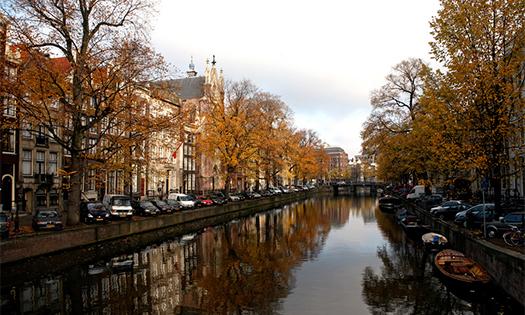
A Grand Tour of Western Europe: Amsterdam to the Rhine and Back
This comprehensive travel guide details a classic Western European circuit, a journey through the heart of the Benelux countries, France, Germany, and Luxembourg. The route, starting and ending in Amsterdam, encompasses world-class cities, medieval towns, and breathtaking landscapes. It is designed for travelers seeking a rich blend of art, history, architecture, and modern urban culture.
Route Overview
The itinerary follows a logical and efficient circular route:
Amsterdam → The Hague → Rotterdam → Antwerp → Bruges → Brussels → Paris → Luxembourg City → Trier → Heidelberg → Frankfurt → Cologne → Windmill Village (Zaanse Schans) → Amsterdam. This journey can be comfortably completed in two to three weeks, with travel primarily by the region’s excellent and efficient rail network.
Netherlands: Canals, Culture, and Modernism
Amsterdam
The Dutch capital, built on a network of concentric canals, is a city of immense charm and cultural wealth.
Attractions: The Museum Quarter is essential, housing the Rijksmuseum (Dutch Masters), the Van Gogh Museum, and the Stedelijk Museum (modern art). Pre-booking tickets online is highly recommended. A canal cruise offers a unique perspective of the city’s architecture. The Anne Frank House is a profoundly moving experience; bookings must be made online well in advance. For a different vibe, explore the trendy Jordaan district with its indie shops and cafes.
Food & Drink: Sample traditional Dutch snacks like bitterballen (deep-fried meatballs) and stroopwafels (caramel-filled waffles). Try raw herring with onions from a street stand. For a hearty meal, enjoy a Dutch rijsttafel (“rice table”), an Indonesian feast of small dishes, a legacy of colonial history.
Transportation: Amsterdam is a walking and cycling city. The GVB public transport pass (available for 1 to 7 days) covers trams, buses, and metros. Bicycles can be rented from numerous shops.
Accommodation: Stay in the Canal Ring for classic charm, Jordaan for a bohemian feel, or De Pijp for a vibrant, local atmosphere. Book months ahead for the best options.
Cultural Insight: Amsterdam embodies Dutch “gezelligheid,” a untranslatable word encompassing coziness, conviviality, and comfort. The city is also known for its tolerant and progressive social policies.
The Hague (Den Haag)
As the seat of the Dutch government and royalty, The Hague has a more formal, international ambiance.
Attractions: The Mauritshuis museum is a must for art lovers, home to Vermeer’s “Girl with a Pearl Earring” and Rembrandt’s “The Anatomy Lesson of Dr. Nicolaes Tulp.” Visit the Binnenhof, the inner court of the Parliament buildings. A short tram ride away is Scheveningen, a popular beach resort with a long pier.
Transportation: A short 50-minute train ride from Amsterdam Centraal. The city center is walkable, and trams connect to outer districts.
Rotterdam
Rebuilt after WWII bombing, Rotterdam is an architectural playground and Europe’s largest port.
Attractions: Marvel at the innovative Cube Houses (Kubuswoningen), the stunning Markthal (a food market housed in an arch-shaped building with a massive interior artwork), and the Erasmusbrug bridge. Take a Spido harbor tour to grasp the scale of the port.
Transportation: Only 25 minutes by train from The Hague. The city’s metro and tram system is efficient for covering longer distances.
Windmill Village (Zaanse Schans)
An open-air museum just north of Amsterdam, Zaanse Schans offers a picturesque glimpse into traditional Dutch life.
Attractions: See working windmills, watch wooden clogs being made, and visit a cheese farm. It’s exceptionally photogenic but can be crowded; visiting early morning or late afternoon is advised.
Transportation: Easily accessible by a 17-minute train ride from Amsterdam Centraal to Zaandijk Zaanse Schans station, followed by a 15-minute walk.
Belgium: Medieval Splendor and EU Power
Antwerp
A vibrant port city known as the world’s diamond capital and the hometown of Baroque master Peter Paul Rubens.
Attractions: The magnificent Cathedral of Our Lady houses several Rubens masterpieces. The Grote Markt (main square) with its ornate guildhouses is stunning. Explore the MAS Museum on the riverfront for art and history, and the fashion district around the Nationalestraat.
Food & Drink: This is the place to indulge in Belgian chocolates from masters like Burie or Del Rey. Enjoy a Belgian beer in a traditional brown café.
Transportation: A direct train from Rotterdam takes about 40 minutes.
Bruges (Brugge)
A perfectly preserved medieval city, often called the “Venice of the North” for its canals.
Attractions: Climb the 366 steps of the Belfry in the main market square for panoramic views. Take a scenic boat tour along the canals. Visit the Groeningemuseum for a superb collection of Flemish Primitive art. The Begijnhof (Beguinage) is a serene courtyard of white-washed houses.
Food & Drink: Try the local specialty, Flemish beef stew (carbonade flamande), and follow it up with a Belgian waffle. Bruges is also famous for its lace shops.
Accommodation: Staying within the historic center allows for magical early morning and evening walks when the day-trippers have left.
Transportation: A one-hour train ride from Brussels. The entire city center is easily navigated on foot.
Brussels
The bustling capital of Belgium and the de facto capital of the European Union.
Attractions: See the iconic Manneken Pis and the stunning Grand-Place, one of the most beautiful squares in the world. Visit the Atomium, a remnant of the 1958 World’s Fair. Explore the EU district with its modern architecture.
Food & Drink: Brussels is the home of frites (French fries), served with a variety of sauces. Mussels with frites (moules-frites) is the national dish. Don’t miss indulging in pralines from chocolatiers like Neuhaus or Pierre Marcolini.
Transportation: Well-connected by high-speed trains (Thalys) to Paris and ICE to Cologne. The city has an extensive metro system.
France: The Glamour of Paris
Paris
The “City of Light” needs little introduction, offering an unparalleled concentration of art, fashion, and cuisine.
Attractions: The list is endless: the Eiffel Tower, Louvre Museum, Notre-Dame Cathedral (exterior viewing), Arc de Triomphe, and Sainte-Chapelle. Stroll through Montmartre to the Sacré-Cœur basilica and along the Seine. Explore the charming neighborhoods of Le Marais and Saint-Germain-des-Prés.
Food & Drink: Start the day with a croissant and coffee at a sidewalk café. Enjoy steak-frites, onion soup, or duck confit. Sample pastries from a patisserie and macarons from Ladurée or Pierre Hermé.
Transportation: The high-speed Thalys train from Brussels gets to Paris in under 1.5 hours. Within Paris, the Métro is dense and efficient; a “carnet” of 10 tickets is cost-effective.
Accommodation: Arrondissements (districts) 1-8 are central but expensive. Le Marais (3rd/4th) is trendy, Saint-Germain-des-Prés (6th) is classic, and Montmartre (18th) is bohemian but hilly.
Cultural Insight: Embrace the Parisian pace. Take time to sit in a café and people-watch. A simple “Bonjour” when entering a shop and “Merci, au revoir” when leaving goes a long way.
The Heart of Europe: Luxembourg and Germany’s Romantic Road
Luxembourg City
The capital of the Grand Duchy of Luxembourg is a wealthy and picturesque city built around deep gorges.
Attractions: Walk the Chemin de la Corniche, dubbed “Europe’s most beautiful balcony,” for stunning views over the Grund district and Alzette River valley. Explore the subterranean passages of the Bock Casemates. See the Grand Ducal Palace from the outside.
Transportation: A 2-hour direct train from Paris-Est station. The city is small and very walkable.
Trier
Claimed to be Germany’s oldest city, Trier was once a Roman capital and is filled with impressive Roman ruins.
Attractions: The massive Porta Nigra, a Roman city gate, is the iconic symbol. Also visit the Roman Imperial Baths ruins, the Aula Palatina (Basilica), and the Trier Cathedral, which houses the Holy Tunic.
Transportation: An easy one-hour train ride from Luxembourg City on regional trains.
Heidelberg
A quintessential German romantic city, famous for its red-roofed old town, river setting, and majestic castle ruins.
Attractions: Take the funicular railway up to the sprawling Heidelberg Castle for breathtaking views. Walk across the Old Bridge (Alte Brücke). Stroll down the Hauptstrasse, one of Europe’s longest pedestrian shopping streets.
Food & Drink: Enjoy traditional German fare in a historic beer hall or restaurant.
Transportation: Reachable by train from Frankfurt (approx. 1 hour). The city is best explored on foot, though the funicular helps with the steep climb to the castle.
Frankfurt
Germany’s financial hub, known for its impressive skyline, earning it the nickname “Mainhattan.”
Attractions: Contrast the modern skyscrapers of the banking district with the reconstructed medieval buildings in the Römerberg, the old town square. Visit the Goethe House and climb the Main Tower for a panoramic city view.
h3>Cologne (Köln)
p>A vibrant, historic city on the Rhine River, dominated by its colossal cathedral./p>
ul>
li>
2Practical Travel Information/h2>
3Getting Around/h3
4The most efficient way to travel this route is by train.Companies like Thalys,Eurostar,and ICE(InterCity Express) require seat reservations.Planning and booking these high-speed trains well in advance secures the best fares.For more flexibility,a Eurail Global Pass covering all these countries can be cost-effective.Regional trains within countries offer more flexibility and can usually be booked on the day of travel./p>
3Accommodation Tips/h3
4Book accommodations as far in advance as possible,especially for popular cities like Amsterdam,Bruges,and Paris.Consider location versus cost; staying slightly outside the main tourist center can offer better value and a more local experience,but factor in transportation time and costs.Read reviews on reputable sites before booking./p>
3Cultural Etiquette/h3
4A few simple phrases in the local language (Dank u wel in Dutch,Merci in French,Danke in German) are always appreciated.In restaurants across these countries,it is common to ask for the bill; it is not automatically brought to you after you finish eating.Tipping is not as generous as in North America; rounding up the bill or leaving 5-10% is customary and appreciated./p>
3Budgeting/h3
4Western Europe can be expensive.Costs are generally highest in Paris,Amsterdam,and Luxembourg,and more moderate in smaller German cities.Budget for museum entrances,food,train travel,and accommodation.Many cities offer tourist cards that provide free public transport and discounted or free entry to major attractions,which can offer significant savings./p>
1Conclusion/h1
4This grand tour through Western Europe offers an incredible diversity of experiences.From Amsterdam’s canals to Parisian grandeur,and from Bruges’ medieval magic to Heidelberg’s romantic castle,the journey is a feast for the senses.Efficient travel links make it remarkably accessible.Allow time to wander,savor local flavors,and immerse yourself in the rich tapestry of cultures that define this fascinating corner of the world./p>
/section