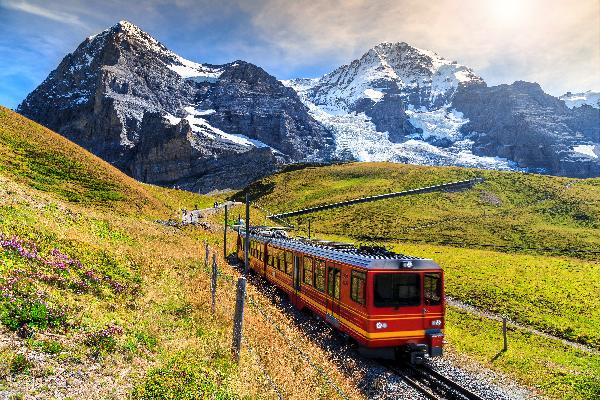
A Grand Tour of Switzerland: Zurich to Lucerne
This comprehensive travel guide details a classic Swiss itinerary, connecting the vibrant urban centers of the north with the breathtaking landscapes of the Alps, culminating in the serene beauty of its lakes. The journey encompasses financial hubs, federal capitals, panoramic train rides, Riviera-like shores, iconic mountain peaks, and charming villages. It is a route designed to showcase the incredible diversity and precision that defines Switzerland.
1. Zurich (Zürich)
As Switzerland’s largest city and a global financial hub, Zurich seamlessly blends a rich historical core with a dynamic, modern culture. Situated at the northwestern end of Lake Zurich, the city offers a sophisticated urban experience as a starting point for the Swiss adventure.
Main Attractions
Old Town (Altstadt): Straddling both sides of the Limmat River, the Altstadt is a maze of narrow, winding lanes filled with medieval houses, guild halls, and charming squares like the Lindenhof, which offers a panoramic view over the city.
Bahnhofstrasse: One of the world’s most exclusive shopping avenues, running from Zurich Main Station to Lake Zurich. It is home to luxury brands, Swiss banks, and elegant department stores.
Fraumünster: Notable for its stunning stained-glass windows created by the artist Marc Chagall, a must-see for art enthusiasts.
Grossmünster: The twin-towered cathedral is a landmark of Zurich and, according to legend, founded by Charlemagne. Visitors can climb one of the towers for a magnificent view.
Lake Zurich (Zürichsee): A boat trip on the lake provides a relaxing perspective of the city and the affluent villas lining its shores.
Food & Drink
Zürcher Geschnetzeltes: The classic Zurich dish of sliced veal in a creamy white wine and mushroom sauce, typically served with Rösti.
Vegetarian Cuisine: Zurich has a thriving vegetarian and vegan food scene, with many restaurants offering innovative plant-based dishes.
Luxemburgerli: These delicate macarons from Confiserie Sprüngli are a sweet Zurich institution.
Transportation & Accommodation
Zurich Airport (ZRH) is a major international gateway. The city’s public transportation system (trams, buses, S-Bahn) is exceptionally efficient. The Zurich Card offers unlimited travel and museum discounts. For accommodation, the area around the main station (Bahnhofsviertel) is convenient for arrivals and departures, while the Old Town offers more historic charm.
2. Bern (Berne)
The de facto capital of Switzerland, Bern is a UNESCO World Heritage site renowned for its impeccably preserved medieval old town. Its relaxed atmosphere, arcaded streets, and bear symbolism make it a uniquely charming capital city.
Main Attractions
Old Town: Built on a peninsula encircled by the Aare River, it features over six kilometers of arcades (Lauben), housing shops, bars, and cafes, providing shelter in any weather.
Zytglogge: The iconic medieval clock tower with an intricate astronomical clock and moving figures that perform just before every hour.
Federal Palace (Bundeshaus): The seat of the Swiss government and parliament. Guided tours are available when parliament is not in session.
Bear Park (BärenPark): Home to Bern’s heraldic animals, this modern and spacious enclosure along the river allows visitors to observe bears in a naturalistic habitat.
Rose Garden (Rosengarten): A beautiful park offering one of the best postcard-perfect views of the Old Town below.
Food & Drink
Bernese Platter: A hearty meal featuring various smoked meats, sausages, sauerkraut, and beans.
Bernerteller: A sampler plate often including Bernese specialties.
Onion Market (Zibelemärit): If visiting on the fourth Monday of November, witness this unique festival where the city is transformed into a market selling onion wreaths and figures.
Transportation & Accommodation
Bern is a compact city easily explored on foot. The train from Zurich takes about 1 hour. Trams and buses efficiently connect the outskirts to the center. Accommodation ranges from modern hotels near the station to boutique hotels within the Old Town.
3. Zweisimmen & The GoldenPass Line
Zweisimmen is a key gateway to the Bernese Oberland and, more importantly, a major junction for one of Switzerland’s most scenic train journeys: the GoldenPass Line. The journey from Bern to Montreux via Zweisimmen is a highlight in itself.
The GoldenPass Experience
The train ride from Zweisimmen to Montreux is a breathtaking descent from the alpine pastures of the Bernese Oberland to the vineyards of the Vaud Riviera. The landscape transforms dramatically, passing pristine lakes like Lake Geneva and offering stunning vistas. For an enhanced experience, book a seat in the panoramic carriage for unobstructed views.
Transportation
Travelers typically take a regional train from Bern to Zweisimmen, then transfer to the GoldenPass Line train bound for Montreux. No advanced reservation is mandatory for standard class, but it is highly recommended for panoramic cars, especially during peak season.
4. Montreux
Nestled on the shores of Lake Geneva with a spectacular view of the Alps, Montreux enjoys a remarkably mild microclimate. Known for its jazz festival, beautiful lakeside promenade, and the iconic Chillon Castle, it has a distinctly Mediterranean flair.
Main Attractions
Chillon Castle (Château de Chillon): A stunning island castle located on a rock off the lakeshore. Its history spans centuries, and its dungeons inspired Lord Byron’s poem “The Prisoner of Chillon.”
Montreux Lakeside Promenade: Lined with flowers, palm trees, sculptures, and Belle Époque hotels, it’s perfect for a leisurely stroll from Montreux to Chillon Castle.
Freddie Mercury Statue: A tribute to the legendary Queen frontman who loved Montreux and recorded several albums here.
Rochers-de-Naye: A mountain overlooking Montreux accessible by cogwheel railway. At the top, visitors find a panoramic view, a marmot park, and the “La Rambertia” alpine garden.
Food & Drink
Swiss Riviera Wines: Sample local wines from the Lavaux vineyards, particularly Chasselas, a crisp white wine.
Fresh Fish from Lake Geneva: Perch fillets (filets de perche) are a local specialty, often served meunière-style.
Transportation & Accommodation
Montreux is well-connected by train and serves as a terminus for the GoldenPass Line. The lakeside promenade area is ideal for accommodation, offering beautiful views and easy access to main attractions.
5. Lausanne
A short train ride from Montreux, Lausanne is a vibrant city built on three hills, overlooking Lake Geneva. It is the Olympic Capital, home to the International Olympic Committee (IOC), and boasts a dynamic cultural life and a bustling university population.
Main Attractions
Olympic Museum (Musée Olympique): A world-class museum dedicated to the history of the Olympic Games, featuring interactive exhibits, torches, and medals.
Old Town (Cité): The historical heart of Lausanne, centered around the impressive Gothic Lausanne Cathedral. The climb to the top of the bell tower is rewarded with a stunning view of the city, lake, and Alps.
Lavaux Vineyard Terraces: A UNESCO World Heritage site located between Lausanne and Montreux. These stunning terraced vineyards can be explored on foot via marked trails or by train.
Ouchy: Lausanne’s lakeside port district, with parks, promenades, and cafes, is a relaxing escape.
Food & Drink
Saucisson Vaudois: A cured sausage from the canton of Vaud.
Fondue: While popular nationwide, Lausanne’s restaurants offer excellent cheese fondue, often with local wines.
Café Culture: The Flon district, a former warehouse area now filled with trendy bars and clubs, is the center of Lausanne’s nightlife.
Transportation & Accommodation
The city’s metro system is one of only two in Switzerland (the other being in Lausanne’s sibling city, Geneva) and efficiently connects the lake (Ouchy) with the train station and Old Town. Consider staying in Ouchy for lakeside tranquility or in the city center for proximity to nightlife and shopping.
6. Geneva (Genève)
Situated at the southwestern tip of Lake Geneva where the Rhône River exits the lake, Geneva is a truly global city. It is a hub for diplomacy, housing the European headquarters of the United Nations and the Red Cross, among many other international organizations.
Main Attractions
Jet d’Eau: The symbol of Geneva, this water fountain shoots 140 meters into the air above the lake.
The Flower Clock (L’Horloge Fleurie): Located in the Jardin Anglais (English Garden), this clock is a tribute to Geneva’s watchmaking tradition and horticultural skill.
St. Pierre Cathedral: Dominating the Old Town, this cathedral offers a panoramic view from its north tower. It was also the church of John Calvin during the Reformation.
The United Nations Office at Geneva (Palais des Nations): Take a guided tour to see the Assembly Hall and learn about the UN’s work.
The Old Town (Vieille Ville): A charming area with cobblestone streets, antique shops, art galleries, and St. Peter’s Cathedral.
Food & Drink
Longeole: A Geneva-specific sausage flavored with cumin.
Fondue: Another great city to enjoy this classic dish.
Swiss Chocolate:
International Cuisine:
: As a melting pot of cultures, Geneva boasts an exceptional range of international restaurants.
Transportation & Accommodation
Geneva Airport (GVA) is another major international gateway. The city provides free public transportation passes for tourists staying in affiliated hotels. The area around Cornavin train station is convenient but can be noisy; for a more upscale stay, look for hotels along the lake or in the Eaux-Vives district.
7. Zermatt
A world-famous mountain resort nestled at the foot of the Matterhorn, Zermatt is a car-free village that preserves its traditional charm while offering world-class skiing and mountaineering. The sight of the iconic pyramid-shaped peak is an unforgettable experience.
Main Attractions
The Matterhorn: