A Grand Tour of Northern Italy: From Milan’s Fashion to the Dolomites’ Peaks
This comprehensive travel guide details a spectacular loop through Northern Italy, starting and ending in the vibrant metropolis of Milan. The journey takes you through historic cities, across the serene waters of Lombard lakes, and deep into the heart of the UNESCO World Heritage-listed Dolomites, before descending to the romantic canals of Venice and the shores of Lake Garda. It’s an itinerary designed for those who seek a perfect blend of urban culture, breathtaking alpine scenery, and iconic Italian experiences.
1. Milan (Milano): The Stylish Gateway
Your Italian adventure begins in Milan, the country’s dynamic financial and fashion capital. While often overlooked by travelers heading straight to Rome or Florence, Milan offers a sophisticated urban experience, boasting a rich artistic heritage and a forward-thinking, cosmopolitan atmosphere.
Attractions & Experiences
Duomo di Milano (Milan Cathedral): The city’s iconic centerpiece, this magnificent Gothic cathedral is one of the largest in the world. Ascend to the rooftop terraces for a breathtaking, up-close view of the intricate spires and statues, with panoramic views of the city skyline.
Galleria Vittorio Emanuele II: Adjacent to the Duomo, this 19th-century glass-vaulted arcade is one of the world’s oldest shopping malls. It’s a place to admire the architecture, window-shop at luxury boutiques, and partake in the tradition of spinning on the mosaic bull’s testicles (the “bull of Turin”) for good luck.
Teatro alla Scala: One of the most famous opera houses globally, La Scala is a temple of music and performance. Even if you don’t attend a show, its associated museum offers a fascinating glimpse into the history of opera.
Santa Maria delle Grazie: This church and Dominican convent is a UNESCO World Heritage site, housing one of the most famous artworks in history: Leonardo da Vinci’s The Last Supper. Booking tickets months in advance is absolutely essential.
Sforzesco Castle (Castello Sforzesco): A vast fortress that now houses several museums and art collections, including Michelangelo’s final sculpture, the Rondanini Pietà.
Food & Drink
Milanese cuisine is rich and comforting. Don’t miss:
Risotto alla Milanese: Creamy saffron-infused risotto, often served with ossobuco (braised veal shanks).
Cotoletta alla Milanese: A tender, breaded veal cutlet fried in butter.
Panettone: The classic Milanese Christmas cake, now enjoyed year-round.
Aperitivo: Join the locals in the Navigli district for this pre-dinner ritual. Purchase a drink and enjoy access to a lavish buffet of snacks and small dishes.
Transportation & Tips
Milan has an efficient metro, tram, and bus system. The city center is very walkable. Milan Malpensa (MXP) is the main international airport, connected to the city by the Malpensa Express train. Linate (LIN) handles more European flights.
Local Insight: For a less crowded alternative to the Duomo rooftop, visit the nearby Terrazza del Duomo at the Rinascente department store for a stunning view with an aperitivo in hand.
2. Bergamo: The Two-Tiered City
A short trip from Milan, Bergamo is a city of two distinct parts: the modern lower city (Città Bassa) and the enchanting, walled upper city (Città Alta), perched on a hill.
Attractions & Experiences
Città Alta: Reach this medieval hilltop town via a funicular railway. Wander through Piazza Vecchia, the stunning central square, and admire the adjacent Basilica di Santa Maria Maggiore.
Venetian Walls (Mura Venete): These 16th-century fortifications surround the Città Alta and are a UNESCO World Heritage site. A walk along the walls offers superb views over the lower city and the plains beyond.
Cappella Colleoni: A masterpiece of Renaissance architecture located next to Santa Maria Maggiore, with a stunningly ornate facade and interior.
Accademia Carrara: An excellent art gallery in the lower city housing works by Botticelli, Raphael, and Titian.
Food & Drink
Bergamo is known for its polenta dishes. Try:
Polenta e Osei: A classic dish of polenta served with small birds (now often replaced with game or sausage). Also a namesake dessert—a sweet cake resembling the dish.
Casoncelli alla Bergamasca: A stuffed pasta typical of the region, often filled with meat, amaretti biscuits, and raisins, served with sage butter and pancetta.
Transportation & Tips
Bergamo is easily reached from Milan by train (to the lower city) in about one hour. The Orio al Serio International Airport (BGY) is located just outside Bergamo. Use the funicular to travel between the upper and lower cities.
Local Insight: Visit Città Alta in the evening after the day-trippers have left to experience its magical, quiet atmosphere.
3. Trento: The Alpine City of the Council
The journey now heads north into the Trentino region. Trento is a handsome city with a strong Austrian influence, set in a valley surrounded by mountains. It’s a city of history, wine, and a gateway to the Dolomites.
Attractions & Experiences
Piazza Duomo: The beautiful heart of the city, dominated by the Trento Cathedral (Duomo) and featuring the elegant Neptune Fountain (Fontana di Nettuno).
Buonconsiglio Castle (Castello del Buonconsiglio): The largest and most important monumental complex in the region. Don’t miss the “Cycle of Months” frescoes in the Torre Aquila, a stunning depiction of medieval life.
MUSE – Science Museum: A spectacular museum designed by renowned architect Renzo Piano, offering interactive exhibits on science, nature, and sustainability.
Food & Drink
The cuisine here blends Italian and Tyrolean traditions.
Strangolapreti: “Priest-chokers” – spinach and bread gnocchi, typically served with melted butter and sage.
Carne Salada e Fasoi: Salted beef served with beans.
Trentodoc: Excellent sparkling wine produced in the surrounding hills.
Transportation & Tips
Trento is a major transport hub with excellent train connections. It’s an ideal base for exploring the southern Dolomites.
Local Insight: Rent a bike and cycle along the Adige River cycle path, which stretches for miles through picturesque vineyards and villages.
The Heart of the Dolomites: A Scenic Loop
The following section details a journey through some of the most iconic landscapes in the Dolomites. Renting a car is highly recommended for maximum flexibility.
4. Braies Lake (Lago di Braies)
A jewel of the Dolomites, this emerald-green alpine lake is framed by the imposing Seekofel (Croda del Becco) mountain. Its beauty has made it internationally famous.
Experience: Walk the easy 2-3 hour trail that circuits the lake. Rent a traditional wooden rowboat from the boathouse for a serene experience on the water. Arrive early in the morning or late in the afternoon to avoid the largest crowds.
5. Val di Funes (Funes Valley)
A peaceful valley famous for its idyllic views of the Odle/Geisler peaks rising behind picturesque churches.
Attractions:
Santa Maddalena Church: The iconic church set against the jagged Odle Group. The view from the nearby viewpoint on the trail to “Panorama” is postcard-perfect.
San Giovanni Church: An isolated 18th-century chapel in Ranui, surrounded by meadows and forests.
Tip: This is a paradise for photographers, especially at sunrise and sunset when the light turns the peaks pink (enrosadira).
6. Ortisei (St. Ulrich), Alpe di Siusi (Seiser Alm), & Seceda
Ortisei is the main town in the Val Gardena, a charming hub for hiking and skiing with a distinct Ladin culture.
Alpe di Siusi (Seiser Alm): Europe’s largest high-altitude alpine meadow. Accessible by cable car from Ortisei (Siusi-Alpe di Siusi cable car). It’s a vast landscape of rolling green hills dotted with huts, with the Sciliar (Schlern) massif as a backdrop. Perfect for easy hikes and photography. Note: Private car access is restricted during most of the day in summer.
Seceda: Take the cable car from Ortisei directly to Seceda’s ridgeline at 2,500 meters. You are greeted by one of the most dramatic views in the Dolomites: a sheer wall of jagged peaks that look like a fleet of stone ships. It’s the start of numerous high-alpine hikes.
7. Tre Cime di Lavaredo (Drei Zinnen) & Lago di Misurina
The Tre Cime are arguably the most famous landmark of the Dolomites, three distinctive battlement-like peaks.
Tre Cime Loop Hike: The classic 10km hike circles the base of the three peaks. It’s a moderate hike with minimal elevation gain, offering constantly changing, spectacular perspectives. Start from Rifugio Auronzo (reachable by toll road).
Lago di Misurina: A beautiful lake located just below the Tre Cime road. Known as “the Pearl of Cadore,” it has a lovely walking path around its perimeter and is reputed to have air beneficial for asthma sufferers.
Tip: The toll road to Rifugio Auronzo is expensive but necessary unless you are undertaking a very long hike. Pay early to secure parking, especially at sunrise for photographers.
8. Venice (Venezia): The Floating City
Descending from the mountains, you arrive at one of the world’s most unique cities. Venice is a labyrinth of canals, bridges, and historic palaces that seems to float on water.
Attractions & Experiences
Piazza San Marco (St. Mark’s Square): The city’s main square, home to St. Mark’s Basilica with its dazzling golden mosaics, and the Campanile (bell tower) for panoramic views.
Palazzo Ducale (Doge’s Palace): A masterpiece of Gothic architecture, this was the seat of Venetian power. Walk across the Bridge of Sighs and explore the opulent rooms and prison cells.
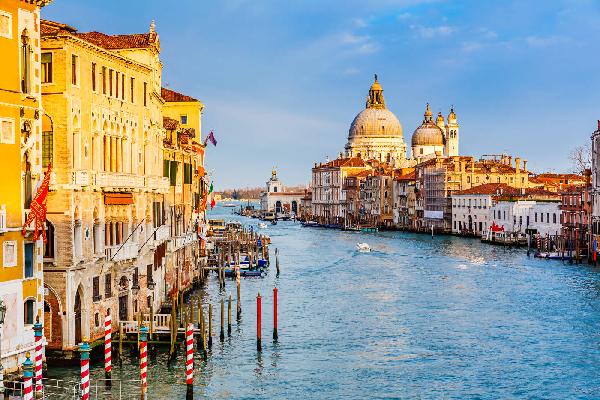
Grand Canal: The main waterway of Venice. Take a vaporetto (water bus) from Piazzale Roma or Ferrovia (train station) down the entire canal to St. Mark’s for a stunning introduction to the city’s palazzi.
Rialto Bridge: The oldest and most famous bridge spanning the Grand Canal, surrounded by a bustling market area.
Get Lost: The true magic of Venice lies in wandering away from the main tourist paths. Lose yourself in the quiet alleyways (calli) and small canals (rii) of neighborhoods like Cannaregio and Dorsoduro.
Food & Drink
Venetian cuisine features seafood, rice, and polenta.
Cicchetti: Small snacks or side dishes, similar to Spanish tapas, typically enjoyed with a glass of wine (ombra) in a bacaro (traditional wine bar).
Sarde in Saor: Sardines marinated in onions, vinegar, pine nuts, and raisins.
Risi e Bisi:A creamy rice and pea dish.
Spritz:The quintessential Venetian aperitif, made with Prosecco, Aperol or Campari, and soda water.
Transportation & Tips
The only ways to get around are on foot or by boat. The vaporetto network is extensive but can be crowded. A multi-day travel card can be cost-effective.
Local Insight: Avoid the expensive gondola rides from St. Mark’s. Instead, find a gondola stand in a quieter neighborhood for a more authentic and peaceful ride. For a cheap “gondola” experience, use the traghetti—gondola ferries that cross the Grand Canal at various points for just a few euros.
9. Lake Garda (Lago di Garda)
The final major stop before returning to Milan is Italy’s largest lake. Lake Garda offers a dramatic contrast between its northern alpine scenery and its southern Mediterranean-like shores.
Sights Around the Lake
Sirmione:A stunning peninsula at the southern end of the lake, famous for its thermal springs and the majestic Scaligero Castle, which appears to rise directly from the water.
Limone sul Garda:A charming town clinging to the western shore, known for its historic lemon groves (limonaie) built into terraces on the cliffs.
A charming town clinging to