A Grand Tour of Britain: From London to the Highlands and Back
This comprehensive travel guide outlines an epic journey through England and Scotland, capturing the essence of Britain’s diverse landscapes, rich history, and vibrant culture. The route is designed as a circular tour, ideal for a two to three-week road trip, showcasing bustling cities, quaint villages, academic bastions, and breathtaking natural wonders.
London: The Capital Commencement
London serves as the perfect starting point for any British adventure. A global metropolis steeped in history, it offers an unparalleled blend of the traditional and the contemporary.
Attractions: The British Museum, Tower of London, Buckingham Palace (for the Changing of the Guard), Houses of Parliament and Big Ben, the London Eye, Westminster Abbey, and a stroll across Tower Bridge. For a different perspective, explore the trendy streets of Shoreditch or the artistic hub of South Bank.
Food & Drink: Indulge in a classic Sunday roast at a traditional pub, sample diverse street food at Borough Market, enjoy afternoon tea at a prestigious hotel like The Ritz or a more quaint establishment, and try international cuisine in neighborhoods like Soho and Chinatown.
Transportation: London’s Underground (the “Tube”) is the most efficient way to navigate the city. Consider an Oyster card or contactless payment for the best fares. Black cabs are iconic but expensive.
Accommodation: Options range from luxury hotels in Mayfair and Knightsbridge to boutique hotels in Covent Garden and budget-friendly hostels in Earl’s Court.
Cultural Insight: London is a city of distinct “villages,” each with its own character. Respect the queue (line) culture and mind the gap on the Tube.
Windsor: A Royal Day Trip
A short journey west of London lies the historic town of Windsor, home to the world’s oldest and largest inhabited castle.
Attractions: Windsor Castle is the primary draw. Explore the State Apartments, St. George’s Chapel (the burial place of monarchs including Queen Elizabeth II), and witness the Changing of the Guard. Afterwards, take a pleasant walk along the Long Walk in Windsor Great Park.
Food & Drink: The town offers numerous pubs and cafes. For a unique experience, have a cream tea in one of the traditional tea rooms.
Transportation: A direct train from London Paddington or Waterloo stations takes approximately 30-60 minutes.
Oxford: The City of Dreaming Spires
Journey north to Oxford, a city defined by its prestigious university. The stunning architecture of its 38 colleges creates a majestic and scholarly atmosphere.
Attractions: Visit individual colleges like Christ Church (notable for its cathedral and Harry Potter connections), Magdalen College, and Bodleian Library. Climb the University Church of St Mary the Virgin for a panoramic view of the spires. Don’t miss the Ashmolean Museum, Britain’s oldest public museum.
Food & Drink: Enjoy a pint in a historic pub like The Eagle and Child, a former haunt of J.R.R. Tolkien and C.S. Lewis. The Covered Market offers a variety of food stalls and local produce.
Transportation: Trains from London Paddington are frequent and take about an hour. Once in Oxford, the city is best explored on foot.
The Lake District & Windermere: Poetic Landscapes
Travel further north to the Lake District National Park, a UNESCO World Heritage Site renowned for its glacial lakes, rugged fell mountains, and literary associations with Wordsworth and Beatrix Potter.
Attractions: Lake Windermere is the largest natural lake in England. Take a cruise on the lake, hike up Orrest Head for a stunning view, or visit the World of Beatrix Potter attraction in Bowness-on-Windermere. For serious hikers, Scafell Pike, England’s highest mountain, is nearby.
Food & Drink: Try traditional Cumberland sausage, sticky toffee pudding (a local invention), and Kendal mint cake. Cosy pubs with open fires are abundant.
Accommodation: Stay in a charming guesthouse or a boutique hotel in Bowness-on-Windermere or Ambleside. For a unique experience, consider a farm stay.
Cultural Insight: The Lake District is a haven for outdoor enthusiasts. The weather can change rapidly, so come prepared with waterproof clothing and sturdy footwear.
The Scottish Highlands & A82: Into the Wild
Crossing into Scotland, the landscape transforms. The A82 road is one of the world’s most scenic drives, cutting through the heart of the dramatic Scottish Highlands.
The Drive: The A82 passes along the shores of Loch Lomond, through Glen Coe, and past Fort William, with views of Ben Nevis, the UK’s highest peak.
Cultural Insight: This is the land of clans, tartans, and ancient battles. The sense of space and raw, untamed nature is profound.
Glen Coe: The Weeping Glen
Glen Coe is a valley of breathtaking beauty and somber history, famed for its volcanic peaks and the 1692 Massacre of Glencoe.
Attractions: Stop at the Three Sisters car park for iconic views. Numerous hiking trails cater to all levels, from gentle walks to challenging climbs like Buachaille Etive Mòr.
Accommodation: The Clachaig Inn is a legendary bunkhouse for climbers and walkers. There are also hotels and B&Bs in the glen itself.
Loch Ness & Urquhart Castle: Myth and Majesty
Continue north on the A82 to the legendary Loch Ness, home of the mythical monster “Nessie.” On its shores stand the evocative ruins of Urquhart Castle.
Attractions: Take a boat cruise on Loch Ness to search for Nessie and get a spectacular view of Urquhart Castle from the water. Explore the castle ruins and its visitor center to learn about its turbulent 1,000-year history.
Food & Drink: Enjoy fresh Scottish salmon or haggis, neeps and tatties at a local pub in Drumnadrochit.
Edinburgh: The Athens of the North
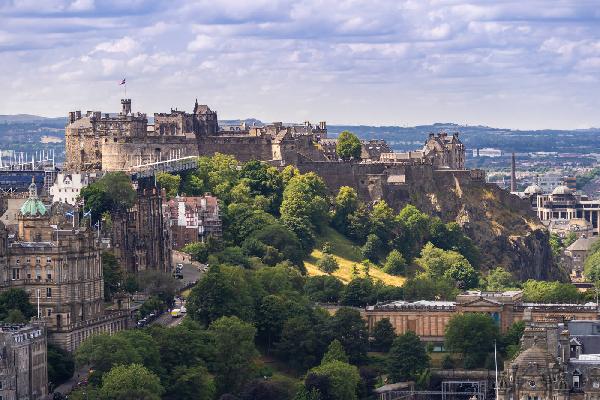
The capital of Scotland is a city of stunning geography, dominated by its castle atop an extinct volcano. Its history is palpable in every stone.
Attractions: Edinburgh Castle, the Royal Mile, Holyrood Palace, Arthur’s Seat (an easy hike for incredible city views), and the National Museum of Scotland. In August, the city comes alive with the Edinburgh Festival Fringe.
Food & Drink: Sample Scotch whisky in a traditional pub like The Bow Bar, try haggis (a national dish), and indulge in fine dining. Don’t miss trying a slice of Cranachan for dessert.
Accommodation: Stay in a historic hotel on Princes Street, a boutique guesthouse in the elegant New Town, or a budget-friendly hostel in the Old Town.
Cultural Insight: Edinburgh has a proud and distinct identity from England. The locals are generally friendly and have a great sense of humor.
York: A Tapestry of History
Heading back into England, York is a beautifully preserved medieval city with Roman and Viking roots.
Attractions: Walk the magnificent medieval York Minster, explore The Shambles (a crooked street said to be an inspiration for Diagon Alley), and walk along the ancient city walls. The Jorvik Viking Centre offers an immersive look into York’s Viking past.
Food & Drink: York is famous for its chocolate heritage (visit York’s Chocolate Story). Enjoy a traditional afternoon tea or visit one of the city’s many atmospheric pubs.
Warwick Castle: A Step Back in Time
A detour to Warwick Castle offers a fully immersive medieval experience. It is one of Britain’s most well-preserved and entertaining castles.
Attractions: Explore the castle’s ramparts, towers, and grand interiors. Watch live shows including archery displays, falconry exhibitions, and jousting tournaments.
Transportation: Warwick is easily accessible by train or car from London or Birmingham.
Cambridge: Punting on the Cam
The other great university city, Cambridge, has a more compact and tranquil feel than Oxford, centered around the River Cam.
Attractions: Visit King’s College and its magnificent chapel, go punting on the River Cam to see the “Backs” of the colleges, explore the Fitzwilliam Museum, and see the fascinating Corpus Clock.
Food & Drink: Enjoy a pint in a historic pub like The Eagle (where DNA was announced) or The Anchor. The market square offers various food options.
The South Coast & Countryside: Cliffs and Charm
The final leg of the journey explores the scenic south coast of England and the idyllic Cotswolds region.
Seven Sisters Country Park & Brighton
The Seven Sisters are a series of dramatic white chalk cliffs that are arguably more stunning than their famous neighbor, Dover. Nearby Brighton is a vibrant, quirky seaside city.
Attractions: Hike along the clifftops of Seven Sisters for breathtaking coastal views. In Brighton, visit the Royal Pavilion, walk along Brighton Pier, and explore The Lanes for independent shops.
Food & Drink: Brighton is a foodie paradise with a huge variety of restaurants. Enjoy fish and chips on the beach or sample international cuisine.
Stonehenge & Bath
A journey west from London takes you to two of Britain’s most significant historical sites.
Stonehenge: This prehistoric monument remains a mystery. The visitor center provides excellent context before you view the stones themselves.
Bath: A UNESCO World Heritage city famed for its Roman Baths, stunning Georgian architecture (including the Royal Crescent), and the modern Thermae Bath Spa where you can bathe in natural thermal waters.
Food & Drink: In Bath, try a Sally Lunn bun, a local speciality. The city has many fine dining establishments and cosy pubs.
Cornwall: St Ives, Land’s End & Durdle Door
The southwestern peninsula of Cornwall has a distinct Celtic culture and a ruggedly beautiful coastline.
St Ives: A picturesque fishing town with narrow cobbled streets, art galleries (including Tate St Ives), and beautiful beaches.
Land’s End: The westernmost point of mainland England, offering dramatic cliff scenery.
Durdle Door: Part of the Jurassic Coast World Heritage Site, this natural limestone arch is one of the most photographed landmarks in the UK.
Bournemouth Pier:A classic Victorian seaside pier with amusements and beautiful sandy beaches.
Food & Drink: Cornwall is famous for its pasties (savory filled pastry), Cornish cream teas (debate rages over whether jam or cream goes first), and fresh seafood.
The Cotswolds: Quintessential England
The Cotswolds is an Area of Outstanding Natural Beauty characterized by rolling hills, honey-colored limestone villages, and peaceful farmland.
Bibury: Often called England’s most beautiful village, famed for Arlington Row, a row of ancient weavers’ cottages.
Bourton-on-the-Water:The “Venice of the Cotswolds,” with low bridges crossing the River Windrush that runs through the village center.
Chipping Campden:A historic market town with a magnificent High Street lined with elegant terraced houses from the wool-trading era.
Accommodation: Stay in a charming Cotswold stone bed and breakfast or a luxury country house hotel for an authentic experience.
Cultural Insight: This area represents an idealized version of rural England. Life moves at a slower pace here. It’s perfect for walking, enjoying pub lunches, and simply soaking in the scenery.
A Final Return to London
The tour concludes by returning to London, having completed a remarkable circuit of Britain’s greatest hits—from ancient history and royal pomp to academic excellence and wild, untamed landscapes—offering a deep and unforgettable understanding of this diverse nation.