A Grand Southern England Circuit: London, Windsor, Stonehenge, Bath, Oxford & the White Cliffs
This comprehensive travel guide outlines a classic and enriching circuit through the heart of Southern England. This journey from London takes travelers through royal residences, ancient mysteries, Georgian elegance, academic prestige, and dramatic coastal landscapes. It is an itinerary designed to immerse visitors in the profound history, culture, and natural beauty that define this part of the United Kingdom.
Itinerary Overview
This multi-day journey is typically best experienced over 5 to 7 days. The route forms a logical loop from London, heading west and then circling back via the southeastern coast. The most efficient way to undertake this tour is by a combination of train travel and a rented car, offering both convenience for city stops and flexibility for the rural attractions.
Days 1-2: London to Windsor (by train), then to the Stonehenge and Bath area (by car/tour).
Day 3: Explore Bath and travel to the Oxford area (by car/train).
Day 4: Explore Oxford and Blenheim Palace, then travel towards Canterbury/Dover (by train from London).
Day 5: Explore Canterbury and the White Cliffs of Dover, returning to London (by train).
Chapter 1: London to Windsor Castle
The journey begins with a short trip west of London to the oldest and largest inhabited castle in the world.
Attraction Introduction: Windsor Castle
A royal residence for over 900 years, Windsor Castle is an official home of His Majesty The King. Its imposing structure dominates the town of Windsor. Key highlights within the castle complex include:
State Apartments: These lavishly decorated rooms are used for ceremonial and official entertaining. They house treasures from the Royal Collection, including paintings by Rembrandt and Rubens.
St. George’s Chapel: A masterpiece of Perpendicular Gothic architecture, this is the burial place of ten monarchs, including Queen Elizabeth II and her husband, Prince Philip. It is also the home of the Order of the Garter.
Queen Mary’s Dolls’ House: The largest and most famous dolls’ house in the world, showcasing exquisite miniature works from early 20th-century British craftsmen.
Visitors should check the official royal website before their visit as the castle can close for state functions.
Transportation Information
Windsor is easily accessible from central London. The most straightforward routes are:
By Train: South Western Railway services run from London Waterloo to Windsor & Eton Riverside (approx. 55 minutes). Great Western Railway services run from London Paddington to Windsor Central, changing at Slough (approx. 30-40 minutes). Both stations are a short walk from the castle.
By Car: The journey takes about an hour from central London, but traffic can be heavy, and parking in Windsor can be challenging and expensive.
Food Recommendations in Windsor
After exploring the castle, visitors can find a range of dining options.
The Crooked House: A historic and charming tea room for a classic English cream tea.
Gilbey’s Bar & Restaurant: Offers modern British cuisine and a good selection of wines.
The Two Brewers: A traditional pub close to the castle walls, perfect for a pint and pub food.
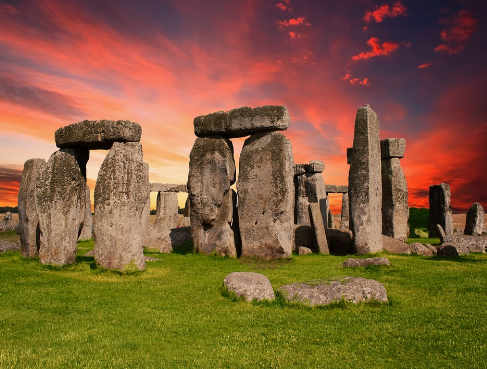
Chapter 2: The Ancient Mysteries of Stonehenge
From Windsor, the journey heads deeper into Wiltshire to one of the world’s most famous prehistoric monuments.
Attraction Introduction: Stonehenge
This iconic stone circle, built in several stages from around 3000 BC to 2000 BC, is a UNESCO World Heritage Site. Its purpose remains a subject of debate—serving as an ancient temple, an astronomical clock, or a sacred burial ground. The visitor experience includes:
The Stone Circle: A shuttle bus takes visitors from the visitor center to the stone circle itself, where you can walk around the perimeter and marvel at the colossal sarsen stones and smaller bluestones.
The Visitor Centre: An excellent exhibition featuring over 250 archaeological objects found at the site, including tools, pottery, and jewelry. It also houses life-sized Neolithic houses that demonstrate how the builders may have lived.
Booking tickets online in advance is highly recommended to secure a time slot and avoid long queues.
Transportation Information
Stonehenge is located in a rural area, making public transport less convenient. The best options are:
By Car: The most flexible option. It is about a 1.5-hour drive from Windsor. There is a large car park at the visitor center.
By Tour: Numerous coach tours operate from London, Bath, and Salisbury, combining Stonehenge with other nearby attractions like Bath or Windsor. This eliminates transport and ticket hassles.
By Public Transport: The nearest city is Salisbury. From Salisbury station, a dedicated Stonehenge Tour bus service operates to the site.
Cultural Insights
Stonehenge is part of a much larger ritual landscape that includes numerous other Neolithic and Bronze Age monuments. It is a place that evokes a deep sense of connection to Britain’s distant past. The summer and winter solstices continue to draw thousands of visitors, including modern pagans and druids, who celebrate the sun’s alignment with the stones.
Chapter 3: The Georgian Splendour of Bath
A short drive from Stonehenge lies the magnificent city of Bath, a UNESCO World Heritage Site renowned for its Roman-built baths and stunning Georgian architecture.
Attraction Introduction
The Roman Baths: Built around Britain’s only hot spring, this is one of the best-preserved Roman spas in the world. Visitors can explore the Great Bath, walk on ancient Roman pavements, and see artifacts from the Roman era.
Bath Abbey: A stunning Gothic church adjacent to the Roman Baths, known for its magnificent fan-vaulting ceiling and large stained-glass windows.
The Royal Crescent & The Circus: Masterpieces of Georgian architecture. The Royal Crescent is a sweeping crescent of 30 terraced houses, while The Circus is a circular space of townhouses divided into three segments.
Pulteney Bridge: One of only a few bridges in the world with shops built across its full span on both sides, reminiscent of Florence’s Ponte Vecchio.
Food Recommendations in Bath
Bath has a thriving food scene, from fine dining to historic pubs.
Sally Lunn’s Historic Eating House: Famous for the “Sally Lunn Bun,” a large, sweet brioche-style bun served with both sweet and savory toppings.
The Pump Room: A grand neo-classical restaurant above the Roman Baths. It offers a traditional afternoon tea or a meal accompanied by the city’s spa water and often, live classical music.
The Scallop Shell: Widely regarded as one of the best fish and chip shops in the UK.
Accommodation Tips
Staying in Bath allows for a more immersive experience. Options range from luxury hotels in historic buildings to charming bed and breakfasts. For a truly Georgian experience, consider a hotel on or near the Royal Crescent or The Circus. Booking well in advance is crucial, especially during peak season.
Chapter 4: The Academic Prestige of Oxford & Blenheim Palace
The next leg of the journey heads east to the “City of Dreaming Spires” and its nearby palatial gem.
Attraction Introduction: Oxford
Oxford is synonymous with its world-famous university, which is composed of 39 independent colleges. The city center is compact and perfect for exploring on foot.
Bodleian Library: One of the oldest libraries in Europe. Guided tours allow access to the magnificent Divinity School and Duke Humfrey’s medieval library.
Christ Church College: One of the largest and most famous colleges. Its grand dining hall was the inspiration for the Great Hall in the Harry Potter films, and its cathedral is also Oxford’s smallest cathedral.
Ashmolean Museum: Britain’s oldest public museum, housing world-class collections of art and archaeology.
Radcliffe Camera: A stunning circular library building that is an iconic symbol of the city (interior access is generally restricted to students).
Attraction Introduction: Blenheim Palace
Located just a short drive from Oxford in Woodstock, Blenheim Palace is a UNESCO World Heritage Site and the birthplace of Sir Winston Churchill.
The Palace: A monumental baroque masterpiece designed by Sir John Vanbrugh. Visitors can tour the opulent state rooms filled with portraits, tapestries, and fine furniture.
The Gardens and Parkland: Landscaped by Lancelot “Capability” Brown, the grounds are vast and include formal gardens, a beautiful lake, and the Churchill Exhibition.
The Churchill Connection: