A Comprehensive Travel Guide: Vienna to Budapest and Back
This guide details a classic Central European itinerary, connecting the imperial capitals of Austria and Hungary. The journey from Vienna to Budapest is a voyage through the heart of the former Austro-Hungarian Empire, offering a fascinating study in contrasts and shared histories. Travelers can experience Vienna’s refined elegance and Budapest’s vibrant, thermal-bath culture, all within a short and convenient distance.
Trip Overview and Itinerary
The Vienna-Budapest-Vienna loop is one of the most popular routes in Central Europe. The cities are approximately 250 kilometers (155 miles) apart, making them perfectly suited for a 5 to 7-day trip. A typical itinerary might involve 2-3 nights in each city. The journey between them is swift and comfortable, primarily by rail or road.
Classic 7-Day Itinerary:
Day 1-3: Arrive in Vienna. Explore the historic city center, imperial palaces, and coffee house culture.
Day 4: Morning travel from Vienna to Budapest (approx. 2.5-3 hours by train). Check into accommodation and enjoy an initial stroll along the Danube.
Day 5-6: Discover Budapest’s Buda and Pest sides, including castle district, parliament, and thermal baths.
Day 7: Morning in Budapest, perhaps for last-minute shopping or a final soak, before traveling back to Vienna for departure.
Vienna: The Imperial Capital
Vienna, the capital of Austria, is a city synonymous with music, art, and grand architecture. Its well-preserved historic center is a UNESCO World Heritage Site, telling stories of the Habsburg monarchy, composers like Mozart and Beethoven, and intellectual movements that shaped Europe.
Top Attractions in Vienna
Schönbrunn Palace: The magnificent former summer residence of the Habsburgs. Visitors can tour the opulent state rooms and the sprawling gardens, which include the Gloriette monument and the world’s oldest zoo, Tiergarten Schönbrunn.
St. Stephen’s Cathedral (Stephansdom): The Gothic masterpiece at the heart of the city. Climbing the South Tower offers a breathtaking panoramic view of Vienna.
Hofburg Palace: The former principal imperial palace of the Habsburg dynasty. This vast complex now houses the Austrian president’s office, several museums (including the Sisi Museum and Imperial Apartments), the Spanish Riding School, and the National Library.
Belvedere Palace: A stunning Baroque palace complex built for Prince Eugene of Savoy. It now hosts an art museum featuring the world’s largest collection of Gustav Klimt’s paintings, including the famous “The Kiss.”
Vienna State Opera (Wiener Staatsoper): One of the leading opera houses in the world. Attending a performance is a quintessential Viennese experience, but guided tours are also available during the day.
Kunsthistorisches Museum: The Museum of Art History boasts an immense collection formed by the Habsburgs, with works by Old Masters such as Rembrandt, Vermeer, and Bruegel.
Viennese Cuisine & Dining
Viennese cuisine is hearty and comforting, with influences from across the former empire.
Wiener Schnitzel: A thin, breaded, and pan-fried veal cutlet, traditionally served with potato salad or parsley potatoes.
Sachertorte: The world-famous chocolate cake with a layer of apricot jam, invented at the Hotel Sacher.
Apfelstrudel: A classic pastry of flaky dough filled with spiced apples, raisins, and breadcrumbs.
Tafelspitz: Boiled beef in broth, often served with horseradish and apple sauce, considered a national dish.
Coffee House Culture: More than just a place for coffee, a Viennese Kaffeehaus is an institution for relaxation and conversation. Order a Melange (similar to a cappuccino) and spend hours reading the newspaper.
Getting Around Vienna
Vienna has an excellent and efficient public transportation system (Wiener Linien) consisting of U-Bahn (subway), trams, and buses. A single ticket is valid for one journey with transfers. For tourists, the
Vienna City Card offers unlimited travel and discounts at many museums, attractions, and restaurants.
Accommodation Tips for Vienna
Staying in the
Innere Stadt (1st District) places you within walking distance of most major sights but can be expensive. The districts just outside the ring road, such as Leopoldstadt (2nd), Mariahilf (6th), and Neubau (7th), offer more affordable options with excellent public transport links and vibrant local neighborhoods filled with cafes and shops.
The Journey: Vienna to Budapest
The train is the most scenic, comfortable, and environmentally friendly way to travel between the two capitals.
By Train: Direct trains operated by ÖBB (Austrian Railways) and MÁV (Hungarian Railways) run frequently throughout the day from Wien Hauptbahnhof (Vienna’s main station) to Budapest-Keleti or Budapest-Nyugati stations. The journey takes approximately 2 hours and 40 minutes on the high-speed Railjet service. It is highly recommended to book tickets in advance online for the best fares.
By Bus: Companies like FlixBus offer a budget-friendly alternative, with journeys taking around 3 hours. Buses typically arrive at Népliget or Stadion bus stations in Budapest.
By Car: The drive takes about 2.5 to 3 hours via the A4 motorway in Austria and the M1 in Hungary. Be aware of vignette requirements for Austrian motorways and a highway sticker (matrica) for Hungary.
Budapest: The Pearl of the Danube
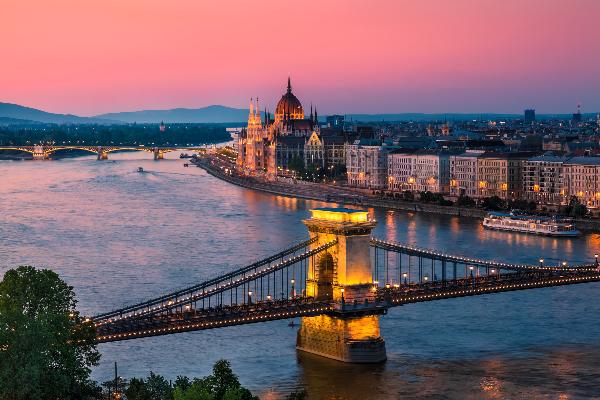
Budapest, often called the “Paris of the East,” is actually two cities in one: hilly Buda and flat Pest, united in 1873. It is a city of thermal springs, ruin bars, dramatic history, and stunning Danube views.
Top Attractions in Budapest
Buda Castle & Castle Hill: A UNESCO World Heritage site, this historic castle district is home to the Royal Palace (housing the Hungarian National Gallery and Budapest History Museum), Matthias Church, and Fisherman’s Bastion, which offers postcard-perfect views of the Parliament across the river.
Hungarian Parliament Building: An iconic Gothic Revival masterpiece on the Pest side of the Danube. Guided tours are available to see the stunning interior and the Hungarian Crown Jewels.
Thermal Baths: A defining experience in Budapest. The Széchenyi Thermal Baths in City Park is one of the largest spa complexes in Europe, with outdoor pools steaming in winter. The Gellért Baths, located in the Art Nouveau Gellért Hotel, are famous for their stunning architecture.
St. Stephen’s Basilica: The largest church in Budapest, named after the first King of Hungary. Visitors can climb to the dome for a 360-degree view of the city.
Dohány Street Synagogue: The largest synagogue in Europe, a beautiful building with a profound adjacent museum and memorial garden commemorating Hungarian Jews lost in the Holocaust.
Andrássy Avenue & Heroes’ Square: Another UNESCO site, this elegant boulevard leads from the city center to Heroes’ Square and City Park, home to Vajdahunyad Castle and the Széchenyi Baths.
Hungarian Cuisine & Dining
Hungarian food is robust, flavorful, and often paprika-heavy.
Goulash (Gulyás): A hearty meat and vegetable stew, seasoned with paprika. It’s more soup-like than its international variations.
Lángos: A popular deep-fried dough snack, typically topped with sour cream and grated cheese.
Chicken Paprikash (Csirkepaprikás): Chicken simmered in a creamy paprika sauce, usually served with nokedli (dumplings similar to spätzle).
Tokaji Aszú: A world-renowned sweet dessert wine from the Tokaj region of Hungary.
Ruin Bars (Romkocsma): Unique to Budapest, these bars are set up in abandoned buildings and courtyards in the old Jewish Quarter (District VII), decorated with eclectic furniture and art. Szimpla Kert is the most famous.
Getting Around Budapest
Budapest has an extensive and easy-to-use public transport network (BKK) that includes metro, trams, buses, and trolleybuses. A single ticket is valid for one journey without transfers (except for night services). For tourists, a
24-, 48-, or 72-hour travel card is excellent value. The city is also very walkable, especially on the Pest side.
Accommodation Tips for Budapest
The
Pest city center (District V), particularly near Deák Ferenc tér (the main transport hub), is very convenient. For a more vibrant and trendy atmosphere with great nightlife and ruin bars, consider the Jewish Quarter (District VII). For stunning views and a quieter, more historic feel, Castle Hill in Buda (District I) is ideal.
The Return: Budapest to Vienna
The return journey follows the same routes in reverse. The train remains the top recommendation for its city-center to city-center convenience. Travelers should allow sufficient time to return to Vienna for their flight or onward travel, considering potential traffic or check-in times.
Cultural Insights and Practical Tips
Currency & Language
Austria: The currency is the Euro (€). The official language is German. English is widely spoken in tourist areas.
Hungary: The currency is the Hungarian Forint (HUF). Credit cards are widely accepted, but it’s wise to have some cash for markets and smaller establishments. The official language is Hungarian, which is not related to most other European languages. English is common in tourist centers.
Tipping Etiquette
Austria: It is customary to round up the bill or leave 5-10% for good service in restaurants. Say the total amount you wish to pay when handing over cash.
Hungary: A tip of 10-15% is standard in restaurants. It is usually not added to the bill; you are expected to calculate it and tell the waiter the total amount to be charged.
Shopping & Souvenirs
Vienna: Look for Mozartkugeln (Mozart balls), Augarten porcelain, products from the Demel confectionery, or classical music recordings.
Budapest: Popular souvenirs include Hungarian paprika, Tokaji wine, Herend porcelain, embroidered linens, and Unicum (a traditional herbal liqueur).
Sustainable Travel Tips
- Utilize the excellent public transportation systems in both cities.
- Carry a reusable water bottle; tap water is safe to drink in both Vienna and Budapest.
- Support local businesses by eating at traditional restaurants and buying from local artisans.
- Be respectful when visiting memorial sites and places of worship.
A journey from Vienna to Budapest offers an unparalleled glimpse into the soul of Central Europe. From the baroque splendor of Schönbrunn to the steamy thermal baths of Széchenyi, this trip weaves together imperial history, artistic genius, culinary delights, and vibrant modern life along the beautiful Blue Danube.