A Comprehensive Travel Guide: Vienna and Salzburg, Austria
This guide offers a detailed itinerary for a classic Austrian journey, starting and ending in the imperial capital of Vienna, with an enchanting interlude in the Baroque jewel of Salzburg. This route is perfect for travelers seeking a blend of grand Habsburg history, world-class art and music, and breathtaking Alpine landscapes.
Trip Overview and Itinerary
A suggested 7 to 10-day trip allows for a thorough exploration of both cities and the journey between them. A typical breakdown could be 4-5 nights in Vienna, 2-3 nights in Salzburg, and a final night in Vienna before departure. The core of this journey is the scenic train ride connecting the two cities, a highlight in itself.
Days 1-4/5: Explore Vienna’s imperial palaces, art museums, and coffee house culture.
Days 5-7/8: Travel to Salzburg; explore the Altstadt (Old Town), Fortress Hohensalzburg, and surrounding lake district.
Days 8/9-10: Return to Vienna for final explorations and departure.
Part 1: Vienna – The Imperial Capital
Vienna, once the heart of the Austro-Hungarian Empire, is a city that lives and breathes art, music, and history. Its grand boulevards, opulent palaces, and vibrant cultural scene offer an unforgettable urban experience.
Top Attractions in Vienna
Schönbrunn Palace: The former summer residence of the Habsburgs, this magnificent 1,441-room Rococo palace is a UNESCO World Heritage site. Visitors can tour the lavish imperial apartments, get lost in the vast gardens, and visit the world’s oldest zoo, Tiergarten Schönbrunn.
St. Stephen’s Cathedral (Stephansdom): The Gothic masterpiece and symbol of Vienna. Climb the 343 steps of the South Tower for a stunning panoramic view of the city.
Hofburg Palace: The winter residence of the Habsburgs, this vast complex now houses the office of the Austrian president, several museums (including the Sisi Museum and Imperial Apartments), the Spanish Riding School, and the Austrian National Library.
Belvedere Palace: A beautiful Baroque palace complex comprising the Upper and Lower Belvedere. It is home to an incredible collection of Austrian art, including Gustav Klimt’s masterpiece, “The Kiss.”
Kunsthistorisches Museum (Museum of Art History): One of the world’s foremost fine arts museums, boasting works by Old Masters such as Rembrandt, Vermeer, and Bruegel, housed in a palatial building.
Vienna State Opera (Wiener Staatsoper): A pinnacle of musical life. Attend a world-class opera or ballet performance, or take a guided tour to admire its splendid interior.
Viennese Food & Drink
Viennese cuisine is hearty and comforting. Key experiences include:
Wiener Schnitzel: A thin, breaded, and fried veal cutlet, traditionally served with potato salad or parsley potatoes.
Sachertorte: The famous chocolate cake with a layer of apricot jam, invented at the Hotel Sacher.
Apfelstrudel: A classic apple strudel, best enjoyed warm with a dollop of vanilla sauce (Vanillesauce).
Coffee House Culture: An integral part of Viennese life. Spend an afternoon at a traditional Kaffeehaus like Café Central or Café Sacher, sipping a Melange (similar to a cappuccino) and reading the newspaper.
Heuriger: Visit a traditional wine tavern in the outskirts (like Grinzing or Neustift am Walde) to sample young wine (Heuriger) and cold buffet fare in a rustic setting.
Transportation in Vienna
Vienna has an excellent and efficient public transportation network (Wiener Linien) consisting of U-Bahn (subway), trams, and buses. The system is easy to navigate. Purchasing a
Vienna Card (Wien-Karte) offers discounts at many attractions and unlimited travel for 24, 48, or 72 hours. Alternatively, single tickets or 24/72-hour passes are also available. The city center (Innere Stadt) is very walkable.
Accommodation Tips for Vienna
Staying in or near the
Innere Stadt (1st District) places you within walking distance of major sights but can be expensive. The districts just outside the Ringstrasse, such as Leopoldstadt (2nd), Mariahilf (6th), and Neubau (7th), offer excellent connections via U-Bahn, a more local vibe, and a wider range of mid-range and boutique hotels.
The Journey: Vienna to Salzburg by Train
The train journey from Vienna to Salzburg is one of Europe’s most scenic and convenient routes. Operated primarily by Österreichische Bundesbahnen (ÖBB), the Railjet high-speed trains cover the approximately 300 km distance in just over 2.5 hours.
Booking: It is advisable to book tickets in advance on the ÖBB website or app for the best fares (“Sparschiene” are discounted advance tickets).
Departure Stations: Trains depart frequently from Wien Hauptbahnhof (Vienna’s main station) and some from Wien Meidling.
The Scenery: The route passes through the rolling hills of the Mostviertel region and then follows the course of the River Traun, offering views of picturesque villages and the foothills of the Alps before arriving in Salzburg.
Arrival: Trains arrive at Salzburg Hauptbahnhof, located about a 20-25 minute walk or a short bus ride from the Altstadt (Old Town).
Part 2: Salzburg – The City of Mozart and The Sound of Music
Nestled on the banks of the Salzach River with a dramatic backdrop of Alpine peaks, Salzburg is a Baroque city of immense charm. It is universally known as the birthplace of Wolfgang Amadeus Mozart and the filming location for “The Sound of Music.”
Top Attractions in Salzburg
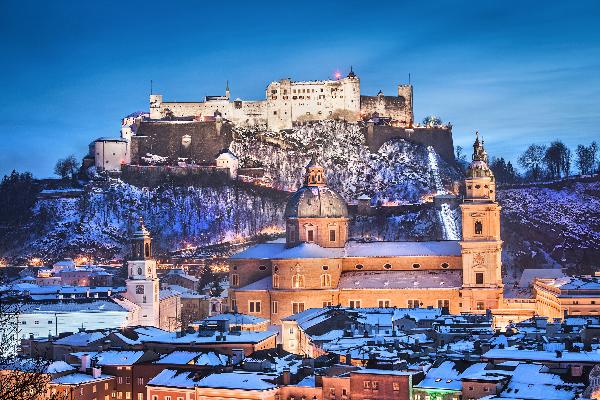
Hohensalzburg Fortress (Festung Hohensalzburg): One of the largest and best-preserved medieval castles in Europe. It towers over the city and can be reached on foot or via the funicular railway. The views from the ramparts are spectacular.
Salzburg Altstadt (Old Town): A UNESCO World Heritage site. Get lost in its winding cobblestone streets, lined with elegant shops, traditional breweries, and charming courtyards.
Mozart’s Birthplace (Mozarts Geburtshaus) & Residence (Mozart-Wohnhaus): Two museums dedicated to the life and work of the city’s most famous son, housing instruments, portraits, and memorabilia.
Mirabell Palace and Gardens: A beautiful Baroque palace with famous gardens featuring statues of dwarves and the Pegasus Fountain—key scenes from “The Sound of Music” were filmed here.
Hellbrunn Palace (Schloss Hellbrunn): Located just south of the city, this early Baroque villa is famous for its whimsical trick fountains (Wasserspiele) that surprise and delight visitors.
Salzburg Cathedral (Salzburger Dom): The magnificent 17th-century Baroque cathedral at the heart of the city, with an impressive dome and façade.
“The Sound of Music” Tour: Numerous bus tours take fans to filming locations around the city and the surrounding Lake District, including the Leopoldskron Palace, Nonnberg Abbey, and the gazebo at Hellbrunn.
Salzburg Food & Drink
Salzburg’s cuisine blends Austrian classics with Bavarian influences.
Salzburger Nockerl: A iconic sweet soufflé dessert, fluffy and shaped like the three mountains surrounding Salzburg.
Bosna: A popular street food—a grilled sausage with curry powder, onions, and sauces in a bun.
Mozartkugeln (Mozart Balls): The famous chocolate confection made of marzipan, nougat, and dark chocolate. The original is from confectioner Fürst.
Beer Gardens (Biergarten): Enjoy a locally brewed Stiegl beer at Augustiner Bräu, a massive monastery brewery with a self-service tavern and chestnut-shaded garden.
Traditional Gasthöfe: Dine at a traditional inn for hearty dishes like Schweinsbraten (roast pork) or Kasnocken (cheese dumplings).
Transportation in Salzburg
The compact Altstadt is best explored on foot. For attractions further out, such as Hellbrunn Palace or the Untersberg mountain cable car, Salzburg has an efficient bus network. A
Salzburg Card is highly recommended; it includes free single admission to all major attractions and unlimited use of public transportation for 24, 48, or 72 hours.
Accommodation Tips for Salzburg
The most atmospheric area to stay is in or near the
Altstadt, though it is also the most expensive. The neighborhoods across the river, such as Neustadt, offer more moderate prices while still being within easy walking distance of the main sights. For a quieter stay with beautiful views, consider areas on the outskirts like Aigen.
The Return: Salzburg to Vienna
The return journey to Vienna is again best undertaken by ÖBB Railjet train. The process is identical to the outbound journey: book in advance for good fares from Salzburg Hauptbahnhof to Wien Hauptbahnhof. This provides a smooth and comfortable conclusion to your Alpine interlude before your final stay or departure from Vienna.
Cultural Insights and Practical Tips
Tipping Etiquette
Tipping is customary in Austria. It is not added to the bill. Instead, it is polite to round up the bill or leave 5-10% for good service in restaurants and cafes. Simply tell the server the total amount you wish to pay (e.g., if the bill is €18, you can say “€20” when paying). Tip taxi drivers by rounding up the fare.
The Language
The official language is German. While English is widely spoken in tourist areas, learning a few basic German phrases like “Guten Tag” (Good day), “Danke” (Thank you), and “Bitte” (Please/You’re welcome) is appreciated and shows respect for the local culture.
Shopping and Souvenirs
Vienna: Look for Augarten porcelain, Swarovski crystals (though not Austrian-owned, it’s very popular), traditional Dirndls and Lederhosen from markets, and delicacies from Demel or other confectioners.
Salzburg: Original Mozartkugeln from Fürst (only sold in Salzburg), traditional folk clothing, Christmas ornaments (from the year-round Christmas shop), and Alpine herbs and schnapps.
Best Time to Visit
Spring (April-May) and Autumn (September-October) are ideal, with mild weather and fewer crowds. Summer (June-August) is peak season with festivals but also more tourists. Winter (November-March) is magical with Christmas markets (Advent), but days are short and cold; it’s perfect for those seeking festive charm.
Austrian Festivals
Vienna Ball Season: From New Year’s Eve until Fasching (Carnival), hundreds of balls are held. The most famous is the Opera Ball.
Salzburg Festival (Salzburger Festspiele): A world-renowned festival of music and drama held every July and August.
Christmas Markets (Christkindlmärkte): Both Vienna and Salzburg host enchanting Christmas markets from mid-November until Christmas Eve.