A Comprehensive Travel Guide: Tromsø, Kiruna, Narvik, Icehotel, Haparanda, Icebreaker, and Rovaniemi
This guide details a classic Arctic Circle adventure through the northern reaches of Norway, Sweden, and Finland. This journey is centered around winter experiences, from chasing the Northern Lights and exploring ice sculptures to riding a mighty icebreaker and meeting Santa Claus. The route connects vibrant cities with remote wilderness, offering a profound encounter with the stark beauty and unique cultures of the European High North.
Introduction to the Region
The Scandinavian Arctic is a land of dramatic contrasts. During the winter months, the polar night envelops the region in a prolonged twilight, offering unparalleled opportunities to witness the Aurora Borealis. The landscape is a pristine canvas of snow-covered forests, frozen lakes, and rugged fjords. The indigenous Sámi people have inhabited this area for millennia, and their rich culture remains an integral part of the local identity. This itinerary is designed for travelers seeking a mix of urban comfort, raw nature, and unforgettable winter activities. The best time to embark on this journey is from late November to early April, when winter conditions are at their peak, and the iconic ice structures are stable.
Destinations and Attractions
Tromsø, Norway: The Arctic Capital
Nestled on an island surrounded by jagged peaks and fjords, Tromsø is a lively and cultural hub well inside the Arctic Circle. Despite its northern location, it boasts a surprisingly mild climate due to the Gulf Stream.
Arctic Cathedral (Ishavskatedralen): An architectural masterpiece with a striking triangular design intended to resemble icebergs. Its massive stained-glass window is particularly breathtaking when illuminated.
Fjellheisen Cable Car: Ascend to the top of Mount Storsteinen for a panoramic view of Tromsø, the surrounding islands, and mountains. It is a spectacular spot for both midday views and nighttime Northern Lights hunting.
Polar Museum: This museum offers fascinating insights into Tromsø’s history as a gateway for Arctic expeditions, hunting, and trapper life.
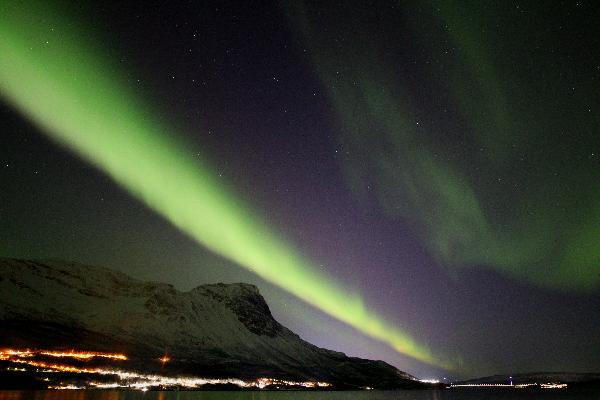
Northern Lights Tours: Tromsø is one of the world’s best places to see the Aurora Borealis. Numerous tour operators offer chasing tours by bus, boat, or even minibus for a more personalized experience.
Kiruna and Icehotel, Sweden: A Town on the Move
Kiruna is the northernmost city in Sweden, famous for its massive iron ore mine. The entire city is currently being relocated bit by bit to avoid subsidence from the mine, a unique phenomenon in itself.
Kiruna Church (Kiruna Kyrka): Voted as Sweden’s most beautiful public building, this wooden church is a must-see before it is eventually moved.
Esrange Space Center: Take a tour of one of the world’s largest civilian space centers, used for rocket launches and satellite communications.
The World-Famous Icehotel (Jukkasjärvi): Located about 20 minutes from Kiruna in the village of Jukkasjärvi, this is the original and largest hotel built entirely of snow and ice. It is reconstructed every winter with new artistic suites, an Icebar, and a chapel. Visitors can take day tours to explore the art exhibitions even if not staying overnight.
Sámi Culture: The area around Kiruna is part of Sápmi, the land of the indigenous Sámi people. Tours can be arranged to visit a Sámi reindeer herding camp to learn about their traditions, clothing (gákti), and way of life.
Narvik, Norway: War History and Mountain Vistas
Situated on the Ofotfjord, Narvik’s deep ice-free harbor made it a strategic point for iron ore shipping, leading to fierce naval battles during World War II.
Narvik War Museum (Krigsminnemuseum): A modern and highly informative museum detailing the Battle of Narvik and the broader impact of WWII on Northern Norway.
Narvikfjellet Cable Car: Ride up to Mount Fagernesfjellet for stunning views of the town, fjord, and surrounding mountains. It’s a popular area for skiing and winter hiking.
Haparanda-Tornio, Sweden-Finland: A Borderless Twin City
Haparanda (Sweden) and Tornio (Finland) are two towns seamlessly connected across the Torne River. They share services and a unique bicultural identity.
The Border: Walk or drive across the bridge between the two countries. Notice the time zone change (Finland is one hour ahead).
World’s Largest IKEA: A major draw for visitors, this IKEA is strategically located to serve both populations.
The Green Line: A line on the road marking the actual border between Sweden and Finland.
The Icebreaker Sampo, Finland: A Crushing Experience
This unique attraction is located in the Bay of Bothnia near Kemi, a short drive from Haparanda/Tornio.
Icebreaker Cruise: The Sampo is a retired icebreaker that now takes passengers on daily cruises into the frozen sea. The highlight is feeling the ship’s massive weight crush through the thick ice.
Floating in an Ice Suit: A once-in-a-lifetime opportunity to don a special survival suit and float in the icy water amidst the broken ice floes.
Rovaniemi, Finland: The Official Hometown of Santa Claus
The capital of Finnish Lapland, Rovaniemi is a modern city rebuilt after WWII and is known globally as the gateway to Santa’s home.
Santa Claus Village: Located directly on the Arctic Circle line, this is Santa’s official post office. You can meet Santa himself year-round, cross the Arctic Circle line, and send postcards with a special Arctic postmark.
Arktikum Museum: A superb museum and science center that explores life in the North, from Northern Nature to Sámi culture and the history of Lapland.
Husky and Reindeer Safaris: Rovaniemi is a great base for classic Lappish activities like husky sledding through snowy forests or a peaceful reindeer sleigh ride.
Northern Lights: Away from city lights, the chances of seeing the Aurora are high. Many tour operators offer Aurora camps in the wilderness.
Culinary Journey: What and Where to Eat
Norway (Tromsø & Narvik)
Traditional Dishes: Sample reindeer meat (reinsdyrstek), stockfish (tørrfisk), and king crab. “Bidos,” a traditional Sámi reindeer stew, is a rare but authentic treat.
Where to Eat: In Tromsø, try Emma’s Under for creative Norwegian cuisine or Fiskekompaniet for exceptional seafood. For a casual experience, the city’s pubs often serve hearty local fare.
Sweden (Kiruna & Haparanda)
Traditional Dishes: Don’t miss Swedish meatballs (köttbullar) with lingonberries, Arctic char (röding), and cloudberries (hjortron) for dessert. “Suovas” is smoked reindeer meat, a Sámi specialty.
Where to Eat: In Kiruna, Camp Ripan offers a high-quality buffet featuring local ingredients. At the Icehotel, the ICEHOTEL Restaurant provides a fine-dining experience in a unique setting. In Haparanda, classic Swedish cafes offer cinnamon buns (kanelbullar) and coffee.
Finland (Rovaniemi & Tornio)
Traditional Dishes: Look for sautéed reindeer (poronkäristys), salmon soup (lohikeitto), and Karelian pies (karjalanpiirakka). For a unique experience, try a smoke sauna followed by grilled sausages (makkara).
Where to Eat: In Rovaniemi, Nili Restaurant specializes in Lappish cuisine in a rustic setting. Santa’s Salmon Place offers salmon grilled over an open fire. In Tornio, sample Finnish dishes at local pubs and restaurants.
Transportation: Navigating the Arctic
Getting Between Destinations
Tromsø to Narvik: The most scenic option is the bus, which takes about 4-5 hours. Renting a car offers maximum flexibility for stops along the stunning coastline.
Narvik to Kiruna: A direct bus service connects these two cities, taking approximately 2.5 to 3 hours. The train line between Narvik and Kiruna is primarily for freight (iron ore) with limited passenger services; check schedules in advance.
Kiruna to Haparanda/Tornio: A bus journey is required, which can take around 4-5 hours. This route passes through vast, uninhabited landscapes.
Haparanda/Tornio to Rovaniemi: Regular bus services connect Tornio to Rovaniemi, with a travel time of about 1.5 to 2 hours.
General Transportation Tips
Trains: The Swedish rail network extends to Kiruna and Narvik from the south (e.g., Stockholm). Finnish trains connect Rovaniemi to Helsinki. Book long-distance tickets in advance for better prices.
Buses: Buses are the lifeline of this region, connecting towns and cities efficiently. Companies like Länstrafiken Norrbotten (Sweden) and Matkahuolto (Finland) are key operators.
Flights: Major airports for this itinerary are Tromsø (TOS), Kiruna (KRN), and Rovaniemi (RVN). Flying can save time if you are not doing the full overland route.
Car Rental: Renting a car provides ultimate freedom but requires confidence in driving in winter conditions (snow, ice, darkness). Ensure the rental car is equipped with winter tires.
Accommodation Tips: Where to Stay
Tromsø
A range of options exists, from luxury hotels like the Clarion Hotel The Edge to charming guesthouses. For something unique, consider a glass igloo or a cabin outside the city for better Northern Lights viewing.
Kiruna & Jukkasjärvi
The ultimate stay is at the
Icehotel, where you sleep on a bed of ice in a thermal sleeping bag. It also offers warm “chalet” accommodations. In Kiruna town, options include the modern Scandic Ferrum or cozy B&Bs like Guesthouse Husky.
Narvik
The Quality Hotel Grand Royal offers historic charm and central location. For modern comfort, consider the Scandic Narvik.
Haparanda/Tornio
A practical stopover with hotels like the Comfort Hotel Arctic in Haparanda or the Scandic Tornio on the Finnish side.
Rovaniemi
Accommodation ranges from large chain hotels like Santa’s Hotel Santa Claus in the city center to wilderness lodges and glass-roofed cabins on the outskirts. For a full Santa experience, you can stay at the Santa Claus Holiday Village.
Cultural Insights and Practical Advice
Sámi Culture
The Sámi are Europe’s only recognized indigenous people. Show respect by learning a few words: “Buorre beaivi” (Good day in North Sámi). When visiting a Sámi site or purchasing handicrafts (duodji), ensure it is from an authentic Sámi-owned business. Always ask for permission before taking photographs of people.
“Friluftsliv” and “Everyman’s Right”
The Scandinavian concept of “friluftsliv” (free-air life) emphasizes a deep connection with nature. Coupled with “Allemansrätten” (Everyman’s Right) in Sweden and Finland, you have the right to roam freely in nature, even on private land, provided you do not disturb or destroy. This means you can hike and ski almost anywhere but must respect privacy, not litter, and avoid disturbing wildlife.
Winter Survival Tips
Clothing: Dress in layers. A merino wool base layer, an insulating mid-layer (fleece/wool), and a windproof/waterproof outer shell are essential. Don’t forget a warm hat, gloves, scarf, and insulated winter boots with good grip.
The Polar Night: From mid-November to mid-January, the sun does not rise above the horizon in these latitudes. The light is a beautiful blue twilight for a few hours around midday. This can be disorienting; maintain a routine and consider bringing a “happy light” to combat potential Seasonal Affective Disorder (SAD).
Aurora Hunting: Be patient. Use Aurora forecast apps (like Aurora Forecast) to check solar activity and cloud cover. Get away from city lights for the best view.
Curency: Norway uses Norwegian Kroner (NOK), Sweden uses Swedish Kronor (SEK), and Finland uses Euros (EUR). Credit cards are widely accepted almost everywhere.
A Sample 10-Day Winter Itinerary
Day 1-3: Tromsø, Norway
Arrive in Tromsø. Explore the city center, visit the Polar Museum and Arctic Cathedral. Take the Fjellheisen cable car for views. Dedicate one evening to a Northern Lights chase tour.
Day 4: Narvik, Norway
Travel by bus or car from Tromsø to Narvik (4-5 hours). Visit the Narvik War Museum and take the cable car up Narvikfjellet for spectacular fjord views. Overnight in Narvik.
Day 5-6: Kiruna & Jukkasjärvi, Sweden
Take the morning bus from Narvik to Kiruna (2.5-3 hours). In the afternoon, visit Kiruna Church. The next day, travel to Jukkasjärvi to explore the Icehotel on a day tour. Consider a reindeer or husky sledding adventure or a visit to a Sámi camp. Overnight in Kiruna or at the Icehotel.
Day 7: Haparanda/Tornio & The Icebreaker Sampo
Take the bus from Kiruna to Haparanda/Tornio (4-5 hours). In the afternoon/evening, embark on your pre-booked Icebreaker Sampo cruise from Kemi harbor. Overnight in Haparanda or Tornio.
Day 8-10: Rovaniemi, Finland
Take a bus from Tornio to Rovaniemi (1.5-2 hours). Spend your days visiting Santa Claus Village, crossing the Arctic Circle, exploring the Arktikum Museum, and going on a husky safari. Use your final evening for one last Northern Lights hunt before departing.
A journey through Tromsø, Kiruna, Narvik, and Rovaniemi is more than a vacation; it’s an immersion into the heart of the Arctic winter. It offers a blend of natural wonders, deep cultural history, and adventures that will create memories to last a lifetime.