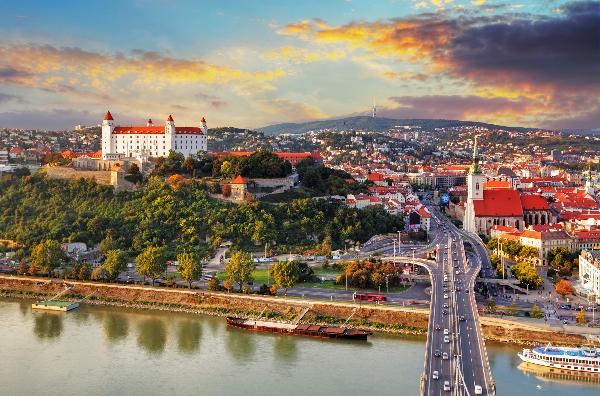
A Comprehensive Travel Guide to Bratislava and Devín Castle
Nestled along the banks of the Danube River, Bratislava is a captivating capital city where history and modernity seamlessly intertwine. Often overlooked in favor of its famous neighbors, Vienna and Budapest, Slovakia’s capital offers a more intimate and relaxed atmosphere, with a charming Old Town, a formidable hilltop castle, and a vibrant cultural scene. A short trip from the city center leads to the majestic ruins of Devín Castle, a site of profound national significance. This guide provides a detailed exploration of what to see, eat, and experience in and around Bratislava.
Introducing Bratislava
Bratislava is the political, cultural, and economic heart of Slovakia. Its unique position at the crossroads of Central Europe has endowed it with a rich and complex history, having been part of the Kingdom of Hungary, the Habsburg Empire, and Czechoslovakia before becoming the capital of an independent Slovakia in 1993. The city’s compact size is one of its greatest assets, allowing visitors to explore most of its key attractions on foot. The atmosphere is a blend of medieval charm, Baroque elegance, and post-communist transformation, creating a destination that is both historically fascinating and dynamically contemporary.
Top Attractions in Bratislava
Bratislava Castle (Bratislavský hrad)
Dominating the city skyline from a hill above the Danube, Bratislava Castle is the city’s most iconic landmark. The rectangular castle with its four corner towers is often referred to as an “upside-down table.” The site has been inhabited since the Neolithic period and has served as a Celtic oppidum, a Roman border post, and a key fortress of the Hungarian monarchy. The castle was meticulously reconstructed in the 1950s after being destroyed by a fire in 1811. Today, it houses the historical exhibitions of the Slovak National Museum. A walk along the castle grounds offers breathtaking panoramic views of the Old Town, the Danube River, and, on a clear day, parts of Austria and Hungary.
Old Town (Staré Mesto)
The historic heart of Bratislava is a delightful maze of cobblestone streets, picturesque squares, and pastel-colored buildings. Key highlights within the Old Town include:
Main Square (Hlavné námestie): The central square is home to the Old Town Hall, a complex of buildings dating from the 14th and 15th centuries that now contains the Bratislava City Museum. The centerpiece of the square is the Roland Fountain, built in 1572 as a public water supply.
St. Martin’s Cathedral (Dóm svätého Martina): This Gothic cathedral served as the coronation church for Hungarian kings and queens from 1563 to 1830. Nineteen Habsburg rulers were crowned within its walls.
Michael’s Gate (Michalská brána): The only preserved gate of the city’s medieval fortifications. Visitors can climb the tower for a lovely view of the Old Town and visit the Museum of Arms inside.
Primate’s Palace (Primaciálny palác): A beautiful Neoclassical palace known for its Hall of Mirrors, where the Peace of Pressburg was signed in 1805. Don’t miss the unique collection of 17th-century English tapestries.
Man at Work (Čumil): One of several quirky bronze statues that dot the Old Town, this figure peeping out of a manhole has become an unofficial symbol of the city.
UFO Tower (Nový Most)
Stretching across the Danube, the SNP Bridge (Most SNP) is a remarkable piece of 20th-century architecture. Its most distinctive feature is the UFO-like observation deck and restaurant perched atop a single pylon. An elevator whisks visitors to the top for what is arguably the best 360-degree view of Bratislava. It’s particularly spectacular at sunset.
Slovak National Theatre (Slovenské národné divadlo)
This historic theatre has two buildings: the ornate Neo-Renaissance building from 1886 in the Old Town and the modern building from 2007 by the river. Attending a ballet, opera, or drama performance here is a wonderful way to experience Slovak high culture.
A Journey to Devín Castle (Optional but Highly Recommended)
Located at the confluence of the Danube and Morava rivers, approximately 10 kilometers from central Bratislava, lie the evocative ruins of Devín Castle (Devínsky hrad). This site is of immense archaeological and national importance, offering a glimpse into over a thousand years of history.
History and Significance
The strategic location of Devín Hill has been fortified since the Neolithic Age. It was a significant outpost of the Roman Empire (as part of the Limes Romanus frontier) and a major center of Great Moravia, one of the first Slavic states, in the 9th century. The castle was later expanded and fortified throughout the Middle Ages. In 1809, it was deliberately destroyed by Napoleon’s troops. For Slovaks, Devín is a powerful symbol of their national identity and resilience, especially as it lies just across the river from Austria, once part of the Iron Curtain.
What to See and Do
Visitors to Devín Castle can explore the extensive ruins, including the foundations of medieval palaces, churches, and fortifications. The climb to the top of the Main Fortress is rewarded with a stunning view of the two rivers meeting and the Austrian countryside beyond. The “Maiden Tower,” perched on a isolated rock, is one of the most photographed parts of the castle. A small museum on-site displays artifacts found during archaeological excavations. The natural surroundings are part of the protected landscape area of Devínska Kobyla, making it a great spot for hiking.
Getting to Devín Castle
Reaching Devín Castle is straightforward:
By Bus: Take bus number 29 from beneath the Nový Most bridge (stop: “Most SNP”) or from the main bus station (Autobusová stanica Mlynské Nivy). The journey takes about 20-25 minutes. Get off at the “Devín” stop and follow the signs for a 15-minute walk to the castle.
By Bike or Boat: A scenic bike path runs along the Danube from Bratislava to Devín. In the summer months, tourist boats also operate between the city center and Devín.
Slovak Cuisine: Food and Drink Recommendations
Slovak food is hearty, flavorful, and designed to satisfy. It shares similarities with Czech, Austrian, and Hungarian cuisines, with a focus on meat, potatoes, dumplings, and cheese.
Must-Try Dishes
Bryndzové Halušky: The national dish. These are small potato dumplings similar to gnocchi, smothered in a special sheep cheese called bryndza and topped with pieces of fried bacon.
Kapustnica: A rich and tangy sauerkraut soup often made with sausage and sometimes mushrooms. It’s a traditional Christmas Eve soup but is available year-round.
Rezeň: A breaded and fried schnitzel, typically made from pork or chicken. It is usually served with boiled potatoes or potato salad.
Slovak Goulash (Guláš): A thicker stew than its Hungarian counterpart, often served in a bread bowl (called “guláš v bochníku”).
Langoš: A popular street food: deep-fried flatbread topped with garlic, cheese, or ketchup.
Drinks
Kofola: A uniquely Central European soft drink developed during the Communist era as an alternative to Western colas. It has a less sweet, more herbal taste that is quite popular.
Slovak Beer (Pivo): Slovakia produces excellent lagers. Look for brands like Zlatý Bažant, Šariš, and Stein.
Slivovica: A potent plum brandy that is the national spirit. It is often consumed as a shot before a meal.
Tokaj: Slovakia produces a small portion of the famous Tokaj wine region. Sample sweet dessert wines from cellars in nearby towns.
Where to Eat
The Old Town is filled with restaurants ranging from tourist-focused spots to authentic Slovak pubs (“pivnica”). For a more local experience, venture slightly outside the historic center. Look for “reštaurácia” for a full-service restaurant or “koláreň” for a pastry shop.
Transportation: Getting There and Around
Arriving in Bratislava
By Air: Bratislava Airport (BTS) is small and conveniently located just 9 km from the city center. It is connected by public bus (number 61) and a more direct shuttle service.
By Train: The main train station, Hlavná stanica, is about a 20-minute walk from the Old Town. It has excellent connections to Vienna (approx. 1 hour), Budapest (approx. 2.5 hours), and Prague (approx. 4 hours).
By Bus: The modern bus station, Mlynské Nivy, is a major hub for international and domestic coaches. Companies like FlixBus offer affordable connections across Europe.
By Boat: A scenic and relaxing way to arrive is via a hydrofoil or catamaran on the Danube from Vienna.
Getting Around the City
Bratislava is an exceptionally walkable city. The entire Old Town and routes to the castle are best explored on foot.
Public Transport (IMHD): The network of trams, buses, and trolleybuses is efficient and covers the entire city. Tickets must be purchased in advance from ticket machines or newsstands (“tabak”) and validated upon boarding. A single 15-, 30-, or 60-minute ticket is available.
Bike Sharing: The city has a public bike-sharing system called Slovnaft BAjk, which is a cheap and healthy way to get around.
Taxi & Ride-Sharing: Use established companies or apps like Bolt to avoid being overcharged by unofficial taxis.
Accommodation Tips
Bratislava offers a wide range of accommodation to suit all budgets.
Old Town: Staying within or on the edge of the Old Town is ideal for first-time visitors. You’ll be within walking distance of almost all major attractions, restaurants, and nightlife. This area tends to have more boutique hotels and higher-end options.
Near the Main Station (Hlavná stanica): This area offers more budget-friendly hotels and hostels. It’s a short walk or one tram stop away from the Old Town.
Apartments & Hostels: For longer stays or travelers on a budget, renting an apartment or staying in one of the city’s well-regarded hostels is an excellent option.
Booking Advice: It is advisable to book well in advance during peak season (spring and summer) or during major events and festivals.
Cultural Insights and Etiquette
Understanding local customs can greatly enrich your travel experience.
Greetings: A simple handshake with direct eye contact is standard for greetings and farewells. Use formal titles (Pan for Mr., Pani for Mrs./Ms.) until invited to use first names.
Tipping: Tipping is common but not as obligatory as in some countries. It is customary to round up the bill or leave 5-10% for good service in restaurants. Leave the tip on the table or tell the server how much you are paying in total (e.g., if the bill is €18.50, you can say “€20” when paying).
Shoes Off: When invited into a Slovak home, it is expected that you remove your shoes.
National Pride: Slovaks are proud of their distinct national identity, separate from that of the Czechs or other neighboring nations. Showing an interest in their culture and history is appreciated.
Café Culture: Like much of Central Europe, spending an afternoon in a café over coffee and cake is a cherished tradition.
A Sample One-Day Itinerary
Morning: Start at Michael’s Gate and walk through the Old Town, visiting Main Square, Primate’s Palace, and St. Martin’s Cathedral.
Late Morning: Hike up to Bratislava Castle for stunning views and a tour of its museum.
Lunch: Enjoy a traditional Slovak lunch at a classic pivnica.
Afternoon Option A (History): Take bus 29 to Devín Castle and spend 2-3 hours exploring the ruins and surrounding nature.
Afternoon Option B (Modern City): Walk across the UFO Bridge or take a tram to explore modern architecture around Eurovea or the Slovak National Theatre’s new building.
Evening: Return to the Old Town for dinner. Afterwards, ascend the UFO Tower for nighttime panoramic views or enjoy a performance at the Slovak National Theatre.
A visit to Bratislava, with its layered history, charming streetscapes, and welcoming atmosphere, provides a deeply rewarding Central European experience. By combining exploration of its urban core with a trip to the symbolic ruins of Devín Castle, travelers gain a fuller understanding of Slovakia’s past and present.