A Comprehensive Travel Guide: Portugal & Spain (Barcelona to Lisbon)
This guide details a classic Iberian Peninsula itinerary, connecting the vibrant cities of Spain and the charming towns of Portugal. The route takes you from the modernist wonders of Barcelona, through the historic heart of Spain, and onto the dramatic Atlantic coastline of Portugal.
Overview of the Itinerary
The journey spans two distinct countries, offering a rich tapestry of art, architecture, history, and cuisine. The general route is:
Barcelona (Spain) -> Zaragoza -> Madrid -> Toledo -> Badajoz -> Lisbon (Portugal) -> Sintra -> Cabo da Roca -> Lisbon. This can be comfortably covered in 14-21 days.
Primary Mode of Transport: Train and bus are efficient for city-to-city travel. Renting a car offers more flexibility, especially for the Portuguese coastal section.
Best Time to Visit: Spring (April-June) and Autumn (September-October) for pleasant weather and fewer crowds.
Currency: Euro (€) in both Spain and Portugal.
Part 1: Spain
Barcelona: The Capital of Catalonia
Barcelona is a Mediterranean metropolis famed for the unique architecture of Antoni Gaudí and a vibrant, artistic atmosphere.
Key Attractions
La Sagrada Família: Gaudí’s unfinished masterpiece, a basilica of immense scale and intricate detail. Booking tickets online well in advance is essential.
Park Güell: A whimsical public park with colorful mosaics, strange structures, and excellent city views. Also requires pre-booked tickets.
Casa Batlló & La Pedrera: Two of Gaudí’s most famous modernist buildings on the Passeig de Gràcia.
Gothic Quarter (Barri Gòtic): A maze of narrow medieval streets, home to the Barcelona Cathedral and charming plazas.
La Rambla: A bustling, tree-lined pedestrian street running through the heart of the city. Be vigilant for pickpockets.
Magic Fountain of Montjuïc: A spectacular light and music show at the fountain, especially beautiful at night.
Practical Information
Getting There & Away: Barcelona-El Prat Airport (BCN) is well-connected internationally. The main train station, Barcelona Sants, has high-speed AVE connections to Madrid and Zaragoza.
Getting Around: The Metro system is extensive and efficient. The T-casual multi-trip ticket offers good value.
Food & Drink: Try “pa amb tomàquet” (bread with tomato), fresh seafood, and “crema catalana” for dessert.
Recommended Stay: 3-4 days.
Zaragoza: The City of Four Cultures
A historical stopover between Barcelona and Madrid, Zaragoza is the capital of Aragon, known for its grand Basilica and Roman history.
Key Attractions
Basilica del Pilar: A massive baroque church on the banks of the Ebro River, famous for its domes and a revered statue of the Virgin Mary.
Aljafería Palace: An 11th-century Islamic palace-fortress, showcasing stunning Moorish architecture and later used as a residence for Aragonese kings.
Caesaraugusta Forum Museum: An underground museum displaying the ruins of the ancient Roman forum.
Practical Information
Getting There & Away: A key stop on the high-speed AVE train line between Barcelona and Madrid. The journey from Barcelona is about 1.5 hours.
Getting Around:The city center is very walkable.
Food & Drink: Sample local specialties like “ternasco de Aragón” (roast lamb) and “migas” (fried breadcrumbs).
Recommended Stay: 1 day.
Madrid: The Spanish Capital
A vibrant, elegant city known for its world-class art museums, sprawling parks, and lively nightlife.
Key Attractions
Prado Museum: Home to one of the finest collections of European art, with masterpieces by Velázquez, Goya, and El Greco.
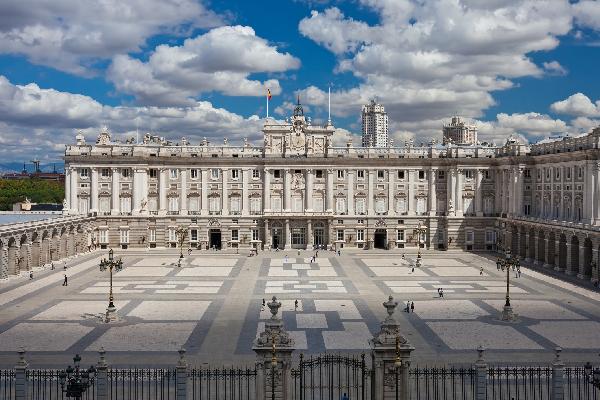
Royal Palace: The official residence of the Spanish Royal Family, a grandiose palace with over 3,000 rooms. Book tickets online.
Puerta del Sol & Plaza Mayor: The bustling heart of the city, perfect for people-watching and enjoying a coffee.
Retiro Park: A vast and beautiful park where you can rent a rowboat on the lake, visit the Crystal Palace, or simply stroll.
Reina Sofía Museum: Features 20th-century art, including Picasso’s monumental anti-war painting, “Guernica.”
Practical Information
Getting There & Away: Madrid-Barajas Airport (MAD) is a major international hub. Atocha station is the primary train station for high-speed services.
Getting Around: An excellent Metro system connects the entire city. The city center is also very walkable.
Food & Drink: Don’t miss “churros con chocolate” at San Ginés, “cocido madrileño” (a hearty chickpea stew), and hopping between tapas bars in the La Latina neighborhood.
Recommended Stay: 3-4 days.
Toledo: The Imperial City
A UNESCO World Heritage site perched on a hill, Toledo is a historical masterpiece known as the “City of Three Cultures” for its Christian, Muslim, and Jewish heritage.
Key Attractions
Toledo Cathedral: A magnificent High Gothic cathedral with an intricate altarpiece and a collection of art by El Greco.
Alcázar of Toledo: A imposing fortress overlooking the city, now housing an Army Museum.
Santo Tomé Church: Houses El Greco’s most famous painting, “The Burial of the Count of Orgaz.”
Jewish Quarter: Wander through narrow streets to find the Synagogue of Santa María la Blanca and the El Tránsito Synagogue.
Mirador del Valle: A viewpoint across the river offering the classic, panoramic postcard view of Toledo.
Practical Information
Getting There & Away: A short 30-minute high-speed train ride from Madrid. It’s an easy day trip, but staying overnight allows you to experience the city without the day-trip crowds.
Getting Around:The city is best explored on foot, but be prepared for steep hills. There are public escalators from the bus station to the city center.
Food & Drink: Toledo is famous for “perdiz estofado” (stewed partridge) and marzipan (“mazapán”).
Recommended Stay: 1-2 days (or as a day trip from Madrid).
Badajoz: The Gateway to Portugal
A historic frontier fortress town on the Spanish-Portuguese border, often used as a transit point rather than a primary destination.
Key Attractions
Alcazaba of Badajoz: One of the largest fortified Arab citadels in Spain, offering great views from its walls.
Badajoz Cathedral: A fortress-like cathedral built between the 13th and 15th centuries.
Plaza Alta:The main historic square, characterized by its arcades and colorful buildings.
Practical Information
Getting There & Away: Connected to Madrid by train and bus. The bus to Lisbon takes approximately 3-4 hours. This is a logical stopping point if breaking up the journey from Toledo/Madrid to Lisbon.
Getting Around:The historic center is compact and walkable.
Food & Drink:A good place to try Extremaduran cuisine, including Iberian pork products and “migas extremeñas.”
Recommended Stay: 1 night or just a stopover.
Part 2: Portugal
Lisbon: The City of Seven Hills
Portugal’s charismatic capital is known for its hilly landscape, iconic yellow trams, Fado music, and stunning views.
Key Attractions
Belém Tower:A 16th-century fortified tower on the Tagus River, a symbol of Portugal’s Age of Discoveries.
Jerónimos Monastery:A magnificent Manueline-style monastery in Belém, a UNESCO site and the resting place of Vasco da Gama.
Alfama District:The oldest neighborhood in Lisbon, a labyrinth of narrow streets, small squares, and home to the São Jorge Castle.
Tram 28:A classic yellow tram that winds through Lisbon’s most historic neighborhoods. Be aware of pickpockets.
Santa Justa Lift:An elegant iron elevator connecting downtown Baixa with the higher Carmo Square.
LX Factory:A trendy creative hub under the 25 de Abril Bridge, with shops, restaurants, and galleries in a converted industrial complex.
Practical Information
Getting There & Away: Lisbon Airport (LIS) is the main international gateway. The Oriente station is a major train and bus hub.
Getting Around:The Metro is efficient for longer distances. Trams, funiculars, and walking are best for exploring the historic core. Consider a Viva Viagem card for public transport.
Food & Drink:Must-tries include “pastéis de nata” (custard tarts, best from Pastéis de Belém), grilled sardines, “bacalhau” (salted cod), and a “ginjinha” (sour cherry liqueur).
Recommended Stay: 3-4 days, using it as a base for day trips.
Sintra: A Fairytale Landscape
A UNESCO World Heritage site nestled in the forested hills of the Serra de Sintra, filled with romantic palaces and estates.
Key Attractions
Pena Palace:A fantastical, colorful palace perched atop a hill, representing 19th-century Romanticism. The primary attraction—go early to avoid crowds.
Moorish Castle:The ruins of a 10th-century castle with dramatic walls snaking along the mountain ridge, offering breathtaking views.
Quinta da Regaleira:A mysterious estate with a palace, lush gardens, hidden tunnels, and initiation wells linked to Templar symbolism.
Monserrate Palace:A stunning palace with a blend of Gothic, Indian, and Moorish influences, set within beautiful botanical gardens.
Practical Information
Getting There & Away:A 40-minute train ride from Lisbon’s Rossio station. Trains are frequent.
Getting Around:The palaces are spread out across the hills. Use the local Scotturb bus circuit (434 or 435) to get between them. Taxis are also available.
Food & Drink:“Travesseiros” (almond-filled pastries) and “queijadas” (cheese tarts) are local specialties.
Recommended Stay:A full day trip from Lisbon is essential; consider staying overnight to explore more thoroughly.
Cabo da Roca: The Edge of Europe
“Where the land ends and the sea begins.” This dramatic headland is the westernmost point of continental Europe.
Key Attractions
The Cliff Top & Lighthouse:The main draw is the sheer cliff dropping into the Atlantic Ocean. A cross monument marks the spot with a certificate available for purchase. The lighthouse is one of the oldest in Portugal.
<< h4 > Practical Information< / h4 >
<< ul >
<< li >< strong > Getting There & Away :< / strong > Easiest reached by car or as part of a tour from Sintra or Lisbon . Public bus 403 runs from Sintra .< / li >
<< li >< strong > Getting Around :< / strong > It is a single viewpoint area , easily explored on foot . Be extremely careful near cliff edges due to strong winds .< / li >
<< li >< strong > Food & Drink :< / strong > There is a small café and souvenir shop at the site .< / li >
<< li >< strong > Recommended Stay :< / strong > 1-2 hours , typically combined with a visit to Sintra .< / li >
<< h2 > General Travel Tips for Spain & Portugal< / h2 >
<< ul >
<< li >< strong > Language :< / strong > Spanish in Spain , Portuguese in Portugal . English is widely spoken in tourist areas , but learning a few basic phrases is appreciated .< / li >
<< li >< strong > Tipping :< / strong > Not obligatory . In restaurants , it’s common to round up the bill or leave small change (5-10%) for good service .< / li >
<< li >< strong > Safety :< / strong > Generally safe , but be vigilant against pickpocketing in major tourist centers like Barcelona , Madrid , and Lisbon .< / li >
<< li >< strong > Siesta & Dinner Times :< / strong > In Spain , many smaller shops close in the afternoon (2-5 PM) . Dinner is typically late , starting from 9 PM onwards . Portugal follows slightly earlier hours .< / li >
<< li >< strong > Power Sockets :< / strong > Type F (two round pins) , 230V .< / li >
<< p > This itinerary provides a deep dive into the cultural heart and coastal beauty of the Iberian Peninsula , offering an unforgettable journey through two of Europe ‘s most captivating countries .< / p >