A Comprehensive Travel Guide: Norway & Iceland Grand Tour
This guide details an epic Scandinavian journey, a grand loop combining the breathtaking fjords and mountains of Norway with the raw, volcanic landscapes of Iceland. This itinerary is designed for travelers seeking a profound connection with nature, from the deep blue fjords to roaring waterfalls and sprawling glaciers.
Part 1: The Norwegian Fjords and Mountains
The Norwegian leg of this journey is a classic exploration of the country’s most dramatic scenery, primarily focusing on the western fjord region, with a venture into the cultural and historical heartland.
Oslo: The Modern Capital
Oslo, Norway’s vibrant capital, sits at the head of the Oslofjord. It’s a city that seamlessly blends modern architecture with rich history and easy access to nature.
Attractions: The Vigeland Sculpture Park is a world-unique installation with over 200 sculptures by Gustav Vigeland. The Viking Ship Museum houses incredibly well-preserved Viking longships. For art lovers, the Munch Museum is home to Edvard Munch’s iconic works, including “The Scream.” The Norwegian Folk Museum offers a glimpse into the country’s past with its open-air collection of historic buildings.
Food: Experience traditional Norwegian fare at restaurants like Statholdergaarden or try the city’s vibrant food hall scene at Vulkan Hall. Don’t miss trying brunost (brown cheese) on a waffle.
Transportation: Oslo Airport (OSL) is the main international gateway. The city center is compact and walkable, with an excellent public transportation system of trams, buses, and metro.
Accommodation: Options range from luxury hotels like The Thief to more budget-friendly hostels and mid-range hotels in neighborhoods like Grünerløkka.
Heddal: A Stave Church Masterpiece
A detour to Heddal to see the
Heddal Stave Church, the largest stave church in Norway. This magnificent wooden structure, built in the 13th century, is a testament to medieval Norse architecture and craftsmanship.
Stavanger: Gateway to the Lysefjord
Stavanger is Norway’s oil capital but retains a charming old town. It serves as the primary base for exploring the iconic Lysefjord.
Attractions: The picturesque Gamle Stavanger (Old Stavanger) with its white wooden houses is a delight to wander. The Norwegian Petroleum Museum is surprisingly engaging. The main draw, however, is the Lysefjord. From here, travelers can embark on trips to Preikestolen (The Pulpit Rock), a steep cliff plateau offering dizzying views 604 meters above the fjord.
Food: Stavanger has a renowned food scene. Enjoy fresh seafood at the docks or dine at one of its several Michelin-starred restaurants.
Transportation: Stavanger is connected to Oslo by flight and a scenic train/bus route. Local ferries and tour boats depart from the harbor for the Lysefjord.
Lysefjord & Back to Stavanger
A day trip into the Lysefjord is essential. The fjord is famous for its massive, sheer granite walls. Beyond Preikestolen, another highlight is
Kjeragbolten, a boulder wedged in a mountain crevasse, popular with adventurous hikers.
Bergen: The City of Seven Mountains
A scenic train ride or flight from Stavanger brings you to Bergen, a UNESCO World Heritage City and the historic gateway to the fjords.
Attractions: The iconic Bryggen Hanseatic Wharf, a row of colorful wooden merchant houses, is the city’s heart. Take the Fløibanen Funicular to the top of Mount Fløyen for panoramic views. The Fish Market is a vibrant and sensory experience.
Food: Sample the day’s catch at the Fish Market. Bergen is also known for its traditional fiskesuppe (fish soup).
Transportation: Bergen is a major transport hub. The journey from here involves the “Norway in a Nutshell” tour or its components.
“Norway in a Nutshell”: Gudvangen, Flåm, and Fjord Villages
This is not a single tour but a famous sequence of transport legs showcasing Norway’s best scenery.
Bergen to Voss: A scenic train ride.
Voss to Gudvangen: A bus journey through stunning landscapes.
Gudvangen to Flåm: A spectacular ferry cruise through the Nærøyfjord, a UNESCO-listed arm of the Sognefjord, surrounded by towering mountains and waterfalls.
Flåm: A small village at the head of the Aurlandsfjord. The highlight here is the Flåm Railway (Flåmsbana), one of the world’s steepest railway lines, offering breathtaking views of valleys and waterfalls.
Fjord Village (e.g., Aurland or Undredal): Staying in a small village along the fjord offers a serene, authentic experience.
The Atlantic Road and Trollstigen (Troll’s Path)
The journey northwards leads to some of Norway’s most famous driving routes.
Alesund: Known for its beautiful Art Nouveau architecture, rebuilt after a fire in 1904. Climb the 418 steps to Mount Aksla for a stunning view of the archipelago.
The Atlantic Road (Atlanterhavsveien): An 8-kilometer stretch of road that dips and arches over bridges connecting small islands, appearing to skim the ocean’s surface. It’s a dramatic and engineering marvel.
Trollstigen (Troll’s Path): A mountain road with 11 hairpin bends and a steep 9% gradient. It winds up a mountainside, passing the stunning Stigfossen waterfall. It is typically open from May to October.
Eagle’s Road (Ørnevegen): Another impressive serpentine road on the other side of the Geirangerfjord, offering equally magnificent views.
The Inland Route: Lom and Lillehammer
The return journey to Oslo traverses Norway’s mountainous interior.
Lom: Home to another magnificent stave church and is a gateway to Jotunheimen National Park, “The Home of the Giants.”
Lillehammer: Famously hosted the 1994 Winter Olympics. Visit the Maihaugen Open-Air Museum and the Olympic facilities.
Return to Oslo and Flight to Reykjavík
The Norwegian leg concludes with a return to Oslo, from where you will catch a flight to Keflavík International Airport (KEF) in Iceland, beginning the next chapter of the adventure.
Part 2: The Land of Fire and Ice – Iceland
The Icelandic leg is a classic Ring Road-style tour, showcasing the country’s diverse and otherworldly landscapes, from geothermal areas and golden waterfalls to black sand beaches and glacial lagoons.
Reykjavík: The Northernmost Capital
A small but vibrant city, Reykjavík is the cultural heart of Iceland.
Attractions: Hallgrímskirkja church, with its distinctive stepped concrete design, offers a city view from its tower. Explore the old harbor, Harpa Concert Hall, and learn about Viking history at the National Museum of Iceland.
Food: Try Icelandic hot dogs (pylsur) from Bæjarins Beztu, or sample more adventurous fare like fermented shark (hákarl). The city boasts a world-class culinary scene with New Nordic cuisine.
Transportation: Most visitors rent a car at Keflavík Airport for maximum flexibility. Reykjavík itself is very walkable.
Accommodation: A wide range of options exists, from design hotels to guesthouses and hostels.
The Blue Lagoon and The Golden Circle
These are two of Iceland’s most famous and accessible attractions.
The Blue Lagoon:A geothermal spa located in a lava field. Its milky-blue, mineral-rich waters are renowned for their skin-healing properties. Pre-booking is essential.
The Golden Circle:A popular tourist route covering three main sites:
Þingvellir National Park:A UNESCO site where the North American and Eurasian tectonic plates are pulling apart. It was also the original site of Iceland’s ancient parliament, the Alþingi.
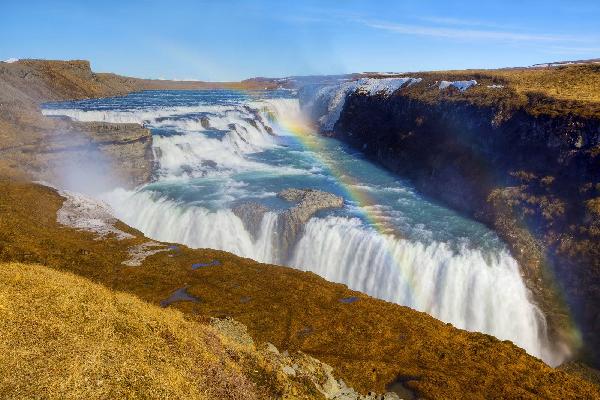
Gullfoss (Golden Falls):A massive, two-tiered waterfall that cascades into a deep canyon.
Geysir Geothermal Area:The home of the original Geysir (which is now dormant), but its neighbor, Strokkur, erupts every 5-10 minutes, shooting boiling water up to 40 meters into the air.
Kerid Crater:A striking volcanic crater lake with strikingly red rocks and aquamarine water, often included as a stop on the Golden Circle route.
The South Coast: Waterfalls and Black Sand Beaches
The drive along Iceland’s South Coast is one of the most scenic in the world, featuring powerful waterfalls and dramatic coastlines.
Reynisfjara (Reynisfjara Black Sand Beach):A stunningly beautiful but dangerous beach near Vík, known for its black sand, basalt column cliffs, and towering sea stacks. Strong “sneaker waves” make it vital to never turn your back on the ocean.
Sólheimasandur Plane Wreck:The skeletal remains of a US Navy DC-3 that crash-landed in 1973. It sits isolated on a black sand beach, a 4km (one-way) walk from the parking area.
Seljalandsfoss and Skógafoss Waterfalls:Two iconic waterfalls. Seljalandsfoss is unique for the path that allows you to walk behind the curtain of water. Skógafoss is a powerful, broad waterfall where you can often see a rainbow on sunny days.
Vík í Mýrdal:A small village serving as a key stopover, famous for its church-on-a-hill photo opportunity and its proximity to Reynisfjara.
The Glacial Lagoon and East Fjords
The journey continues eastward into more remote and rugged territory.
Jökulsárlón Glacier Lagoon:A breathtaking lagoon filled with icebergs calved from the Breiðamerkurjökull glacier. Boat tours are available to get closer to the ice. Across the road is the “Diamond Beach,” where icebergs wash ashore on black sand, glistening like diamonds.
The East Fjords (Austfirðir):A series of remote, steep-sided fjords with small fishing villages clinging to their shores. The drive is spectacular but involves many tunnels and winding roads. Egilsstaðir is the main service town for the region.
The Power of the North: Dettifoss and Mývatn
The landscape shifts again in North Iceland, dominated by powerful geology and volcanic lakes.
Dettifoss:Europe’s most powerful waterfall by volume, located in Vatnajökull National Park. Its raw power and mist are awe-inspiring. It can be accessed from both the east and west sides; the west side offers better views.
Mývatn (Mývatn):A shallow lake formed by volcanic activity 2300 years ago. The area is a geothermal wonderland with pseudo-craters, bubbling mud pots at Hverir, and the Grjótagjá lava cave with a geothermal spring inside.
Goðafoss (Waterfall of the Gods):A stunningly beautiful semi-circular waterfall steeped in history; it’s said that upon converting to Christianity, lawmaker Þorgeir Ljósvetningagoði threw his statues of Norse gods into these falls.
The Capital of the North and West Iceland
- Akrureyri (Akureyri):“The Capital of North Iceland,” a charming town on the Eyjafjörður fjord. Visit the iconic Akureyrarkirkja church and the beautiful botanical gardens.
- The Journey West:The route passes through historical sites like Reykholt, an important medieval center connected to scholar Snorri Sturluson.
- The Snæfellsnes Peninsula (Snæfellsnes Peninsula):“Iceland in Miniature,” as it features many of the country’s classic landscapes in one area. Dominated by the glacier-capped Snæfellsjökull volcano, it includes dramatic coastal cliffs at Arnarstapi, the iconic Kirkjufell mountain, black sand beaches at Djúpalónssandur, and charming fishing villages like Stykkishólmur.
The Final Return to Reykjavík
The grand loop concludes with a drive back to Reykjavík from Snæfellsnes, completing an unforgettable journey through two of the world’s most geologically dramatic and beautiful countries. This itinerary offers a deep dive into Norse culture, Viking history, and unparalleled natural wonders that will leave a lasting impression on any traveler.
Crucial Travel Tips for Norway & Iceland
- Crucial Packing Items:A high-quality waterproof and windproof jacket is non-negotiable. Pack layers (thermal base layers, fleece), sturdy waterproof hiking boots, swimwear for hot springs/lagoons, a reusable water bottle, and a power bank. In summer, an eye mask for sleeping during the midnight sun can be helpful.
- Crucial Booking Advice:For both countries, book accommodation and rental cars many months in advance, especially for travel during summer (June-August). Popular activities like Blue Lagoon or specific guided hikes also require early booking.
- Crucial Budgeting Note: