A Comprehensive Travel Guide: Munich and Nuremberg Loop
This guide details a classic and enriching journey through the heart of Bavaria, focusing on two of its most iconic cities: Munich, the vibrant state capital, and Nuremberg, the historic former imperial city. A trip from Munich to Nuremberg and back offers a perfect blend of royal grandeur, dark history, medieval charm, and world-famous culinary delights. The cities are well-connected, making this loop an efficient and deeply rewarding travel experience.
Trip Overview and Itinerary Planning
A logical and highly recommended itinerary for this loop is a 5 to 7-day trip. This duration allows for a thorough exploration of both cities without feeling rushed. The journey from Munich to Nuremberg is swift, taking just about one hour by high-speed train (ICE), making it ideal for a multi-city adventure.
Sample 5-Day Itinerary:
Day 1: Arrival in Munich. Check into accommodation. Evening exploration of Marienplatz and a welcome dinner at a traditional beer hall.
Day 2: Deep dive into Munich’s royal history at the Residenz and Nymphenburg Palace. Afternoon relaxation in the English Garden.
Day 3: Morning visit to the Deutsches Museum or art galleries. In the afternoon, take a train to Nuremberg (1 hour). Check in and have an evening stroll through the illuminated Old Town.
Day 4: Explore Nuremberg’s Imperial Castle, Albrecht Dürer’s House, and the Hauptmarkt. In the afternoon, visit the Documentation Center and Nazi Party Rally Grounds.
Day 5: Morning visit to the Germanisches Nationalmuseum or the Toy Museum. Return to Munich by train for departure, or extend your stay.
Munich (München): The Cosmopolitan Heart of Bavaria
Munich, the capital of Bavaria, is a city of contrasts, seamlessly blending centuries-old traditions with a dynamic, modern economy. Known globally for its Oktoberfest, Munich’s appeal extends far beyond beer, offering world-class museums, sprawling parks, magnificent royal palaces, and a high quality of life.
Top Attractions in Munich
Marienplatz and the New Town Hall (Neues Rathaus): The central square and the undeniable heart of Munich. The main draw is the Glockenspiel in the New Town Hall’s tower, which performs a charming mechanical show daily at 11 am, 12 pm, and (from March to October) 5 pm. Visitors can ascend the tower for a panoramic view of the city’s historic center.
Frauenkirche (Cathedral of Our Blessed Lady): The iconic twin-domed church is a symbol of Munich. Its simple, vast interior provides a stark contrast to its imposing exterior. A footprint in the entrance hall, the “Devil’s Footstep,” is the subject of a popular local legend.
Hofbräuhaus: The world’s most famous beer hall, founded in 1589. While touristy, it remains a quintessential Munich experience. The lively atmosphere, traditional Bavarian music, massive beer steins, and hearty food offer an unforgettable glimpse into Bavarian culture.
Residenz München: The former royal palace of the Wittelsbach monarchs of Bavaria. This enormous complex is one of Europe’s most significant palace museums, featuring over 130 rooms displaying treasures, lavish furnishings, and the stunning Antiquarium hall. The adjacent Treasury and the beautiful Hofgarten are also must-sees.
Nymphenburg Palace: A magnificent Baroque summer palace with a sprawling park. The palace interior is opulent, but the real highlights are the “Gallery of Beauties” commissioned by King Ludwig I and the park, which features smaller palaces like the Amalienburg, a masterpiece of Rococo hunting lodge design.
English Garden (Englischer Garten): One of the world’s largest urban public parks, larger than New York’s Central Park. It’s a place for relaxation and activity, with paths for walking and cycling, meadows for sunbathing (including designated nude sunbathing areas), a Japanese teahouse, and the famous Eisbachwelle, a permanent river wave perpetually surfed by enthusiasts.
Deutsches Museum: Located on an island in the Isar river, this is one of the world’s oldest and largest museums of science and technology. Its vast collections cover everything from astronomy and aviation to mining and musical instruments, making it engaging for visitors of all ages.
Viktualienmarkt: A daily open-air market near Marienplatz offering a feast for the senses. Stalls sell fresh produce, cheeses, meats, spices, flowers, and ready-to-eat local delicacies. It’s an ideal spot for a casual lunch.
Munich Food and Drink
Bavarian cuisine is hearty and flavorful. Essential culinary experiences in Munich include:
Weißwurst: A traditional veal sausage flavored with parsley, lemon, mace, and onions. It is traditionally eaten before noon, peeled, and served with sweet mustard, a soft pretzel (Brezn), and a wheat beer (Weißbier).
Schweinshaxe: A colossal roasted pork knuckle with crispy crackling, typically served with potato dumplings (Knödel) and sauerkraut.
Obatzda: A flavorful cheese spread made from camembert, butter, paprika, and onions, perfect for spreading on a pretzel.
Beer: Munich is the birthplace of the Reinheitsgebot (Beer Purity Law). Must-try beer styles include Helles (a pale lager), Dunkles (a dark lager), and the cloudy, yeasty Weißbier.
Apfelstrudel: A classic dessert of thin pastry filled with spiced apples, often served with vanilla sauce (Vanillesoße).
Transportation in Munich
Munich has an excellent public transportation system (MVV), comprising U-Bahn (subway), S-Bahn (suburban train), trams, and buses. A single ticket is valid for all modes within the specified zones. For tourists, the
MVV Day Ticket (Tageskarte) for the entire inner zone (Innenraum) is the most cost-effective option for unlimited travel throughout the day. The city center is also very walkable.
Accommodation Tips for Munich
For first-time visitors, staying within or near the
Altstadt (Old Town) is ideal for proximity to major sights. The neighborhoods of Ludwigsvorstadt-Isarvorstadt (near the Hauptbahnhof) offer good value and convenience, while Schwabing and Maxvorstadt are trendy areas known for their cafes, galleries, and university vibe. Book well in advance, especially during major events like Oktoberfest.
The Journey: Munich to Nuremberg
The connection between these two cities is exceptionally efficient. The primary and recommended mode of transport is the train.
By Train: High-speed ICE (InterCity Express) trains run frequently from Munich Hauptbahnhof (main station) to Nuremberg Hauptbahnhof. The journey takes approximately 1 hour. Regional trains are also available and are cheaper but take around 2 hours. It is advisable to book train tickets in advance for the best fares, especially for ICE trains.
By Car: The drive via the A9 Autobahn takes about 1.5 to 2 hours without traffic. Renting a car offers flexibility for exploring the Bavarian countryside along the way, such as stopping in Ingolstadt or at one of the many lakes.
Nuremberg (Nürnberg): A Tapestry of Medieval Splendor and Modern History
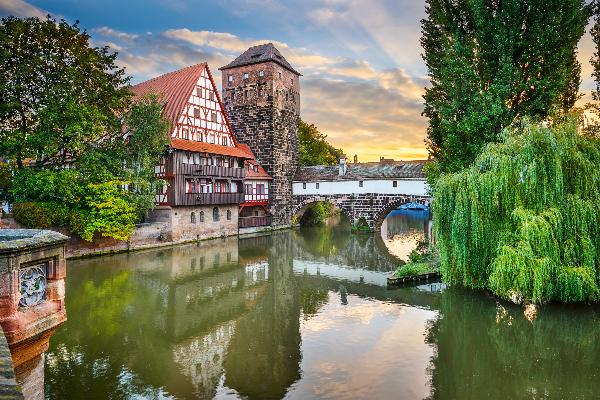
Nuremberg evokes images of towering imperial castles, half-timbered houses, famous Christmas markets, and significant but somber 20th-century history. Its beautifully restored Altstadt (Old Town), surrounded by massive defensive walls, tells a story that spans from the Holy Roman Empire to the post-war Nuremberg Trials.
Top Attractions in Nuremberg
Nuremberg Castle (Kaiserburg): The city’s defining landmark. This complex comprises buildings from the Middle Ages that were part of the fortifications for the Burgraves and later served as a residence for Holy Roman Emperors. Climbing the Sinwell Tower or walking along the ramparts offers breathtaking views over the red-roofed city. The Deep Well demonstrates impressive medieval engineering.
Albrecht Dürer’s House: The former home of Germany’s most famous Renaissance artist, Albrecht Dürer (1471-1528). The half-timbered house is a museum that recreates the living and working conditions of the period and provides deep insight into his life and work.
Hauptmarkt (Main Market Square): The central square is home to the beautiful Gothic Frauenkirche (with its mechanical clock, the Männleinlaufen) and the ornate Schöner Brunnen (Beautiful Fountain). A golden ring embedded in the fountain’s wrought-iron grill is said to bring good luck when turned three times. This square is the spectacular setting for the world-renowned Christkindlesmarkt each December.
Weißgerbergasse: Arguably Nuremberg’s most picturesque street, lined with beautifully restored half-timbered houses that now host cafes, galleries, and boutiques. It offers a perfect glimpse into the city’s medieval character.
Germanisches Nationalmuseum (Germanic National Museum): Germany’s largest museum of cultural history. Its vast collections span from prehistoric times to the present day, including art, crafts, scientific instruments, and musical artifacts. It holds the world’s earliest known globe and works by Albrecht Dürer.
The Nazi Party Rally Grounds & Documentation Center: A sobering but essential visit. The Documentation Center museum, housed in the unfinished Congress Hall of the Nazi party, provides a critical examination of the causes, context, and consequences of the Nazi regime. Walking through the vast remains of the rally grounds outside offers a powerful sense of scale and ambition of this dark chapter in history.
Memorium Nuremberg Trials & Courtroom 600: Located in the Nuremberg Palace of Justice, this exhibition documents the famous post-World War II trials of leading Nazi officials. When court is not in session, visitors can view Courtroom 600, where the trials were held.
Nuremberg Toy Museum (Spielzeugmuseum): A delightful journey through the history of toys, reflecting Nuremberg’s long-standing reputation as a “toy city.” Exhibits range from ancient dolls and tin figures to modern Lego sets.
Nuremberg Food and Drink
Nuremberg has its own distinct culinary specialties that are not to be missed:
Nürnberger Rostbratwurst: These are small, thin grilled sausages, traditionally made from pork and seasoned with marjoram. They are typically served “Drei im Weckla” (three in a roll) or as “Sechs auf Kraut” (six on sauerkraut) with potato salad.
Lebkuchen: Nuremberg’s famous gingerbread cookies are a world-renowned treat, especially during the Christmas season. The best quality is labeled “Elisenlebkuchen,” containing a high percentage of nuts and little to no flour.
Nuremberg Red Beer (Rotbier): A unique, coppery-red lager that was once Nuremberg’s most common beer style before pale lagers became popular. It has a malty, slightly sweet flavor.
Schäufele: A hearty shoulder of pork, slow-roasted until tender with a crispy skin, usually served with potato dumplings and a rich gravy.
Blaue Zipfel: Sausages cooked in a sharp vinegar-onion broth that gives them a bluish-grey appearance (“blue tips”). It’s a tangy and traditional Franconian dish.
Transportation in Nuremberg
Nuremberg’s Altstadt is compact and best explored on foot. For attractions outside the walls, such as the Nazi Party Rally Grounds, the city has an efficient U-Bahn and tram network operated by VGN. A
VGN Day Ticket for the Nuremberg city area (Area A) provides unlimited travel.
Accommodation Tips for Nuremberg
The best area to stay is within or just outside the city walls (
Altstadt) for easy access to all major historical sites. Areas around the Hauptbahnhof are also convenient for train travel but can be less atmospheric. For a quieter stay with charming guesthouses, consider districts like Schniegling or Sankt Johannis, which are still close to the center.
Cultural Insights and Practical Tips
Understanding Bavarian Culture
Bavaria has a strong regional identity. While Germans are often perceived as formal and reserved, Bavarians can be quite jovial and direct, especially in a beer hall setting. A common greeting is “Grüß Gott!” (God greet you). Tipping is customary; it is standard practice to round up the bill to the nearest euro or add 5-10% for good service in restaurants.
Shopping and Souvenirs
Munich: Look for high-quality products from brands like Siemens or BMW apparel. For traditional goods, seek out Dirndls and Lederhosen from specialist shops or unique Christmas ornaments from Käthe Wohlfahrt year-round.
Nuremberg: Lebkuchen from renowned bakeries like Düll or Wicklein are a must-buy. The city is also famous for its fine craftsmanship in goldsmithing and toys.
Saving Money with City Cards
Both cities offer tourist cards that can provide significant savings:
Munich City Tour Card: Offers discounts on attractions and includes public transportation.
Nuremberg Card: Provides free admission to all major museums and attractions for two consecutive days, plus free public transportation within the city center. It represents exceptional value for any visitor planning to see multiple sights.
A Note on History
A visit to Nuremberg involves engaging with difficult history at the Rally Grounds and Memorium. These sites are handled with great respect and educational purpose. Visitors are encouraged to approach them with solemnity and an open mind to learn from the past.
The Return: Nuremberg to Munich
The return journey to Munich follows the same efficient route in reverse. Trains depart regularly from Nuremberg Hauptbahnhof to Munich Hauptbahnhof. If you have an early flight from Munich Airport (MUC), note that there are direct trains from Nuremberg to the airport’s own station (Flughafen München Besucherpark), though sometimes with a change in Munich’s main station.
A journey from Munich to Nuremberg provides a profound understanding of Bavaria’s diverse character—from its regal capital to its historically rich second city. It is a trip that satisfies a love for history, art, architecture, food, and culture in one unforgettable loop.