A Comprehensive Travel Guide: Istanbul, Cappadocia, Pamukkale, Kusadasi/Izmir
This itinerary covers the quintessential Turkish experience, often referred to as the “Golden Route.” It combines the imperial grandeur of Istanbul, the surreal landscapes of Cappadocia, the dazzling white travertines of Pamukkale, and the ancient ruins of the Aegean coast. This guide provides a detailed roadmap for an unforgettable journey through Turkey’s history, culture, and natural wonders.
Route Overview and Logistics
The classic route is a circular journey starting and ending in Istanbul. The most efficient way to cover the long distances between these destinations is by combining domestic flights and road travel.
Typical Route: Istanbul → (Fly to) Cappadocia → (Fly or Bus to) Pamukkale → (Bus to) Kusadasi/Izmir → (Fly to) Istanbul.
Recommended Duration: 10-14 days allows for a comfortable pace.
Transportation: Domestic flights between Istanbul and Cappadocia, and from Izmir back to Istanbul, are highly recommended to save time. Comfortable long-distance buses connect Cappadocia to Pamukkale and Pamukkale to Kusadasi.
Istanbul: Where Continents Collide
Istanbul, straddling Europe and Asia, is a mesmerizing metropolis steeped in history. As the former capital of the Byzantine and Ottoman Empires, it boasts an unparalleled wealth of monuments, bazaars, and culinary delights.
Key Attractions
Hagia Sophia (Ayasofya): A monumental masterpiece of architecture, it has served as a cathedral, mosque, and now a museum. Its massive dome and stunning Byzantine mosaics are awe-inspiring.
Sultanahmet Mosque (The Blue Mosque): Famous for its six minarets and exquisite blue Iznik tiles that adorn its interior. Visitors should dress modestly and be mindful of prayer times.
Topkapi Palace: The sprawling palace of the Ottoman Sultans for centuries. Explore its lavish courtyards, harem, treasury (home to famous jewels), and enjoy panoramic views of the Bosphorus.
Basilica Cistern: A vast, subterranean chamber supported by 336 columns, built in the 6th century. The atmospheric lighting and Medusa head columns create an eerie and beautiful experience.
Grand Bazaar: One of the world’s oldest and largest covered markets, with over 4,000 shops. It’s a labyrinth of jewelry, carpets, spices, leather goods, and ceramics. Haggling is expected.
Spice Bazaar (Egyptian Bazaar): A fragrant market filled with mounds of spices, dried fruits, nuts, and Turkish delight. It’s a sensory delight.
Bosphorus Cruise: A boat tour along the strait separating Europe and Asia is essential. It offers stunning views of palaces, mosques, and wooden villas (yalıs) lining the shores.
Food & Drink
Kebabs: Try classics like Iskender Kebab (sliced meat on bread with tomato sauce and yogurt) or Adana Kebab (spicy minced meat).
Meze: A selection of small appetizers like hummus, ezme (spicy tomato dip), and dolma (stuffed vine leaves).
Fish & Seafood: Fresh fish is a specialty, especially along the Bosphorus. Enjoy a grilled sea bass or bonito.
Simit & Cay: The quintessential Turkish breakfast or snack: a sesame-encrusted bread ring (simit) with a glass of strong black tea (cay).
Baklava: Layers of filo pastry filled with nuts and soaked in syrup. Karaköy Güllüoğlu is a famous institution.
Transportation & Accommodation
Getting Around: The city has an extensive and efficient public transport system (tram, metro, ferry). An Istanbulkart is a rechargeable card that provides access to all. Taxis are widely available but ensure the meter is running.
Staying There: The Sultanahmet area is ideal for first-time visitors due to its proximity to major sights. For a more vibrant nightlife and boutique shopping, consider Beyoğlu or Karaköy.
Cultural Insights
Istanbul is a city of contrasts—ancient and modern, religious and secular. When visiting mosques, cover your shoulders and knees; headscarves are provided for women. The call to prayer echoes from minarets five times a day, a beautiful and integral part of the city’s soundscape.
Cappadocia: A Surreal Landscape
Cappadocia is a historical region in Central Anatolia, famous for its unique “fairy chimney” rock formations, ancient underground cities, and breathtaking hot air balloon rides at dawn.
Key Attractions
Hot Air Balloon Ride: The quintessential Cappadocia experience. Floating over the fairy chimneys and valleys as the sun rises is truly magical. Book well in advance.
Göreme Open-Air Museum: A UNESCO World Heritage site featuring a complex of rock-cut churches, chapels, and monasteries adorned with well-preserved Byzantine frescoes.
The Valleys: Hiking through the valleys is a must.
Love Valley: Known for its tall, phallic-shaped rock formations.
Rose Valley: Offers stunning pink-hued rock views, especially at sunset.
Pigeon Valley: Named for the thousands of pigeon houses carved into the cliffs.
Underground Cities: Kaymaklı and Derinkuyu are multi-level subterranean cities that could house thousands of people, complete with stables, churches, and ventilation shafts.
Uchisar Castle: A natural rock citadel that is the highest point in Cappadocia, offering a 360-degree panoramic view of the region.
Avanos: A town situated on the Red River (Kızılırmak), famous for its pottery traditions dating back to Hittite times.
Food & Drink
Testi Kebab (Pottery Kebab): Meat and vegetables cooked slowly in a sealed clay pot, which is dramatically cracked open at your table.
Clay Pot Dishes: Various stews and casseroles are cooked and served in clay pots.
Local Wines: Cappadocia has a long history of winemaking. Sample wines made from local grapes like Öküzgözü and Boğazkere.
Transportation & Accommodation
Getting There & Around: Fly to either Kayseri (ASR) or Nevşehir (NAV) airports from Istanbul. Most hotels offer airport shuttle services. To explore the region, renting a car provides maximum flexibility. Alternatively, join guided “Red” and “Green” tours or use local taxis.
Staying There: The most unique accommodation experience is a “cave hotel.” These are hotels carved into the soft rock, offering modern comforts within ancient dwellings. Göreme and Uçhisar are popular towns to stay in.
Cultural Insights
Cappadocia’s landscape is a testament to human adaptation. Early Christians carved entire cities into the rock to escape persecution. The region’s history is deeply intertwined with its geology. Respect the fragile environment by staying on marked paths during hikes.
Pamukkale: The Cotton Castle
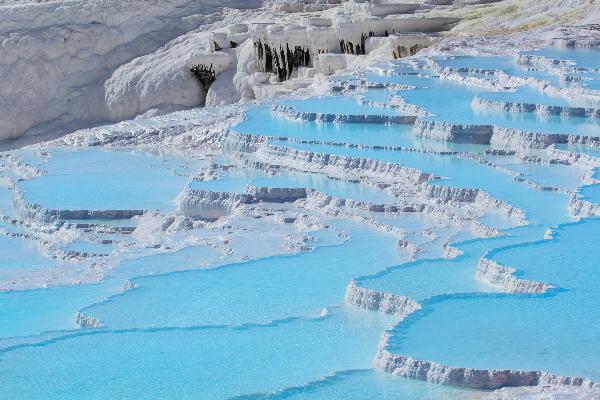
Pamukkale, meaning “cotton castle” in Turkish, is a natural site famous for its brilliant white travertine terraces filled with thermal waters. It is also the location of the ancient city of Hierapolis.
Key Attractions
The Travertine Terraces: These stunning, snow-white calcite shelves are formed by flowing thermal springs rich in minerals. Visitors can walk on designated paths and wade in the thermal pools.
Hierapolis Ancient City: A sprawling Greco-Roman city built on top of the hot springs. Key sites include a vast necropolis, a well-preserved theater, the Frontinus Street, and the Antique Pool.
Antique Pool (Cleopatra’s Pool): Swim amongst submerged Roman columns in this warm, mineral-rich pool. An extra entrance fee applies.
Food & Drink
The town of Pamukkale offers standard Turkish fare. For a more memorable experience, consider dining in the nearby town of Karahayıt, known for its red thermal waters.
Transportation & Accommodation
Getting There: The most common way is by bus from Cappadocia (approx. 8-10 hours) or Selçuk/Kusadasi (approx. 3 hours). The nearest airport is in Denizli.
Staying There: Most visitors stay for one night. Accommodation ranges from thermal spa hotels in Karahayıt to simpler pensions in Pamukkale town. Staying overnight allows for an early morning visit to the terraces before the day-trip crowds arrive.
Cultural Insights
The terraces are an extremely fragile natural wonder. To preserve them, visitors are required to walk barefoot. The combination of a powerful natural phenomenon with a significant ancient city makes Pamukkale a unique UNESCO World Heritage site that showcases both natural and human history.
Kusadasi & Izmir: The Aegean Coast
Kusadasi is a popular coastal resort town and the main gateway to the ancient city of Ephesus. Izmir is Turkey’s third-largest city, a vibrant and modern port with a rich history.
Key Attractions
Ephesus (from Kusadasi/Selçuk): One of the best-preserved classical cities in the Mediterranean.
The Library of Celsus: The iconic facade is a masterpiece of Roman architecture.
The Great Theatre: A massive structure that could hold 25,000 spectators.
Terraced Houses: The lavish homes of Ephesus’ elite, with exquisite mosaics and frescoes (extra ticket required).
House of Virgin Mary: A pilgrimage site believed to be the final home of the Virgin Mary.
Temple of Artemis: One of the Seven Wonders of the Ancient World; today only a single column remains.
Izmir: Ancient Smyrna
Kemeraltı Bazaar:A historic market offering everything from spices to antiques.
Konak Square & Clock Tower:The symbol of Izmir.
Ancient Agora:The ruins of the Roman marketplace in the city center.
Food & Drink
Aegean Cuisine:The region is known for its olive oil-based dishes, fresh herbs, and seafood.
Boyoz:A flaky pastry, a specialty of Izmir.
Kumru:A warm sandwich with sausage, cheese, and tomato, popular in Cesme near Izmir.
Fresh Seafood:Enjoy grilled octopus, sea bream, and meze by the waterfront.
Transportation & Accommodation
Getting There & Around:A bus from Pamukkale to Kusadasi takes about 3 hours. Kusadasi and Izmir are connected by frequent buses and trains. Izmir’s Adnan Menderes Airport (ADB) has frequent flights back to Istanbul.
Staying There:Kusadasi offers a wide range of resorts and hotels along its coastline. For a quieter base closer to Ephesus, consider the small town of Selçuk. Izmir provides more urban hotel options.
Cultural Insights
The Aegean coast has a more liberal and cosmopolitan atmosphere compared to inland Anatolia. It was home to some of the most important cities of the ancient Ionian civilization. The legacy of Greeks and Armenians is also deeply embedded in the region’s culture and architecture.
The Return: Izmir to Istanbul
The journey concludes with a short flight from Izmir Adnan Menderes Airport (ADB) back to Istanbul. This allows for last-minute souvenir shopping or a final Turkish meal before departure.
Final Practical Tips
Visa: Check visa requirements for your nationality before traveling. Many nationals can obtain an e-Visa online.
Currency:The Turkish Lira (TRY) is the local currency. Credit cards are widely accepted in cities, but carry cash for smaller establishments and bazaars.
Language:The official language is Turkish. English is spoken in tourist areas, but learning a few basic Turkish phrases is appreciated.
bargaining:A common practice in bazaars. Be polite, start at about half the asking price, and be prepared to walk away.
Tipping:Around 10% is customary in restaurants if a service charge is not included. Tip hotel staff, hamam attendants, and tour guides.
Shoes Off:A custom when entering someone’s home and mosques.