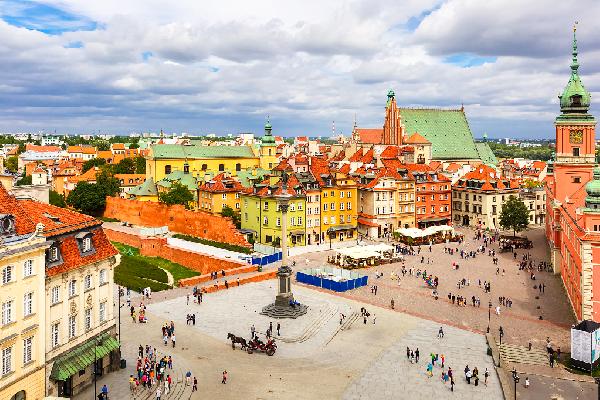
A Comprehensive Travel Guide: Berlin to Poland Loop
This guide details a classic Central European itinerary, starting and ending in the vibrant German capital of Berlin, and looping through some of Poland’s most significant and beautiful cities. This route offers a profound journey through history, from medieval old towns to the sobering lessons of the 20th century, all while showcasing stunning architecture and vibrant contemporary culture.
Route Overview
The itinerary is a circular route:
Berlin (Germany) → Poznań → Warsaw → Kraków → Auschwitz-Birkenau → Wrocław → Berlin (Germany). This can be comfortably completed in 10-14 days, depending on the pace. Travel between cities is efficient, primarily by train or bus.
Total Estimated Time: 10-14 days
Primary Transport: Train and intercity bus.
Best Time to Visit: Late spring (May-June) and early autumn (September-October) for pleasant weather and fewer crowds. Summer (July-August) is warm but busy. Winter (December-February) can be cold and snowy, but offers Christmas markets.
Berlin, Germany (Starting Point)
Berlin, a city forever etched in modern history, is a dynamic and sprawling metropolis. It serves as the perfect starting point for its excellent transport connections to Poland.
Key Attractions
Brandenburg Gate: The iconic symbol of Berlin and German reunification.
Reichstag Building: The German parliament building with a stunning glass dome offering panoramic city views (advance registration required).
Berlin Wall Memorial & East Side Gallery: See preserved sections of the Wall, with the East Side Gallery being a long open-air gallery of murals painted on a remaining segment.
Museum Island: A UNESCO World Heritage site with five world-class museums, including the Pergamonmuseum.
Checkpoint Charlie: The famous crossing point between East and West Berlin during the Cold War.
Holocaust Memorial: A powerful and somber field of 2,711 concrete slabs commemorating the murdered Jews of Europe.
Practical Information
Getting There: Berlin is served by two major airports: Berlin Brandenburg (BER) and has excellent rail connections from across Europe.
Getting Around: The BVG public transport system (U-Bahn, S-Bahn, trams, buses) is extensive and efficient. Purchase a day pass or the “Berlin WelcomeCard” for unlimited travel and discounts.
Accommodation: Popular areas include Mitte (central), Kreuzberg (trendy), and Prenzlauer Berg (bohemian).
Food & Drink: Don’t miss Currywurst, a hearty German breakfast, and doner kebab, a Berlin staple. Explore the food markets like Markthalle Neun.
Poznań, Poland
The first stop in Poland is Poznań, one of the country’s oldest cities and a key historical center. It’s known for its charming Old Town, vibrant student life, and as the birthplace of the Polish nation.
Key Attractions
Old Market Square (Stary Rynek): One of the most beautiful market squares in Poland, surrounded by colorful merchant houses.
Poznań Town Hall: A magnificent Renaissance building. At noon, watch the mechanical billy goats butt heads from the clock tower—a famous local legend.
Imperial Castle (Zamek Cesarski): A relatively “new” castle built for the German Emperor Wilhelm II in the early 20th century.
Ostrów Tumski (Cathedral Island): The oldest part of the city, where the Cathedral of St. Peter and St. Paul stands. It’s the burial place of the first Polish rulers.
St. Martin’s Croissants: A local culinary specialty, a croissant with a white poppy-seed filling. You can visit a museum dedicated to it.
Practical Information
Getting from Berlin: Direct trains or buses take approximately 2.5-3.5 hours.
Getting Around: The city center is very walkable. Trams and buses are available for longer distances.
Accommodation: Stay in or near the Old Town for the best access to sights.
Warsaw (Warszawa)
The resilient capital of Poland, Warsaw, is a city of contrasts. It was almost completely destroyed during World War II and has been painstakingly rebuilt. Today, it’s a bustling political and economic hub with a mix of meticulously restored historic areas and gleaming modern skyscrapers.
Key Attractions
Old Town (Stare Miasto): A UNESCO World Heritage site, rebuilt from ruins after the war. It feels authentically medieval and is home to the Royal Castle and the Mermaid Statue, the city’s symbol.
Royal Route: A scenic walk connecting the Royal Castle with the former royal palaces in the south, including Łazienki Park and Palace.
Warsaw Uprising Museum: A must-visit, immersive museum dedicated to the heroic but tragic 1944 uprising against Nazi occupation. It’s a powerful and emotional experience.
POLIN Museum of the History of Polish Jews: An award-winning museum that tells the thousand-year history of Jewish life in Poland.
Palace of Culture and Science: A “gift” from the Soviet Union, this towering building offers a great view from its 30th-floor terrace and is a central landmark.
Practical Information
Getting from Poznań: Frequent trains (approx. 2.5-3 hours) and buses (approx. 3.5 hours).
Getting Around: An excellent public transport system of buses, trams, and a metro. The city is large, so public transport is essential.
Accommodation: Śródmieście (city center), Old Town, or Powiśle for trendy options.
Kraków (Krakow)
Often considered Poland’s cultural capital, Kraków is a breathtakingly beautiful city that miraculously escaped destruction in WWII. Its well-preserved medieval core, vibrant Jewish quarter, and proximity to major historical sites make it a highlight of any Polish itinerary.
Key Attractions
Main Market Square (Rynek Główny): The largest medieval town square in Europe, surrounded by historic townhouses and churches. Don’t miss the Cloth Hall (Sukiennice) in the center and listen for the Hejnał mariacki trumpet call from St. Mary’s Basilica.
Wawel Royal Castle & Cathedral: A magnificent hilltop complex that was the seat of Polish kings for centuries. The cathedral is the traditional coronation and burial site of monarchs.
Kazimierz (Jewish Quarter): The historic Jewish district, full of synagogues, cemeteries, and a poignant atmosphere. It was famously depicted in Steven Spielberg’s Schindler’s List. Now it’s a hub of cafes, bars, and cultural life.
Schindler’s Factory Museum: Located in the actual enamel factory of Oskar Schindler, this museum brilliantly covers Kraków under Nazi occupation.
Wieliczka Salt Mine: A UNESCO site located just outside Kraków. Descend into an incredible underground world of chapels, lakes, and sculptures—all carved from salt.
Practical Information
Getting from Warsaw: Fast trains (approx. 2.5 hours) and buses (approx. 4-5 hours).
Getting Around: The Old Town and Kazimierz are best explored on foot. Trams are useful for longer distances.
Accommodation: The Old Town or Kazimierz are ideal locations.
Food & Drink: Try obwarzanek (a Kraków-style bagel) from a street cart and zapiekanka (a long, open-faced baguette with toppings) in Kazimierz’s Plac Nowy.
Auschwitz-Birkenau Memorial and Museum
A visit to Auschwitz-Birkenau is a deeply sobering and essential historical experience. It is the site of the largest Nazi concentration and extermination camp, where over 1.1 million people, mostly Jews, were murdered. A visit requires preparation and respect.
Key Information
The Sites: The museum consists of two parts: Auschwitz I (the original camp with brick barracks) and Auschwitz II-Birkenau (the vast extermination camp located 3km away). Both are essential to understand the scale of the atrocity.
The Exhibits: See the infamous “Arbeit Macht Frei” gate, prisoner barracks, displays of victims’ personal belongings, and the ruins of the gas chambers and crematoria.
Practical Information
Location: Near the town of Oświęcim, about 1.5 hours west of Kraków.
Getting from Kraków:
Organized Tour: The easiest option, including transport and a guided tour.
Public Bus: Buses run frequently from Kraków’s main bus station to Oświęcim.
Train: Trains go to Oświęcim station, from which it’s a 20-minute walk or short bus ride to Auschwitz I.
Visiting:
Reservations are mandatory for individuals. Book well in advance on the official museum website: auschwitz.org.
- A guided tour (approx. 3.5 hours) is highly recommended for context.
- The site involves a lot of walking; wear comfortable shoes.
- Maintain a respectful and quiet demeanor throughout your visit.
Wrocław (Breslau)
The final Polish stop is Wrocław, a stunning city built across 12 islands on the Oder River. Known for its picturesque canals, grand Main Square, and a large population of whimsical dwarf statues, Wrocław is a lively and charming city with a complex German-Polish history.
Key Attractions
Old Town Hall & Market Square (Rynek): A gorgeous Gothic Town Hall sits in the middle of one of Europe’s most expansive market squares, surrounded by colorful burghers’ houses.
The Dwarves (Krasnale): Hunt for hundreds of small bronze dwarf statues scattered throughout the city. They started as a symbol of anti-communist protest and have become a beloved city feature.
Ostrów Tumski (Cathedral Island): The oldest part of Wrocław, with its cathedral and churches, is beautifully illuminated at night by a lamplighter.
Centennial Hall (Hala Stulecia):A UNESCO World Heritage site, this pioneering masterpiece of early modern architecture is set in lovely Szczytnicki Park.
Panorama of Racławice:A massive 360-degree painting depicting a battle during the Kościuszko Uprising. It’s a unique and impressive work of art.
Practical Information
Getting from Kraków/Auschwitz:The most convenient route is by train from Kraków (approx. 3-4 hours). From Oświęcim, you would typically take a train back to Kraków and then transfer to Wrocław.
The Journey Back to Berlin
Trip Summary & Final Tips