A Comprehensive Travel Guide: Belfast to the Causeway Coast
This guide details a classic Northern Ireland road trip, a journey from the vibrant capital of Belfast, along the stunning Causeway Coastal Route, to its crown jewel—the Giant’s Causeway—and back. This route is renowned for its dramatic landscapes, rich history, mythical legends, and cinematic fame, offering an unforgettable experience through one of the world’s most beautiful coastal drives.
Belfast: The Revitalized Capital
Belfast, the capital of Northern Ireland, is a city of industry, art, and resilience. Having undergone a remarkable transformation, it now stands as a dynamic hub of culture, gastronomy, and history. A visit here provides essential context before exploring the wild natural beauty of the coast.
Key Attractions in Belfast
Titanic Belfast: Located in the very shipyards where the RMS Titanic was built, this state-of-the-art museum is a must-visit. Its iconic architecture and nine interactive galleries explore the story of the Titanic, from its conception to its tragic maiden voyage and subsequent discovery.
Belfast City Hall: An imposing Edwardian masterpiece in the heart of the city. Free public tours are available, offering insight into the city’s history and governance, while the surrounding grounds are perfect for a leisurely stroll.
St. George’s Market: A vibrant covered market operating since the 1890s. On weekends, it buzzes with local vendors selling fresh produce, artisan foods, crafts, and live music. It’s an ideal spot to sample local flavors.
Crumlin Road Gaol: Take a guided tour through this former Victorian prison, which operated for 150 years. The tour offers a sobering yet fascinating look into Northern Ireland’s social and political history.
Political Murals and Peace Walls: To understand Belfast’s complex past, a guided black cab tour of the political murals in the Falls and Shankill Roads areas is highly recommended. These powerful artworks depict the region’s turbulent history, and the tour often includes a visit to the still-standing Peace Walls.
Food & Drink in Belfast
Belfast’s food scene is thriving. For a fine dining experience,
OX offers Michelin-starred cuisine with stunning river views. For exceptional seafood, Mourne Seafood Bar is a local institution. For a more casual vibe, the Benedicts Hotel Restaurant serves excellent modern Irish food. No trip is complete without a pint of Guinness in a traditional pub; The Crown Liquor Saloon, a beautifully preserved Victorian gin palace owned by the National Trust, is an absolute must.
Transportation & Accommodation in Belfast
Belfast is easily navigated on foot in the city center. The Metro bus service covers wider areas. For the coastal trip, renting a car from Belfast City Airport (BHD) or Belfast International Airport (BFS) is the most flexible option. Accommodation ranges from luxury hotels like
The Merchant Hotel to charming boutique options like The Fitzwilliam Hotel and budget-friendly chains.
The Causeway Coastal Route Begins: Carrickfergus Castle
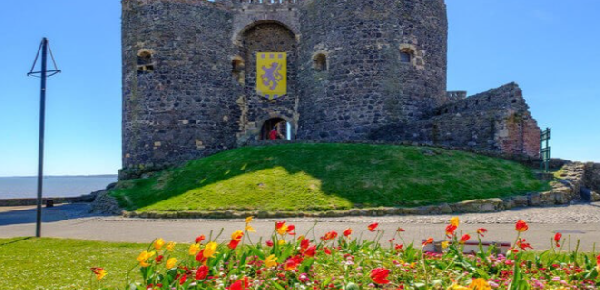
Heading north from Belfast along the A2, the first major landmark is Carrickfergus Castle. This Norman fortress, built in 1177 by John de Courcy, is one of the best-preserved medieval structures in Northern Ireland. Its imposing presence on the shore of Belfast Lough has stood for over 800 years, witnessing sieges by Scots, Irish, English, and French forces.
Visitor Tip: Explore the massive keep, the inner and outer wards, and see the cannonballs fired during battles still embedded in its walls. The visitor center provides excellent historical context.
Carrickfergus to The Gobbins & Portaneevy Viewpoint
Continuing north, adventurous travelers can detour for
The Gobbins, a spectacular cliff-face path on Islandmagee involving tubular and suspension bridges, tunnels, and stairways carved directly into the rock. It requires advance booking and a good level of fitness.
Further along the coast road, near the village of Ballygalley, is the
Portaneevy Viewpoint (sometimes simply marked as a layby). This is the first of many stunning vantage points on this drive. It offers a breathtaking panoramic view south over Ballygalley Bay with its charming castle hotel and north towards the headlands, setting the tone for the scenic splendour to come.
The King’s Road and The Dark Hedges
Venturing slightly inland via the B147, travelers find themselves on what is popularly known as the
King’s Road. This serene, tree-lined country lane leads to one of Northern Ireland’s most iconic and photographed locations: The Dark Hedges.
Planted by the Stuart family in the 18th century to impress visitors approaching their Gracehill House mansion, this enchanting avenue of beech trees has become a global phenomenon thanks to its appearance as the “Kingsroad” in HBO’s
Game of Thrones. The interwoven branches create a hauntingly beautiful tunnel that is particularly atmospheric at dawn or dusk.
Visitor Tip: Please be respectful. This is a living natural monument and a working road. Park in the dedicated car park (for a fee) and walk to the trees. Do not climb on the trees or cause damage. The area can get very crowded; visiting early in the morning is best for photos and atmosphere.
The Crown Jewel: Giant’s Causeway
A UNESCO World Heritage Site, the Giant’s Causeway is a geological marvel and the centerpiece of the coastal route. This area consists of about 40,000 interlocking basalt columns, the result of an ancient volcanic fissure eruption. Local legend, however, tells a different story: that the giant Finn McCool built the causeway to walk across the sea to fight his Scottish rival, Benandonner.
Visitor Tip: The site is managed by the National Trust. While access to the stones themselves is free, using the main visitor center (which includes parking, an exhibition, an audio guide, and a cafe) requires a ticket. The walk down to the stones is about 20 minutes, or a shuttle bus is available for a small fee. Wear sturdy shoes as the rocks can be slippery. Allow at least 2-3 hours to fully explore the different trails and viewpoints.
Dunluce Castle: The Medieval Ruin on the Edge
Just a short drive west from the Giant’s Causeway lies the dramatic ruin of Dunluce Castle. Perched precariously on a cliff edge, this medieval castle dates back to the 14th and 15th centuries. It was once the seat of the Clan MacDonnell and is steeped in history and tragedy—part of the kitchen court collapsed into the sea during a storm in 1639.
Visitor Tip: Walking through the ruins, you can sense its former grandeur. The views of the North Atlantic from the castle walls are spectacular. It also served as the inspiration for Pyke Castle of House Greyjoy in Game of Thrones. The modern Moyle Crossing footbridge connects the mainland to the castle, recreating the original entrance.
The Return Journey to Belfast
After Dunluce Castle, travelers have several options. They can continue west to explore the charming town of Portrush with its famous Royal Portrush Golf Club and sandy beaches, or head south through the beautiful Glens of Antrim. The most direct route back to Belfast is via the inland A26, which offers a quicker journey but still passes through pleasant countryside.
Practical Travel Information
Best Time to Visit
The best time for this trip is between late May and September when the days are longest and the weather is generally mildest. However, this is also the busiest period. The spring (April-May) and autumn (September-October) offer fewer crowds and beautiful scenery, though rain is more likely.
Transportation: Driving vs. Tours
Self-Driving: This is the most recommended option for maximum flexibility. The roads are well-signposted as the “Causeway Coastal Route.” Renting a car allows you to stop at viewpoints like Portaneevy at your own pace.
Organized Tours: Numerous day tours operate from Belfast, covering major sites like the Dark Hedges and Giant’s Causeway. This is a stress-free option if you prefer not to drive.
Public Transport: It is possible using Ulsterbus services (e.g., the 172 Goldline service from Belfast to Coleraine), but it requires careful planning and is less flexible for reaching remote viewpoints.
Accommodation Along the Route
While Belfast offers the widest range, consider staying overnight along the coast to break up the journey. Options include:
Bushmills: Home to the world’s oldest licensed whiskey distillery, this charming village offers several B&Bs and guesthouses.
Portballintrae: A quiet seaside village near the Giant’s Causeway.
Portrush: A lively seaside resort town with hotels, B&Bs, and a vibrant nightlife.
Ballycastle: A lovely town further along the coast, serving as a gateway to Rathlin Island.
Cultural Insights & Etiquette
Northern Ireland has a rich cultural tapestry woven from Irish and British influences. The people are known for their warmth and wit (“craic”). When discussing history, particularly “The Troubles,” it’s wise to be sensitive and listen rather than assume. Tipping (10-15%) is customary in restaurants and for taxi drivers. Always greet staff when entering a small shop or pub—a simple “hello” is appreciated.
Sample One-Day Itinerary
- 08:00: Depart Belfast early.
- 09:00: Quick stop at Carrickfergus Castle (exterior photos).
- 10:30: Arrive at The Dark Hedges for photos.
- 12:00: Arrive at Giant’s Causeway Visitor Centre. Explore for 2-3 hours.
- 15:00: Visit Dunluce Castle (allow 1 hour).
- 16:30: Optional stop in Bushmills for a whiskey tasting or in Portrush for dinner.
- 18:30: Return drive to Belfast.
Note: This is a packed itinerary. A two-day trip allows for a more relaxed pace and additional stops.