A Comprehensive Travel Guide: Athens to Sounion and Back
This guide provides a detailed exploration of a classic Greek itinerary: experiencing the ancient and modern marvels of Athens before journeying along the Athenian Riviera to the breathtaking Temple of Poseidon at Cape Sounion. This route offers a perfect blend of world-class historical sites, stunning coastal scenery, and vibrant urban culture.
Part 1: Athens – The Cradle of Western Civilization
Athens, the historical capital of Europe, is a city where antiquity seamlessly blends with contemporary urban energy. Home to some of the world’s most significant archaeological treasures, it is a sprawling metropolis set against the backdrop of Mounts Hymettus and Penteli, with the iconic Acropolis watching over the city.
Major Attractions in Athens
The Acropolis and the Parthenon: The Acropolis is the sacred rock and the absolute must-see landmark of Athens. Dominating the summit is the Parthenon, the temple dedicated to the goddess Athena, a masterpiece of Doric architecture. A visit here also includes the Propylaea (the grand entrance), the Temple of Athena Nike, and the Erechtheion with its famous Caryatids. It is highly recommended to visit early in the morning or late in the afternoon to avoid the peak crowds and heat. Purchasing a combined ticket that includes other archaeological sites offers excellent value.
Acropolis Museum: Located at the foot of the Acropolis, this modern architectural marvel houses the priceless artifacts found on the rock. The glass floors revealing excavations below and the top-floor Parthenon Gallery, which mirrors the dimensions of the Parthenon, are particularly stunning. It provides essential context to the ruins above.
Ancient Agora: This was the heart of ancient Athens, the center of political, commercial, administrative, and social activity. Key sights include the remarkably well-preserved Temple of Hephaestus and the reconstructed Stoa of Attalos, which now serves as a museum. It was here that Socrates philosophized and democracy was nurtured.
Plaka and Anafiotika: Nestled on the northern slopes of the Acropolis, Plaka is the oldest neighborhood in Athens. Its labyrinthine, cobblestone streets are lined with neoclassical houses, souvenir shops, and traditional tavernas. Hidden within Plaka is Anafiotika, a tiny, white-washed Cycladic-style village built by workers from the island of Anafi. It offers a peaceful escape with stunning views.
National Archaeological Museum: Housing the richest collection of artifacts from Greek antiquity worldwide, this museum is a treasure trove. Highlights include the Mask of Agamemnon, the Antikythera Mechanism (an ancient analog computer), and breathtaking sculptures from the Archaic and Classical periods.
Mount Lycabettus: The highest point in central Athens, offering a panoramic 360-degree view of the entire city basin stretching to the sea. Visitors can take a funicular railway or hike to the summit, where the small chapel of Agios Georgios sits. Sunset from Lycabettus is a magical experience.
Panathenaic Stadium (Kallimarmaro): The world’s only stadium built entirely of marble. It was reconstructed for the first modern Olympic Games in 1896 and hosted the archery competition and the marathon finish in the 2004 Olympics. Visitors can run on the track and explore the vaulted passageways.
Athens Food & Drink Recommendations
Athenian cuisine is a celebration of fresh, high-quality ingredients. Beyond the well-known classics, exploring local eateries is a must.
Must-Try Dishes:
Souvlaki & Gyros: A quintessential Greek fast food. For an authentic experience, visit a local souvlatzidiko. The debate between “Kostas” and “O Thanasis” for the best souvlaki is a classic Athenian pastime.
Moussaka: A rich baked casserole of eggplant, minced meat, and béchamel sauce.
Horiatiki (Greek Salad): A simple salad of tomatoes, cucumber, onion, olives, and a large slab of feta cheese, dressed with olive oil and oregano.
Fava: A delicious purée of yellow split peas, typically served with onions and olive oil.
Fresh Seafood: Especially in coastal suburbs like Piraeus, Glyfada, or Vouliagmeni. Look for barbounia (red mullet) and astakos (lobster).
Drinks:
Ouzo: The classic anise-flavored aperitif, always served with ice and meze (small appetizers).
Greek Wine: Explore wines from indigenous varieties like Assyrtiko (white) and Agiorgitiko (red).
Greek Coffee: A strong, thick coffee brewed in a briki pot and served with the grounds. Specify if you want it sketo (unsweetened), metrio (medium sugar), or glyko (sweet).
Where to Eat:
Central Market (Varvakios Agora): For an immersive experience, eat at one of the no-frills fish tavernas or meat restaurants within the market.
Psiri & Metaxourgeio: Vibrant neighborhoods filled with traditional tavernas and modern restaurants catering to both locals and tourists.
Kolonaki: An upscale area with chic cafes, cocktail bars, and fine-dining establishments.
Transportation in Athens
Metro: Athens has a clean, efficient, and safe metro system. It’s the best way to avoid traffic and connects the city center (Syntagma, Monastiraki, Acropolis) with Piraeus port, the airport, and the main bus terminals. The metro stations themselves are like museums, displaying artifacts found during their construction.
Bus & Tram: The bus network is extensive and reaches areas not covered by the metro. The tram line is particularly pleasant for traveling along the coastal strip from Syntagma Square to the southern suburbs (Glyfada, Voula).
Taxi & Ride-Sharing: Taxis are relatively inexpensive compared to other European capitals. Use the official Uber app or Beat to hail a taxi reliably. Ensure the meter is running.
On Foot:The historical center is very walkable. The unification of archaeological sites (“Archaeological Promenade”) is a grand pedestrian walkway connecting most major sites.
Accommodation Tips for Athens
Choosing the right neighborhood is key to your Athenian experience.
Plaka/Koukaki: Ideal for first-time visitors. Offers proximity to the Acropolis, charming streets, and numerous restaurants. Koukaki is slightly more residential but has become a trendy hotspot.
Syntagma: Centrally located near Parliament, luxury hotels, and high-end shopping. Perfect for business travelers or those who prefer a central base.
Monastiraki/Psiri: Lively areas with bustling markets, rooftop bars with Acropolis views, and a vibrant nightlife scene. Can be noisy at night.
Kolonaki: An upscale, quieter neighborhood at the foot of Lycabettus Hill, known for its designer boutiques and sophisticated dining.
Coastal Suburbs (Glyfada, Vouliagmeni):A good choice for those who prefer a beachside stay, with easy tram access to the city center. More relaxed atmosphere.
The Journey: Athens to Cape Sounion
The approximately 70km drive from Athens to Cape Sounion is one of Greece’s most scenic routes, tracing the coastline of the Saronic Gulf along what is known as the Athenian Riviera. The journey itself is a major part of the experience.
Transportation Options to Sounion
KTEL Bus: This is the most common and economical way to reach Sounion without a car. Buses depart from the Mavromateon terminal near the Pedion tou Areos park in central Athens. The journey takes about 2 hours, depending on traffic, and offers beautiful views of the coast. It’s crucial to check the return schedule in advance, as services become less frequent in the evening.
Rental Car: Renting a car provides maximum flexibility. It allows you to stop at beautiful beaches and coastal towns along the way, such as Vouliagmeni Lake or Lagonisi. The coastal road is well-maintained and scenic.
Organized Tour: Numerous companies offer half-day or sunset tours from Athens to Sounion. This is a hassle-free option that often includes guided commentary and hotel pickup/drop-off.
Taxi:A private taxi is the most expensive option but offers door-to-door convenience. It can be cost-effective for groups of 3-4 people.
Highlights Along the Athenian Riviera
Flisvos Marina:A modern marina with luxury yachts, upscale restaurants, and cafes. A great place for a stroll.
Edem Beach:A popular organized public beach in the Paleo Faliro area, easily accessible by tram.
The Lake of Vouliagmeni:A unique brackish-water lake nestled in a stunning rock landscape. Its waters are warm year-round due to underground springs and are reputed to have therapeutic properties. A perfect stop for a swim.
Varkiza Resort:A popular beach destination for Athenians, with a large sandy beach, crystal-clear waters, and seaside tavernas.
Part 2: Cape Sounion – Where Myth Meets the Sea
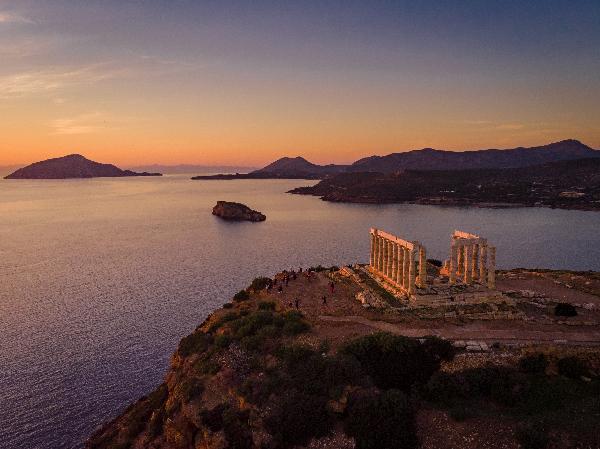
Cape Sounion is the dramatic southernmost tip of the Attica peninsula, famed for the majestic Temple of Poseidon that stands on a cliff overlooking the sea. It has been a sacred site and a landmark for sailors since ancient times.
The Temple of Poseidon
The Temple of Poseidon was constructed in 444-440 BC, during the ascendancy of Athenian statesman Pericles. It was built to honor Poseidon, the god of the sea, to grant safe passage to sailors. The temple is of the Doric order, and of its original 42 columns, 16 remain standing. The site is most famous for its breathtaking sunsets, which paint the sky and marble columns in spectacular hues. The poet Lord Byron famously carved his name on one of the columns in the 19th century, a practice now strictly forbidden.
Visitor Tips:
Timing is Everything: Aim to arrive at least 1-1.5 hours before sunset to secure a good viewing spot and have time to explore the temple ruins before it gets too crowded.
Tickets:The site has an entrance fee. The combined ticket for Athens’ archaeological sites does not include Sounion.
Weather:The cape can be extremely windy; it’s advisable to bring a light jacket even in summer.
Amenities:There is a small cafe near the temple entrance, but dining options are better at the tavernas located at the foot of the cape.
Sounion Food & Drink
The tavernas directly below the archaeological site specialize in fresh seafood. Dining here while overlooking the sea is a quintessential Greek experience. Recommended dishes include grilled octopus, fried calamari, and fish fresh from the day’s catch. Enjoying a leisurely dinner after watching the sunset is a perfect way to end the day.
The Return: Sounion to Athens
The return journey to Athens is typically straightforward. If taking the KTEL bus, ensure you are aware of the last departure time. For those with a car or taxi, driving back along the coast at night offers a different perspective, with the lights of Athens twinkling in the distance.
Cultural Insights & Practical Tips
“Siga Siga” (Slowly Slowly): This phrase encapsulates the Greek approach to life. Don’t rush your meals or your sightseeing. Embrace a more relaxed pace.
Hospitality (Philoxenia):The ancient concept of “friend to a stranger” is deeply ingrained. Greeks are generally very welcoming and helpful to visitors.
Siesta Time:Many smaller shops and businesses close in the afternoon from roughly 2 pm to 5 pm, especially in summer. Plan your shopping accordingly.
Tipping Etiquette:Tipping is appreciated but not always mandatory. In restaurants, it’s customary to leave a small tip (5-10%) by rounding up the bill or leaving some change on the table. For good service, leaving more is common.
Dress Code for Churches & Monasteries:Shoulders and knees should be covered when entering Orthodox churches. Some sites provide shawls for visitors, but it’s best to be prepared.
Bargaining:Not common in shops or restaurants. It may be acceptable in flea markets for larger items.
Sunscreen & Hydration:The Attica sun can be intense, especially at exposed sites like Sounion. Carry water, wear a hat, and use sunscreen liberally.
A journey from Athens to Cape Sounion encapsulates the essence of Greece: profound history etched in marble, spectacular natural beauty, delicious cuisine, and legendary hospitality. It is an itinerary that leaves a lasting impression on all who undertake it.