A Comprehensive Travel Guide: Athens and Santorini, Greece
This guide details a classic Greek itinerary, looping from the ancient capital of Athens to the iconic volcanic island of Santorini and back. It is designed to provide a thorough, objective overview of the experiences, logistics, and cultural nuances you will encounter on this unforgettable journey.
Part 1: Athens – The Cradle of Western Civilization
Athens is a sprawling, modern metropolis built upon and around layers of profound history. The contrast is striking: millennia-old marble temples overlook bustling city streets filled with cafes, markets, and contemporary life. It’s a city that demands more than a passing glance; it requires exploration to uncover its true character beyond the ancient stones.
Major Attractions in Athens
The Acropolis and the Parthenon: The quintessential symbol of Athens and ancient Greece. The walk up the sacred rock is a journey back in time. The Parthenon, dedicated to the goddess Athena, is an architectural marvel even in its partially ruined state. The scale and precision of the Doric columns are breathtaking. Be sure to also see the Erechtheion with its iconic Caryatids and the beautifully preserved Temple of Athena Nike. Practical Tip: Purchase a combo ticket online in advance to skip the long ticket lines. This ticket also grants access to several other major archaeological sites. Go early in the morning or late in the afternoon to avoid the worst of the crowds and heat.
Acropolis Museum: Located at the foot of the Acropolis, this modern architectural masterpiece is the perfect companion to the ancient site. It houses the magnificent artifacts found on the Acropolis slopes, with glass floors revealing excavations below. The top-floor Parthenon Gallery is arranged in alignment with the actual temple, offering a stunning contextual view.
Ancient Agora: This was the heart of classical Athenian public life—the center of commerce, politics, and philosophy. Walk among the ruins of temples, stoas (covered walkways), and government buildings. The incredibly well-preserved Temple of Hephaestus dominates the site, and the reconstructed Stoa of Attalos houses a museum with fascinating everyday objects from the period.
Plaka and Anafiotika: Nestled on the northern slopes of the Acropolis, Plaka is the old historical neighborhood of Athens. Its labyrinthine, cobblestone streets are lined with neoclassical houses, souvenir shops, and traditional tavernas. For a truly magical experience, wander into Anafiotika, a tiny, hidden district within Plaka built by workers from the Cycladic island of Anafi. With its whitewashed, cubic houses and narrow, winding paths, it feels like a Greek island village suddenly transported to the city center.
National Archaeological Museum: Home to the world’s richest collection of artifacts from Greek antiquity. The sheer scope is staggering, from the Mask of Agamemnon and the Antikythera Mechanism (an ancient analog computer) to breathtaking sculptures and vast collections of pottery and jewelry. It provides an essential deep dive into Greek history and art.
Mount Lycabettus: The highest point in Athens. You can take a funicular or hike to the top for a panoramic 360-degree view of the entire city basin, all the way to the port of Piraeus and the Saronic Gulf. Sunset is a particularly popular and spectacular time to visit.
Athenian Cuisine
Athenian food is a robust introduction to Greek culinary traditions. It’s characterized by fresh ingredients, simple preparations, and bold flavors from olive oil, lemon, and herbs like oregano and thyme.
Must-Try Dishes: Moussaka (a layered eggplant and meat casserole), Souvlaki (grilled meat skewers, often served in a pita wrap with tomato, onion, and tzatziki), Horiatiki (the authentic “Greek salad” with feta, tomatoes, cucumber, onions, olives, and capers, without lettuce), Dolmades (stuffed grape leaves), and fresh grilled fish.
Where to Eat: Avoid the overly touristy restaurants with touts in Monastiraki Square. Instead, seek out traditional tavernas in Plaka (look for ones on quieter side streets) or venture into residential neighborhoods like Koukaki or Petralona for a more authentic local experience. The Central Market (Varvakios Agora) is also a fantastic spot for an inexpensive and lively lunch at one of its meat or fish tavernas.
Local Insight: Greeks eat late. Lunch might start at 2:00 or 3:00 PM, and dinner often begins after 9:00 PM. Follow their lead for the most vibrant atmosphere. Don’t forget to try a strong Greek coffee, served in a small cup with the grounds at the bottom.
Transportation in Athens
Athens has an efficient and affordable public transport system.
Metro: The clean and modern metro is the best way to cover long distances quickly. Key stations include “Acropolis” for the historic core, “Syntagma” for the city center and Parliament, and “Monastiraki” for the flea market and Plaka.
Walking: The historical center (Acropolis, Plaka, Monastiraki, Syntagma) is very walkable. Comfortable shoes are essential as you’ll be navigating uneven marble and cobblestone paths.
Taxis & Ride-Sharing: Taxis are relatively inexpensive. Use the official “Beat” or “Taxiplon” app to hail a cab and ensure metered fares. Ride-sharing apps like Uber also operate in Athens.
Part 2: The Journey from Athens to Santorini
The transition from mainland to island is a key part of the experience. You have two primary options, each with its own advantages.
By Ferry: This is the classic mode of transport. The journey from Piraeus port (Athens’ main port) to Santorini takes approximately 5-8 hours depending on the type of ferry (high-speed or conventional). It’s a scenic voyage through the Aegean Sea, passing by other islands. Practical Tip: Book ferry tickets in advance online through sites like Ferryhopper or Direct Ferries, especially during peak season (June-September). Choose a seat on the deck to enjoy the views and avoid potential seasickness. Remember, Piraeus port is about an hour from central Athens by metro or taxi.
By Flight: A short 45-minute flight from Athens International Airport (ATH) to Santorini (JTR) is the fastest option. It’s convenient if you are short on time, but you miss out on the sea journey. During peak season, flight prices can be comparable to high-speed ferries.
Part 3: Santorini – The Volcanic Marvel
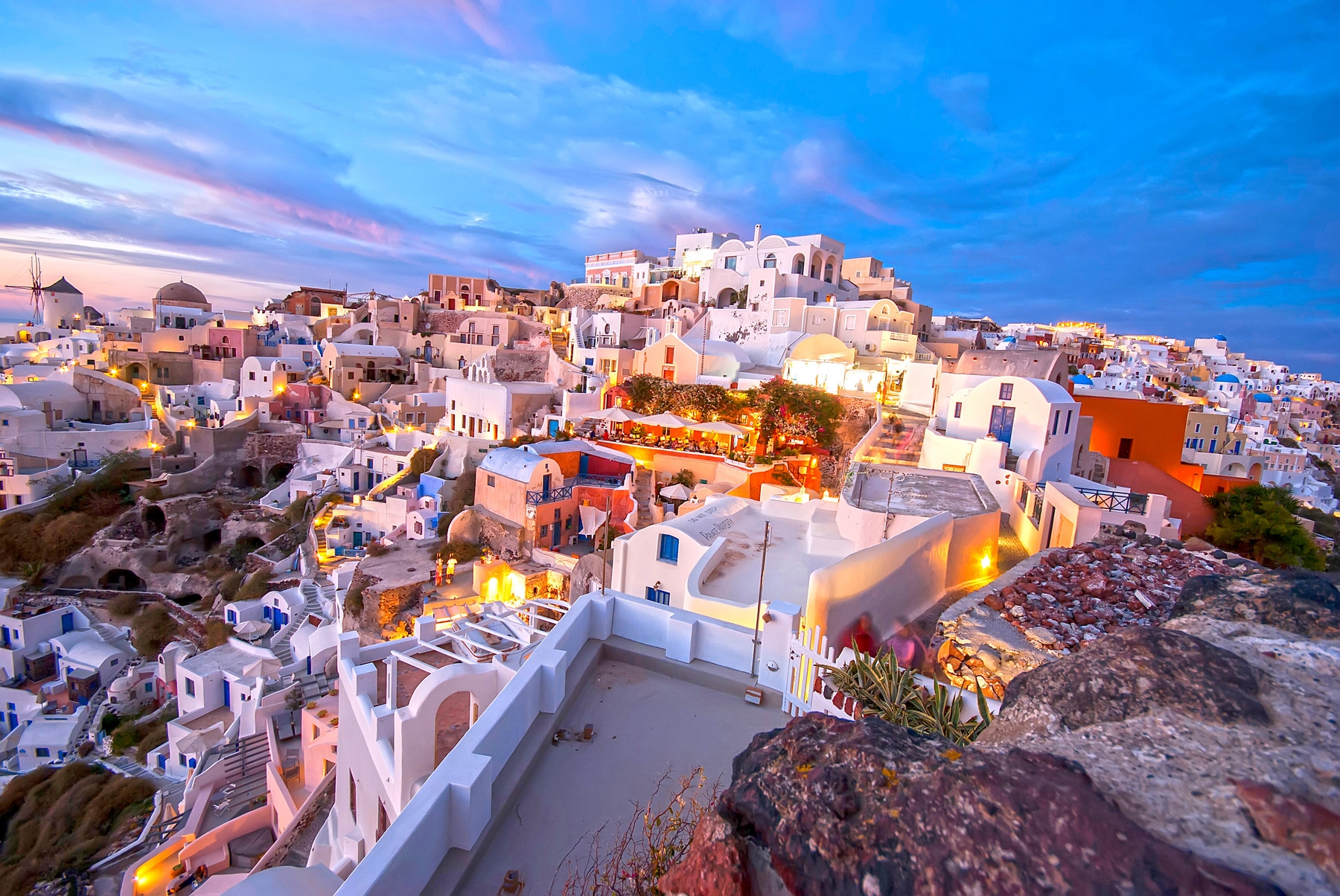
Santorini (Thira) is not a typical sandy-beach island. It is the remnant of a massive volcanic caldera. The spectacular cliffs, whitewashed villages clinging to the edge, and dramatic views are its defining features. The energy here is different from Athens—more romantic, contemplative, and geared towards awe-inspiring landscapes.
Major Attractions in Santorini
Oia (pronounced EE-ah): Famous for its picture-perfect blue-domed churches and windmills, Oia is the postcard image of Santorini. It’s a labyrinth of narrow marble paths lined with high-end boutiques, art galleries, and luxury hotels. The main attraction is the sunset, which draws massive crowds to the castle ruins for a celebrated nightly viewing ritual. Local Insight: While beautiful, Oia can be overwhelmingly crowded. For a slightly more relaxed but equally stunning sunset, consider the village of Imerovigli.
Fira: The bustling capital of the island. Fira is perched on the caldera edge and is connected to the old port below by a steep zig-zag path. You can walk down, take a cable car, or ride a donkey. Fira is the hub for shopping, dining, and nightlife, with countless bars and restaurants offering caldera views.
The Caldera & Volcanic Islands: Take a boat tour from the old port of Fira or from Ammoudi Bay (below Oia). These tours typically include a stop at the still-active volcanic island of Nea Kameni, where you can hike to the steaming crater. You will also stop at the hot springs on Palia Kameni for a therapeutic swim in the iron-rich, orange-tinted waters. Finally, many tours include Thirassia, a quiet, traditional island opposite Oia, offering a glimpse of Santorini before mass tourism.
Ancient Thira & Akrotiri: For history buffs, these two sites are essential.
Akrotiri: A Minoan Bronze Age settlement buried by volcanic ash around 1600 BC, often called the “Minoan Pompeii.” It’s an extensive archaeological site protected by a bioclimatic roof, featuring remarkably preserved multi-story buildings, pottery, and sophisticated drainage systems.
Ancient Thira: Perched high on Mesa Vouno mountain, this site features ruins from Hellenistic, Roman, and Byzantine periods. The climb is steep but rewards you with breathtaking views of the island’s east and west coasts.
The Unique Beaches: Due to its volcanic origin, Santorini’s beaches are dramatic and unique.
Red Beach: Famous for its striking red cliffs and volcanic sand. Access can be tricky via a short rocky path.
Perissa & Kamari Beaches: Long stretches of black sand and pebbles, well-organized with sunbeds, umbrellas, and beachfront tavernas.
Vlychada Beach: Noted for its extraordinary white cliffs sculpted by wind erosion, giving it a lunar landscape appearance.
Pyrgos: A former capital, this village is located inland and uphill. It’s less crowded than Oia or Fira and offers a more authentic feel with its Venetian castle ruins and labyrinthine paths. The views from the top are spectacular and panoramic.
Santorinian Cuisine
The volcanic soil and unique microclimate of Santorini produce some exceptional local specialties.
Must-Try Dishes & Products:
Fava: A delicious yellow split pea purée, typically served warm with onions and olive oil. It’s a Santorini staple.
Tomato Keftedes: Savory fritters made from Santorini’s distinctive small, sweet tomatoes.
White Eggplant: A local variety that is less bitter than its purple cousin; often grilled or baked.
Fresh Seafood: Especially octopus grilled or marinated.
Assyrtiko Wine: Santorini is renowned for its crisp, dry, and mineral-white Assyrtiko wine grown in unique basket-shaped vines low to the ground to protect them from the wind. Visiting a winery for a tasting is a highly recommended activity.
Where to Eat: While caldera-view restaurants in Oia and Fira are iconic, they are also very expensive. For more authentic and reasonably priced meals, explore tavernas in smaller villages like Megalochori, Pyrgos, or on the beaches.
Transportation in Santorini
ATV (Quad Bike) or Scooter: A very popular and fun way to explore the island independently. It gives you the flexibility to stop at viewpoints and beaches at your own pace.
Rental Car: Ideal for families or those wanting to cover the entire island comfortably. Book well in advance during peak season.
Local Buses (KTEL): An inexpensive network that connects Fira (the central bus station) with all major villages and beaches. It can be crowded during peak times but is a reliable budget option.
Taxis: Available but can be scarce; it’s best to book through your hotel or use a taxi app.
The Return: Santorini to Athens
The return journey follows the same options: ferry or flight. When planning your departure from Santorini, consider your final international flight schedule. If flying out of Athens International Airport (ATH) on the same day, ensure you leave a significant buffer—at least 5-6 hours if taking a ferry (due to potential delays) or 3-4 hours if taking a domestic flight (accounting for transport between airports if your flight lands at the other Athens airport). Many travelers choose to spend one last night in Athens near the airport to ensure a stress-free departure.
Crucial Practical Travel Tips
Best Time to Visit: Late spring (May-June) and early autumn (September-October) offer ideal weather—warm and sunny but without the intense heat and peak crowds of July and August.
Currency: Euro (€). Credit cards are widely accepted, but it’s always wise to carry some cash for small purchases, tips, and local markets.
Tipping Culture: Service charge is usually included in restaurant bills. However, it is customary to leave a small extra tip (5-10%) for good service by rounding up the bill or leaving some small change. For hotel staff and tour guides, a tip of a few euros is appreciated.
What to Pack: Comfortable walking shoes are non-negotiable. Pack sunscreen, a hat, and sunglasses for protection against the strong Mediterranean sun. A light jacket or sweater is useful for cooler evenings, especially on islands where it can get windy.
A Note on Crowds: Both Athens and Santorini are among Europe’s most popular destinations. Prepare for crowds at major sites. Patience and advance planning (booking tickets online) are your best allies.
A Final Cultural Insight: Greeks are known for their concept of “philoxenia” (friendliness to strangers). A little courtesy goes a long way. Learn a few basic Greek phrases: “Yasas” (Hello/Thank you), “Parakalo” (Please/You’re welcome), “Kalimera” (Good morning), and “Efharisto” (Thank you). This small effort will be warmly received.
A journey from Athens to Santorini offers a perfect duality: the profound historical weight of ancient civilization paired with one of nature’s most dramatic and beautiful creations. By understanding what each destination offers and planning accordingly, you can craft a trip that is both enriching and utterly mesmerizing.